
Randall Balmer
Author of Mine Eyes Have Seen the Glory: A Journey into the Evangelical Subculture in America
About the Author
Randall Balmer (Ph.D., Princeton University), a prize-winning historian and Emmy Award nominee, is the John Phillips Professor in Religion at Dartmouth College. Before coming to Dartmouth in 2012, he was professor of American religious history at Columbia University for twenty-seven years, and he show more has been a visiting professor at Princeton, Yale, Drew, Emory, and Northwestern universities and in the Columbia University Graduate School of Journalism. He is the author of more than a dozen books, including Evangelicalism in America and Redeemer: The tile of Jimmy Carter. His second book, Mine Eyes Have Seen the Glory: A Journey into the Evangelical Subculture in America, now in its fifth edition, was made into a three-part series for PBS. He has written and hosted two other documentaries for PBS, and he is working on another, a history of the Orthodox Church in Alaska. Dr. Balmer's commentaries about religion in America have appeared in newspapers across the country, including the Los Angeles Times, the Des Moines Register, the Washington Post, the Santa Fe flew Mexican, and the New York Times. Dr. Balmer was ordained an Episcopal priest in 2006. show less
Image credit: www.randallbalmer.com
Works by Randall Balmer
Mine Eyes Have Seen the Glory: A Journey into the Evangelical Subculture in America (1989) 375 copies, 4 reviews
Thy Kingdom Come: How the Religious Right Distorts the Faith and Threatens America: An Evangelical's Lament (2006) 186 copies, 3 reviews
God in the White House: A History: How Faith Shaped the Presidency from John F. Kennedy to George W. Bush (2008) 122 copies, 3 reviews
A Perfect Babel of Confusion: Dutch Religion and English Culture in the Middle Colonies (1989) 50 copies
Mormonism and American Politics (Religion, Culture, and Public Life Book 18) (2015) — Editor; Introduction; Contributor — 12 copies
Religion and Public Life in the Middle Atlantic Region: Fount of Diversity (Religion By Region) (2006) 8 copies
Solemn Reverence: The Separation of Church and State in American Life (Sunlight Editions) (2021) 6 copies, 1 review
Queers in the Kingdom 1 copy
Associated Works
The Life of Meaning: Reflections on Faith, Doubt, and Repairing the World (2007) — Contributor — 132 copies, 5 reviews
The Worlds of Joseph Smith: A Bicentennial Conference at the Library of Congress (2006) — Contributor — 30 copies
From the Outside Looking In: Essays on Mormon History, Theology, and Culture (2015) — Contributor — 10 copies
Tagged
Common Knowledge
- Canonical name
- Balmer, Randall
- Legal name
- Balmer, Randall Herbert
- Birthdate
- 1954-10-22
- Gender
- male
- Education
- Princeton University (MA|1982|Ph.D|1985)
Trinity College (BA|1976)
Trinity Evangelical Divinity School (MA|1981)
Union Theological Seminary (M.Div|2001) - Occupations
- professor (American religious history)
editor
Episcopal priest (ordained 2006) - Organizations
- Dartmouth College
Barnard College, Columbia University
Christianity Today
Episcopal Church
American Society of Church History - Nationality
- USA
- Birthplace
- Chicago, Illinois, USA
- Places of residence
- Woodbury, Connecticut, USA
- Associated Place (for map)
- USA
Members
Reviews
God in the White House, A History: How Faith Shaped the Presidency from John F. Kennedy to George W. Bush by Randall Balmer

Balmer's fascinating study does a superb job of exploring the absolute reversal of the relationship of politics and religion in the latter half of the 20th century. As a candidate, John F. Kennedy had to DISTANCE himself from his Roman Catholic roots in order to have a chance at the Presidency; however, by the time of the George W. Bush-Al Gore election cycle, you have Bush talking in very glowing and open terms about his religious conversion experience and beliefs. Clearly, Bush felt that show more his faith would help WIN him the White House rather than COSTING him his opportunity. Balmer's narrative is all about connecting and explaining those two inverted points. And he does a remarkable job at it.
However, there IS a subtext to this narrative, and that is a not-so-subtle criticism of the "Religious Right," which, since the days of Reagan has crystallized Evangelicalism's engagement with American presidential politics. Balmer's rhetoric gets pretty sharp here, taking on a tone I can only describe as "wounded lover." It is clear that he feels the "Religious Right" (and Christian political conservatism more broadly) has effectively betrayed its original purpose, and Balmer takes that quite personally. The REAL issue is that, by and large, Balmer is EXACTLY right in the criticisms he aims at the Falwell's followers (especially their rejection of devout Christian Jimmy Carter for a barely-Christian Ronald Reagan). In fact for me, Balmer's expose of the hypocrisy of Evangelicalism's swing from supporting Carter to Reagan explained a lot about Donald Trump's election.
He asks hard questions that still have not been effectively answered by the new leaders of evangelical Christianity, I feel. And it is disheartening to me that a man of Balmer's stature could so astutely diagnose the near schizophrenia that has infected evangelical Christianity's political engagement and yet that warning has clearly gone unheeded with what I fear might be disastrous long-term consequences for the integrity and power of the Church's voice in the larger public discourse.
Last but not least: Mr. Balmer, if you're reading this and looking for a new book idea, I would love to read your take on the Obama and Trump presidencies in light of the trajectories outlined here. show less
However, there IS a subtext to this narrative, and that is a not-so-subtle criticism of the "Religious Right," which, since the days of Reagan has crystallized Evangelicalism's engagement with American presidential politics. Balmer's rhetoric gets pretty sharp here, taking on a tone I can only describe as "wounded lover." It is clear that he feels the "Religious Right" (and Christian political conservatism more broadly) has effectively betrayed its original purpose, and Balmer takes that quite personally. The REAL issue is that, by and large, Balmer is EXACTLY right in the criticisms he aims at the Falwell's followers (especially their rejection of devout Christian Jimmy Carter for a barely-Christian Ronald Reagan). In fact for me, Balmer's expose of the hypocrisy of Evangelicalism's swing from supporting Carter to Reagan explained a lot about Donald Trump's election.
He asks hard questions that still have not been effectively answered by the new leaders of evangelical Christianity, I feel. And it is disheartening to me that a man of Balmer's stature could so astutely diagnose the near schizophrenia that has infected evangelical Christianity's political engagement and yet that warning has clearly gone unheeded with what I fear might be disastrous long-term consequences for the integrity and power of the Church's voice in the larger public discourse.
Last but not least: Mr. Balmer, if you're reading this and looking for a new book idea, I would love to read your take on the Obama and Trump presidencies in light of the trajectories outlined here. show less
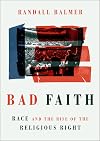
You’ve probably heard the self-reinforcing story. Yes, in general, American Evangelicals were not a well-mobilized group for voting and influencing American politics throughout much of the twentieth century. But then the Supreme Court handed down their decision on Roe vs. Wade, and Evangelicals were mobilized to vote regarding abortion.
Well, as said by the Secretary of Defense in Independence Day, “that’s not entirely accurate.”
In Bad Faith: Race and the Rise of the Religious Right, show more Randall Balmer provides the far more unsettling story based on primary documents and conversations and interviews with some of the primary architects of the rise of the “Religious Right.”
Paul Weyrich is the name regarding which you rarely hear but was highly influential behind the scenes. For years he sought to find some way to catalyze conservative Evangelicals to vote, and specifically, to vote Republican. He sought issue after issue. Nothing was really “sticking.”
There was not, in fact, a polarization or political push in the immediate aftermath of the 1973 Roe vs. Wade decision. The primary documents Balmer presents might surprise you: many Evangelical denominations were not against the decision, sought to find ways to value the lives of women and children, and emphasized how access to abortion was not the same as mandating or requiring abortion. Criswell is even quoted in his belief of a child’s life not being fully his or her own until birth and thus why he was not as concerned about abortion as many are today.
Those Evangelicals who were activated to vote in 1976 mostly did so…for the Democratic candidate Jimmy Carter, who was an Evangelical and spoke regarding how his Evangelical faith shaped many of his political commitments.
So what changed? If abortion was not the catalyzing political issue, what was?
As Balmer powerfully demonstrates, the catalyzing issue was the push by the Internal Revenue Service to revoke the religious non-profit status of the secondary and post-secondary “segregation academies” and colleges like Bob Jones University in the middle of the 1970s.
Southern segregationalists did not just fade away into the sunset after the Brown vs. Board of Education decision was enforced in the South. They often developed their own private schools which maintained segregation. These were maintained in the 1960s and 1970s and became quite popular among a certain set of white Evangelicals in the South.
And they did not take kindly to the IRS considering them no longer religious non-profit organizations. Even though it was a matter of a tax benefit being removed, many Evangelicals organized and argued as if it were a significant violation of the separation of church and state and a form of persecution. And even though the matter was done and even adjudicated in the days of the Gerald Ford administration, it would be in the 1980 election in which the matter would come to a head.
This was the catalyst Weyrich was looking for and he took full advantage. Believe it or not, Ronald Reagan was not the most ideal conservative Christian candidate. He had been divorced and remarried. As Governor of California he signed pro-choice and gun control legislation. But he managed the dog whistles well and had been well coached about how to cultivate conservative Evangelical votes. And vote for him they did. And they got what they wanted: under the Reagan administration, IRS efforts against the “segregation academies” was pulled back.
During the late 1970s and into the 1980s was when abortion came to the fore and became more than just a “[Roman] Catholic issue.” Nuance was dropped and significant concern for the health and lives of women were marginalized in the attempt to emphasize the health and lives of babies and what it meant for a society to provide access to abortion. Within a few years even the Falwells and other such Evangelical authors of the Religious Right had told themselves often enough that abortion was the catalyzing issue that they believed it.
Does this mean every politically conservative Christian who is fervently against abortion is a closeted, secret racist? No, of course not. But the real history well explains why the moral character and dog whistle racism of DJT was not disqualifying in the eyes of most Evangelicals, and how it can be that conservative Christendom writ large remains quite comfortable with white supremacists in their midst. It was their energy which got the whole political machine up and moving. And it’s never been fully and decisively repudiated. show less
Well, as said by the Secretary of Defense in Independence Day, “that’s not entirely accurate.”
In Bad Faith: Race and the Rise of the Religious Right, show more Randall Balmer provides the far more unsettling story based on primary documents and conversations and interviews with some of the primary architects of the rise of the “Religious Right.”
Paul Weyrich is the name regarding which you rarely hear but was highly influential behind the scenes. For years he sought to find some way to catalyze conservative Evangelicals to vote, and specifically, to vote Republican. He sought issue after issue. Nothing was really “sticking.”
There was not, in fact, a polarization or political push in the immediate aftermath of the 1973 Roe vs. Wade decision. The primary documents Balmer presents might surprise you: many Evangelical denominations were not against the decision, sought to find ways to value the lives of women and children, and emphasized how access to abortion was not the same as mandating or requiring abortion. Criswell is even quoted in his belief of a child’s life not being fully his or her own until birth and thus why he was not as concerned about abortion as many are today.
Those Evangelicals who were activated to vote in 1976 mostly did so…for the Democratic candidate Jimmy Carter, who was an Evangelical and spoke regarding how his Evangelical faith shaped many of his political commitments.
So what changed? If abortion was not the catalyzing political issue, what was?
As Balmer powerfully demonstrates, the catalyzing issue was the push by the Internal Revenue Service to revoke the religious non-profit status of the secondary and post-secondary “segregation academies” and colleges like Bob Jones University in the middle of the 1970s.
Southern segregationalists did not just fade away into the sunset after the Brown vs. Board of Education decision was enforced in the South. They often developed their own private schools which maintained segregation. These were maintained in the 1960s and 1970s and became quite popular among a certain set of white Evangelicals in the South.
And they did not take kindly to the IRS considering them no longer religious non-profit organizations. Even though it was a matter of a tax benefit being removed, many Evangelicals organized and argued as if it were a significant violation of the separation of church and state and a form of persecution. And even though the matter was done and even adjudicated in the days of the Gerald Ford administration, it would be in the 1980 election in which the matter would come to a head.
This was the catalyst Weyrich was looking for and he took full advantage. Believe it or not, Ronald Reagan was not the most ideal conservative Christian candidate. He had been divorced and remarried. As Governor of California he signed pro-choice and gun control legislation. But he managed the dog whistles well and had been well coached about how to cultivate conservative Evangelical votes. And vote for him they did. And they got what they wanted: under the Reagan administration, IRS efforts against the “segregation academies” was pulled back.
During the late 1970s and into the 1980s was when abortion came to the fore and became more than just a “[Roman] Catholic issue.” Nuance was dropped and significant concern for the health and lives of women were marginalized in the attempt to emphasize the health and lives of babies and what it meant for a society to provide access to abortion. Within a few years even the Falwells and other such Evangelical authors of the Religious Right had told themselves often enough that abortion was the catalyzing issue that they believed it.
Does this mean every politically conservative Christian who is fervently against abortion is a closeted, secret racist? No, of course not. But the real history well explains why the moral character and dog whistle racism of DJT was not disqualifying in the eyes of most Evangelicals, and how it can be that conservative Christendom writ large remains quite comfortable with white supremacists in their midst. It was their energy which got the whole political machine up and moving. And it’s never been fully and decisively repudiated. show less
God in the White House: A History: How Faith Shaped the Presidency from John F. Kennedy to George W. Bush by Randall Balmer
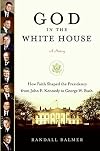
Summary: Traces the history of the religious faith and presidential politics from the election of John Kennedy as the first Catholic president up through George W. Bush and the religious-political alliances by which he was elected to two terms as president.
One of the most surprising discoveries in reading this history of religion and the White House was how the religious lives and views of the Presidents were not a significant issue, with few exceptions until the 1960 election campaign show more between Richard Nixon and John Kennedy. In this history, written in 2008, Randall Balmer traces the changes that occurred in presidential politics where religion became a bigger issue and religious voters, particularly evangelicals, became an important factor.
Balmer begins with the fears aroused in the 1960 campaign that Kennedy, by no means a fervent Catholic, would take orders from the Vatican. On September 12, 1960, Kennedy gave a speech [The text of this and other key presidential speeches referenced in the text are included in a series of appendices] at the Rice Hotel in Houston, Texas, that helped put this issue to rest. In it he said:
"I believe in an America that is neither Catholic, Protestant nor Jewish, where no public official either requests or accepts instructions on public policy from the pope, the National Council of Churches or any other ecclesiastical source--where no religious body seeks to impose its will directly or indirectly upon the general populace or the public acts of its officials--and where religious liberty is so indivisible that an act against one church is treated as an act against all."
What Kennedy did was preserve the understanding of the relation of religious faith and politics that had been the status quo. Yet Balmer notes, a group of evangelicals led by Norman Vincent Peale, Billy Graham, and Harold Ockenga, convened first in Switzerland and then at the Mayflower Hotel in Washington, D.C., to organize opposition to Kennedy. Kennedy's speech, and the resultant backlash against this group's efforts may have made the difference in this closely run election.
Later Graham mended fences and called on Kennedy and thus began a history of Graham's involvement with presidents. Lyndon Johnson, Richard Nixon and Gerald Ford were all friends with Graham, even while the role of religion in their presidencies remained subdued. Johnson's Great Society and civil rights efforts certainly conformed to deep religious impulses even while his involvement in, and deception of the American people in Vietnam contradicted those impulses (even while being couched in language of "moral uplift"). Nixon held regular services in the White House, passed landmark environmental legislation, brought an end to the war, yet also perpetrated a great deception in the Watergate scandal, that embarrassed Graham who supported him and brought down his presidency. Gerald Ford was not a man to wear religion on his sleeve but his pardon of Richard Nixon may have reflected deep conviction and not mere politics, and that, along with the contrast between him and an openly evangelical Carter, probably cost him the election of 1976.
The Carter presidency led to the rise of the evangelicals as a political force as Carter spoke openly of his own faith. Balmer portrays Carter's deeply principled faith combined with his ineffectual presidency. He also traces the rise of the religious right, galvanized initially, not by abortion, but by threats to the tax-exempt status of Bob Jones University because of civil rights violations, laid at Carter's feet even though it was during the Ford administration that these actions began. Only in 1980, as Ronald Reagan adopted a pro-life stance, did the religious right adopt this issue in alliance with Reagan against Carter, which became a litmus test for Republican Party candidates and cemented an alliance between evangelicals and the Republican Party, carrying through the administration of George H.W. Bush.
The Clinton administration simultaneously welcomed evangelical leaders to the White House, including various personal counselors like Bill Hybels and Tony Campolo during the Monica Lewinsky affair, yet pursued a decidedly non-religious agenda. The narrative then concludes with the George W. Bush presidency, marked by his open appeals to faith, his affirmation of Jesus as his favorite philosopher, his embrace of religious right culture wars issues, even while he countenanced water-boarding and other forms of torture in post 9/11 America.
In his concluding chapter, Balmer turns from the religiosity of the presidents to what it is that the American people look for, and what they overlook, in their presidents. It is clearly, at the end of the day, not moral rectitude. Jimmy Carter was probably the most morally upright of all, evidenced in his concerns for human rights, the Camp David accords and environmental efforts, yet we repudiated him after four years. We re-elected Richard Nixon, Ronald Reagan, Bill Clinton, and George W. Bush despite personal flaws and deep moral issues raised by their policies. Balmer proposes that a more significant question than what a candidate's religious faith is, is how does that faith inform their thinking on the national and international issues in which a president must lead. Is faith just a window dressing or does it provide a moral compass? This is a form of questioning that takes significant thought and attention, that cannot be summarized in a soundbite. Yet to do less, Balmer argues, is cheap grace.
Balmer exposes both the dangers of "religious bodies trying to impose their will" and becoming politically captive, and of politicians who pander to these bodies for their votes, even while pursuing their own ends. What is troubling as one reads Balmer is that it appears to me that we are even worse off today than in 2008. Religious groups are still trading support for influence even while candidates with deep moral and lifestyle inconsistencies appeal to religious groups for their support. Given the sorry history of these entanglements, I wonder when people of faith will repent of these political captivities to pursue a more thoughtful engagement with office holders and seekers. Sadly, it does not seem that 2016 is the year where we say, "enough". show less
One of the most surprising discoveries in reading this history of religion and the White House was how the religious lives and views of the Presidents were not a significant issue, with few exceptions until the 1960 election campaign show more between Richard Nixon and John Kennedy. In this history, written in 2008, Randall Balmer traces the changes that occurred in presidential politics where religion became a bigger issue and religious voters, particularly evangelicals, became an important factor.
Balmer begins with the fears aroused in the 1960 campaign that Kennedy, by no means a fervent Catholic, would take orders from the Vatican. On September 12, 1960, Kennedy gave a speech [The text of this and other key presidential speeches referenced in the text are included in a series of appendices] at the Rice Hotel in Houston, Texas, that helped put this issue to rest. In it he said:
"I believe in an America that is neither Catholic, Protestant nor Jewish, where no public official either requests or accepts instructions on public policy from the pope, the National Council of Churches or any other ecclesiastical source--where no religious body seeks to impose its will directly or indirectly upon the general populace or the public acts of its officials--and where religious liberty is so indivisible that an act against one church is treated as an act against all."
What Kennedy did was preserve the understanding of the relation of religious faith and politics that had been the status quo. Yet Balmer notes, a group of evangelicals led by Norman Vincent Peale, Billy Graham, and Harold Ockenga, convened first in Switzerland and then at the Mayflower Hotel in Washington, D.C., to organize opposition to Kennedy. Kennedy's speech, and the resultant backlash against this group's efforts may have made the difference in this closely run election.
Later Graham mended fences and called on Kennedy and thus began a history of Graham's involvement with presidents. Lyndon Johnson, Richard Nixon and Gerald Ford were all friends with Graham, even while the role of religion in their presidencies remained subdued. Johnson's Great Society and civil rights efforts certainly conformed to deep religious impulses even while his involvement in, and deception of the American people in Vietnam contradicted those impulses (even while being couched in language of "moral uplift"). Nixon held regular services in the White House, passed landmark environmental legislation, brought an end to the war, yet also perpetrated a great deception in the Watergate scandal, that embarrassed Graham who supported him and brought down his presidency. Gerald Ford was not a man to wear religion on his sleeve but his pardon of Richard Nixon may have reflected deep conviction and not mere politics, and that, along with the contrast between him and an openly evangelical Carter, probably cost him the election of 1976.
The Carter presidency led to the rise of the evangelicals as a political force as Carter spoke openly of his own faith. Balmer portrays Carter's deeply principled faith combined with his ineffectual presidency. He also traces the rise of the religious right, galvanized initially, not by abortion, but by threats to the tax-exempt status of Bob Jones University because of civil rights violations, laid at Carter's feet even though it was during the Ford administration that these actions began. Only in 1980, as Ronald Reagan adopted a pro-life stance, did the religious right adopt this issue in alliance with Reagan against Carter, which became a litmus test for Republican Party candidates and cemented an alliance between evangelicals and the Republican Party, carrying through the administration of George H.W. Bush.
The Clinton administration simultaneously welcomed evangelical leaders to the White House, including various personal counselors like Bill Hybels and Tony Campolo during the Monica Lewinsky affair, yet pursued a decidedly non-religious agenda. The narrative then concludes with the George W. Bush presidency, marked by his open appeals to faith, his affirmation of Jesus as his favorite philosopher, his embrace of religious right culture wars issues, even while he countenanced water-boarding and other forms of torture in post 9/11 America.
In his concluding chapter, Balmer turns from the religiosity of the presidents to what it is that the American people look for, and what they overlook, in their presidents. It is clearly, at the end of the day, not moral rectitude. Jimmy Carter was probably the most morally upright of all, evidenced in his concerns for human rights, the Camp David accords and environmental efforts, yet we repudiated him after four years. We re-elected Richard Nixon, Ronald Reagan, Bill Clinton, and George W. Bush despite personal flaws and deep moral issues raised by their policies. Balmer proposes that a more significant question than what a candidate's religious faith is, is how does that faith inform their thinking on the national and international issues in which a president must lead. Is faith just a window dressing or does it provide a moral compass? This is a form of questioning that takes significant thought and attention, that cannot be summarized in a soundbite. Yet to do less, Balmer argues, is cheap grace.
Balmer exposes both the dangers of "religious bodies trying to impose their will" and becoming politically captive, and of politicians who pander to these bodies for their votes, even while pursuing their own ends. What is troubling as one reads Balmer is that it appears to me that we are even worse off today than in 2008. Religious groups are still trading support for influence even while candidates with deep moral and lifestyle inconsistencies appeal to religious groups for their support. Given the sorry history of these entanglements, I wonder when people of faith will repent of these political captivities to pursue a more thoughtful engagement with office holders and seekers. Sadly, it does not seem that 2016 is the year where we say, "enough". show less
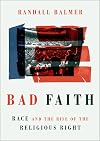
This is not a book review, it is the ramblings of a disgruntled, annoyed, and tired Christian who is a political liberal-moderate and happens to live in America. Also, I guess there are spoilers? Can you spoil a book like this? Either way, this book is good.
When did abortion become a top-tier issue for American Christianity and the Republican party? Roe v. Wade was ruled upon in 1973, but it was '78-'79 before abortion became a voter issue. This was on the heels of conservative Christians show more coming out in force to oppose the IRS's battle with the evangelical Bob Jones University over integration: BJU was proud it had no black students, so the IRS took away the school's tax exempted status. This was the first time conservative Christians came out in numbers as a voting bloc. This group had largely relegated itself as an isolationist group, uninterested in the politics of the world. The movement to vote came because Christians in conservative circles saw the IRS's threat of tax exemption over not integrating as a violation of their isolationism.
The Christian right, which was hardly even a thing yet, was fine to leave alone and be left alone. Until they were told by the state that their organizations could not exclude blacks, anyway.
It is telling that early in the 1970s, the Southern Baptist Convention passed a resolution acknowledging that abortion was necessary:
This resolution was reaffirmed two more times before the end of the 1970s, both after Roe v. Wade was ruled upon by the Supreme Court.
After the fruitless battle over integration, however, those who saw their chance to overturn American politics needed a new topic: the battle against homosexuality and the disintegration of the American family was chosen. This proved less able to move people to vote than expected. There were, of course, quiet minorities within conservative Christianity who were upset about abortion, but they were just that: a minority within the group. Then, in 1979, a man named Frank Schaeffer and his father, Francis Shaeffer, traveled the country showing a film entitled "Whatever Happened to the Human Race?". After a showing in March of that year, the younger Schaeffer gave a speech, he later recounted by saying:
So the agenda was set: abortion would be the issue used to upend American politics and turn one of its two parties into the public-policy wing of conservative Christianity. And despite Jimmy Carter, who had worked to reduce the number of abortions both during his time as governor of Georgia and President, being an "evangelical" himself, he was made a villain when he refused to seek a constitutional amendment outlawing abortion. Ronald Reagan, who was allied with the religious right, became President despite having signed into law "the most liberal abortion bill in the country" in 1967. He was also divorced (Carter was not), which should have been a big no-no for Christians. A Harris poll indicated that Carter would have won the election...if the religious right hadn't voted.
It may have helped that Reagan at least partially campaigned on "unconstitutional regulatory agendas....against independent schools." Race-baiting at its finest, if you ask me. Also, Reagan opposed the Civil Rights Act of 1964 and the Voting Rights Act of 1965. Listen: Ronald Reagan was a racist. Period the end.
But don't just take my word for it. Look up the Reagan-Nixon tape on YouTube and listen to how Reagan describes black people. Go do it right now. It's horrible.
Thus a group which had been largely apolitical (as an overall, unified voting bloc), having retreated in a staunch isolationism in order to distance themselves from the culture, were now being radicalized into action because of the threat of racial equality and moved on to the fight against gay marriage and abortion: not because they were terribly passionate about those issues, mind you, but because they were the necessary tools for the, as quoted above, takeover of the Republican party.
Unfortunately, it was not the religious right itself which motivated the change, nor the Republican party, but a group of a few individuals who wanted to see the two groups coalesce into a political force to be reckoned with. This small group of individuals wanted political power, knew they needed control of the Republican party to achieve it, and knew they needed the religious right to get there.
Forgive me for, at least somewhat, recounting the content of this book. But it's important to know what this book is and isn't. It's not an argument that abortion should be legal or illegal. It is, however, an argument that abortion was a fringe issue, later raised on the tail-end of the losing battle for segregation, by a few bad actors who wanted to seize control of a political party. This is a takeover which is largely complete today. Christians who identify as liberal, or (worse yet) as the D-word (Democrats) are view with skepticism within conservative Christianity. To be a Christian in modern America, it seems as though a person must almost have a Republican Party membership card in their wallet, donate to conservative politicians, own shotguns, hate gay people, wear MAGA caps (and "Make American Great Again," by the way, was used as a Reagan slogan), and hold on...*checks notes*...oh! try to overthrow the government by the impeding of a largely ceremonial Congressional process. Don't forget what Schaefer said after his movie:
It's all according to plan. show less
When did abortion become a top-tier issue for American Christianity and the Republican party? Roe v. Wade was ruled upon in 1973, but it was '78-'79 before abortion became a voter issue. This was on the heels of conservative Christians show more coming out in force to oppose the IRS's battle with the evangelical Bob Jones University over integration: BJU was proud it had no black students, so the IRS took away the school's tax exempted status. This was the first time conservative Christians came out in numbers as a voting bloc. This group had largely relegated itself as an isolationist group, uninterested in the politics of the world. The movement to vote came because Christians in conservative circles saw the IRS's threat of tax exemption over not integrating as a violation of their isolationism.
The Christian right, which was hardly even a thing yet, was fine to leave alone and be left alone. Until they were told by the state that their organizations could not exclude blacks, anyway.
It is telling that early in the 1970s, the Southern Baptist Convention passed a resolution acknowledging that abortion was necessary:
under such conditions as rape, incest, clear evidence of fetal deformity, and carefully ascertained evidence of the likelihood of damage to the emotional, mental, and physical health of the mother
This resolution was reaffirmed two more times before the end of the 1970s, both after Roe v. Wade was ruled upon by the Supreme Court.
After the fruitless battle over integration, however, those who saw their chance to overturn American politics needed a new topic: the battle against homosexuality and the disintegration of the American family was chosen. This proved less able to move people to vote than expected. There were, of course, quiet minorities within conservative Christianity who were upset about abortion, but they were just that: a minority within the group. Then, in 1979, a man named Frank Schaeffer and his father, Francis Shaeffer, traveled the country showing a film entitled "Whatever Happened to the Human Race?". After a showing in March of that year, the younger Schaeffer gave a speech, he later recounted by saying:
We were calling for civil disobedience, the takeover of the Republican Party, and even hinting at overthrowing our 'unjust pro-abortion government.'
So the agenda was set: abortion would be the issue used to upend American politics and turn one of its two parties into the public-policy wing of conservative Christianity. And despite Jimmy Carter, who had worked to reduce the number of abortions both during his time as governor of Georgia and President, being an "evangelical" himself, he was made a villain when he refused to seek a constitutional amendment outlawing abortion. Ronald Reagan, who was allied with the religious right, became President despite having signed into law "the most liberal abortion bill in the country" in 1967. He was also divorced (Carter was not), which should have been a big no-no for Christians. A Harris poll indicated that Carter would have won the election...if the religious right hadn't voted.
It may have helped that Reagan at least partially campaigned on "unconstitutional regulatory agendas....against independent schools." Race-baiting at its finest, if you ask me. Also, Reagan opposed the Civil Rights Act of 1964 and the Voting Rights Act of 1965. Listen: Ronald Reagan was a racist. Period the end.
But don't just take my word for it. Look up the Reagan-Nixon tape on YouTube and listen to how Reagan describes black people. Go do it right now. It's horrible.
Thus a group which had been largely apolitical (as an overall, unified voting bloc), having retreated in a staunch isolationism in order to distance themselves from the culture, were now being radicalized into action because of the threat of racial equality and moved on to the fight against gay marriage and abortion: not because they were terribly passionate about those issues, mind you, but because they were the necessary tools for the, as quoted above, takeover of the Republican party.
Unfortunately, it was not the religious right itself which motivated the change, nor the Republican party, but a group of a few individuals who wanted to see the two groups coalesce into a political force to be reckoned with. This small group of individuals wanted political power, knew they needed control of the Republican party to achieve it, and knew they needed the religious right to get there.
Forgive me for, at least somewhat, recounting the content of this book. But it's important to know what this book is and isn't. It's not an argument that abortion should be legal or illegal. It is, however, an argument that abortion was a fringe issue, later raised on the tail-end of the losing battle for segregation, by a few bad actors who wanted to seize control of a political party. This is a takeover which is largely complete today. Christians who identify as liberal, or (worse yet) as the D-word (Democrats) are view with skepticism within conservative Christianity. To be a Christian in modern America, it seems as though a person must almost have a Republican Party membership card in their wallet, donate to conservative politicians, own shotguns, hate gay people, wear MAGA caps (and "Make American Great Again," by the way, was used as a Reagan slogan), and hold on...*checks notes*...oh! try to overthrow the government by the impeding of a largely ceremonial Congressional process. Don't forget what Schaefer said after his movie:
We were calling for civil disobedience, the takeover of the Republican Party, and even hinting at overthrowing our 'unjust pro-abortion government.'
It's all according to plan. show less
Lists
Awards


You May Also Like


Associated Authors
Statistics
- Works
- 27
- Also by
- 6
- Members
- 1,580
- Popularity
- #16,329
- Rating
- 3.9
- Reviews
- 23
- ISBNs
- 82
- Favorited
- 2