
Julia Pierpont
Author of Among the Ten Thousand Things
About the Author
Julia Pierpont is a graduate of the NYU Creative Writing Program, where she received the Rona Jaffe Foundation Graduate Fellowship and the Stein Fellowship. Her first book, Among the Ten Thousand Things, was published in 2015. (Bowker Author Biography)
Works by Julia Pierpont
Tagged
Common Knowledge
- Canonical name
- Pierpont, Julia
- Gender
- female
- Education
- Barnard College (BA)
NYU (MFA) - Nationality
- USA
- Associated Place (for map)
- USA
Members
Reviews
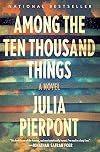
Julia Pierpont’s debut novel opens with a package sent to Deb Shanley from the woman who is having an affair with Deb’s husband, Jack. But instead of Deb, the box is opened by her child, 11-year-old Kate. Filled with hundreds of printed emails chronicling the affair, the box sets in motion the destruction of a family. Tense, occasionally funny, and starring the fictional world’s biggest narcissist (Jack), Peirpont’s novel is mostly successful if not a bit uneven.
 This review was written for LibraryThing Early Reviewers.
[This review is of the Advance Reader's Edition]
The beginning of Among the Ten Thousand Things is gut wrenching, as is the end of Part 1. In between, Pierpont lets you off the hook a bit, but not much. If you don't care about these people by the end of Part 1, you should just quit. But I don't see how that could happen.
I rate this debut quite high (4/5) because of Pierpont's exceptional writing and because the inner lives of the main characters are just too real - remarkably well-formed for show more a writer so young. But Pierpont resists the temptation to make the whole book a series of gut-wrenching 'events', and, instead, takes us through a much more realistic presentation of the lives of this family as they seem to pull apart from each other to deal with the shock and fallout of infidelity; each cast adrift and grasping for a handle on what life is going to be like now.
Near the halfway point in the book, Part 2 is a brief summary of the rest of their lives - some trivial events and some major. But this seems to be only a possible way that their lives will play out, and Part 3 (most of the remainder of the book) provides some hope for sanity and survival, in some form, for each of them. Among the Ten Thousand Things ends with a brief Part 4, which is an alternative to the Part 2 future. Pierpont stays in the realm of the realistic - no tidy happy endings...no definite ending at all, just like life. For some, Part 2 just causes confusion (and, perhaps, it confused me and I just don't realize it). But if you consider it a tangent and not a definitive summary of the rest of the story, you should find hope in the alternatives ultimately playing out for the characters by the end.
So, would I recommend this book? Sure, for those who don't need near-constant action, and are willing to spend time in other people's heads; for those who don't have to have a tidy wrap-up for the characters, but are happy with simple realism. I found myself empathetic, if not sympathetic, towards each of the four main family members long before the end, though empathy came much sooner and easier for some. And now I find that they still live in my head, and I wonder how things are turning out for them.
Os. show less
The beginning of Among the Ten Thousand Things is gut wrenching, as is the end of Part 1. In between, Pierpont lets you off the hook a bit, but not much. If you don't care about these people by the end of Part 1, you should just quit. But I don't see how that could happen.
I rate this debut quite high (4/5) because of Pierpont's exceptional writing and because the inner lives of the main characters are just too real - remarkably well-formed for show more a writer so young. But Pierpont resists the temptation to make the whole book a series of gut-wrenching 'events', and, instead, takes us through a much more realistic presentation of the lives of this family as they seem to pull apart from each other to deal with the shock and fallout of infidelity; each cast adrift and grasping for a handle on what life is going to be like now.
Near the halfway point in the book, Part 2 is a brief summary of the rest of their lives - some trivial events and some major. But this seems to be only a possible way that their lives will play out, and Part 3 (most of the remainder of the book) provides some hope for sanity and survival, in some form, for each of them. Among the Ten Thousand Things ends with a brief Part 4, which is an alternative to the Part 2 future. Pierpont stays in the realm of the realistic - no tidy happy endings...no definite ending at all, just like life. For some, Part 2 just causes confusion (and, perhaps, it confused me and I just don't realize it). But if you consider it a tangent and not a definitive summary of the rest of the story, you should find hope in the alternatives ultimately playing out for the characters by the end.
So, would I recommend this book? Sure, for those who don't need near-constant action, and are willing to spend time in other people's heads; for those who don't have to have a tidy wrap-up for the characters, but are happy with simple realism. I found myself empathetic, if not sympathetic, towards each of the four main family members long before the end, though empathy came much sooner and easier for some. And now I find that they still live in my head, and I wonder how things are turning out for them.
Os. show less
This review was written for LibraryThing Early Reviewers.Got this book from LibraryThing's Early Review program, in exchange for an honest review. This is Pierpont's first novel, and I guess you can say that its a domestic drama.
Husband, wife, 2 kids, seemingly ideal life. Husband's ex-mistress sends a box of all of their raunchy correspondence to the wife. The the proverbial kaka hits the proverbial fan. This is the opening of the book and the rest is the fallout. Its written in 4 sections. Sections 1 and 3 are "current time". Two and 4 represent show more the future and tells what happens after the end of the book. I normally like multiple timelines, but the 2nd section coming so early and detailing/telegraphing so much, it took me out of the story a bit. Still an enjoyable read with interesting writing and characters. The author has promise.
A quote that struck me...
"For 18 days the apartment sat empty. Fine dusts and pollen collected on the window panes and the mirrors stood with no one in them. Nothing in or out of the closed-circuit space. Only the wireless went on, invisibly complicating the air."
6/10
S: 6/21/15 F: 6/28/15 (8 Days) show less
Husband, wife, 2 kids, seemingly ideal life. Husband's ex-mistress sends a box of all of their raunchy correspondence to the wife. The the proverbial kaka hits the proverbial fan. This is the opening of the book and the rest is the fallout. Its written in 4 sections. Sections 1 and 3 are "current time". Two and 4 represent show more the future and tells what happens after the end of the book. I normally like multiple timelines, but the 2nd section coming so early and detailing/telegraphing so much, it took me out of the story a bit. Still an enjoyable read with interesting writing and characters. The author has promise.
A quote that struck me...
"For 18 days the apartment sat empty. Fine dusts and pollen collected on the window panes and the mirrors stood with no one in them. Nothing in or out of the closed-circuit space. Only the wireless went on, invisibly complicating the air."
6/10
S: 6/21/15 F: 6/28/15 (8 Days) show less
This review was written for LibraryThing Early Reviewers.Among the Ten Thousand Things by Julia Pierpont is a highly recommended debut novel about a family in crisis.
Jack Shanley is a well-known artist. He and his wife Deb, a former ballet dancer, and their two children, Simon, 15, and Kay, 11, live in NYC. When Kay looks inside a package addressed to Deb that she is mistakenly given, she finds hundreds of printed emails and a letter from her father Jack's mistress. Kay understands some of it, but not quite all of it, so she shares the information show more with her brother, Simon, who does understand the contents.
When the contents of the box is brought to Deb's attention by her children, she realizes that she can no longer pretend that she doesn't know about Jack's (repeated) infidelity. While Jack's actions have hurt her, the fact that their children know hurts even more and Deb knows that she must take action. This wasn't Jack's first affair and won't be his last. Deb decides it would be best for her and the kids to leave NYC for a few weeks.
Among the Ten Thousand Things brought to my mind the quote: "The mass of men lead lives of quiet desperation. What is called resignation is confirmed desperation." Henry David Thoreau (Walden). Everyone can be said to live a life of desperation of some kind or at some point. What Pierpont does is take this family at such a time, during the dissolution of a marriage, and show how each member of the family is affected.
Pierpont takes a radical approach in the organization of her novel that challenges the usual story-telling sequence. The first part of the novel is set in NYC at the end of May and presents the discovery of the affair and the domestic drama that follows. Then Pierpont tells us in "Part Two, That Year and Those That Followed", what happens in the future to the characters. Part Three resumes the in depth story at the start of June and continues character development right where part one left off. The fourth part is again a concluding "That Year and Those That Followed" that ties up all the loose ends with additional information.
I thought the writing was excellent. The unconventional presentation of the story didn't bother me, but I can see where other readers may have qualms about knowing the end of the story, so to speak, before knowing the characters better. Personally, knowing the outcome so soon was a surprise, but intriguing enough to encourage me to continue reading to see the details and immerse myself in the emotional lives of the family.
Disclosure: My Kindle edition was courtesy of Penguin First to Read and Random House for review purposes. show less
Jack Shanley is a well-known artist. He and his wife Deb, a former ballet dancer, and their two children, Simon, 15, and Kay, 11, live in NYC. When Kay looks inside a package addressed to Deb that she is mistakenly given, she finds hundreds of printed emails and a letter from her father Jack's mistress. Kay understands some of it, but not quite all of it, so she shares the information show more with her brother, Simon, who does understand the contents.
When the contents of the box is brought to Deb's attention by her children, she realizes that she can no longer pretend that she doesn't know about Jack's (repeated) infidelity. While Jack's actions have hurt her, the fact that their children know hurts even more and Deb knows that she must take action. This wasn't Jack's first affair and won't be his last. Deb decides it would be best for her and the kids to leave NYC for a few weeks.
Among the Ten Thousand Things brought to my mind the quote: "The mass of men lead lives of quiet desperation. What is called resignation is confirmed desperation." Henry David Thoreau (Walden). Everyone can be said to live a life of desperation of some kind or at some point. What Pierpont does is take this family at such a time, during the dissolution of a marriage, and show how each member of the family is affected.
Pierpont takes a radical approach in the organization of her novel that challenges the usual story-telling sequence. The first part of the novel is set in NYC at the end of May and presents the discovery of the affair and the domestic drama that follows. Then Pierpont tells us in "Part Two, That Year and Those That Followed", what happens in the future to the characters. Part Three resumes the in depth story at the start of June and continues character development right where part one left off. The fourth part is again a concluding "That Year and Those That Followed" that ties up all the loose ends with additional information.
I thought the writing was excellent. The unconventional presentation of the story didn't bother me, but I can see where other readers may have qualms about knowing the end of the story, so to speak, before knowing the characters better. Personally, knowing the outcome so soon was a surprise, but intriguing enough to encourage me to continue reading to see the details and immerse myself in the emotional lives of the family.
Disclosure: My Kindle edition was courtesy of Penguin First to Read and Random House for review purposes. show less
Awards


You May Also Like


Associated Authors
Statistics
- Works
- 3
- Members
- 776
- Popularity
- #32,779
- Rating
- 2.9
- Reviews
- 87
- ISBNs
- 21
- Languages
- 4
