
James Enge
Author of Blood of Ambrose
About the Author
Series
Works by James Enge
The Singing Spear 4 copies
The Lawless Hours 2 copies
Payment In Full 2 copies
Payment Deferred 2 copies
Destroyer 2 copies
Spears Of Winter Rain 1 copy
Turn Up This Crooked Way 1 copy
Interlude How The Story Ends 1 copy
Where Nurgnatz Dwells 1 copy
Traveller's Dream 1 copy
Interlude The Anointing 1 copy
Interlude Book Of Witness 1 copy
An Old Lady and a Lake 1 copy
Fire and Water 1 copy
Blood from a Stone 1 copy
Interlude Telling The Tale 1 copy
The War Is Over 1 copy
The Gordian Stone 1 copy
The Red Worm's Way 1 copy
A Covenant with Death 1 copy
Whisper Street 1 copy
Associated Works
Blackguards: Tales of Assassins, Mercenaries, and Rogues (2015) — Contributor — 88 copies, 4 reviews
L. Ron Hubbard Presents Writers of the Future, Volume 27 (2011) — Contributor — 58 copies, 9 reviews
Tales From The Magician's Skull, No. 6 — Contributor — 9 copies
Tales From The Magician's Skull, No. 9 — Contributor — 3 copies
Old Moon Quarterly: Issue 3, Winter 2023 — Contributor — 2 copies
Old Moon Quarterly Volume 7: A Magazine of Dark Fantasy and Sword and Sorcery (Old Moon Quarterly; A Magazine of Dark Fantasy and Sword and Sorcery) — Contributor — 2 copies
New Edge Sword & Sorcery Issue #7 — Contributor, some editions — 1 copy
Tagged
Common Knowledge
- Legal name
- Pfundstein, James M.
- Birthdate
- 1960-05-25
- Gender
- male
- Education
- University of Minnesota
- Occupations
- professor of classics
- Places of residence
- Ohio, USA
- Associated Place (for map)
- Ohio, USA
Members
Reviews

Personally, I blame Star Wars, but the Lord of the Rings movies are doubtlessly at fault, too, and I suppose people were just fed up a bit with all those sword-swinging barbarians… whatever the reason, the Sword & Sorcery had a bit of a hard time, even to seeming extinct for a while superseded, by Epic Fantasy and its huge doorstepper novels that had lost even the last bit of decency by extending themselves beyond the trilogy format. While the situation has not exactly been reversed, Sword show more & Sorcery has made a bit of a comeback in recent years, and one of the pioneers of that revival is James Enge with his stories about Morlock Ambrosius, master of all makers.
In one sense, Enge is very much a traditionalist; not only does he not hide the debts he owes to his influences, he positively flaunts them in the reader’s face. Leiber’s Fafhrd and Grey Mouser and Vance’s Cugel the Clever come to mind most strongly – for the frequent and devious plotting and counter-plotting that is going on in Enge’s stories, for the often odd and bizarre turns his imagination takes (just check out his fantasy version of the internet in “Whisper Street”) and for wit and writing that are elegant, sharp and swift like a rapier. For all this, he is very much his own man, and Morlock a Sword & Sorcery protagonist not quite like any other. He compensates for his physical disability (he is a hunchback) with a keen intelligence and a formidable talent for magic (or at least one branch in what seems like a very thoroughly thought-out magical system – Enge in general does pseudo-erudition really, really well, just have a look at the appendices to this volume). Unusually for a Fantasy hero (even supposed barbarians who are often quite grandiloquent), he is very monosyllabic most of the time; his favourite utterance is a simple “Eh” that Enge often uses to great effect – it is quite astonishing to see the shades and variety it is able to take if placed deftly in context.
Morlock is also a hero with a past and a man with a family, and the latter in particular plays an important part in This Crooked Way (as it actually did in Blood of Ambrose, the first book featuring Morlock – but those were different members), an attempt Morlock’s to help his mother against his father in fact constitues the main drive for the plot, such as it is. The Sword & Sorcery genre tends to favour the short form over the novel, and having a novel made up of stories, as Enge does here, might therefore seem almost natural. Or as an attempt to keep your cake and it eat it, too – and while those attempts are of course invariably doomed to failure, This Crooked Way comes close enough to suceeding to make the reader not care about the difference, because it is all so very enjoyable.
In their best moments, these stories have a certain exuberance to them, a joy in their writing, that at times rises to the level of sheer glee and can’t help but infect the reader, in spite of the sometimes dark and grisly nature of what they tell of. Possibly connected to that, it has to be said that James Enge is probably unparalled in Fantasy literature when it comes to writing unpleasant characters. Which might not sound like much in the way of praise, but you likely won’t be saying that once you have encountered some of his villains. The main villain of This Crooked Way is a wonderfully repellent example of that, but probably even worse is Nurgnatz the gnome who in my estimate has a very good chance to go down into Fantasy history as the most disgusting villain ever - completely ridiculous, of boundless arrogance and narcissm, and utterly horrifying.
There is a basic plot in This Crooked Way, but it makes its presence felt only sporadically, and for the most part deals with events and encounters along the way that are only marginally connected to the main storyline which almost happens an aside. On the other hand, this is not a random travelogue either – the arrangement of the stories (four long ones in the centre of the volume, all told by or from the perspective of a single family) bracketed by shorter narratives, and those interspersed with bits of interlude (although I have to admit that I did not quite see the point of those – but that might have been my own fault rather than the novel’s) shows an intention towards symmetry and an awareness of form and balance. Enge has obviously given some thought to the overall structure of his work, but even so it still is very much a case of the journey being the reward – something that is emphasised by the final showdown between Morlock and the villain which is delightfully anticlimactic and pretty much guaranteed to frustrate any expectations the reader might have had for it. show less
In one sense, Enge is very much a traditionalist; not only does he not hide the debts he owes to his influences, he positively flaunts them in the reader’s face. Leiber’s Fafhrd and Grey Mouser and Vance’s Cugel the Clever come to mind most strongly – for the frequent and devious plotting and counter-plotting that is going on in Enge’s stories, for the often odd and bizarre turns his imagination takes (just check out his fantasy version of the internet in “Whisper Street”) and for wit and writing that are elegant, sharp and swift like a rapier. For all this, he is very much his own man, and Morlock a Sword & Sorcery protagonist not quite like any other. He compensates for his physical disability (he is a hunchback) with a keen intelligence and a formidable talent for magic (or at least one branch in what seems like a very thoroughly thought-out magical system – Enge in general does pseudo-erudition really, really well, just have a look at the appendices to this volume). Unusually for a Fantasy hero (even supposed barbarians who are often quite grandiloquent), he is very monosyllabic most of the time; his favourite utterance is a simple “Eh” that Enge often uses to great effect – it is quite astonishing to see the shades and variety it is able to take if placed deftly in context.
Morlock is also a hero with a past and a man with a family, and the latter in particular plays an important part in This Crooked Way (as it actually did in Blood of Ambrose, the first book featuring Morlock – but those were different members), an attempt Morlock’s to help his mother against his father in fact constitues the main drive for the plot, such as it is. The Sword & Sorcery genre tends to favour the short form over the novel, and having a novel made up of stories, as Enge does here, might therefore seem almost natural. Or as an attempt to keep your cake and it eat it, too – and while those attempts are of course invariably doomed to failure, This Crooked Way comes close enough to suceeding to make the reader not care about the difference, because it is all so very enjoyable.
In their best moments, these stories have a certain exuberance to them, a joy in their writing, that at times rises to the level of sheer glee and can’t help but infect the reader, in spite of the sometimes dark and grisly nature of what they tell of. Possibly connected to that, it has to be said that James Enge is probably unparalled in Fantasy literature when it comes to writing unpleasant characters. Which might not sound like much in the way of praise, but you likely won’t be saying that once you have encountered some of his villains. The main villain of This Crooked Way is a wonderfully repellent example of that, but probably even worse is Nurgnatz the gnome who in my estimate has a very good chance to go down into Fantasy history as the most disgusting villain ever - completely ridiculous, of boundless arrogance and narcissm, and utterly horrifying.
There is a basic plot in This Crooked Way, but it makes its presence felt only sporadically, and for the most part deals with events and encounters along the way that are only marginally connected to the main storyline which almost happens an aside. On the other hand, this is not a random travelogue either – the arrangement of the stories (four long ones in the centre of the volume, all told by or from the perspective of a single family) bracketed by shorter narratives, and those interspersed with bits of interlude (although I have to admit that I did not quite see the point of those – but that might have been my own fault rather than the novel’s) shows an intention towards symmetry and an awareness of form and balance. Enge has obviously given some thought to the overall structure of his work, but even so it still is very much a case of the journey being the reward – something that is emphasised by the final showdown between Morlock and the villain which is delightfully anticlimactic and pretty much guaranteed to frustrate any expectations the reader might have had for it. show less
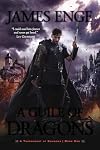
High Fantasy often faces the criticism that it is a poor reflection of the works that have gone before it, most notably Tolkien. By employing the same basic mythos with a highly Western European (and generally, British) composition, many chide that too much of fantasy falls into this trap and needs to be refreshed with something edgier, or something more original. The end result is generally a poor facsimile that inevitably fails to shine in comparison.
"A Guile of Dragons" is not some mere show more copy.
Yes, it employs many of the elements that we might quickly label a High Fantasy trope - dwarves, dragons, ancient terrors, and the name Merlin (or at least his son, Morlock). Its important to remember that it is not what elements a writer uses, but how they use them, that brings distinction. Enge does not treat these elements lightly - the history and culture of the dwarves alone are an integral part of this story, hinting at a depth we never see a bottom to. The shortness of the work (@300 pages) is belied by the depth and fullness of the characters that populate it. These are thick characters, populating the pages not because they fill a need but because it is their story to tell.
Set as a prequel for Enge's character, Ambrosius, aka Morlock syr Theorn, "A Guile of Dragons" introduces us to a small cast of recurring characters, each of whom demonstrates a depth and fullness usually reserved for the titular character. Not having read the other books in this milieu proved to not be a problem - as a prequel, it is a well contained volume, beginning with the birth of Morlock, son of Merlin, and the circumstances that place young Morlock in the care of the dwarves of Thrymhaiam to the north. This is also the story of Morlock's first real adventure (other feats are alluded to, but nothing so grand), following a metre and pace that is reminiscent of a classic saga even when the story telling is modern.
For in the Northold, the dwarves find themselves cut off from the Graith of Guardians as a guile of dragons invades, reigniting the Longest War from before the dawn of history. Morlock, a thaen of the Graith, adopted son of the dwarves, trapped between both worlds, faces the failings of each as he is thrust into battling the dragons themselves.
Enge, who's unsecret real world identity is a classics professor, demonstrates that a writer is influenced by the books and life you lead. "A Guile of Dragons" is a worthy epic for any fantasy reader, containing a surprising depth and fullness that is rarely found in so short a book. I cannot say more about this book without spoiling it, so I will just say that I wholly and heartily recommend that it be read. show less
"A Guile of Dragons" is not some mere show more copy.
Yes, it employs many of the elements that we might quickly label a High Fantasy trope - dwarves, dragons, ancient terrors, and the name Merlin (or at least his son, Morlock). Its important to remember that it is not what elements a writer uses, but how they use them, that brings distinction. Enge does not treat these elements lightly - the history and culture of the dwarves alone are an integral part of this story, hinting at a depth we never see a bottom to. The shortness of the work (@300 pages) is belied by the depth and fullness of the characters that populate it. These are thick characters, populating the pages not because they fill a need but because it is their story to tell.
Set as a prequel for Enge's character, Ambrosius, aka Morlock syr Theorn, "A Guile of Dragons" introduces us to a small cast of recurring characters, each of whom demonstrates a depth and fullness usually reserved for the titular character. Not having read the other books in this milieu proved to not be a problem - as a prequel, it is a well contained volume, beginning with the birth of Morlock, son of Merlin, and the circumstances that place young Morlock in the care of the dwarves of Thrymhaiam to the north. This is also the story of Morlock's first real adventure (other feats are alluded to, but nothing so grand), following a metre and pace that is reminiscent of a classic saga even when the story telling is modern.
For in the Northold, the dwarves find themselves cut off from the Graith of Guardians as a guile of dragons invades, reigniting the Longest War from before the dawn of history. Morlock, a thaen of the Graith, adopted son of the dwarves, trapped between both worlds, faces the failings of each as he is thrust into battling the dragons themselves.
Enge, who's unsecret real world identity is a classics professor, demonstrates that a writer is influenced by the books and life you lead. "A Guile of Dragons" is a worthy epic for any fantasy reader, containing a surprising depth and fullness that is rarely found in so short a book. I cannot say more about this book without spoiling it, so I will just say that I wholly and heartily recommend that it be read. show less
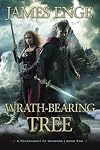
Readers of Ovid looking for something with a little more sex and magic would do well to dwell in these pages. Like A Guile of Dragons, Wrath-Bearing Tree is a book whose mood implies it is best savored on a stormy summer afternoon, or from the comfort of a stuffed chair on a cold and bleak autumn night.
Continuing the early adventures of Morlock Ambrosius, Wrath-Bearing Tree begins by giving us a taste of life in the kingdom of Kaen and how easy it is for one of the many city gods of this show more continent to be replaced by an usurper. It stands to reason, then, that when Morlock is thrust into the middle of this, his only way out is to kill a god and return home to the Graith.
But no sooner is he home than he is sent back to Kaen. Something more is going on on that scary continent, and more information is needed about the Two Powers, believed to be behind the fall of many of the city gods of Kaen recently. While readers of A Guile of Dragons will remember the role of the Two Powers in the return of the dragons, this second volume was still approachable as a stand alone novel. Before the novel ends, Morlock and his companion will face warring gods, living machines that grant apotheosis, and a wintry father figure named Merlin driving a sleigh led by eight tiny demons.
Morlock and his companion's journey reads like a medieval travelogue, cataloging the strange customs and unusual creatures and beliefs found along the way. I enjoyed the book, though it was a bit more graphic (NSFW) than expected. Enge again delivers a well written story set in a mythos that is so familiar to us, painted with the elements that have defined the landscape of fantastical stories for centuries, and yet delivered in a fresh and entertaining story. show less
Continuing the early adventures of Morlock Ambrosius, Wrath-Bearing Tree begins by giving us a taste of life in the kingdom of Kaen and how easy it is for one of the many city gods of this show more continent to be replaced by an usurper. It stands to reason, then, that when Morlock is thrust into the middle of this, his only way out is to kill a god and return home to the Graith.
But no sooner is he home than he is sent back to Kaen. Something more is going on on that scary continent, and more information is needed about the Two Powers, believed to be behind the fall of many of the city gods of Kaen recently. While readers of A Guile of Dragons will remember the role of the Two Powers in the return of the dragons, this second volume was still approachable as a stand alone novel. Before the novel ends, Morlock and his companion will face warring gods, living machines that grant apotheosis, and a wintry father figure named Merlin driving a sleigh led by eight tiny demons.
Morlock and his companion's journey reads like a medieval travelogue, cataloging the strange customs and unusual creatures and beliefs found along the way. I enjoyed the book, though it was a bit more graphic (NSFW) than expected. Enge again delivers a well written story set in a mythos that is so familiar to us, painted with the elements that have defined the landscape of fantastical stories for centuries, and yet delivered in a fresh and entertaining story. show less
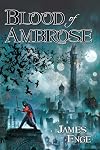
Blood of Ambrose is an enjoyable different sword-and-sorcery novel - a bit of a throwback in many ways. Enge has created an interesting cast of characters and a narrative with a nice pace to it.I'm looking forward to further entries in the series.
The King of Ambrose has always relied on help from the semi-mortal Ambrosius siblings - powerful wizards with a swarm of legends trailing them. Just as well, as the young King as been usurped, and he will need every ounce of creativity his "uncle" show more and "aunty" can bring to regain, and retain, his throne.
I enjoyed this novel. Enge is one of a growing number of fantasy writers writers, not outside genre per se, but certainly distinct from the prevailing trends. The antecedents of Blood of Ambrose are earlier fantasy novels. There's a kind of humour and Vance-ian touch to proceedings, and also a clear debt to Fritz Leiber.
As it happens, I love those older authors and their style of fantasy, so I felt right at home with Blood of Ambrose. This was Enge's first novel, and there are a few rough corners (the prose gets a little unfinished at times), but there's a solid base underneath it all.
That base is the characterisation. The Ambrose siblings, Morlock and Ambrosia, are well-drawn, interesting, and call back to a very rich history during the course of this book. Enge is happy to keep some cards off the table, and it makes for a complexity and ambiguity that really bodes well for the future books in the series.
Morlock in particular, is a tortured, and flawed figure who is always compelling. Enge resist silly hyperbole when it comes to these flaws - something a lot of fantasy writers succumb to, and it keeps the character fresh and his responses unpredictable.
A great start for a debut novel and first in a series. I'll definitely read more. show less
The King of Ambrose has always relied on help from the semi-mortal Ambrosius siblings - powerful wizards with a swarm of legends trailing them. Just as well, as the young King as been usurped, and he will need every ounce of creativity his "uncle" show more and "aunty" can bring to regain, and retain, his throne.
I enjoyed this novel. Enge is one of a growing number of fantasy writers writers, not outside genre per se, but certainly distinct from the prevailing trends. The antecedents of Blood of Ambrose are earlier fantasy novels. There's a kind of humour and Vance-ian touch to proceedings, and also a clear debt to Fritz Leiber.
As it happens, I love those older authors and their style of fantasy, so I felt right at home with Blood of Ambrose. This was Enge's first novel, and there are a few rough corners (the prose gets a little unfinished at times), but there's a solid base underneath it all.
That base is the characterisation. The Ambrose siblings, Morlock and Ambrosia, are well-drawn, interesting, and call back to a very rich history during the course of this book. Enge is happy to keep some cards off the table, and it makes for a complexity and ambiguity that really bodes well for the future books in the series.
Morlock in particular, is a tortured, and flawed figure who is always compelling. Enge resist silly hyperbole when it comes to these flaws - something a lot of fantasy writers succumb to, and it keeps the character fresh and his responses unpredictable.
A great start for a debut novel and first in a series. I'll definitely read more. show less
Awards


You May Also Like


Associated Authors
Statistics
- Works
- 37
- Also by
- 24
- Members
- 760
- Popularity
- #33,469
- Rating
- 3.8
- Reviews
- 19
- ISBNs
- 21
- Languages
- 1
- Favorited
- 1