
Ivan Vladislavić
Author of Portrait with Keys: The City of Johannesburg Unlocked
About the Author
Image credit: foto: Minky Schlesinger
Works by Ivan Vladislavić
Associated Works
Tagged
Common Knowledge
- Canonical name
- Vladislavić, Ivan
- Birthdate
- 1957
- Gender
- male
- Occupations
- novelist
short story writer
editor - Awards and honors
- Windham–Campbell Literature Prize (2015)
- Nationality
- South Africa
- Birthplace
- Pretoria, South Africa
- Places of residence
- Johannesburg, South Africa
- Associated Place (for map)
- South Africa
Members
Reviews

According to the dictionary, an exploded view is an illustration or diagram of a construction that shows its parts separately but in positions that indicate their proper relationships to the whole. It's the perfect title for this short novel in that it is comprised of four stories that illustrate components of South African society close up and in relation to each other. It begins with a census taker who is gathering input on a new batch of demographic questions. He is a person who thinks in show more statistics and is able to view his own actions from a remove. He becomes infatuated with a woman who lives in Villa Toscana, a faux Italian enclave, down the highway from a new housing project.
A sanitation engineer who is working on the new housing project has been invited to dinner by his boss. He worries about whether to bring a gift, what to wear, and is surprised to find two community liaisons and an unintroduced man at the dinner as well. He is the only white person at the table, and when the conversation lapses into Sotho and Zulu he is left out, leaving him to wonder if there is more going on than meets the eye.
He could already see himself looking back on it {the dinner}, from a tremendous distance, and understanding, at last, what it was all about. He wished he was there now, at that reassuring remove, on a height, filled with the wisdom of hindsight.
The restaurant where they are eating is decorated with dozens of African masks, the work of the artist S. Majara, who is hosting a party after the closing of his show called Curiouser or curio user. He had bought several cartons of masks, probably stolen, and repurposed them for his art. One party goer challenges him that the Africans who made the masks were paid peanuts, yet he is being paid outrageous sums for his art.
'...But I can't help being aware of the balance of power, the imbalance, one should say. The way you live here, the way the people who made these masks live.'
'And you, poor thing, sleeping on a bench at the station.'
'Oh, I'm talking about myself too, you mustn't take it personally. It's just a question of awareness, of being conscious and staying conscious of how things are, even if you can't change them. Especially then.'
Later, the artist thinks,
Where had Leon picked up this girl Amy? He knew the type. They drove to their televised protests in their snappy little cars, they took their djembe drums on board as hand luggage, they gazed upon exploitation and oppression through their Police sunglasses. And all along they demonstrated that there was nothing to be done. Their radicalism consisted in making manifest the impossibility of change.
Our fourth and final protagonist runs a business putting up billboards. He's on his way home from installing one in the new housing project, when he realizes that he's forgotten his phone, probably dropped at the work site. He turns back and meets the minibus that the census taker had passed in the first story.
The interconnectedness of these seemingly random strangers is similar to the way components of an exploded view seem complete unto themselves, but are parts of a larger whole. Race, class, and education level seem to divide these characters, yet they are entwined in a larger, complicated societal whole. Although the story is set post-apartheid, racism and de facto segregation are realities acknowledged by everyone. Although all the characters are besmirched by the system, I found myself drawn to them and their petty struggles. Although not a cheerful book, I was comforted by the common humanness of their situations.
This is the second book by Vladislavić that I've read, and it's very different from [The Folly], which has a fantastical or allegorical element. But I found both books thought-provoking and well-written, and although I finished both with more questions than answers, I enjoyed pondering those questions. show less
A sanitation engineer who is working on the new housing project has been invited to dinner by his boss. He worries about whether to bring a gift, what to wear, and is surprised to find two community liaisons and an unintroduced man at the dinner as well. He is the only white person at the table, and when the conversation lapses into Sotho and Zulu he is left out, leaving him to wonder if there is more going on than meets the eye.
He could already see himself looking back on it {the dinner}, from a tremendous distance, and understanding, at last, what it was all about. He wished he was there now, at that reassuring remove, on a height, filled with the wisdom of hindsight.
The restaurant where they are eating is decorated with dozens of African masks, the work of the artist S. Majara, who is hosting a party after the closing of his show called Curiouser or curio user. He had bought several cartons of masks, probably stolen, and repurposed them for his art. One party goer challenges him that the Africans who made the masks were paid peanuts, yet he is being paid outrageous sums for his art.
'...But I can't help being aware of the balance of power, the imbalance, one should say. The way you live here, the way the people who made these masks live.'
'And you, poor thing, sleeping on a bench at the station.'
'Oh, I'm talking about myself too, you mustn't take it personally. It's just a question of awareness, of being conscious and staying conscious of how things are, even if you can't change them. Especially then.'
Later, the artist thinks,
Where had Leon picked up this girl Amy? He knew the type. They drove to their televised protests in their snappy little cars, they took their djembe drums on board as hand luggage, they gazed upon exploitation and oppression through their Police sunglasses. And all along they demonstrated that there was nothing to be done. Their radicalism consisted in making manifest the impossibility of change.
Our fourth and final protagonist runs a business putting up billboards. He's on his way home from installing one in the new housing project, when he realizes that he's forgotten his phone, probably dropped at the work site. He turns back and meets the minibus that the census taker had passed in the first story.
The interconnectedness of these seemingly random strangers is similar to the way components of an exploded view seem complete unto themselves, but are parts of a larger whole. Race, class, and education level seem to divide these characters, yet they are entwined in a larger, complicated societal whole. Although the story is set post-apartheid, racism and de facto segregation are realities acknowledged by everyone. Although all the characters are besmirched by the system, I found myself drawn to them and their petty struggles. Although not a cheerful book, I was comforted by the common humanness of their situations.
This is the second book by Vladislavić that I've read, and it's very different from [The Folly], which has a fantastical or allegorical element. But I found both books thought-provoking and well-written, and although I finished both with more questions than answers, I enjoyed pondering those questions. show less

One evening a man carrying a fake leather portmanteau gets out of a taxi in front of a vacant lot next to the Malgas′ home. He is odd, scurrying around the lot picking up trash and making things out of it, camping in the corner by the hedges, and never seeming to leave. Mrs. Malgas is suspicious and keeps an eye on him out the window and wonders if she should call the police. Mr. Malgas, however, is intrigued and soon approaches him. The man introduces himself as ″Father,″ although show more later he says his name is Nieuwenhuizen. He is there to take ownership of the lot and build a house. Mr. Malgas is excited at the prospect and offers to help. As time goes by, and the plans for the house never materialize, Mr. Malgas must imagine the house in order to remain friends with his neighbor. As the imaginary house becomes more real, Mr. Malgas begins to become less so.
Parable, fable, allegory? It′s hard to say exactly what this book is, but it is well-written and funny, with thought-provoking threads. But like the strings outlining the foundation of the planned house, they seem to meander into a tangled dead-end heap. I was following a line I thought was a religious allegory, but in the end was left staring at an amorphous cat′s cradle. Was Father God and Malgas his disciple? Were they building His church not on a rock, but an anthill? Or was this a cautionary tale about totalitarian state plans, being forced to ″see″ what you are told to, and then being left with nothing when the plan changes? The genius in this book lies not in what is written, but in what must be conjectured. Do we as readers buy into the premise, or do we remain with Mrs. Malgas on the outside looking in?
The writing is very clever and humorous. Things are described like punctuation marks, lists of objects reflect personality, and words beginning with C seem to be important, but are they? The first sentence and the last are nearly the same; what do the differences mean? I would love to be reading this with others, as the possibilities for discussion are endless. Recommended for those who liked [The Investigation] by Philippe Claudel or perhaps Paul Auster′s [Travels in the Scriptorium]. show less
Parable, fable, allegory? It′s hard to say exactly what this book is, but it is well-written and funny, with thought-provoking threads. But like the strings outlining the foundation of the planned house, they seem to meander into a tangled dead-end heap. I was following a line I thought was a religious allegory, but in the end was left staring at an amorphous cat′s cradle. Was Father God and Malgas his disciple? Were they building His church not on a rock, but an anthill? Or was this a cautionary tale about totalitarian state plans, being forced to ″see″ what you are told to, and then being left with nothing when the plan changes? The genius in this book lies not in what is written, but in what must be conjectured. Do we as readers buy into the premise, or do we remain with Mrs. Malgas on the outside looking in?
The writing is very clever and humorous. Things are described like punctuation marks, lists of objects reflect personality, and words beginning with C seem to be important, but are they? The first sentence and the last are nearly the same; what do the differences mean? I would love to be reading this with others, as the possibilities for discussion are endless. Recommended for those who liked [The Investigation] by Philippe Claudel or perhaps Paul Auster′s [Travels in the Scriptorium]. show less
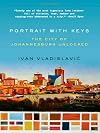
Ivan Vladislavic’s Portrait with Keys is all once beautiful, sad, infuriating, marvelous, and quiet. This is a book of fragments – pieces of a city – which are inspected, sometimes connected to other parts. But there are many areas that are unreachable, locked behind doors, walls, and gates that only open for the right people. Each of the 138 pieces are indeed a portrait of a city, but only the parts that Vladislavic has access to. Through the book, there is a theme of history and art show more being created and destroyed that haunts the writing. I encourage anyone with a free afternoon to read this one. show less

This is probably the perfect lockdown travel book: not only is it constantly playing around with ideas about locks, keys, fences and guards, it is also almost entirely focussed on a suburban area within a block or two of the narrator's house.
In 138 numbered, short pieces — which rather endearingly turn out to occupy 183 pages — Vladislavić jumps around, apparently randomly, between encounters with beggars and street vendors, crime reports, notes about art exhibitions, thoughts on show more writers from Elias Canetti to Herman Charles Bosman, close observation of the way the very ordinary buildings, gardens, pavements, signs, graffiti, and street furniture around him reflect the short and complicated history of the city, and extracts from an essay on the semiotics of the steering-wheel lock.
The pieces seem to be arranged in simple chronological order of writing, irrespective of their subject, but there's an appendix in which Vladislavić proposes to us a number of thematic "walking tours" of different lengths and difficulties we can take through the literary model of a city he's created. Kind of a cross between Lonely Planet and Hopscotch.
The kind of engaging, enquiring writing that spots something interesting under the most ordinary and prosaic detail. Great fun. show less
In 138 numbered, short pieces — which rather endearingly turn out to occupy 183 pages — Vladislavić jumps around, apparently randomly, between encounters with beggars and street vendors, crime reports, notes about art exhibitions, thoughts on show more writers from Elias Canetti to Herman Charles Bosman, close observation of the way the very ordinary buildings, gardens, pavements, signs, graffiti, and street furniture around him reflect the short and complicated history of the city, and extracts from an essay on the semiotics of the steering-wheel lock.
The pieces seem to be arranged in simple chronological order of writing, irrespective of their subject, but there's an appendix in which Vladislavić proposes to us a number of thematic "walking tours" of different lengths and difficulties we can take through the literary model of a city he's created. Kind of a cross between Lonely Planet and Hopscotch.
The kind of engaging, enquiring writing that spots something interesting under the most ordinary and prosaic detail. Great fun. show less
Lists
Awards


You May Also Like


Associated Authors
Statistics
- Works
- 21
- Also by
- 5
- Members
- 661
- Popularity
- #38,153
- Rating
- 3.8
- Reviews
- 20
- ISBNs
- 66
- Languages
- 6
- Favorited
- 2