
Gerald Bray
Author of Romans (Ancient Christian Commentary on Scripture)
About the Author
Gerald L. Bray is Research Professor of Divinity at Beeson Divinity School of Samford University (Birmingham, Alabama). He is the author of numerous books including God Is Love. God Has Spoken, and Biblical Interpretation: Past and Present.
Series
Works by Gerald Bray
James, 1-2 Peter, 1-3 John, Jude (Ancient Christian Commentary on Scripture: New Testament, Volume XI) (2000) — Editor — 569 copies
Commentaries on Romans and 1-2 Corinthians (Ancient Christian Texts) (2009) — Editor — 88 copies, 2 reviews
Holiness and the will of God: Perspectives on the theology of Tertullian (New foundations theological library) (1979) 38 copies
The History of Christianity in Britain and Ireland: From the First Century to the Twenty-First (2021) 32 copies, 1 review
Tudor church reform : the Henrician canons of 1535 and the Reformatio legum ecclesiasticarum (2000) — Editor — 22 copies
The Pastoral Epistles: An International Theological Commentary (T&T Clark International Theological Commentary) (2019) 13 copies
Reading the Bible With Ten Church Fathers: How to Interpret, Teach, and Preach Like the Early Christians (2026) 11 copies, 1 review
The Church's One Foundation: What Orthodoxy Is and Why It Matters (Latimer Briefings) (2024) 4 copies
Dios ha hablado - Vol. 1: Una Historia de la Teologia Cristiana (Fundamentos para la interpretación historica) (Spanish Edition) (2023) 2 copies
A Doutrina de Deus 2 copies
BI352 History of Biblical Interpretation II: Seventeenth Century through the Present (Videos) 1 copy
BI351 History of Biblical Interpretation I: Second Temple Judaism through the Reformation (Videos) 1 copy
História da Teologia Cristã 1 copy
Romans, edited by Gerald Bray — Editor — 1 copy
Los atributos de Dios 1 copy
The Kingdom and Eschatology 1 copy
La fe que confesamos (Spanish Edition): Explicación de los Treinta y Nueve Artículos (Fundamentos Anglicanos) (2017) 1 copy
Gerald Bray / Ancient Christian Commentary on Scripture New Testament XI (James, Peter, John, Jude) (2000) 1 copy
Sin in Historical Theology 1 copy
Teu é o reino 1 copy
Quem é Jesus? Principais Acontecimentos da Sua Vida da Preexistência a Segunda Vinda (Em Portuguese do Brasil) (2008) 1 copy
Records of Convocation XVIII: Ireland, 1690-1869, Part 2: Lower House: 1703-13; Both Houses: 1714-1869 (2006) 1 copy
Associated Works
Dictionary for Theological Interpretation of the Bible (2005) — Contributor, some editions — 602 copies, 5 reviews
John Calvin and His Passion for the Majesty of God (2008) — Foreword, some editions — 330 copies, 5 reviews
The Trials of Theology: Becoming a 'Proven Worker' in a Dangerous Business (2010) — Contributor — 199 copies, 2 reviews
The Trinity in a Pluralistic Age: Theological Essays on Culture and Religion (1996) — Contributor — 92 copies, 1 review
Evangelicals and the Early Church: Recovery, Reform, Renewal (Wheaton Center for Early Christian Studies) (2011) — Contributor — 12 copies
Tagged
Common Knowledge
- Birthdate
- 1948-11-16
- Gender
- male
- Occupations
- Seminary professor
theologian
Church historian - Nationality
- England
UK - Places of residence
- Birmingham, Alabama, USA
- Associated Place (for map)
- Birmingham, Alabama, USA
Members
Reviews
The History of Christianity in Britain and Ireland: From the First Century to the Twenty-First by Gerald Bray
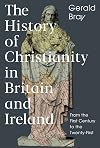
We are indebted to Dr Bray for this possibly unique attempt at giving a complete history of Christianity in these islands, all the way from a point somewhere in the second century down to the present day. As he admits, it is a daunting task but he does it very well.
We all know parts of the story – the Reformation, the rise of Methodism, life since 1980, etc. – but most of us do not know all of the story and often we do not know how one part follows on from another. Dr Bray does, and he show more takes us through the main parts of the story, step by step, with consummate skill.
We begin with the early history and are soon on to the Celtic church, Augustine’s arrival, Anselm of Canterbury, Thomas Becket, Wyclif, Cranmer, the Puritans, the Westminster Assembly, dissent, etc. His determination to cover the history of all four nations is to be commended but that is no easy task and goes a long way to showing that the history of Christianity in Ireland is just as complicated as one always thought. To describe Wales as a backwater and to deny the very existence of the Scots language is probably unwise, whether he is right or not.
One enjoyed some of the etymological notes (e.g., sinecure, Dingwall, church ales, etc.), the very occasional displays of humour and the judicious use of poetry and hymns. I was amazed to learn that rural deaneries began in Norman times. Bray’s explanation of the origin of Sabbatarianism, “a peculiarly British phenomenon” (265) is controversial, to say the least.
Some statements will come as a surprise to some. For example, we are told that the piety of Alfred the Great has been exaggerated by his admirers (48) and that Wyclif is unlikely to have done any Bible translation himself (136).
The scholarship in this volume is immense but the narrative mostly rattles along at a good pace, although there are inevitably some dull moments too. Strictly speaking, we have to say that this is an Anglican history; few opportunities are missed to downplay whatever is not of that ilk. Hence, we are told, contentiously, the number involved in the Great Ejection of 1662 was likely to have been half the figure of 2000 so often quoted. William Carey was not the big deal in missionary work that some of us thought and as for people like Matthew Henry or Andrew Fuller, they merit not even a mention. On the plus side, Bunyan and Spurgeon receive due attention.
Inevitably, just as Homer nodded so there are slips. For example, to say that the 1859 revival in Wales mainly affected the Welsh speaking areas is rather redundant as at that time that was most of Wales. Whoever told Mr Bray that Dr Martyn Lloyd-Jones’ first name was Dafydd misled him; it was David.
The Protestant Truth Society will be disappointed to learn (517) that almost nothing has been heard from (or about) them since 1982. Members of FIEC churches will similarly be interested to learn (582) that the FIEC has “made no impression outside its own very limited circles”.
The book, on the whole, is a sterling piece of work, well worth obtaining to read through or to use for reference, something facilitated by the clear contents page and the two-part index. There are 27 pages of bibliography covering primary and secondary sources too and it contains 12 statistical tables of variable usefulness. Some illustrations and maps may have further enhanced an already handsome tome. show less
We all know parts of the story – the Reformation, the rise of Methodism, life since 1980, etc. – but most of us do not know all of the story and often we do not know how one part follows on from another. Dr Bray does, and he show more takes us through the main parts of the story, step by step, with consummate skill.
We begin with the early history and are soon on to the Celtic church, Augustine’s arrival, Anselm of Canterbury, Thomas Becket, Wyclif, Cranmer, the Puritans, the Westminster Assembly, dissent, etc. His determination to cover the history of all four nations is to be commended but that is no easy task and goes a long way to showing that the history of Christianity in Ireland is just as complicated as one always thought. To describe Wales as a backwater and to deny the very existence of the Scots language is probably unwise, whether he is right or not.
One enjoyed some of the etymological notes (e.g., sinecure, Dingwall, church ales, etc.), the very occasional displays of humour and the judicious use of poetry and hymns. I was amazed to learn that rural deaneries began in Norman times. Bray’s explanation of the origin of Sabbatarianism, “a peculiarly British phenomenon” (265) is controversial, to say the least.
Some statements will come as a surprise to some. For example, we are told that the piety of Alfred the Great has been exaggerated by his admirers (48) and that Wyclif is unlikely to have done any Bible translation himself (136).
The scholarship in this volume is immense but the narrative mostly rattles along at a good pace, although there are inevitably some dull moments too. Strictly speaking, we have to say that this is an Anglican history; few opportunities are missed to downplay whatever is not of that ilk. Hence, we are told, contentiously, the number involved in the Great Ejection of 1662 was likely to have been half the figure of 2000 so often quoted. William Carey was not the big deal in missionary work that some of us thought and as for people like Matthew Henry or Andrew Fuller, they merit not even a mention. On the plus side, Bunyan and Spurgeon receive due attention.
Inevitably, just as Homer nodded so there are slips. For example, to say that the 1859 revival in Wales mainly affected the Welsh speaking areas is rather redundant as at that time that was most of Wales. Whoever told Mr Bray that Dr Martyn Lloyd-Jones’ first name was Dafydd misled him; it was David.
The Protestant Truth Society will be disappointed to learn (517) that almost nothing has been heard from (or about) them since 1982. Members of FIEC churches will similarly be interested to learn (582) that the FIEC has “made no impression outside its own very limited circles”.
The book, on the whole, is a sterling piece of work, well worth obtaining to read through or to use for reference, something facilitated by the clear contents page and the two-part index. There are 27 pages of bibliography covering primary and secondary sources too and it contains 12 statistical tables of variable usefulness. Some illustrations and maps may have further enhanced an already handsome tome. show less
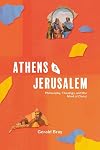
Summary: An in-depth survey of the parallel histories of philosophical tradition and Christian theology and their interactions.
I should lead off by saying that this book turned out to be something different than I’d expected. Instead of a critical analysis of the influences of philosophy on Christianity, this turn out to be more of a historical survey of both traditions, their differing perspectives, and interactions. That said, the survey offered by Bray is a highly readable one spanning show more the time from Socrates, Plato, and Aristotle down to the present.
Bray accomplishes that by a chronological history that begins first in Athens and the rise of the Greek philosophers followed by a history of Jerusalem and the Abrahamic faith of the Jews. Then Bray traces the intersection of both Jews and Christians with the Greek philosophers, first in Alexandria, and then with Origin. Following this, Bray describes the period from 313 to late medieval times as Jerusalem triumphant. Theological controversy demanded the systematic rigor of philosophy to clarify matters of doctrine. The high point of harmonizing philosophy and theology came with Thomas Aquinas.
The rediscovery of philosophical works in the Renaissance resulted in the rise of Neoplatonism and an increasing focus on human reason. For Protestants, Hobbes and Locke offered a kind of creed for civil society that opened the way for the secular, separated state. The longest chapter in the work treats the thinkers of the Enlightenment with its focus on rationalism. Often, this resulted in challenging Christian theological conviction. Some of examples of this are found in the works of Rousseau, Voltaire, Hegel, Marx, and Darwin. In addition, philosophers like Jeremy Bentham and john Stuart Mill promoted a pragmatic secularism.
So, we finally arrive at the present. Both biological and cosmological discoveries have led to a renewed openness of some to theism. In addition, Bray notes metaphysical premises that parallel theological convictions including an orderly and rational universe and the human ability to understand it, contingency, and more. However Bray seems more cautious than some when it comes to reconciling the two. He notes a basic difference of perspective. Theology begins with and focuses on God. Philosophy begins with human reason and lacks a fixed point of reference. He’s not without hope however and notes the work of Christians in philosophy.
What Bray offers is a highly readable yet in-depth survey of the history of the interaction of Christianity and philosophy. Summaries at the end of each chapter distill the main points of his survey yet further. We don’t get an in-depth critical analysis of the church councils and how philosophical considerations played into the debates and formulations. Nor do we study the synthesis of philosophy and theology in Aquinas and subsequent Catholic tradition. Some may also object to his summary treatment of philosophers.
What I would suggest is that this is a great first work to read, overviewing the landscape of the history. Of course, the interested student will want to zoom in on particular periods and people. It would have been helpful to have more in-depth bibliographies for each chapter rather than the brief “For Further Reading” at the conclusion. However, any student who has learned basic research methods can figure this out. This also makes a good reference work for pastors who need historical context if discussing a particular philosopher.
_______________________
Disclosure of Material Connection: I received a complimentary copy of this book from the publisher for review. show less
I should lead off by saying that this book turned out to be something different than I’d expected. Instead of a critical analysis of the influences of philosophy on Christianity, this turn out to be more of a historical survey of both traditions, their differing perspectives, and interactions. That said, the survey offered by Bray is a highly readable one spanning show more the time from Socrates, Plato, and Aristotle down to the present.
Bray accomplishes that by a chronological history that begins first in Athens and the rise of the Greek philosophers followed by a history of Jerusalem and the Abrahamic faith of the Jews. Then Bray traces the intersection of both Jews and Christians with the Greek philosophers, first in Alexandria, and then with Origin. Following this, Bray describes the period from 313 to late medieval times as Jerusalem triumphant. Theological controversy demanded the systematic rigor of philosophy to clarify matters of doctrine. The high point of harmonizing philosophy and theology came with Thomas Aquinas.
The rediscovery of philosophical works in the Renaissance resulted in the rise of Neoplatonism and an increasing focus on human reason. For Protestants, Hobbes and Locke offered a kind of creed for civil society that opened the way for the secular, separated state. The longest chapter in the work treats the thinkers of the Enlightenment with its focus on rationalism. Often, this resulted in challenging Christian theological conviction. Some of examples of this are found in the works of Rousseau, Voltaire, Hegel, Marx, and Darwin. In addition, philosophers like Jeremy Bentham and john Stuart Mill promoted a pragmatic secularism.
So, we finally arrive at the present. Both biological and cosmological discoveries have led to a renewed openness of some to theism. In addition, Bray notes metaphysical premises that parallel theological convictions including an orderly and rational universe and the human ability to understand it, contingency, and more. However Bray seems more cautious than some when it comes to reconciling the two. He notes a basic difference of perspective. Theology begins with and focuses on God. Philosophy begins with human reason and lacks a fixed point of reference. He’s not without hope however and notes the work of Christians in philosophy.
What Bray offers is a highly readable yet in-depth survey of the history of the interaction of Christianity and philosophy. Summaries at the end of each chapter distill the main points of his survey yet further. We don’t get an in-depth critical analysis of the church councils and how philosophical considerations played into the debates and formulations. Nor do we study the synthesis of philosophy and theology in Aquinas and subsequent Catholic tradition. Some may also object to his summary treatment of philosophers.
What I would suggest is that this is a great first work to read, overviewing the landscape of the history. Of course, the interested student will want to zoom in on particular periods and people. It would have been helpful to have more in-depth bibliographies for each chapter rather than the brief “For Further Reading” at the conclusion. However, any student who has learned basic research methods can figure this out. This also makes a good reference work for pastors who need historical context if discussing a particular philosopher.
_______________________
Disclosure of Material Connection: I received a complimentary copy of this book from the publisher for review. show less
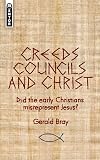
This book was originally published in 1984, and I'm very glad that Christian Focus has reprinted it.
It is a wonderful presentation of and argument for the appreciation of the development of the fundamental doctrines that are rightly called orthodoxy. In a detailed survey over 7 chapters it is at once history, theology and critique. It is full of detail, but not in any way bloated. It is erudite but not showy. I'd see it as a book a first year student should read, but clearly he is writing show more for a present church in need of getting its historical and theological bearings - so the audience is anyone with a role in teaching, and many more besides. The loss in much of the church of a commitment to doctrine that is not doctrinaire is perhaps so serious that only the godly display of the fruit of knowing God in such a deeply informed way as Bray presents is antidote.
Those looking for an introduction to the first 6 or so centuries will be greatly assisted. From the developments of this period, Bray argues for the place of theology in the life of the church, describes its connection to the Bible texts themselves, explains the interactions between expanding Christianity and the world which it encountered and evangelised, examines the development of the creeds under the heading of the Rule of Faith (a term now rarely heard, sadly), portrays the rapidly changing political scene and its significance for Christian faith and thought, charts the movement from theology to Christology and concludes with a loving exposition of the thought behind what we know as the Athanasian Creed. The last chapter seeks to join the dots from the early period to ours, making a suggestion or two for how the light of that past can illuminate the issues of our day.
The appendices are also valuable, containing critique of modern translations of the creeds as well as Greek and Latin texts of the key documents. Notes give short lists of further reading for each chapter.
It's a little like the TARDIS - bigger on the inside that its slim exterior would suggest - and good reading for any and every minister of the Gospel. show less
It is a wonderful presentation of and argument for the appreciation of the development of the fundamental doctrines that are rightly called orthodoxy. In a detailed survey over 7 chapters it is at once history, theology and critique. It is full of detail, but not in any way bloated. It is erudite but not showy. I'd see it as a book a first year student should read, but clearly he is writing show more for a present church in need of getting its historical and theological bearings - so the audience is anyone with a role in teaching, and many more besides. The loss in much of the church of a commitment to doctrine that is not doctrinaire is perhaps so serious that only the godly display of the fruit of knowing God in such a deeply informed way as Bray presents is antidote.
Those looking for an introduction to the first 6 or so centuries will be greatly assisted. From the developments of this period, Bray argues for the place of theology in the life of the church, describes its connection to the Bible texts themselves, explains the interactions between expanding Christianity and the world which it encountered and evangelised, examines the development of the creeds under the heading of the Rule of Faith (a term now rarely heard, sadly), portrays the rapidly changing political scene and its significance for Christian faith and thought, charts the movement from theology to Christology and concludes with a loving exposition of the thought behind what we know as the Athanasian Creed. The last chapter seeks to join the dots from the early period to ours, making a suggestion or two for how the light of that past can illuminate the issues of our day.
The appendices are also valuable, containing critique of modern translations of the creeds as well as Greek and Latin texts of the key documents. Notes give short lists of further reading for each chapter.
It's a little like the TARDIS - bigger on the inside that its slim exterior would suggest - and good reading for any and every minister of the Gospel. show less
Reading the Bible with Ten Church Fathers: How to Interpret, Teach, and Preach Like the Early Christians by Gerald Bray
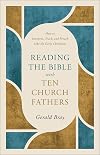
Summary: How the generations after the apostles interpreted and preached the Bible.
One of the things any growing Christian aspires to is to better read and understand the Bible. Gerald Bray believes that is one of the reasons why we should learn how the early church fathers read, understood and preached the Bible. We follow in the footsteps of two millenia of Christians and the ten church fathers profiled here were among the first. Not only that, what they understood and taught played a show more crucial role in the formation of the church’s understanding of key doctrines. They contributed, even in their disagreements, to clarifying what we believe about the Trinity and the person of Christ. And, yes, they differed. But even their differences helped shape the church’s interpretive practices.
In this readable account, theologian Gerald Bray offers a concise biography of each of the ten fathers, highlighting their works and how they read scripture, and what this means for us. For example:
Justin Martyr was an apologist to the Jews. He argued for the idea that all scripture pointed to Christ but that the Jews had failed to see this. His Dialogue with Trypho and how the two men concluded is a model of respectful dialogue.
Origen was the first to write commentaries and practice careful textual criticism. He set forth principles of interpretation and guarded against excessive spiritualization of the biblical text, yet used the literal sense as a basis for allegorizing scripture.
Gregory of Nyssa came from a family of theologians with older brother Basil and sister Macrina. He stressed God’s initiative through the Incarnate Word, Jesus, and the written word of scripture. He not only contributed to the formulation of God as one in nature and three hypostases. Gregory sets forth Abraham as the archetype of faith.
Ambrosiaster is a kind of “mystery man” among the church fathers. However, he left us with commentaries on Paul’s letters and a discussion of questions of interpretation of the whole Bible.
John Chrysostom was known for his preaching, eventually being elevated to patriarch of Constantinople before become embroiled in controversy and exiled. He sees scripture as God’s accommodation to the limits of human understanding. John described Old Testament prophets as sowers and the New Testament apostles as reapers. He believed salvation to be for all people and modeled diligent exposition of the whole of scripture.
Theodore of Mopsuestia was a friend of John Chrysostom. He was a monastic and scholar, writing commentaries on most of the Bible and rejecting fanciful allegorization for literal reading of the text. He got in trouble after his death for his views of the two hypostases of Christ.
Jerome is best known for his Latin translation of the Bible, known as the Vulgate, based on the Hebrew Masoretic text rather than the Septuagint. He was a model of careful translation that returned to the sources as well as an author of several commentaries.
Augustine, the Bishop of Hippo in north Africa models the work of a theologian grounded in the biblical text, confronting both the Donatist schism and Pelagianism.
Cyril of Alexandria met the challenge of Nestorianism over Christology. He read the Old Testament as history that pointed to Christ, a pioneer of typological reading. Cyril also modeled the theological interpretation of the New Testament, particularly the gospel of John. He was clear in proclaiming Jesus as God incarnate who, divine and human in one person, died for our salvation.
Theoderet of Cyrrhus was a disciple of Theodore of Mopsuestia, but models for us the willingness to be convinced by scripture that the ideas of Christology he received from Theodore were inadequate and that the Chalcedonian account was truer to the text of scripture.
This is a wonderfully concise introduction to the fathers, suitable for a class or personal study. Reflection questions help the reader discern the relevance of each father for today. They also recognize the timeless questions with which both they and we must wrestle. Each chapter also includes texts for further reading on each father.
Bray helps us realize the crucial role these fathers played in clarifying orthodox belief. Not only that, he helps us see how they grounded the defense of the faith in scripture carefully interpreted. Bray encourages us to give thanks for their lives, anticipating the day we will be in eternal communion with them at the table of the Lamb.
_______________________
Disclosure of Material Connection: I received a complimentary copy of this book from the publisher for review. show less
One of the things any growing Christian aspires to is to better read and understand the Bible. Gerald Bray believes that is one of the reasons why we should learn how the early church fathers read, understood and preached the Bible. We follow in the footsteps of two millenia of Christians and the ten church fathers profiled here were among the first. Not only that, what they understood and taught played a show more crucial role in the formation of the church’s understanding of key doctrines. They contributed, even in their disagreements, to clarifying what we believe about the Trinity and the person of Christ. And, yes, they differed. But even their differences helped shape the church’s interpretive practices.
In this readable account, theologian Gerald Bray offers a concise biography of each of the ten fathers, highlighting their works and how they read scripture, and what this means for us. For example:
Justin Martyr was an apologist to the Jews. He argued for the idea that all scripture pointed to Christ but that the Jews had failed to see this. His Dialogue with Trypho and how the two men concluded is a model of respectful dialogue.
Origen was the first to write commentaries and practice careful textual criticism. He set forth principles of interpretation and guarded against excessive spiritualization of the biblical text, yet used the literal sense as a basis for allegorizing scripture.
Gregory of Nyssa came from a family of theologians with older brother Basil and sister Macrina. He stressed God’s initiative through the Incarnate Word, Jesus, and the written word of scripture. He not only contributed to the formulation of God as one in nature and three hypostases. Gregory sets forth Abraham as the archetype of faith.
Ambrosiaster is a kind of “mystery man” among the church fathers. However, he left us with commentaries on Paul’s letters and a discussion of questions of interpretation of the whole Bible.
John Chrysostom was known for his preaching, eventually being elevated to patriarch of Constantinople before become embroiled in controversy and exiled. He sees scripture as God’s accommodation to the limits of human understanding. John described Old Testament prophets as sowers and the New Testament apostles as reapers. He believed salvation to be for all people and modeled diligent exposition of the whole of scripture.
Theodore of Mopsuestia was a friend of John Chrysostom. He was a monastic and scholar, writing commentaries on most of the Bible and rejecting fanciful allegorization for literal reading of the text. He got in trouble after his death for his views of the two hypostases of Christ.
Jerome is best known for his Latin translation of the Bible, known as the Vulgate, based on the Hebrew Masoretic text rather than the Septuagint. He was a model of careful translation that returned to the sources as well as an author of several commentaries.
Augustine, the Bishop of Hippo in north Africa models the work of a theologian grounded in the biblical text, confronting both the Donatist schism and Pelagianism.
Cyril of Alexandria met the challenge of Nestorianism over Christology. He read the Old Testament as history that pointed to Christ, a pioneer of typological reading. Cyril also modeled the theological interpretation of the New Testament, particularly the gospel of John. He was clear in proclaiming Jesus as God incarnate who, divine and human in one person, died for our salvation.
Theoderet of Cyrrhus was a disciple of Theodore of Mopsuestia, but models for us the willingness to be convinced by scripture that the ideas of Christology he received from Theodore were inadequate and that the Chalcedonian account was truer to the text of scripture.
This is a wonderfully concise introduction to the fathers, suitable for a class or personal study. Reflection questions help the reader discern the relevance of each father for today. They also recognize the timeless questions with which both they and we must wrestle. Each chapter also includes texts for further reading on each father.
Bray helps us realize the crucial role these fathers played in clarifying orthodox belief. Not only that, he helps us see how they grounded the defense of the faith in scripture carefully interpreted. Bray encourages us to give thanks for their lives, anticipating the day we will be in eternal communion with them at the table of the Lamb.
_______________________
Disclosure of Material Connection: I received a complimentary copy of this book from the publisher for review. show less
Awards

You May Also Like


Associated Authors
Statistics
- Works
- 146
- Also by
- 12
- Members
- 6,176
- Popularity
- #3,982
- Rating
- 4.0
- Reviews
- 13
- ISBNs
- 173
- Languages
- 4