
John William Drane
Author of Introducing the New Testament
About the Author
John Drane is an adjunct professor of New Testament and Practical Theology at Fuller Seminary, California.
Image credit: via Durham University
Series
Works by John William Drane
Paul: An Illustrated Documentary on the life and writings of a key figure in the beginnings of Christianity (1976) 102 copies, 1 review
After McDonaldization: Mission, Ministry, and Christian Discipleship in an Age of Uncertainty (2008) — Author — 53 copies, 1 review
Early Christians: Life in the First Years of the Church (An Illustrated Documentary) (1982) 49 copies
Paul, libertine or legalist? : a study in the theology of the major Pauline epistles (1975) 11 copies
Abenteuer Bibel 4. Der Mann, der die Welt veränderte. Das Leben des Jesus von Nazareth (1998) 3 copies
How Can I Understand the Bible?: A Way into the World's Best-Seller (Bible Answer Library) (2000) 3 copies
Paulo 2 copies
Abenteuer Bibel 5. Ein gefährlicher Auftrag. Das abenteuerliche Leben der ersten Christen (1998) 2 copies
El Antiguo Testamento: la fe 1 copy
Bibelens verden 1 copy
The bible fact or fantasy 1 copy
The Bible Phenomenon 1 copy
The Life of the Early Church 1 copy
Associated Works
Dictionary of Contemporary Religion in the Western World: Exploring Living Faiths on Postmodern Contexts (2002) — Editor — 107 copies, 1 review
Tagged
Common Knowledge
- Birthdate
- 1946-10-17
- Gender
- male
- Education
- University of Aberdeen (MA|1969)
University of Manchester (PhD|1972) - Organizations
- Studiorum Novi Testamenti Societas
- Birthplace
- Hartlepool, England, UK
- Places of residence
- Stirlingshire, Scotland, UK
- Associated Place (for map)
- UK
Members
Reviews
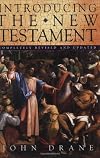
John Drane's Introducing the New Testament is impressive for what it is and isn't. Drane has managed to combine the readability of the more narrative New Testament Histories with the scholarly depth of an Introduction to the New Testament. And instead of ending up with the weakness of both, he merged their respective strengths. As a result, Introducing the New Testament is highly readable and very informative, even as to issues such as the Synoptic Problem and the dating and authorship of show more the Gospels and other New Testament documents.
As with a New Testament History, Drane opens up by providing background material on the broader world out of which Christianity grew, including the Greek heritage, the mystery religions, Judaism, and Palestine. He then narrates through Jesus' birth and early years, his ministry, his death, and the resurrection. There is an excellent side discussion on dating Jesus' birth.
In the next section, Drane spends more time exploring Jesus' precise message. The focus of the discussion is, appropriately, Jesus' declaration of the Kingdom of God. After this able discussion, Drane moves on to focusing on the four gospels themselves. I was impressed with the sophistication of many of his points regarding authorship, dating, and historicity. Though not presented with the footnotes and scholarly references that an Introduction would, it is obvious that Drane is conversant with a wide range of opinions and is writing from a high level of knowledge and understanding. One of the outstanding features of this section is his side discussion on "Identifying the authentic words of Jesus." Therein he identifies the main criteria of testing the historicity of Jesus's sayings, and identifies the problems and limitations with such an endeavor. According to Drane, the entire enterprise is premised on the problematic assumption that there was a high level of creativity in the early Church.
Drane next moves on to the spread of Christianity throughout the Roman world, including an excellent treatment of the dating of Acts. He also covers Paul the Apostle's activities, with solid discussions of each of his letters. There is a helpful discussion of the early church's recognition of the New Testament and first-rate discussions of the remaining books of the Bible (especially James and Hebrews).
Though the serious scholar may miss the footnotes and citations that commentaries and New Testament Introductions provide, the beauty of this book is that it delivers much the same sophistication and information of those works to the layperson. And it does so in an entertaining manner that does not get stale or tedious. show less
As with a New Testament History, Drane opens up by providing background material on the broader world out of which Christianity grew, including the Greek heritage, the mystery religions, Judaism, and Palestine. He then narrates through Jesus' birth and early years, his ministry, his death, and the resurrection. There is an excellent side discussion on dating Jesus' birth.
In the next section, Drane spends more time exploring Jesus' precise message. The focus of the discussion is, appropriately, Jesus' declaration of the Kingdom of God. After this able discussion, Drane moves on to focusing on the four gospels themselves. I was impressed with the sophistication of many of his points regarding authorship, dating, and historicity. Though not presented with the footnotes and scholarly references that an Introduction would, it is obvious that Drane is conversant with a wide range of opinions and is writing from a high level of knowledge and understanding. One of the outstanding features of this section is his side discussion on "Identifying the authentic words of Jesus." Therein he identifies the main criteria of testing the historicity of Jesus's sayings, and identifies the problems and limitations with such an endeavor. According to Drane, the entire enterprise is premised on the problematic assumption that there was a high level of creativity in the early Church.
Drane next moves on to the spread of Christianity throughout the Roman world, including an excellent treatment of the dating of Acts. He also covers Paul the Apostle's activities, with solid discussions of each of his letters. There is a helpful discussion of the early church's recognition of the New Testament and first-rate discussions of the remaining books of the Bible (especially James and Hebrews).
Though the serious scholar may miss the footnotes and citations that commentaries and New Testament Introductions provide, the beauty of this book is that it delivers much the same sophistication and information of those works to the layperson. And it does so in an entertaining manner that does not get stale or tedious. show less
After McDonaldization: Mission, Ministry, and Christian Discipleship in an Age of Uncertainty by John Drane

John Drane. After McDonaldization: Mission, Ministry, and Christian Discipleship in an Age of Uncertainty. Grand Rapids: Baker, 2008. 166 pp. $19.99.
Drane writes to equip church leaders in understanding and responding to cultural attitudes in a post-9/11 world. He opens by noting how all major denominations have been declining in attendance for over 20 years. Thus, congregational leaders must ‘re-imagine church life’ or commit ‘institutional suicide.’
This volume was preceded by show more Drane’s The McDonaldization of the Church (2000) which has been regarded as one of the six most influential books on the emerging church by Daniel Pink. This current volume is a follow-up publication. The term ‘McDonaldization’ was coined by sociologist George Ritzer to describe a certain form of ‘over-rationalized life.’
Concerning the topic of Culture Drane argues our consumerist and inclusivist society has relegated all religions, including Christianity, as leisurely activities where all are ‘equally unimportant and meaningless.’ In the so-called Conceptual Age in which we are living religion is just another experience to consume. After outlining some interesting insights throughout his first chapter Drane asks how churches can reach the often times destructively indulgent hedonists the church is failing to reach. Herein lays one of the book’s major weaknesses: long on problems, short on solutions.
In Community Drane continues to outline insightful cultural changes industrialized nations like America have undergone. Increased hours of work have created fatigue and isolation. Material possessions have increased while deep relationships have decreased. Cars have enabled us to work far from home, in effect, diminishing community. Furthermore, the suburbs in which we live intentionally isolate neighbors from one another. In short, Americans are increasingly lonely. In effect, churches must create genuine communities that practice hospitality.
A real strength of Drane’s work is asking difficult questions. For example, he quotes Ray Anderson’s inquiry, “Which century is normative for our theology?” (52). It is suggested no one century, including the first, is normative. As a result, church leaders must recognize the gospel is oriented toward both the past and the future.
By ignoring ways in which the church must change, ministry often includes silly judgments. For instance, Drane mentions a youth minister who is expected to work from nine-to-five every day. Apparently, the question of how one reaches youth from an office at such times never occurred to otherwise intelligent men and women of faith. Problems of bad church models must be met with better ones.
Beginning on page 104 Drane denounces the model of the omnicompetent ‘heroic leader’ as well as that of the ‘servant leader.’ Our author argues both models are ultimately unworkable and unbiblical. The former model creates “an unhealthy dependency on their clergy” while the latter often leads to a lack of leadership as the notion of “‘the priesthood of all believers’ can easily become an excuse for doing nothing” (107). A biblical solution to these models is to equip congregations to operate with a shared vision and a shared sense of duty.
The book’s five chapters cover the issues of culture, community, mission, ministry and theology. John Drane’s line of argument is cyclical rather than linear and consists of many personal stories where his experiences are assumed to be normative. A major weakness is the book’s lack of specificity. His applications are broad and thus vague.
This volume will be especially useful to professors who teach courses in Practical Ministry. Likewise, ministers looking for a book to prod their thinking over ministry issues may want to read After McDonaldization.
A Ramey show less
Drane writes to equip church leaders in understanding and responding to cultural attitudes in a post-9/11 world. He opens by noting how all major denominations have been declining in attendance for over 20 years. Thus, congregational leaders must ‘re-imagine church life’ or commit ‘institutional suicide.’
This volume was preceded by show more Drane’s The McDonaldization of the Church (2000) which has been regarded as one of the six most influential books on the emerging church by Daniel Pink. This current volume is a follow-up publication. The term ‘McDonaldization’ was coined by sociologist George Ritzer to describe a certain form of ‘over-rationalized life.’
Concerning the topic of Culture Drane argues our consumerist and inclusivist society has relegated all religions, including Christianity, as leisurely activities where all are ‘equally unimportant and meaningless.’ In the so-called Conceptual Age in which we are living religion is just another experience to consume. After outlining some interesting insights throughout his first chapter Drane asks how churches can reach the often times destructively indulgent hedonists the church is failing to reach. Herein lays one of the book’s major weaknesses: long on problems, short on solutions.
In Community Drane continues to outline insightful cultural changes industrialized nations like America have undergone. Increased hours of work have created fatigue and isolation. Material possessions have increased while deep relationships have decreased. Cars have enabled us to work far from home, in effect, diminishing community. Furthermore, the suburbs in which we live intentionally isolate neighbors from one another. In short, Americans are increasingly lonely. In effect, churches must create genuine communities that practice hospitality.
A real strength of Drane’s work is asking difficult questions. For example, he quotes Ray Anderson’s inquiry, “Which century is normative for our theology?” (52). It is suggested no one century, including the first, is normative. As a result, church leaders must recognize the gospel is oriented toward both the past and the future.
By ignoring ways in which the church must change, ministry often includes silly judgments. For instance, Drane mentions a youth minister who is expected to work from nine-to-five every day. Apparently, the question of how one reaches youth from an office at such times never occurred to otherwise intelligent men and women of faith. Problems of bad church models must be met with better ones.
Beginning on page 104 Drane denounces the model of the omnicompetent ‘heroic leader’ as well as that of the ‘servant leader.’ Our author argues both models are ultimately unworkable and unbiblical. The former model creates “an unhealthy dependency on their clergy” while the latter often leads to a lack of leadership as the notion of “‘the priesthood of all believers’ can easily become an excuse for doing nothing” (107). A biblical solution to these models is to equip congregations to operate with a shared vision and a shared sense of duty.
The book’s five chapters cover the issues of culture, community, mission, ministry and theology. John Drane’s line of argument is cyclical rather than linear and consists of many personal stories where his experiences are assumed to be normative. A major weakness is the book’s lack of specificity. His applications are broad and thus vague.
This volume will be especially useful to professors who teach courses in Practical Ministry. Likewise, ministers looking for a book to prod their thinking over ministry issues may want to read After McDonaldization.
A Ramey show less
This comprehensive encyclopaedia provides information on key people, places, events and themes of the Bible and also includes photographs, maps, timelines and other diagrams that link into, and illuminate the main text.

ok , but the actual man himself is loopier than a spag hoop
Lists
You May Also Like


Associated Authors
Statistics
- Works
- 93
- Also by
- 2
- Members
- 2,849
- Popularity
- #9,008
- Rating
- 3.6
- Reviews
- 13
- ISBNs
- 166
- Languages
- 12