
Amy Ehrlich
Author of The Random House Book of Fairy Tales
About the Author
Amy Ehrlich has had a long and distinguished career in children's books, both as an author and an editor. Her books include Rachel, The Story of Rachel Carson and the retelling of many fairy tales like The Wild Swans, Cinderella, Thumbelina, The Snow Queen, Rapunzel and A Treasury of Princess show more Stories. Ehrlich is also a winner of The Dorothy Canfield Fisher Award for her novel Joyride, which was also chosen Booklist Choice Best Book of the Decade. (Bowker Author Biography) show less
Works by Amy Ehrlich
When I Was Your Age, Volume One: Original Stories About Growing Up (1996) — Editor — 280 copies, 2 reviews
Wounded Knee: An Indian History of the American West: Adapted for Young Readers by Amy Ehrlich from Dee Brown's Bury My Heart at Wounded Knee (1974) 105 copies, 1 review
When I Was Your Age, Volume Two: Original Stories About Growing Up (1999) — Editor — 93 copies, 2 reviews
Willa: The Story of Willa Cather, an American Writer (American Women Writers) (2016) 37 copies, 1 review
Rachel 1 copy
Hurry Up, Mickey 1 copy
Buck-Buck the Chicken 1 copy
BUSINESS ON THEIR OWN 1 copy
Tagged
Common Knowledge
- Birthdate
- 1942
- Gender
- female
- Occupations
- author
- Places of residence
- Vermont, USA
- Associated Place (for map)
- Vermont, USA
Members
Reviews

The Wild Swans, illustrated by Susan Jeffers.
Originally published in 1838, Andersen's The Wild Swans - in which a beautiful and virtuous young princess must endure many hardships in order to restore her eleven brothers to their human form, after their wicked stepmother's curse transforms them into swans - has its origins in the Danish folk tradition, rather than its author's fertile imagination. Taken from Matthias Winther's 1823 Danske folkeeventyr (which seems, sadly, never to have been show more translated into English), it is quite similar to a number of tales from the Brothers Grimm (The Six Swans, The Twelve Brothers), as well as the old Irish story of The Children of Lir.
That folkloric association, which seems to have resulted in a less self-consciously moral tone than can be found in some of the author's original creations, may explain the fact that this has always been one of my absolute favorites, of Andersen's many tales. Elisa's epic quest, her meeting with the good fairy, her perseverance in the face of misunderstanding and persecution - even in the face of the withdrawal of the king's love - all enthralled me as a girl, and I read this story again and again.
This version, adapted by Amy Ehrlich and illustrated by Susan Jeffers, offers an engaging narrative and appealing artwork, and was for many years the only retelling of The Wild Swans in my possession. But although quite fond of it, I had always felt that it fell a little short, when it came to capturing the magic and wonder of the tale, an impression reinforced when I discovered the astonishingly beautiful version illustrated by Anne Yvonne Gilbert. Still, while this Ehrlich/Jeffers undertaking may have been eclipsed, it retains a place in my affections, and is worth seeking out! show less
Originally published in 1838, Andersen's The Wild Swans - in which a beautiful and virtuous young princess must endure many hardships in order to restore her eleven brothers to their human form, after their wicked stepmother's curse transforms them into swans - has its origins in the Danish folk tradition, rather than its author's fertile imagination. Taken from Matthias Winther's 1823 Danske folkeeventyr (which seems, sadly, never to have been show more translated into English), it is quite similar to a number of tales from the Brothers Grimm (The Six Swans, The Twelve Brothers), as well as the old Irish story of The Children of Lir.
That folkloric association, which seems to have resulted in a less self-consciously moral tone than can be found in some of the author's original creations, may explain the fact that this has always been one of my absolute favorites, of Andersen's many tales. Elisa's epic quest, her meeting with the good fairy, her perseverance in the face of misunderstanding and persecution - even in the face of the withdrawal of the king's love - all enthralled me as a girl, and I read this story again and again.
This version, adapted by Amy Ehrlich and illustrated by Susan Jeffers, offers an engaging narrative and appealing artwork, and was for many years the only retelling of The Wild Swans in my possession. But although quite fond of it, I had always felt that it fell a little short, when it came to capturing the magic and wonder of the tale, an impression reinforced when I discovered the astonishingly beautiful version illustrated by Anne Yvonne Gilbert. Still, while this Ehrlich/Jeffers undertaking may have been eclipsed, it retains a place in my affections, and is worth seeking out! show less

Thumbelina, illustrated by Susan Jeffers.
Originally published in 1979, this abridgement of Hans Christian Andersen's Thumbelina - in which a tiny girl must escape from a number of would-be bridegrooms - was recently reprinted, in 2005. Adapted by Amy Ehrlich and illustrated by Susan Jeffers - who also collaborated on The Wild Swans, The Snow Queen, and Cinderella - it is pleasant enough, but also problematic, from both a narrative and illustrative standpoint.
Ehrlich's retelling omits a few show more key episodes, from Thumbelina's kidnapping by an amorous beetle, and resultant grief at her knowledge that the butterfly she tied to her lily pad will probably starve to death, to the sparrow's final flight north, where he relates his tale to a man (Andersen, clearly) who understands him. The result is a story that feels flattened: robbed of much of its emotional power, and sense of danger. Ehrlich attempts to compensate for this by making the character of the Mole even more unlikeable - going so far as to have him behave in an abusive way to Thumbelina, forcing her to sing until she is hoarse - but the effect is melodramatic, rather than sinister.
Unfortunately, Susan Jeffers' pen and ink illustrations are just as uneven, lovely in some places, and out of place in others. Why does Thumbelina change dresses in every scene, after coming to live with the Mouse, always looking like a Victorian lady? The two-page spreads are quite beautiful, but the overall impression is of a project that doesn't hang together as it should. This is an edition I would recommend only to Susan Jeffers fans - everyone else should probably look further, perhaps to the Lauren Mills edition, or to the recent retelling by Sylvia Long. show less
Originally published in 1979, this abridgement of Hans Christian Andersen's Thumbelina - in which a tiny girl must escape from a number of would-be bridegrooms - was recently reprinted, in 2005. Adapted by Amy Ehrlich and illustrated by Susan Jeffers - who also collaborated on The Wild Swans, The Snow Queen, and Cinderella - it is pleasant enough, but also problematic, from both a narrative and illustrative standpoint.
Ehrlich's retelling omits a few show more key episodes, from Thumbelina's kidnapping by an amorous beetle, and resultant grief at her knowledge that the butterfly she tied to her lily pad will probably starve to death, to the sparrow's final flight north, where he relates his tale to a man (Andersen, clearly) who understands him. The result is a story that feels flattened: robbed of much of its emotional power, and sense of danger. Ehrlich attempts to compensate for this by making the character of the Mole even more unlikeable - going so far as to have him behave in an abusive way to Thumbelina, forcing her to sing until she is hoarse - but the effect is melodramatic, rather than sinister.
Unfortunately, Susan Jeffers' pen and ink illustrations are just as uneven, lovely in some places, and out of place in others. Why does Thumbelina change dresses in every scene, after coming to live with the Mouse, always looking like a Victorian lady? The two-page spreads are quite beautiful, but the overall impression is of a project that doesn't hang together as it should. This is an edition I would recommend only to Susan Jeffers fans - everyone else should probably look further, perhaps to the Lauren Mills edition, or to the recent retelling by Sylvia Long. show less
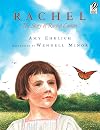
Rachel Carson was a young woman who had a passion for nature and writing. As she got older and went to college she majored in biology, wanting to know more about the world and what lies beneath it. She went on to write Silent Spring, which detailed the dangers of poisons and pesticides that were being used at the time. Throughout the book you hear of all of Carson’s contributions and the challenges she faced, before she succumbed to cancer and passed away. When I picked out the book the show more name Rachel Carson sounded familiar, but I couldn’t put my finger on why I knew the name. When I got to the part about Silent Spring, I realized that is how I knew of Carson, but the sad part is I only knew that I did not know all the other amazing things that Carson did. The ending of the book was my favorite part and made me tear up, as Rachel and her friend go to watch the migration of the butterflies as her bucket list thing to do before she passed. This book would be great to read to inspire students and get them talking about the environment. I really enjoyed this book and would recommend for others to read it. show less

The Snow Queen, illustrated by Susan Jeffers.
Retold by Amy Ehrlich and illustrated by Susan Jeffers, this version of Hans Christian Andersen's The Snow Queen was originally published in 1982, and recently reprinted in a new edition. Ideal for younger children, who might not be able to sit still through the entire seven-chapter original, it is significantly abridged. The basic shape of the story is the same, with all the important episodes of Gerda's journey retained, but many of the details, show more and descriptive passages, are omitted.
As someone who loves the original tale, I can't say that I am particularly pleased with the narrative results, although I understand why some parents might feel differently. Susan Jeffers, who has also illustrated Andersen's The Wild Swans and Thumbelina, creates an appealing world of enchantment, with her pen and ink artwork. All in all, a pleasant adaptation, and, if one is determined to read an abridged edition, probably one of the better options available. show less
Retold by Amy Ehrlich and illustrated by Susan Jeffers, this version of Hans Christian Andersen's The Snow Queen was originally published in 1982, and recently reprinted in a new edition. Ideal for younger children, who might not be able to sit still through the entire seven-chapter original, it is significantly abridged. The basic shape of the story is the same, with all the important episodes of Gerda's journey retained, but many of the details, show more and descriptive passages, are omitted.
As someone who loves the original tale, I can't say that I am particularly pleased with the narrative results, although I understand why some parents might feel differently. Susan Jeffers, who has also illustrated Andersen's The Wild Swans and Thumbelina, creates an appealing world of enchantment, with her pen and ink artwork. All in all, a pleasant adaptation, and, if one is determined to read an abridged edition, probably one of the better options available. show less
Lists
Awards


You May Also Like


Associated Authors
Statistics
- Works
- 56
- Members
- 4,131
- Popularity
- #6,095
- Rating
- 3.9
- Reviews
- 74
- ISBNs
- 226
- Languages
- 8
- Favorited
- 1