
Azorín (1873–1967)
Author of La voluntad
About the Author
Series
Works by Azorín
Libros, buquinistas y bibliotecas : crónicas de un transeúnte : Madrid-París (2014) 15 copies, 2 reviews
Obras escogidas, t.3 (azorin)teatro, cuentos, memorias y epistolario (Clásicos castellanos) (1998) 6 copies
El caballero inactual (Etopeya) 5 copies
Felix Vargas: Superrealismo / Superrealism (Letras Hispanicas / Hispanic Writings) (Spanish Edition) (2001) 5 copies
Spanische Erzählungen aus dem frühen 20. Jahrhundert / Cuentos Espanoles. Spanisch-deutsch. (1996) 5 copies
Agenda 4 copies
Salvadora de Olbena 4 copies
Los valores literarios 4 copies
Ejercicios de castellano 3 copies
Los recuadros 3 copies
El pasado 3 copies
Parla mentarismo español 2 copies
Andando y pensando 2 copies
Salvador de Olbena 2 copies
Escena y sala 2 copies
Posdata 2 copies
Parlamentarismo español (1904-1916) 2 copies
El artista y el estilo 2 copies
AZORÍN El autor y su obra 1 copy
Old Spain 1 copy
Teatro 1 copy
Moja Španija 1 copy
Rutas de Don Quijjote 1 copy
Azorín con Cervantes 1 copy
Los médicos 1 copy
La voluntad 1 copy
Pasos quedos 1 copy
Pueblo. Novela. 1 copy
Brandy, mucho brandy 1 copy
Veraneo Sentimental. 1904-1905: (1904 y 1905) (BIB.AZORIN /OSCAR WILDE / BLASCO IBAÑEZ) (2016) 1 copy
Teatro Azorín 1 copy
El mundo es ansí 1 copy
Mis mejores páginas 1 copy
5 ensayos sobre Don Juan — Author — 1 copy
El libro de levante 1 copy
Lo que lleva el rey Gaspar / What the King Gaspar takes: Cuentos de navidad / Christmas Tales (Spanish Edition) (2003) 1 copy
Teatro 1 copy
Angelita : Auto sacramental 1 copy
Félix Vargas. Etopeya 1 copy
Obras selectas 1 copy
Obras Completas. Tomo VIII 1 copy
Blanco en azul, cuentos 1 copy
TIEMPOS Y COSAS (55) 1 copy
Obras completas 1 copy
María Fontán 1 copy
Blanco En Azul 1 copy
The syrens and other stories 1 copy
Teatro inquieto español 1 copy
Reflejos de España 1 copy
Doña Inés novela 1 copy
Un discurso de la Cierva 1 copy
Politica y literatura 1968 1 copy
Españoles en Paris 1939 1 copy
Con bandera de Francia 1 copy
LA HORA DE ESPAÑA 1 copy
Leyendo a los poetas 1 copy
El político. Obras completas 1 copy
El licenciado Vidriera 1 copy
Racine y Moliére 1 copy
Política y literatura 1 copy
Pintar como querer, ensayos 1 copy
Pensando en España 1 copy
Paris 1 copy
El oasis de los clasicos 1 copy
Los españoles en Paris 1 copy
Ni si, ni no / Azorín 1 copy
López en silueta 1 copy
El Efímero Cisne 1 copy
Ante las candilejas 1 copy
Associated Works
Spanische Erzähler der Gegenwart — Contributor — 1 copy
Tagged
Common Knowledge
- Legal name
- Martínez Ruiz, José
- Other names
- Martínez Ruiz, José Augusto Trinidad (birth name)
- Birthdate
- 1873-06-08
- Date of death
- 1967-03-02
- Gender
- male
- Occupations
- writer
- Awards and honors
- Miembro de la Real Academia Española (1924-1964)
- Nationality
- Spain
- Birthplace
- Monóvar, Alicante, Comunidad Valenciana, España
- Places of residence
- Monóvar, Alicante
Madrid, Spain - Place of death
- Madrid, España
- Burial location
- Cementerio Municipal de Monóvar, Alicante, Comunidad Valenciana, España
- Associated Place (for map)
- Spain
Members
Reviews

These essays/memories of Castilla are a mix of nostalgic history, lamentations of the state of Spain circa 1900 and metaliterature. The last element added tremendously to the first two, and many of the essays I enjoyed the most incorporated characters that were familiar to me from reading books like La Celestina, Lazarillo de Tormes and Cervantes' Novelas ejemplares. That's not to say I didn't like the rest, though, because Azorín's style is friendly and inviting, incorporating the reader show more into the texts and including us in his nostalgic project. When a man surveys the town from a high tower, equipped with a spyglass, and the man's lens fogs, Azorín doesn't say that the man cleans the lens, rather, "let us clean it"; he begins another essay "If you wish to go there, to that house in Henar..."; in another, he invites the reader to cross the threshold and enter an austere, furnitureless home where a down-on-his-luck hidalgo shares hard, stale bread with his servant. The essays are smart and polished and show the author's sophisticated grasp of the Spanish literary tradition and its continued presence in everyday life. But they're also just fun to read, and I can imagine reading them in a Sunday newspaper or a magazine and enjoying them whether or not I was able to enter into his web of references.
The first two are about the history of the Spanish railroad system and a rather lengthy period of the 19th century when the railroad was on the verge of arriving to Spain (Cuba even had a railroad) yet ground had not been broken on peninsular soil. Then there's one about the various inns and roadside accommodations that are littered across Spain and have rich histories of mysterious crimes and even more mysterious guests (Don Quijote's presence goes without saying, and needs not be mentioned in Azorín's text). He references an Englishman named Ford who found them to be rather lacking in creature comforts, going so far to call a particular Segovia inn one of the worst in all Spain. Then there's an essay on the bullfights that transcribes a couple of different accounts of these spectacles. As I understand it, the author's rather negative view of the violence of the bullfight wasn't altogether typical of his time, and I enjoyed his ruminations on what a foreigner would think of the bloody event.
Then come some of my favorite essays. First, "Una ciudad y un balcón," where a man looks out on a city and each time he cleans his lens time leaps forward. The spectre of Celestina is seen in the streets at first view, but disappears when the lens is cleaned and centuries pass. The city of the first glance disappears as Spain is slowly pulled into the industrial era and the roads are paved as the city expands outward...and there will always be a man on a balcony with his head rested against his closed fist, looking out on the world, suffering from an incurable melancholy...feeling just like the Quevedo line that begins the essay, No me podrán quitar el dolorido sentir. My friend told me that the man looking out over the city is actually a character from Leopoldo Alas' La regenta, so that's just another layer of literary figures espying other literary figures from towers that stand over cities that change with the centuries yet also remain the same. I was pretty excited when I finished this story and was hoping there'd be more like it. There were.
In "Las nubes" Calixto and Melibea, the star-crossed lovers from La Celestina, are happily married and entering into the autumn of their lives with a single daughter whom they love and cherish. As the clouds cycle through the sky, ever-different yet also ever-repeating, a falcon enters the garden and a young man comes to retrieve it. Calixto can't hear what the young man
is saying to his daughter, but he can guess his words. They're words he's said himself in the beginning of a different story, or a different iteration of the same story that repeats itself endlessly.
In "Lo fatal," the episode of the poor nobleman from Lazarillo is remembered, with the young pícaro observing his starving master with respect and pity, sharing the very stale bread he though he'd never have to eat again when he agreed to enter into the man's service. The hidalgo's story is then continued into a future where he returns to his homeland and finds fortune and wealth yet at the same time becomes aware of the fleeting nature of worldly life as his health degrades. Then two verses from a Góngora sonnet present an image of a different sort of man, a nameless pilgrim wandering across a dark world, a pilgrim who could represent the fate of the nobleman if he didn't return home and recover his name. Then the hidalgo goes back to Toledo to visit his old servant Lázaro and he sits for a portrait. In the portrait, rumored to be made by El Greco himself, there's a flicker of immortality in his eyes.
Then in "La fragancia del vaso," the title character from Cervantes' "La ilustre fregona" returns to the inn where she once worked and came to be known across Spain for her beauty and virtue. Now mature and with a family of her own, nobody remembers her in the place where she once sowed so much happiness.
I really enjoyed the way Azorín utilizes stories from real life and from fiction to construct a multifaceted portrait of Castilla. Those characters are as much a part of the country as the people and events of the historical past. Incorporating both history and literature and drawing freely from both, these essays almost seem "realer" than if they had been purely historical. The people in those books never stopped existing, they're still with us today, and they're as much a part of the landscape of Azorín's Castilla as the crumbling churches and expanding cityscapes. I mean, its greatest and most enduring hero, El Cid, is very much a mix of historical and literary elements, as the events of his life were developed into countless oral adaptations before finally being penned in a form that mixes reality and fiction. I think it was a very inspired decision by Azorín, to write essays that incorporate literary tradition into evocative essays. And again, his style is so warm and friendly that it wouldn't have mattered what he was writing about, I probably would have enjoyed it. show less
The first two are about the history of the Spanish railroad system and a rather lengthy period of the 19th century when the railroad was on the verge of arriving to Spain (Cuba even had a railroad) yet ground had not been broken on peninsular soil. Then there's one about the various inns and roadside accommodations that are littered across Spain and have rich histories of mysterious crimes and even more mysterious guests (Don Quijote's presence goes without saying, and needs not be mentioned in Azorín's text). He references an Englishman named Ford who found them to be rather lacking in creature comforts, going so far to call a particular Segovia inn one of the worst in all Spain. Then there's an essay on the bullfights that transcribes a couple of different accounts of these spectacles. As I understand it, the author's rather negative view of the violence of the bullfight wasn't altogether typical of his time, and I enjoyed his ruminations on what a foreigner would think of the bloody event.
Then come some of my favorite essays. First, "Una ciudad y un balcón," where a man looks out on a city and each time he cleans his lens time leaps forward. The spectre of Celestina is seen in the streets at first view, but disappears when the lens is cleaned and centuries pass. The city of the first glance disappears as Spain is slowly pulled into the industrial era and the roads are paved as the city expands outward...and there will always be a man on a balcony with his head rested against his closed fist, looking out on the world, suffering from an incurable melancholy...feeling just like the Quevedo line that begins the essay, No me podrán quitar el dolorido sentir. My friend told me that the man looking out over the city is actually a character from Leopoldo Alas' La regenta, so that's just another layer of literary figures espying other literary figures from towers that stand over cities that change with the centuries yet also remain the same. I was pretty excited when I finished this story and was hoping there'd be more like it. There were.
In "Las nubes" Calixto and Melibea, the star-crossed lovers from La Celestina, are happily married and entering into the autumn of their lives with a single daughter whom they love and cherish. As the clouds cycle through the sky, ever-different yet also ever-repeating, a falcon enters the garden and a young man comes to retrieve it. Calixto can't hear what the young man
is saying to his daughter, but he can guess his words. They're words he's said himself in the beginning of a different story, or a different iteration of the same story that repeats itself endlessly.
In "Lo fatal," the episode of the poor nobleman from Lazarillo is remembered, with the young pícaro observing his starving master with respect and pity, sharing the very stale bread he though he'd never have to eat again when he agreed to enter into the man's service. The hidalgo's story is then continued into a future where he returns to his homeland and finds fortune and wealth yet at the same time becomes aware of the fleeting nature of worldly life as his health degrades. Then two verses from a Góngora sonnet present an image of a different sort of man, a nameless pilgrim wandering across a dark world, a pilgrim who could represent the fate of the nobleman if he didn't return home and recover his name. Then the hidalgo goes back to Toledo to visit his old servant Lázaro and he sits for a portrait. In the portrait, rumored to be made by El Greco himself, there's a flicker of immortality in his eyes.
Then in "La fragancia del vaso," the title character from Cervantes' "La ilustre fregona" returns to the inn where she once worked and came to be known across Spain for her beauty and virtue. Now mature and with a family of her own, nobody remembers her in the place where she once sowed so much happiness.
I really enjoyed the way Azorín utilizes stories from real life and from fiction to construct a multifaceted portrait of Castilla. Those characters are as much a part of the country as the people and events of the historical past. Incorporating both history and literature and drawing freely from both, these essays almost seem "realer" than if they had been purely historical. The people in those books never stopped existing, they're still with us today, and they're as much a part of the landscape of Azorín's Castilla as the crumbling churches and expanding cityscapes. I mean, its greatest and most enduring hero, El Cid, is very much a mix of historical and literary elements, as the events of his life were developed into countless oral adaptations before finally being penned in a form that mixes reality and fiction. I think it was a very inspired decision by Azorín, to write essays that incorporate literary tradition into evocative essays. And again, his style is so warm and friendly that it wouldn't have mattered what he was writing about, I probably would have enjoyed it. show less
Antonio Azorín responde a un clarísimo intento de renovación estética en franca ruptura con las formas narrativas del Realismo y del Naturalismo; la crítica ha dado buena cuenta de estos aspectos: fragmentación de la narración, impresionismo, atención al sentimiento de la temporalidad y al paisajismo, estétitca del reposo, etc. Y no es, como quisieran algunos críticos, una novela sin acabar, sino que posee un final claro y ejemplar, que vincula la obra a las más decididas show more experiencias narrativas de nuestra modernidad contemporánea. show less
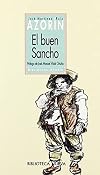
Una colección de cuentos (más o menos) relacionados con el Quijote. Muy bien escritos pero un poco repetitivos a ratos.

"La ruta de don Quijote" (1905) es posiblemente el libro de José Martínez Ruiz, Azorín (1873-1967), que mejor puede considerarse un volumen de crónicas periodísticas. Los textos que lo componen fueron escritos para el diario El Imparcial con motivo del tercer centenario de la publicación de la primera parte del libro de Cervantes.
Lists
Awards

You May Also Like


Associated Authors
Statistics
- Works
- 183
- Also by
- 5
- Members
- 1,195
- Popularity
- #21,506
- Rating
- 3.9
- Reviews
- 33
- ISBNs
- 166
- Languages
- 7
- Favorited
- 3