
Matthew Paul Turner
Author of When God Made You
About the Author
Matthew Paul Turner is the former editor of CCM Magazine, Christian entertainment's premier publication. After graduating from Belmont University, Matthew got his start working at Jammin' Java
Image credit: via Amazon.com
Works by Matthew Paul Turner
The Christian Culture Survival Guide: The Misadventures of an Outsider on the Inside (2004) 133 copies, 1 review
Relearning Jesus: How Reading the Beatitudes One More Time Changed My Faith (2009) 48 copies, 1 review
What You Didn't Learn from Your Parents About: Christianity: A Guide to a Spirited Subject (2006) 21 copies
How to Ruin Your Dating Life: A Christian's Guide for Avoiding [Almost] Every Mistake in the Book (2007) 12 copies
What You Didn't Learn from Your Parents About Money: A Guide to A Pricey Subject (What You Didn't Learn from Your Parents about) (2007) 6 copies
Tagged
Common Knowledge
- Gender
- male
Members
Reviews
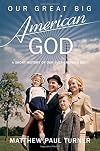
Do we, as Americans, really know God? Our Great Big American God, by Matthew Paul Turner seeks to answer that question. The history of America’s God follows the Man Upstairs through various manifestations and incarnations. Turner, author of such books as Churched, The Christian Culture Survival Guide, and Hear No Evil, explores the history of God in America. At first blush, the book comes across as an accessible popular history, shying away from an academic tone or overly dogmatic show more perspective. John Calvin, Jonathan Edwards, the Moody Bible Institute, the Social Gospel, and the Prosperity Gospel all preach different aspects of the so-called America’s God.
Despite its aim towards a general readership, the perspective is rather narrow. Turner spends a majority of time on figures and institutions related to Calvinist Protestantism. Lutheranism and Catholicism receive cursory mentions and Mormonism not at all. Early on Turner asks, “How did the Puritans’ God become America’s God? […] [T]he most influential was the Puritans’ love for and dedication to Calvinism.” (For another look at the Puritan’s love for and dedication to Calvinism, read The Handmaid’s Tale by Margaret Atwood.) When not hanging Quakers and punishing anyone who danced, played cards, drank, swore, or farted, the Calvinists were engaging in the most austerely unpleasant iteration of Christianity. No wonder the English kicked them out after the Monarchy was restored under the sybarite dingbat King Charles II.
While an entertaining read, Our Great Big American God suffers from a cripplingly narrow perspective and a monumental blind spot. America’s God has throughout history embraced slavery and condemned it, embraced capitalism and condemned it, embraced socialism and condemned it. Is America’s God an ever-changing entity, reflective of our culture’s changing mores, or, more realistically, simply an extension of charismatic egos, exploitation, and American gullibility for the latest fad and craze? Is America’s God a site of polysemic meaning-making or simply a meaningless void? If the American God can represent anything and everything (at the same time being against anything and everything), the entire enterprise becomes a useless charade.
https://driftlessareareview.com/2021/03/21/espresso-shots-our-great-big-american... show less
Despite its aim towards a general readership, the perspective is rather narrow. Turner spends a majority of time on figures and institutions related to Calvinist Protestantism. Lutheranism and Catholicism receive cursory mentions and Mormonism not at all. Early on Turner asks, “How did the Puritans’ God become America’s God? […] [T]he most influential was the Puritans’ love for and dedication to Calvinism.” (For another look at the Puritan’s love for and dedication to Calvinism, read The Handmaid’s Tale by Margaret Atwood.) When not hanging Quakers and punishing anyone who danced, played cards, drank, swore, or farted, the Calvinists were engaging in the most austerely unpleasant iteration of Christianity. No wonder the English kicked them out after the Monarchy was restored under the sybarite dingbat King Charles II.
While an entertaining read, Our Great Big American God suffers from a cripplingly narrow perspective and a monumental blind spot. America’s God has throughout history embraced slavery and condemned it, embraced capitalism and condemned it, embraced socialism and condemned it. Is America’s God an ever-changing entity, reflective of our culture’s changing mores, or, more realistically, simply an extension of charismatic egos, exploitation, and American gullibility for the latest fad and craze? Is America’s God a site of polysemic meaning-making or simply a meaningless void? If the American God can represent anything and everything (at the same time being against anything and everything), the entire enterprise becomes a useless charade.
https://driftlessareareview.com/2021/03/21/espresso-shots-our-great-big-american... show less
 This review was written for LibraryThing Early Reviewers.
In my youth I bought music with reckless abandon. My CD collection used to be prominently displayed on a hand crafted, wall-covering shelf like some hugely antlered deer. Once we started having children I relinquished the ‘man cave’ and moved my collection into more compact binders. (Which are now displayed next to my bed on a hack-job self crafted shelf.)
Now, thanks to quaint used book stores and never-ending digital book sales my book collection is catching up. I’ve even found space show more for a hand crafted, wall-covering shelf to display my physical editions in all their glory. (The CDs at least got listened too, but these books keep piling up unread.)
A few months back I decided to get my books in some sort of order. In the process I discovered LibraryThing.com. It wasn’t as flashy as GoodReads, but it was a geek’s dream….data, data, data everywhere! I paid a few bucks to join and got to cataloguing my books. Along the way I applied for a few books in their early reviewer program. I did have great expectations, but lo and behold I got picked for my first entry: Matthew Paul Turner’s ‘Our Great Big American God’. This was particularly exciting because Matthew is somebody I have follow online for some time. A few weeks later, Hachette books mailed me a nice hardbound and shelf displayable copy. I cracked the cover and dug in.
The thing I loved most about this book was Matthew’s wry, cheeky style. History is boring stuff and I’m not a fan of history books, especially religious history. However, this book was anything but dry. His wit and presentation style made even Puritan history seem fresh and exciting.
Our Great Big American God tackles American Christian history. Through each period of American history cleverly presents how those times helped evolve God. He gives a well researched account of God’s ever-changing face from the angry, separatist God that compelled the Puritans to conquer America to the slick corporate God of recent times who has an officially licensed chicken sandwich to sell you.
I was surprised to learn that the modern culture war is just an extension of the religious conflict that birthed this nation. Much of the rhetoric we hear today about ‘returning to God’ is nothing new in our history. And our past is rife with talking heads opining on the nature and desires of God for ‘His chosen people’. At each stage in our nation’s history God has been there, schizophrenically supporting every side of any given the debate, but standing exclusively with the victors.
One prime example of this is during America’s civil war. God joyfully supported slavery. Scripture taught His followers that slaves were to submit to their masters and institution of slavery was biblically accepted and unchallenged. God also vehemently opposed slavery. The overarching story of scripture informed His followers about the liberation of captives and affirmed the dignity of all people. So, God marched into battle wearing blue and waving the stars and bars. He also marched into battle wearing grey and waving a rebel flag. Perhaps it is not surprising that God’s position was more solidified after the bullets stopped flying.
Another frightening development in God’s character happened during America’s Gilded Age. Around 1860 a young man named D.L. Moody sold all of his possessions to work with the poor in Chicago. His willingness to live, eat, and be with the poor endeared him to those he ministered to. Over time D.L.’s ministry began to grow and instead of a few people his bible studies began to draw a few thousand. As his vision changed, so did God. Moody set off on several evangelism tours. To manage the increasing demands of such ventures he his ministry began to run like a business. “He galvanised into religions action church people in cities of millions….He organized his revivals like a corporate CEO, leaving little to chance. There were committees for everything — prayer, finances, Bible study, visitation, music, ushering, tickets, and an executive committee to supervise committees.”
Moody’s relatable style and knack for storytelling attracted poor, working class families. Unfortunately, this audience had no means to support Moody’s evangelistic ministry. Thankfully, their employers were more than willing to foot the bill.
When Moody railed against drunkenness, it positively effected job performance. He also began preaching against unions, shilling for ten-hour work day, and associating hard work with holy living. In one sermon he’s quoted as preaching
“Get something to do. If is for fifteen hours a day, all the better; for while you are at work Satan does not have so much chance to tempt you. If you cannot earn more than a dollar a week, earn that. That is better than nothing, and you can pray to God for more.”
Among Moody’s upper class sponsors were J.P. Morgan, Cornelius Vanderbilt, and Cyrus McCormick. Why were these men so willing to fund Moody message to their workers? As Turner shares that these tycoons concern was their work force’s unrest in the crowded cities and crummy working environments. They believe that a little God could go a long way in developing a manageable work force. All it seemed God’s gospel of protestant work ethics and morality lacked was a bit of capitalist funding.
This book is fun, frightening, and enlightening. It’s empowering to see the roots of many aspects of the modern American Christian message. It allows us to name them, point to their origins, and rob them of any mystical power. I think it’s a great service that Turner has taken the time to research these moments and offer something outside plausibility structures most of us live in. The real power of this book, unlike most books, speeches, or sermons, is in its subtlety. By presenting us with the origins of some of our favorite pet theology, he asks us to move forward more gently. We must begin to realize that our beliefs about who God is, what God is like, and what God wants have not developed in a vacuum. We have not been entirely in control of what we believe, what our churches teach, or what we think we know about God. There is a long line of men and women who came before stretching back ages. They have each left their mark on our thoughts, practices, and rhetoric. The real power of this Matthew Paul Turner’s book is its quiet call for a more humble approach to certainty, the future, the past, and especially our great big American God. show less
Now, thanks to quaint used book stores and never-ending digital book sales my book collection is catching up. I’ve even found space show more for a hand crafted, wall-covering shelf to display my physical editions in all their glory. (The CDs at least got listened too, but these books keep piling up unread.)
A few months back I decided to get my books in some sort of order. In the process I discovered LibraryThing.com. It wasn’t as flashy as GoodReads, but it was a geek’s dream….data, data, data everywhere! I paid a few bucks to join and got to cataloguing my books. Along the way I applied for a few books in their early reviewer program. I did have great expectations, but lo and behold I got picked for my first entry: Matthew Paul Turner’s ‘Our Great Big American God’. This was particularly exciting because Matthew is somebody I have follow online for some time. A few weeks later, Hachette books mailed me a nice hardbound and shelf displayable copy. I cracked the cover and dug in.
The thing I loved most about this book was Matthew’s wry, cheeky style. History is boring stuff and I’m not a fan of history books, especially religious history. However, this book was anything but dry. His wit and presentation style made even Puritan history seem fresh and exciting.
Our Great Big American God tackles American Christian history. Through each period of American history cleverly presents how those times helped evolve God. He gives a well researched account of God’s ever-changing face from the angry, separatist God that compelled the Puritans to conquer America to the slick corporate God of recent times who has an officially licensed chicken sandwich to sell you.
I was surprised to learn that the modern culture war is just an extension of the religious conflict that birthed this nation. Much of the rhetoric we hear today about ‘returning to God’ is nothing new in our history. And our past is rife with talking heads opining on the nature and desires of God for ‘His chosen people’. At each stage in our nation’s history God has been there, schizophrenically supporting every side of any given the debate, but standing exclusively with the victors.
One prime example of this is during America’s civil war. God joyfully supported slavery. Scripture taught His followers that slaves were to submit to their masters and institution of slavery was biblically accepted and unchallenged. God also vehemently opposed slavery. The overarching story of scripture informed His followers about the liberation of captives and affirmed the dignity of all people. So, God marched into battle wearing blue and waving the stars and bars. He also marched into battle wearing grey and waving a rebel flag. Perhaps it is not surprising that God’s position was more solidified after the bullets stopped flying.
Another frightening development in God’s character happened during America’s Gilded Age. Around 1860 a young man named D.L. Moody sold all of his possessions to work with the poor in Chicago. His willingness to live, eat, and be with the poor endeared him to those he ministered to. Over time D.L.’s ministry began to grow and instead of a few people his bible studies began to draw a few thousand. As his vision changed, so did God. Moody set off on several evangelism tours. To manage the increasing demands of such ventures he his ministry began to run like a business. “He galvanised into religions action church people in cities of millions….He organized his revivals like a corporate CEO, leaving little to chance. There were committees for everything — prayer, finances, Bible study, visitation, music, ushering, tickets, and an executive committee to supervise committees.”
Moody’s relatable style and knack for storytelling attracted poor, working class families. Unfortunately, this audience had no means to support Moody’s evangelistic ministry. Thankfully, their employers were more than willing to foot the bill.
When Moody railed against drunkenness, it positively effected job performance. He also began preaching against unions, shilling for ten-hour work day, and associating hard work with holy living. In one sermon he’s quoted as preaching
“Get something to do. If is for fifteen hours a day, all the better; for while you are at work Satan does not have so much chance to tempt you. If you cannot earn more than a dollar a week, earn that. That is better than nothing, and you can pray to God for more.”
Among Moody’s upper class sponsors were J.P. Morgan, Cornelius Vanderbilt, and Cyrus McCormick. Why were these men so willing to fund Moody message to their workers? As Turner shares that these tycoons concern was their work force’s unrest in the crowded cities and crummy working environments. They believe that a little God could go a long way in developing a manageable work force. All it seemed God’s gospel of protestant work ethics and morality lacked was a bit of capitalist funding.
This book is fun, frightening, and enlightening. It’s empowering to see the roots of many aspects of the modern American Christian message. It allows us to name them, point to their origins, and rob them of any mystical power. I think it’s a great service that Turner has taken the time to research these moments and offer something outside plausibility structures most of us live in. The real power of this book, unlike most books, speeches, or sermons, is in its subtlety. By presenting us with the origins of some of our favorite pet theology, he asks us to move forward more gently. We must begin to realize that our beliefs about who God is, what God is like, and what God wants have not developed in a vacuum. We have not been entirely in control of what we believe, what our churches teach, or what we think we know about God. There is a long line of men and women who came before stretching back ages. They have each left their mark on our thoughts, practices, and rhetoric. The real power of this Matthew Paul Turner’s book is its quiet call for a more humble approach to certainty, the future, the past, and especially our great big American God. show less
This review was written for LibraryThing Early Reviewers.
In this funny, sarcastic, and sometimes scathing reflection on the confusing subculture of contemporary Christianity and its soundtrack, Matthew Paul Turner, the former editor of CCM, shares stories about his budding interest in music and the attempts of his parents and community to shield him from the dangers of “the devil’s songs.”
The opening chapter is set at Fido’s, a coffeehouse/cafe in Nashville where I have spent a few mornings myself, and can easily picture the scene that show more Matthew describes — singers, musicians, and other hopefuls brimming with plans and dreams. His encounter with an aspiring Christian rocker (easily pegged as as “twenty-five-year-old purity pledge playing dress-up”) is laughable in the cliches it explores, but also a bit depressing because that is part of the music industry today. In later chapters, Matthew also explores the paradox of musical talent versus Christian marketability, the divide between church denominations, the evils of syncopated beats, and the cult of Christian celebrities.
As someone who has dabbled in the industry and has friends who aspire to many of the same things that Matthew does, I found this book to be simultaneously hilariously entertaining and condemning, since it highlights issues in both Christianity and the music industry which are contradictory, hypocritical, and just plain stupid. Although there isn’t much spiritual depth or exploration of theology, the book does take a critical look at popular Christian culture through the viewpoint of one who was entrenched in the machine. There were quite a few good, chagrined laughs in this one, simply because I could perfectly picture the situation or the type of person that was described. However, despite all the well-deserved cultural criticism, I feel like Turner could have done a better job at reconciling how he retains his spirituality today despite the flaws which he points out throughout the book. As it stands, the book seems merely to portray the humorous frustration that he has with Christian subculture, without any particular conclusion on his reaction or response. show less
The opening chapter is set at Fido’s, a coffeehouse/cafe in Nashville where I have spent a few mornings myself, and can easily picture the scene that show more Matthew describes — singers, musicians, and other hopefuls brimming with plans and dreams. His encounter with an aspiring Christian rocker (easily pegged as as “twenty-five-year-old purity pledge playing dress-up”) is laughable in the cliches it explores, but also a bit depressing because that is part of the music industry today. In later chapters, Matthew also explores the paradox of musical talent versus Christian marketability, the divide between church denominations, the evils of syncopated beats, and the cult of Christian celebrities.
As someone who has dabbled in the industry and has friends who aspire to many of the same things that Matthew does, I found this book to be simultaneously hilariously entertaining and condemning, since it highlights issues in both Christianity and the music industry which are contradictory, hypocritical, and just plain stupid. Although there isn’t much spiritual depth or exploration of theology, the book does take a critical look at popular Christian culture through the viewpoint of one who was entrenched in the machine. There were quite a few good, chagrined laughs in this one, simply because I could perfectly picture the situation or the type of person that was described. However, despite all the well-deserved cultural criticism, I feel like Turner could have done a better job at reconciling how he retains his spirituality today despite the flaws which he points out throughout the book. As it stands, the book seems merely to portray the humorous frustration that he has with Christian subculture, without any particular conclusion on his reaction or response. show less
“Our Great Big American God” is not exactly what I expected it would be when I first picked it up. But there is a big clue right on the cover of the book as to what to expect inside: the author’s full name is Matthew Paul Turner. What better combination of first and middle names could there be for a writer of religion history (well, maybe, “Matthew Mark”)? The book is subtitled “A Short History of Our Ever-Growing Deity,” and that’s exactly what it is. The part I did not show more expect is all the very effective humor, irony, and understatement that Turner uses to give the reader his take on how the American version of God has changed so dramatically over the past four centuries.
Turner begins, of course, with the Puritans who came to America in order to stake out a place for themselves where they could practice their religion as they saw fit – without interference or input from any group that might believe even a bit differently than themselves. Here we get our first taste of irony because the Puritans turned out to be every bit as intolerant of other religions as they believed themselves to have been wronged in England. From here, the author traces the development of various Protestant religions in America as each of the more dominant ones ebbed and flowed throughout American history: Pentecostals, Baptists, Southern Baptists, Presbyterians, Methodists, etc., right on through Progressives, Fundamentalists, and Evangelicals of all stripes.
The big takeaway, for me, from “Our Great Big American God” is the realization that God’s image has been changed drastically and consistently over the years in order to fit the needs of society as it progressed to the present day. Rather than “man being created in the image of God,” the truth is that America’s version of God has been created in the image of man. That is not necessarily a bad thing, I suppose, but it is not something that most devout Christians tend (or like) to consider.
I do wish that Turner had offered some insight into the television preachers of today instead of ending that discussion with the era of Falwell, Graham, Robertson, Roberts, etc. I would have appreciated more of his thoughts on the “prosperity gospel” preachers of the day, especially one Joel Osteen – but maybe that’s a whole other book. show less
Turner begins, of course, with the Puritans who came to America in order to stake out a place for themselves where they could practice their religion as they saw fit – without interference or input from any group that might believe even a bit differently than themselves. Here we get our first taste of irony because the Puritans turned out to be every bit as intolerant of other religions as they believed themselves to have been wronged in England. From here, the author traces the development of various Protestant religions in America as each of the more dominant ones ebbed and flowed throughout American history: Pentecostals, Baptists, Southern Baptists, Presbyterians, Methodists, etc., right on through Progressives, Fundamentalists, and Evangelicals of all stripes.
The big takeaway, for me, from “Our Great Big American God” is the realization that God’s image has been changed drastically and consistently over the years in order to fit the needs of society as it progressed to the present day. Rather than “man being created in the image of God,” the truth is that America’s version of God has been created in the image of man. That is not necessarily a bad thing, I suppose, but it is not something that most devout Christians tend (or like) to consider.
I do wish that Turner had offered some insight into the television preachers of today instead of ending that discussion with the era of Falwell, Graham, Robertson, Roberts, etc. I would have appreciated more of his thoughts on the “prosperity gospel” preachers of the day, especially one Joel Osteen – but maybe that’s a whole other book. show less
This review was written for LibraryThing Early Reviewers.Lists
Awards

You May Also Like


Statistics
- Works
- 24
- Members
- 2,619
- Popularity
- #9,800
- Rating
- 3.8
- Reviews
- 58
- ISBNs
- 51
- Languages
- 1
