Lauren F. Winner
Author of Girl Meets God: On the Path to a Spiritual Life
About the Author
Lauren F. Winner, an Episcopal priest, lives in Durham, North Carolina, and teaches at Duke Divinity School. She is also the author of Girl Meets God, Still, and Wearing God.
Works by Lauren F. Winner
Wearing God: Clothing, Laughter, Fire, and Other Overlooked Ways of Meeting God (2015) 212 copies, 3 reviews
The Dangers of Christian Practice: On Wayward Gifts, Characteristic Damage, and Sin (2018) 55 copies, 1 review
A Cheerful and Comfortable Faith: Anglican Religious Practice in the Elite Households of Eighteenth-Century Virginia (2010) 49 copies, 1 review
Associated Works
The Blackwell Companion to Christian Ethics (2004) — Contributor, some editions — 188 copies, 1 review
The Meaning is in the Waiting: The Spirit of Advent (2008) — Foreword, some editions — 99 copies, 1 review
Tagged
Common Knowledge
- Birthdate
- 1976-10-13
- Gender
- female
- Education
- Columbia University (BA, PhD)
Clare College, Cambridge (M.Phil)
Duke Divinity School (M.Div) - Occupations
- professor
Episcopal priest
Associate Professsor of Christian Philosophy
Vicar (St. Paul's Episcopal Church - Louisburg, NC; St. Joseph's Church - Durham, NC) - Organizations
- Duke Divinity School
Episcopal Church - Nationality
- USA
- Places of residence
- Durham, North Carolina, USA
- Associated Place (for map)
- North Carolina, USA
Members
Reviews
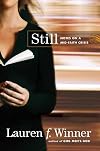
“That finally is the questions, that is the anguish — to abide in God’s hiddenness is one thing, to abide in God’s absence is altogether something else.”
I loved Lauren F. Winners book [Mudhouse Sabbath] in which she reflects and look back at some of the Jewish practices that she misses after converting to the Christian faith.
In Still we find Lauren in a crisis of faith after going through a divorce and she finds herself spiritual lost and bewildered.
There is a movement toward show more finding some solace in the presence of God - although He’s still rather elusive.
“Some days I am not sure if my faith is riddled with doubt, or whether, graciously, my doubt is riddled with faith. And yet I continue to live in a world the way a religious person lives in the world; I keep living in a world that I know to be enchanted, and not left alone. I doubt; I am uncertain; I am restless, prone to wander. And yet glimmers of holy keep interrupting my gaze.”
These glimmers of holy - of the enchanted world keep popping up in the journal-like entries, that are deeply personal - it's a vulnerable soul who shares her loss and pain but also the light and beauty. show less
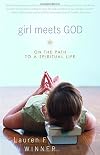
I loved Lauren F. Winners book [Mudhouse Sabbath] in which she reflects and look back at some of the Jewish practices that she misses after converting to the Christian faith.
In Still we find Lauren in a crisis of faith after going through a divorce and she finds herself spiritual lost and bewildered.
There is a movement toward show more finding some solace in the presence of God - although He’s still rather elusive.
“Some days I am not sure if my faith is riddled with doubt, or whether, graciously, my doubt is riddled with faith. And yet I continue to live in a world the way a religious person lives in the world; I keep living in a world that I know to be enchanted, and not left alone. I doubt; I am uncertain; I am restless, prone to wander. And yet glimmers of holy keep interrupting my gaze.”
These glimmers of holy - of the enchanted world keep popping up in the journal-like entries, that are deeply personal - it's a vulnerable soul who shares her loss and pain but also the light and beauty. show less
Lauren Winner is one of the few authors that make me want to actually take up a pencil and underline passages... and write them up into a Commonplace book afterwards as well. (Actually I must admit that she is in fact the one who actually convinced me to write in my books at all, when she talks about writing in books in her first book Girl Meets God.) For all that Lauren's experiences I can often not directly relate to, she has a way of universalizing experience that really speaks to me, and show more a way of stating things that just makes me go - wow - I need to mark this.
I say this to say, if you have read Girl Meets God and it didn't really do anything for you - the same is probably true of Still. This is still essentially Lauren Winner, and is much more like Girl Meets God, than it is like Mudhouse Sabbath or the book on chasity. So if you, like me, were particularly moved by Girl Meets God, then you really do need to check out Still (though truthfully it can't QUITE live up to Girl Meets God, but then Girl Meets God is one of those books that I love so much that I own a nice pretty hardcover I bought, and still keep my underlined, written in, original paperback AND I got her to sign both of them (along with her others) the one time I met her). Likewise, if Girl Meets God did nothing for you, you may want to avoid Still as well, though I hesitate to point anyone away from a book as good as this.
Disclaimer - I received a copy of this book free from Lauren through a blog. (She also signed it! Yay for all my copies of her books being signed!) show less
I say this to say, if you have read Girl Meets God and it didn't really do anything for you - the same is probably true of Still. This is still essentially Lauren Winner, and is much more like Girl Meets God, than it is like Mudhouse Sabbath or the book on chasity. So if you, like me, were particularly moved by Girl Meets God, then you really do need to check out Still (though truthfully it can't QUITE live up to Girl Meets God, but then Girl Meets God is one of those books that I love so much that I own a nice pretty hardcover I bought, and still keep my underlined, written in, original paperback AND I got her to sign both of them (along with her others) the one time I met her). Likewise, if Girl Meets God did nothing for you, you may want to avoid Still as well, though I hesitate to point anyone away from a book as good as this.
Disclaimer - I received a copy of this book free from Lauren through a blog. (She also signed it! Yay for all my copies of her books being signed!) show less
Mudhouse Sabbath: An Invitation to a Life of Spiritual Discipline (Pocket Classics) by Lauren F. Winner
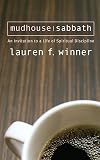
For Jews, the essence of the thing is a doing, an action. Your faith might come and go, but your practice ought not waver. (Indeed, Judaism suggests that the repeating of the practice is the best way to ensure that a doubter's faith will return.)
Lauren F. Winner has written a fine book on spiritual disciplines. She's a Christian with a Jewish background - and in short chapters she reflects and look back at some of the Jewish practices that she misses in her newfound Christian faith - show more disciplines she tries to work into her spiritual life.
It's a very personal and honest book - and she shares both funny and serious incidents from her own life.
I liked best the chapters on food, hospitality, body and aging. It's a book I will return to, no doubt. show less
Lauren F. Winner has written a fine book on spiritual disciplines. She's a Christian with a Jewish background - and in short chapters she reflects and look back at some of the Jewish practices that she misses in her newfound Christian faith - show more disciplines she tries to work into her spiritual life.
It's a very personal and honest book - and she shares both funny and serious incidents from her own life.
I liked best the chapters on food, hospitality, body and aging. It's a book I will return to, no doubt. show less
B&C 5-6/15 review of Wearing God--Clothing, Laughter, and Other Overlooked Ways of Meeting God written by Lauren F. Winner reviewed by Rachel Marie Stone
"Endlessly Overflowing"
An invitation to sacramental wonder.
________________________________________________________________________________________________
(excerpts)
But how does a child learn to reckon God as more beautiful, more awe-inspiring, more iridescent than the countless sparkles that dance upon the surface of the water at dawn and show more dusk unless she first learns to love these beautiful things themselves? Is not the world itself "charged with the grandeur of God" to "flame out like shining from shook foil"?
An admirable humility characterizes the book throughout. Winner is exceptionally well-read and unusually gifted with words, and it is precisely these qualities that make credible her caution against assuming the total adequacy of any particular metaphor for the divine.
In offering these images for our consideration, Winner shows that the things of earth needn't grow strangely dim in order for us to see God; we can see aspects of God's ultimately ineffable nature precisely in the things of this earth. To imagine God as clothing—as the kind of clothing that, like a school uniform, downplays distinction and promotes unity; as a comfortable garment that hugs bodies close and covers whatever shame we carry—is to imagine and perhaps experience the immanence of the transcendent.
But images of God as Mother are as old as Isaiah and older than the church. Winner does not invoke them for shock value or to advance a particular agenda but rather to underline that the Bible insistently reminds us of the inadequacy of any single metaphor or family of metaphors for the God who will always exceed our grasp.
________________________________________________________________________________________________
Like many children, I loved iridescent things—glitter, tinsel, the sparkles on the bay at sunset, jewelry. One of my cherished possessions was an impossibly tiny gold chain necklace graced by an equally tiny pendant consisting of a chip of a diamond set in fragments of white gold. It was given me by a faithful, much-beloved, and too-soon-departed saint of our congregation, a woman who rocked me and sang to me in the church nursery so that my barely adult parents could go to Bible studies and counseling sessions and grow in their fledgling faith. A few weeks before her death, she called me to wish me a happy third birthday. Her strained and tired voice, coming through the yellow rotary phone, spoke of her love for me—and gave me my earliest clear memory.
Years after her death, someone else gave me a glittering necklace of plastic beads with a glass heart pendant, which held a small quantity of cheap fragrance. As I readied for church one Sunday, I left the diamond-and-gold necklace on top of my dresser and put on the glass one. In my absence, the cat batted it off the dresser. Weeks later it turned up, crushed, tangled, and seemingly irreparable. My grief and guilt were considerable.
Now I can see that there may have been a parable of sorts in my forsaking gold and diamonds for plastic, but then, my faith was of the sort which suggested that to set much store in beautiful but ultimately frivolous things was spiritually unsound. So I tried to talk myself out of my sadness. Even so, whenever the hymn implored me to
Turn your eyes upon Jesus
Look full in his wonderful face
And the things of earth will grow strangely dim
In the light of his glory and grace
I pictured my beautiful "things of earth"—my destroyed jewelry, my sequined sweaters, the shimmer of the Long Island Sound I so deeply loved—and felt a little guilty, because, much as I loved Jesus, those beautiful things never did seem to grow strangely dim. Instead they remained bright and appealing, perhaps especially when I felt I was being asked not to delight in them.
But how does a child learn to reckon God as more beautiful, more awe-inspiring, more iridescent than the countless sparkles that dance upon the surface of the water at dawn and dusk unless she first learns to love these beautiful things themselves? Is not the world itself "charged with the grandeur of God" to "flame out like shining from shook foil"?
Winner is exceptionally well-read and unusually gifted with words, and it is precisely these qualities that make credible her caution against assuming the total adequacy of any particular metaphor for the divine.
"Everything I see of the heavens, I know by the earth." So wrote Pattiann Rogers, quoted in the epigraph to Lauren Winner's newest book, Wearing God, a delightful invitation to practice sacramental wonder: to see, perhaps, that a love of luminous things, of a certain slant of light, is not a distraction from God. Rather, Winner says, "you can discover things about God by looking around your ordinary, everyday life." This, she suggests, is an invitation the Bible itself offers to us. While many of our church traditions "hew closely to two or three favored images of God, turning to them in prayer and song and sermon," Scripture—not to mention the church throughout history—suggests hundreds of metaphors for our consideration and contemplation, many of which are as near to us as our own skin, our clothes.
Winner, who has chronicled her spiritual pilgrimage in three previous books, confesses that only recently has what she calls the Bible's "endlessly overflowing" quality impressed itself on her. As she "began to be awake to the Scriptures" in a new way, Winner recognized the inadequacy of her mental image of God: "some combination of sage professor and boyfriend." That didn't satisfy her any more, given the "voluble and variable witness of the Scriptures."
An admirable humility characterizes the book throughout. Winner is exceptionally well-read and unusually gifted with words, and it is precisely these qualities that make credible her caution against assuming the total adequacy of any particular metaphor for the divine. The book carefully honors the apophatic at its opening and its close: "maybe … the best way to speak about God [is] to say and then unsay whatever we say." This would smack of evasiveness were it not for Winner's thoughtful exploration of oft-neglected scriptural metaphors for the divine: clothing, fragrance, laboring woman, bread and vine, flame. "Each image," Winner writes, "invites a different response from us," a different way of being "friends with God." God is bread and the One who offers the bread; God is clothing, the One who clothes, and the One who invites us to share in his work of clothing those in need. God is the One who births, the One birthed, and the One who assists the birth.
In offering these images for our consideration, Winner shows that the things of earth needn't grow strangely dim in order for us to see God; we can see aspects of God's ultimately ineffable nature precisely in the things of this earth. To imagine God as clothing—as the kind of clothing that, like a school uniform, downplays distinction and promotes unity; as a comfortable garment that hugs bodies close and covers whatever shame we carry—is to imagine and perhaps experience the immanence of the transcendent.
Some readers may take the event of this book's publication as an opportunity to denounce Winner as heretical, while others will merely patronize her as confused, trendy, lacking the proper rigor; throughout, she reverently and thoughtfully uses both feminine and masculine pronouns for God. But images of God as Mother are as old as Isaiah and older than the church. Winner does not invoke them for shock value or to advance a particular agenda but rather to underline that the Bible insistently reminds us of the inadequacy of any single metaphor or family of metaphors for the God who will always exceed our grasp.
And Wearing God is pastorally grounded. Throughout the book, Winner draws on her weekly work teaching in a women's prison near Duke Divinity School, where she is a professor. At any given time, 6-10 percent of incarcerated women in the United States are pregnant, Winner notes. What does it look like for God to be with them, in their identical prison uniforms, shackled in childbirth? Winner reflects that the first images that come to her mind when she considers many familiar biblical metaphors (white upper-middle-class versions of bread and wine and breastfeeding and clothing) are quite distant from the experience of her prison students.
But the reality of the living God—at once the Creator of all that is, utterly beyond our ken; the Savior who came among us; and the Spirit indwelling us—challenges the understanding of all people, everywhere, whatever their circumstances (most definitely including those who have been brought up in Christian settings). "Would I prefer a God who lives as I try to live—mostly in my head?" Winner asks, musing that "the lectionary crafters [must have found Isaiah's] picture of God squatting and grunting [in labor] as discomfiting as I do." The Bible, in its endlessly overflowing language, does not share our squeamishness. It can still surprise and unsettle us. Winner's book is a winsome prod to regard Scripture—and the world around us—afresh, again and again, and, in so doing, to renew our sense of wonder and strengthen our friendship with God.
Wearing God made me think of my younger son, who loves the beautiful things of nature and culture and is on friendly terms with God. He's often the first one to point out the glittering fractals of frost on the windows, or the watercolor luminescence of a sunset, and to attribute it to God's paintbrush, God's ice-sculpture. And he is the first to admire a particularly beautiful piece of jewelry. For him there is no dimness in the things of earth, no need to look away from them to see the glory of God. And perhaps that's as it should be.
Rachel Marie Stone is the author of Eat with Joy: Redeeming God's Gift of Food (InterVarsity Press).
Copyright © 2015 by the author or Christianity Today/Books & Culture magazine.
Click here for reprint information on Books & Culture. show less
"Endlessly Overflowing"
An invitation to sacramental wonder.
________________________________________________________________________________________________
(excerpts)
But how does a child learn to reckon God as more beautiful, more awe-inspiring, more iridescent than the countless sparkles that dance upon the surface of the water at dawn and show more dusk unless she first learns to love these beautiful things themselves? Is not the world itself "charged with the grandeur of God" to "flame out like shining from shook foil"?
An admirable humility characterizes the book throughout. Winner is exceptionally well-read and unusually gifted with words, and it is precisely these qualities that make credible her caution against assuming the total adequacy of any particular metaphor for the divine.
In offering these images for our consideration, Winner shows that the things of earth needn't grow strangely dim in order for us to see God; we can see aspects of God's ultimately ineffable nature precisely in the things of this earth. To imagine God as clothing—as the kind of clothing that, like a school uniform, downplays distinction and promotes unity; as a comfortable garment that hugs bodies close and covers whatever shame we carry—is to imagine and perhaps experience the immanence of the transcendent.
But images of God as Mother are as old as Isaiah and older than the church. Winner does not invoke them for shock value or to advance a particular agenda but rather to underline that the Bible insistently reminds us of the inadequacy of any single metaphor or family of metaphors for the God who will always exceed our grasp.
________________________________________________________________________________________________
Like many children, I loved iridescent things—glitter, tinsel, the sparkles on the bay at sunset, jewelry. One of my cherished possessions was an impossibly tiny gold chain necklace graced by an equally tiny pendant consisting of a chip of a diamond set in fragments of white gold. It was given me by a faithful, much-beloved, and too-soon-departed saint of our congregation, a woman who rocked me and sang to me in the church nursery so that my barely adult parents could go to Bible studies and counseling sessions and grow in their fledgling faith. A few weeks before her death, she called me to wish me a happy third birthday. Her strained and tired voice, coming through the yellow rotary phone, spoke of her love for me—and gave me my earliest clear memory.
Years after her death, someone else gave me a glittering necklace of plastic beads with a glass heart pendant, which held a small quantity of cheap fragrance. As I readied for church one Sunday, I left the diamond-and-gold necklace on top of my dresser and put on the glass one. In my absence, the cat batted it off the dresser. Weeks later it turned up, crushed, tangled, and seemingly irreparable. My grief and guilt were considerable.
Now I can see that there may have been a parable of sorts in my forsaking gold and diamonds for plastic, but then, my faith was of the sort which suggested that to set much store in beautiful but ultimately frivolous things was spiritually unsound. So I tried to talk myself out of my sadness. Even so, whenever the hymn implored me to
Turn your eyes upon Jesus
Look full in his wonderful face
And the things of earth will grow strangely dim
In the light of his glory and grace
I pictured my beautiful "things of earth"—my destroyed jewelry, my sequined sweaters, the shimmer of the Long Island Sound I so deeply loved—and felt a little guilty, because, much as I loved Jesus, those beautiful things never did seem to grow strangely dim. Instead they remained bright and appealing, perhaps especially when I felt I was being asked not to delight in them.
But how does a child learn to reckon God as more beautiful, more awe-inspiring, more iridescent than the countless sparkles that dance upon the surface of the water at dawn and dusk unless she first learns to love these beautiful things themselves? Is not the world itself "charged with the grandeur of God" to "flame out like shining from shook foil"?
Winner is exceptionally well-read and unusually gifted with words, and it is precisely these qualities that make credible her caution against assuming the total adequacy of any particular metaphor for the divine.
"Everything I see of the heavens, I know by the earth." So wrote Pattiann Rogers, quoted in the epigraph to Lauren Winner's newest book, Wearing God, a delightful invitation to practice sacramental wonder: to see, perhaps, that a love of luminous things, of a certain slant of light, is not a distraction from God. Rather, Winner says, "you can discover things about God by looking around your ordinary, everyday life." This, she suggests, is an invitation the Bible itself offers to us. While many of our church traditions "hew closely to two or three favored images of God, turning to them in prayer and song and sermon," Scripture—not to mention the church throughout history—suggests hundreds of metaphors for our consideration and contemplation, many of which are as near to us as our own skin, our clothes.
Winner, who has chronicled her spiritual pilgrimage in three previous books, confesses that only recently has what she calls the Bible's "endlessly overflowing" quality impressed itself on her. As she "began to be awake to the Scriptures" in a new way, Winner recognized the inadequacy of her mental image of God: "some combination of sage professor and boyfriend." That didn't satisfy her any more, given the "voluble and variable witness of the Scriptures."
An admirable humility characterizes the book throughout. Winner is exceptionally well-read and unusually gifted with words, and it is precisely these qualities that make credible her caution against assuming the total adequacy of any particular metaphor for the divine. The book carefully honors the apophatic at its opening and its close: "maybe … the best way to speak about God [is] to say and then unsay whatever we say." This would smack of evasiveness were it not for Winner's thoughtful exploration of oft-neglected scriptural metaphors for the divine: clothing, fragrance, laboring woman, bread and vine, flame. "Each image," Winner writes, "invites a different response from us," a different way of being "friends with God." God is bread and the One who offers the bread; God is clothing, the One who clothes, and the One who invites us to share in his work of clothing those in need. God is the One who births, the One birthed, and the One who assists the birth.
In offering these images for our consideration, Winner shows that the things of earth needn't grow strangely dim in order for us to see God; we can see aspects of God's ultimately ineffable nature precisely in the things of this earth. To imagine God as clothing—as the kind of clothing that, like a school uniform, downplays distinction and promotes unity; as a comfortable garment that hugs bodies close and covers whatever shame we carry—is to imagine and perhaps experience the immanence of the transcendent.
Some readers may take the event of this book's publication as an opportunity to denounce Winner as heretical, while others will merely patronize her as confused, trendy, lacking the proper rigor; throughout, she reverently and thoughtfully uses both feminine and masculine pronouns for God. But images of God as Mother are as old as Isaiah and older than the church. Winner does not invoke them for shock value or to advance a particular agenda but rather to underline that the Bible insistently reminds us of the inadequacy of any single metaphor or family of metaphors for the God who will always exceed our grasp.
And Wearing God is pastorally grounded. Throughout the book, Winner draws on her weekly work teaching in a women's prison near Duke Divinity School, where she is a professor. At any given time, 6-10 percent of incarcerated women in the United States are pregnant, Winner notes. What does it look like for God to be with them, in their identical prison uniforms, shackled in childbirth? Winner reflects that the first images that come to her mind when she considers many familiar biblical metaphors (white upper-middle-class versions of bread and wine and breastfeeding and clothing) are quite distant from the experience of her prison students.
But the reality of the living God—at once the Creator of all that is, utterly beyond our ken; the Savior who came among us; and the Spirit indwelling us—challenges the understanding of all people, everywhere, whatever their circumstances (most definitely including those who have been brought up in Christian settings). "Would I prefer a God who lives as I try to live—mostly in my head?" Winner asks, musing that "the lectionary crafters [must have found Isaiah's] picture of God squatting and grunting [in labor] as discomfiting as I do." The Bible, in its endlessly overflowing language, does not share our squeamishness. It can still surprise and unsettle us. Winner's book is a winsome prod to regard Scripture—and the world around us—afresh, again and again, and, in so doing, to renew our sense of wonder and strengthen our friendship with God.
Wearing God made me think of my younger son, who loves the beautiful things of nature and culture and is on friendly terms with God. He's often the first one to point out the glittering fractals of frost on the windows, or the watercolor luminescence of a sunset, and to attribute it to God's paintbrush, God's ice-sculpture. And he is the first to admire a particularly beautiful piece of jewelry. For him there is no dimness in the things of earth, no need to look away from them to see the glory of God. And perhaps that's as it should be.
Rachel Marie Stone is the author of Eat with Joy: Redeeming God's Gift of Food (InterVarsity Press).
Copyright © 2015 by the author or Christianity Today/Books & Culture magazine.
Click here for reprint information on Books & Culture. show less
Lists
Spirituality (1)
Awards
You May Also Like
Associated Authors
Statistics
- Works
- 24
- Also by
- 3
- Members
- 3,741
- Popularity
- #6,772
- Rating
- 4.0
- Reviews
- 71
- ISBNs
- 46
- Languages
- 3
- Favorited
- 8


