
P. J. Lynch
Author of East of the Sun and West of the Moon: Old Tales from the North
About the Author
Works by P. J. Lynch
East of the Sun and West of the Moon: Old Tales from the North (1977) — Illustrator — 872 copies, 7 reviews
Associated Works
Oscar Wilde Stories for Children (1990) — Illustrator, some editions; Illustrator — 365 copies, 7 reviews
Tagged
Common Knowledge
- Canonical name
- Lynch, P. J.
- Legal name
- Lynch, Patrick James
- Birthdate
- 1962-03-02
- Gender
- male
- Short biography
- P. J. Lynch is one of the most talented illustrators working today. He has won many awards, including the Mother Goose Award, the Irish Bisto Award (twice) and the Kate Greenaway Medal (twice). He lives in Dublin.
- Nationality
- Northern Ireland (birth)
- Birthplace
- Belfast, Northern Ireland, UK
- Associated Place (for map)
- Belfast, Northern Ireland, UK
Members
Reviews

At a young age, John Howland learned what it meant to take advantage of an opportunity. Leaving the docks of London on the Mayflower as an indentured servant to Pilgrim John Carver, John Howland little knew that he was embarking on the adventure of a lifetime. By his great good fortune, John survived falling overboard on the crossing of the Atlantic Ocean, and he earned his keep ashore by helping to scout a safe harbor and landing site for his bedraggled and ill shipmates. Would his luck show more continue to hold amid the dangers and adversity of the Pilgrims' lives in New England? John Howland's tale is masterfully told in his own voice, bringing an immediacy and young perspective to the oft-told Pilgrims' story. P.J. Lynch captures this pivotal moment in American history in precise and exquisite detail, from the light on the froth of a breaking wave to the questioning voice of a teen in a new world. show less

Irish children's illustrator and author P.J. Lynch spins an original fairy-tale concerning love, enchanted separation and the passage of time in this gorgeously-illustrated picture-book. The story centers around the old village of Spetzia, flooded years before when the valley was turned into a reservoir. Jacob and his father are the only villagers to remain in the area, fishing the waters of the new Lake Spetzia, and ignoring the rumors of ghostly inhabitants in the watery village below the show more surface. When Jacob falls in love with Ellen, the daughter of another former resident of Spetzia, the two plan to marry, only to be separated when Jacob goes missing on the lake one dark night. Held captive below the waters by Lilith, the leader of the ghosts now living in Spetzia, Jacob slowly begins to forget his life of the surface. Years pass, and Ellen continues to look for him, but how can she break the enchantment that holds him prisoner...?
I have read and greatly enjoyed many picture-books illustrated by Lynch, but The Haunted Lake is the first book I have read that he also wrote. It is a powerful story, full of terror and enchantment, and it is paired with breathtakingly beautiful illustrations, done in watercolor and gouache. The themes here - true love enduring all trials; the passage of time occurring at a different rate in the human world, as opposed to the enchanted one; the ghostly inhabitants of a forgotten and/or lost village - reminded me of various folktales I have read over the years, but are woven together in an original and unique story by Lynch. I am glad that he is beginning to write his own stories, as opposed to simply illustrating the work of others, and look forward to more tales from his pen. As for the artwork, it is as enchanting as ever, capturing the watery beauty and terror of Spetzia and its ghostly inhabitants, and the warm human love of Jacob, Ellen and Jacob's father. With the caveat that it has a melancholy postscript, in the form ofJacob's father returning to the lake at the end of his life, in order to join his wife down in Spetzia below , I would recommend this one to fairy-tale lovers, readers who enjoy ghost stories, and fellow fans of Lynch's artwork. show less
I have read and greatly enjoyed many picture-books illustrated by Lynch, but The Haunted Lake is the first book I have read that he also wrote. It is a powerful story, full of terror and enchantment, and it is paired with breathtakingly beautiful illustrations, done in watercolor and gouache. The themes here - true love enduring all trials; the passage of time occurring at a different rate in the human world, as opposed to the enchanted one; the ghostly inhabitants of a forgotten and/or lost village - reminded me of various folktales I have read over the years, but are woven together in an original and unique story by Lynch. I am glad that he is beginning to write his own stories, as opposed to simply illustrating the work of others, and look forward to more tales from his pen. As for the artwork, it is as enchanting as ever, capturing the watery beauty and terror of Spetzia and its ghostly inhabitants, and the warm human love of Jacob, Ellen and Jacob's father. With the caveat that it has a melancholy postscript, in the form of
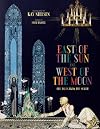
This gorgeous edition of Norwegian folktales as illustrated by Kay Nielsen might be an absolute shoe in for my top books of the year list. Taschen’s art publications are always of high quality, but they surpassed themselves with this lush reprint. Nielsen’s illustrations are showcased alongside their accompanying stories wonderfully and the introductory essays provide some much appreciated context on the importance of Asbjørnsen and Moe’s work to collect and chronicle the folktales of show more Norway, so it is easy to see how this book was a smash hit when it was first published and why Taschen chose to reimagine it for the modern market. What I liked most about this book (besides the illustrations and quality of publication, of course) is the fact that the stories are actually readable. Many collections of this sort either cater to a child audience or become too academic in their transcription, in addition to collecting too many stories of the same sort which quickly becomes tedious to read in any attempt to read the collection cover to cover, but each story stands well alone and is easily accessible by readers of any age. My only small complaint is that Taschen chose to have captions for the images taken straight from the text of the stories, which I felt was alternatingly pointless (readers can either easily identify the match between image and text, or the specific image can apply to many parts of the story) and a wasted opportunity to provide more context and commentary extraneous to the text of the stories. show less

The Snow Queen, illustrated by P.J. Lynch.
I think that I have finally reached the conclusion of that portion of my Hans Christian Andersen project devoted to The Snow Queen, and after eleven different picture-book retellings, it's about time! How glad I am that this edition, adapted by Caroline Peachey and illustrated by P.J. Lynch, is the final one to be read, rather than the insipid version done by Mary Engelbreit, as I can conclude this mini-investigation on the right note!
With a show more narrative that is mostly faithful to the original, retaining its seven-chapter format, Peachey's text reads well and keeps the reader's attention. The fairy-tales told by the flowers in the old witch's garden are omitted, which seems to be a rather common decision, for those abridging this tale, but otherwise this seems to be an accurate and faithful translation. The illustrations by P.J. Lynch - who also worked on Andersen's The Steadfast Tin Soldier - are gorgeous, capturing the wild enchantment of the tale. I particularly liked his full two-page spreads, of the Snow Queen hovering over the town, of Gerda in the enchanted flower garden, and of her journey under the vast Northern Lights. Not quite the equal of Vladyslav Yerko's edition, I would rank this with Angela Barrett's version, which is high praise indeed! Well worth the time of any reader with a love of this particular tale, or an appreciation of beautiful fairy-tale art. show less
I think that I have finally reached the conclusion of that portion of my Hans Christian Andersen project devoted to The Snow Queen, and after eleven different picture-book retellings, it's about time! How glad I am that this edition, adapted by Caroline Peachey and illustrated by P.J. Lynch, is the final one to be read, rather than the insipid version done by Mary Engelbreit, as I can conclude this mini-investigation on the right note!
With a show more narrative that is mostly faithful to the original, retaining its seven-chapter format, Peachey's text reads well and keeps the reader's attention. The fairy-tales told by the flowers in the old witch's garden are omitted, which seems to be a rather common decision, for those abridging this tale, but otherwise this seems to be an accurate and faithful translation. The illustrations by P.J. Lynch - who also worked on Andersen's The Steadfast Tin Soldier - are gorgeous, capturing the wild enchantment of the tale. I particularly liked his full two-page spreads, of the Snow Queen hovering over the town, of Gerda in the enchanted flower garden, and of her journey under the vast Northern Lights. Not quite the equal of Vladyslav Yerko's edition, I would rank this with Angela Barrett's version, which is high praise indeed! Well worth the time of any reader with a love of this particular tale, or an appreciation of beautiful fairy-tale art. show less
Lists
Awards


You May Also Like


Associated Authors
Statistics
- Works
- 10
- Also by
- 29
- Members
- 1,461
- Popularity
- #17,583
- Rating
- 4.1
- Reviews
- 22
- ISBNs
- 88
- Languages
- 8
- Favorited
- 3