
Kenneth M. Pollack
Author of The Persian Puzzle: The Conflict Between Iran and America
About the Author
Kenneth M. Pollack is director of research at the Saban Center for Middle East Policy at the Brookings Institution.
Image credit: Pollack speaking at the Miller Center of Public Affairs in 2012.
Works by Kenneth M. Pollack
A Path Out of the Desert: A Grand Strategy for America in the Middle East (2008) 75 copies, 1 review
Armies of Sand: The Past, Present, and Future of Arab Military Effectiveness (2018) 70 copies, 1 review
The Arab Awakening: America and the Transformation of the Middle East (Saban Center at the Brookings Institution Books) (2011) 18 copies
An Army to Defeat Assad: How to Turn Syria's Opposition Into a Real Fighting Force [journal article] 1 copy
Associated Works
Tagged
Common Knowledge
- Canonical name
- Pollack, Kenneth M.
- Other names
- Pollack, Kenneth Michael
- Birthdate
- 1966-01-13
- Gender
- male
- Education
- Yale College (B.A.|Political Science)
Massachusetts Institute of Technology (Ph.D.|Political Science) - Occupations
- intelligence analyst
- Organizations
- Central Intelligence Agency
National Security Council
Council on Foreign Relations
Brookings Institution - Awards and honors
- CIA Certificate of Distinction for Outstanding Performance of Duty
- Relationships
- Koppel, Andrea (spouse)
Koppel, Ted (father-in-law) - Nationality
- USA
- Places of residence
- Washington, D.C., USA
- Associated Place (for map)
- D.C., USA
Members
Reviews
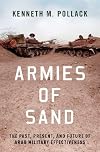
For more reviews and bookish posts visit: https://www.ManOfLaBook.com
Armies of Sand: The Past, Present, and Future of Arab Military Effectiveness by Kenneth M. Pollack investigates the lacking performance of Arab armies since 1945, despite massive investments, training, the latest weaponry, and certainly no shortness of bravery. Mr. Pollack is and Middle East political-military affairs expert who worked in the region and the held relevant positions in the American government.
This book is a show more fantastic, well researched and respectful analysis of Arab armies’ shortfalls in conventional warfare. It is a subject that has been studied, talked about, and researched both within and outside the countries involved, but I believe that this is the best book I have read on this subject to date.
Armies of Sand by Kenneth M. Pollack examines the causes and effects of the ineffectiveness of the Arab Armies after World War II. The book also dispelled popular explanations for these deficiencies by examining historical data from 15 different Arab armies against non-Arab ones such as South Vietnam, Argentina, and Chad. He also analyzes ISIS and Hezbollah as examples of counter Arab culture groups which bypass the cultural weakness that he sees as part of the reason for the big armies’ failures.
The author’s main argument can be separated into four categories: Soviet doctrine, politicization of the military, economic underdevelopment, and Arab patriarchal culture.
One of the theories that Arab armies weren’t successful is because the adaptation of Soviet doctrine which is both rigid and centralized. Mr. Pollack, however, debunks that theory writing that Arab armies were most successful applying that doctrine. He brings examples of Cuba and North Korea who implemented Soviet doctrine successfully.
The politicization of Arab armies, or as the author calls it “praetorianism“, certain did hamper strategic leadership. However, preferring loyalty over competence does not account for the tactical failure of young officers and small units across all armies.
Even though the Arabs lack of technical familiarity (back then, not today) made it difficult to maintain modern war machines, other comparable nations managed to adapt. The Chines of the mid and late 1900s were behind the Arabs from an economic perspective but still showed greater flexibility and initiative in the battlefield.
The author concludes that the dominant Arab cultural traits are the main ones at fault. Rote memorization discouraged initiative, paternalism discouraged questioning your superiors and discouraging individual initiative racked havoc when orders from above were late or never arrived when battlefield conditions dictated a change in strategy.
Mr. Pollack tackled a difficult subject, but his vast knowledge of Middle East battles, rigorous research, and field knowledge made for a remarkable book. This is a comprehensive, very readable book that is a must for anyone who wants to understand Middle East Militaries and its history. show less
Armies of Sand: The Past, Present, and Future of Arab Military Effectiveness by Kenneth M. Pollack investigates the lacking performance of Arab armies since 1945, despite massive investments, training, the latest weaponry, and certainly no shortness of bravery. Mr. Pollack is and Middle East political-military affairs expert who worked in the region and the held relevant positions in the American government.
This book is a show more fantastic, well researched and respectful analysis of Arab armies’ shortfalls in conventional warfare. It is a subject that has been studied, talked about, and researched both within and outside the countries involved, but I believe that this is the best book I have read on this subject to date.
Armies of Sand by Kenneth M. Pollack examines the causes and effects of the ineffectiveness of the Arab Armies after World War II. The book also dispelled popular explanations for these deficiencies by examining historical data from 15 different Arab armies against non-Arab ones such as South Vietnam, Argentina, and Chad. He also analyzes ISIS and Hezbollah as examples of counter Arab culture groups which bypass the cultural weakness that he sees as part of the reason for the big armies’ failures.
The author’s main argument can be separated into four categories: Soviet doctrine, politicization of the military, economic underdevelopment, and Arab patriarchal culture.
One of the theories that Arab armies weren’t successful is because the adaptation of Soviet doctrine which is both rigid and centralized. Mr. Pollack, however, debunks that theory writing that Arab armies were most successful applying that doctrine. He brings examples of Cuba and North Korea who implemented Soviet doctrine successfully.
The politicization of Arab armies, or as the author calls it “praetorianism“, certain did hamper strategic leadership. However, preferring loyalty over competence does not account for the tactical failure of young officers and small units across all armies.
Even though the Arabs lack of technical familiarity (back then, not today) made it difficult to maintain modern war machines, other comparable nations managed to adapt. The Chines of the mid and late 1900s were behind the Arabs from an economic perspective but still showed greater flexibility and initiative in the battlefield.
The author concludes that the dominant Arab cultural traits are the main ones at fault. Rote memorization discouraged initiative, paternalism discouraged questioning your superiors and discouraging individual initiative racked havoc when orders from above were late or never arrived when battlefield conditions dictated a change in strategy.
Mr. Pollack tackled a difficult subject, but his vast knowledge of Middle East battles, rigorous research, and field knowledge made for a remarkable book. This is a comprehensive, very readable book that is a must for anyone who wants to understand Middle East Militaries and its history. show less
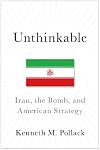
Unthinkable: Iran, the bomb, and American Strategy by Kenneth Pollack is an investigation into the American and Iranian relationship and possible plans of action. Kenneth Pollack earned a BA from Yale and a PhD from MIT. From 1988 through 1995 he was an analyst on Iraqi and Iranian military issues for the CIA. In 1999, he rejoined the National Security Council and has served as a professor at the National Defense University. Outside of the government Pollack work for the Brookings show more Institution and the Council of Foreign Relations.
In the field of International Relations there are two camps: The Liberal Theory and the Realist Theory. The Liberal camp believes in cooperation among nations and if there is a problem there should be a group effort (international institutions) to solve it: Woodrow Wilson’s League of Nations, Roosevelt’s United Nations, even both Bush's Iraq invasions involved coalitions of like thinking nations. The idea of working as group and improving ties helps keep peace by developing common ground and interests. Ideas of interlinked trade (and democracy) creates dependencies among nations ensuring peace and stability. The European Union and NAFTA are examples. The Realists believe the individual states are the main players in the international arena. States should act in their own interests and to ensure their own security. Relations between states is determined by their relative power. Economic, political, and military strength are the determinates of power. Self-interest and power drive the Realist Theory. Kissenger and Reagan are examples American Realists. Reagan's unilateral attacks on Iranian oil platforms in the the Persian Gulf (1987) or the mining of Nicaraguan harbors (1984) are examples of the Realist Theory in action.
Kenneth Pollack is a Realist and that is fairly rare in American writing. Most writing today is from the Liberal Theory. Leverett and Flynt's Going to Tehran is an excellent excellent of Liberal Theory and Iran. Pollack book is a counter balance and presents an American-centric view of Iran rather than an international view. The differences can be readily seen in the writing. Pallack quotes Hooman Majd (The Ayatollah Begs to Differ and The Ministry of Guidance Invites You Not to Stay ) in his book. Majd writing about the Green Revolution in Iran spoke of the restraint of the Iranian government and stated the government figure of under 100 deaths in the riots. The government concentrated on mass arrests and then released most explaining that the people were caught up in a frenzy much like an angry football mob and that did not constitute treason. The Greens agreed with with the less than 100 death toll. In Tunisia, for example 338 died. Egypt 846. Yemen 2,000. Bahrain 120. Libya 30,000. Syria is approaching 100,000. Majd saw this as restraint and the only way the Iranian regime could keep power. Pollack writes “They arrested all of the opposition leaders and with thousands more; they beat up hundreds, if not thousands, and killed perhaps as many as a hundred for good measure – often at random to drive home to the revolutionaries that anyone involved with the Greens might pay the ultimate price.*” Both authors present the same facts, but their tone is very different.
Pollack writes very well and with his experience I would have assumed that he was more than a few years older than I am, rather than three years younger. I could not help being taken back to the Cold War Era when I read his description of what you need to know to be an expert on Iran. Two phrases are all you need: “I don't know” and “it depends”. Shades of the former Soviet Union. The similarities are are remarkable. Unthinkable is filled with relative information and an excellent example of the Realist Theory in action. It is a very worthwhile read for any wanting to understand the inner workings of foreign policy and Iran. Pollack is a refreshing change to the usual opinions of Iranian foreign affairs. He presents a wealth information and carefully backs his opinions and findings with plenty of source material. I recommend this book for anyone looking into current American foreign policy or Iran in the world. Dr. Pollack is indeed an expert in his field.
The reviewer holds a MA in International Relations with a concentration in US Security Policy from St. Mary's University, San Antonio, TX. He is a supporter of the Liberal Theory.
*The quote is from the uncorrected galley of the book. It is being used to show the author's tone rather than to verify specific factual information. show less
In the field of International Relations there are two camps: The Liberal Theory and the Realist Theory. The Liberal camp believes in cooperation among nations and if there is a problem there should be a group effort (international institutions) to solve it: Woodrow Wilson’s League of Nations, Roosevelt’s United Nations, even both Bush's Iraq invasions involved coalitions of like thinking nations. The idea of working as group and improving ties helps keep peace by developing common ground and interests. Ideas of interlinked trade (and democracy) creates dependencies among nations ensuring peace and stability. The European Union and NAFTA are examples. The Realists believe the individual states are the main players in the international arena. States should act in their own interests and to ensure their own security. Relations between states is determined by their relative power. Economic, political, and military strength are the determinates of power. Self-interest and power drive the Realist Theory. Kissenger and Reagan are examples American Realists. Reagan's unilateral attacks on Iranian oil platforms in the the Persian Gulf (1987) or the mining of Nicaraguan harbors (1984) are examples of the Realist Theory in action.
Kenneth Pollack is a Realist and that is fairly rare in American writing. Most writing today is from the Liberal Theory. Leverett and Flynt's Going to Tehran is an excellent excellent of Liberal Theory and Iran. Pollack book is a counter balance and presents an American-centric view of Iran rather than an international view. The differences can be readily seen in the writing. Pallack quotes Hooman Majd (The Ayatollah Begs to Differ and The Ministry of Guidance Invites You Not to Stay ) in his book. Majd writing about the Green Revolution in Iran spoke of the restraint of the Iranian government and stated the government figure of under 100 deaths in the riots. The government concentrated on mass arrests and then released most explaining that the people were caught up in a frenzy much like an angry football mob and that did not constitute treason. The Greens agreed with with the less than 100 death toll. In Tunisia, for example 338 died. Egypt 846. Yemen 2,000. Bahrain 120. Libya 30,000. Syria is approaching 100,000. Majd saw this as restraint and the only way the Iranian regime could keep power. Pollack writes “They arrested all of the opposition leaders and with thousands more; they beat up hundreds, if not thousands, and killed perhaps as many as a hundred for good measure – often at random to drive home to the revolutionaries that anyone involved with the Greens might pay the ultimate price.*” Both authors present the same facts, but their tone is very different.
Pollack writes very well and with his experience I would have assumed that he was more than a few years older than I am, rather than three years younger. I could not help being taken back to the Cold War Era when I read his description of what you need to know to be an expert on Iran. Two phrases are all you need: “I don't know” and “it depends”. Shades of the former Soviet Union. The similarities are are remarkable. Unthinkable is filled with relative information and an excellent example of the Realist Theory in action. It is a very worthwhile read for any wanting to understand the inner workings of foreign policy and Iran. Pollack is a refreshing change to the usual opinions of Iranian foreign affairs. He presents a wealth information and carefully backs his opinions and findings with plenty of source material. I recommend this book for anyone looking into current American foreign policy or Iran in the world. Dr. Pollack is indeed an expert in his field.
The reviewer holds a MA in International Relations with a concentration in US Security Policy from St. Mary's University, San Antonio, TX. He is a supporter of the Liberal Theory.
*The quote is from the uncorrected galley of the book. It is being used to show the author's tone rather than to verify specific factual information. show less
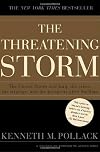
This is a case for invading Iraq, well before Bush and his crowd did it. There have been 88 reviewers in Amazon from 2003 through 2007. It is facinating to read how the first reviewers think Pollock has a good case and latest one say he was wrong.
It is now 2015 and as I consider discarding it I say,no,no,no. I reread did other of the 85 Ajmazon reviewers. We need to go back again and again and see exactly what Bush and company had in mind ad see where we are now.
It is now 2015 and as I consider discarding it I say,no,no,no. I reread did other of the 85 Ajmazon reviewers. We need to go back again and again and see exactly what Bush and company had in mind ad see where we are now.
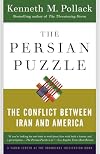
If you are interested in the history of Iran but don't know where to start, this book could be for you. Interesting, informative and readable.
Lists
Awards


You May Also Like


Associated Authors
Statistics
- Works
- 18
- Also by
- 1
- Members
- 876
- Popularity
- #29,232
- Rating
- 3.9
- Reviews
- 5
- ISBNs
- 31