
Diane Middlebrook (1939–2007)
Author of Anne Sexton: A Biography
About the Author
Diane Middlebrook is a former professor at Stanford University.
Image credit: Photo by Jerry Bauer
Works by Diane Middlebrook
Associated Works
Tagged
Common Knowledge
- Legal name
- Middlebrook, Diane Helen Wood
- Other names
- Wood, Diane (birth)
- Birthdate
- 1939-04-16
- Date of death
- 2007-12-15
- Gender
- female
- Education
- University of Washington (BA | 1961)
Yale University (MA|1962|Ph.D|1968) - Occupations
- professor (English ∙ Stanford University)
biographer
poet - Organizations
- Stanford University
- Awards and honors
- Royal Society of Literature (Fellow, 2004)
Prix Du Meilleur Livre Etranger (2006) - Relationships
- Djerassi, Carl (husband)
- Cause of death
- cancer (liposarcoma)
- Nationality
- USA
- Birthplace
- Pocatello, Idaho, USA
- Places of residence
- Pocatello, Idaho, USA
London, England, UK
San Francisco, California, USA - Place of death
- San Francisco, California, USA
- Associated Place (for map)
- USA
Members
Reviews
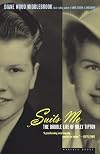
The author is extremely offensive in her refusal to consider that her subject may not have been "playing a role" or "deceiving" anyone. It is easy enough to imagine a person dressing up as a different gender in order to obtain access to worlds not easily attainable in their present gender presentation. But to live for all of one's adult life in a single gender presentation without revealing the sex assigned at birth to anyone, including your own wife or child, is a strong case for believing show more that Billy Tipton was a man and the only "double life" was the childhood period in which he was forced to disguise himself as a girl. We can't know Billy Tipton's gender identity for sure. Such things were simply not spoken of back then. But Diane sure as hell could have respected the identity that Mr. Tipton chose to portray. show less

This is a very well researched biography which links Sexton's poetry to her condition at the time of writing. For those who do not know her work, Sexton produced, almost exclusively, self examining work. This was initially helpful to a lady who had been unloved as a child but, eventually became destructive.
Do not read this book hoping to find a sugar coated version of Sexton's life. Unless you have lived with someone like this, she will come out of these pages as a rather unpleasant, self show more centred person and it will be difficult to understand how so many people can like her and put themselves out for so little respect. Even if one didn't know the end of Sexton's life, it soon becomes inevitable that things will not end well - and they don't.
Certainly, in Anne Sexton's case, being a tortured soul was directly the cause of her literary output: she was advised to write by her psychiatrist and found that she was rather good. It is strange that someone so unable to appreciate the feelings of others could be so good at putting the human condition into words.
Not a pleasant read, but one well worth the effort, whether one is a fan of her poetry or no. show less
Do not read this book hoping to find a sugar coated version of Sexton's life. Unless you have lived with someone like this, she will come out of these pages as a rather unpleasant, self show more centred person and it will be difficult to understand how so many people can like her and put themselves out for so little respect. Even if one didn't know the end of Sexton's life, it soon becomes inevitable that things will not end well - and they don't.
Certainly, in Anne Sexton's case, being a tortured soul was directly the cause of her literary output: she was advised to write by her psychiatrist and found that she was rather good. It is strange that someone so unable to appreciate the feelings of others could be so good at putting the human condition into words.
Not a pleasant read, but one well worth the effort, whether one is a fan of her poetry or no. show less
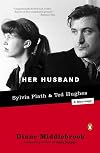
I had some difficulty in choosing which shelf to put this on: biography, fiction or fantasy. I get a bit tired of ever being the nay-sayer, but really, what's the point of anything but complete honesty?
This book is a mess. It's a shambling, mishmash, hodgepodge collection of random thoughts, pulled together by a Sylvia Plath-Ted Hughes groupie who-wasn't-there-when-it-happened-but-writes-about-them-like-she-was-the-family-confidante. I hate that.
Middlebrook rehashes all the old Plath-Hughes show more nuggets without adding anything to the body of work that has been covered, exhaustively, by other biographers. In fact, she probably sets the Plath-Hughes academy back by a decade with some unique (read: kooky or comical) interpretations of the poems. Scholars, and fans, may well be scratching their heads for years wondering about some of these parsed mis-directions on love and marriage.
What is most striking is that Middlebrook seems to be writing an apologia for Ted Hughes -- a little bit of irony coming from a feminist professor. Not that feminists should champion women's causes only, but that Hughes was probably one of the least deserving of such a defence of character, even self-admittedly so, if one knows the Hughes canon.
So.
It's a mess. Weak literary analysis aside, she fails to provide the road map that she intended to write when she started this book.
I don't think you should go in with the notion you want to find out who's right," says Middlebrook, "especially if you're thinking about marriage splits. That's not what a biographer should do. The biographer should ask, 'what was going on? Who was bringing what to the table at that moment?', knowing that marriages are dynamic relationships, knowing that something can grow up inside either of the partners that wasn't a factor when they made their commitment. ... "So that's what I wanted to know: what was their marriage like, what was going on? I would say neither was sinned against or sinning. Or that both were. But I think it's better to look at it in a binary sense: who was alive, who was dead.
Despite her denial, Middlebrook made up her mind long before she ever came to the page, on who was right and who was wrong in this tragic marriage. She gives her hand away in the same interview in which she defends herself:
Then I discovered that what I really wanted to do was talk about the marriage's long life in Hughes's imagination. So the book falls into two parts: when Plath is alive, and after her death. I was interested in how he struggled with the legacy of her suicide and of her work, and how he really – this is quite striking – continued to value her work, though her death was such a compromising and emotionally horrible thing for him.".[The Telegraph, 14 June 2004]
She writes about the marriage that had "its long life in Hughes's imagination" in such a way that beatifies the already-anointed, and in a less-than charming, lopsided fashion ends up blaming Plath for the weight she put on Hughes' life and imagination. A study in impartiality, if ever there was one. (!)
Apart from the undeserved reverence she casts on our hero, the writing itself is un-even at best. She writes lovely, lucid moments for a paragraph or two, and just when one thinks she is getting somewhere with the story, she veers off into the traffic, and plays wantonly with the reader's emotions. It's like following a drunken guest's monologue at a party: some of it is interesting, some of it is even brilliant, but when she starts smashing the crystal you ask her to leave because there's only so much madness that should be supported between friends. show less
This book is a mess. It's a shambling, mishmash, hodgepodge collection of random thoughts, pulled together by a Sylvia Plath-Ted Hughes groupie who-wasn't-there-when-it-happened-but-writes-about-them-like-she-was-the-family-confidante. I hate that.
Middlebrook rehashes all the old Plath-Hughes show more nuggets without adding anything to the body of work that has been covered, exhaustively, by other biographers. In fact, she probably sets the Plath-Hughes academy back by a decade with some unique (read: kooky or comical) interpretations of the poems. Scholars, and fans, may well be scratching their heads for years wondering about some of these parsed mis-directions on love and marriage.
What is most striking is that Middlebrook seems to be writing an apologia for Ted Hughes -- a little bit of irony coming from a feminist professor. Not that feminists should champion women's causes only, but that Hughes was probably one of the least deserving of such a defence of character, even self-admittedly so, if one knows the Hughes canon.
So.
It's a mess. Weak literary analysis aside, she fails to provide the road map that she intended to write when she started this book.
I don't think you should go in with the notion you want to find out who's right," says Middlebrook, "especially if you're thinking about marriage splits. That's not what a biographer should do. The biographer should ask, 'what was going on? Who was bringing what to the table at that moment?', knowing that marriages are dynamic relationships, knowing that something can grow up inside either of the partners that wasn't a factor when they made their commitment. ... "So that's what I wanted to know: what was their marriage like, what was going on? I would say neither was sinned against or sinning. Or that both were. But I think it's better to look at it in a binary sense: who was alive, who was dead.
Despite her denial, Middlebrook made up her mind long before she ever came to the page, on who was right and who was wrong in this tragic marriage. She gives her hand away in the same interview in which she defends herself:
Then I discovered that what I really wanted to do was talk about the marriage's long life in Hughes's imagination. So the book falls into two parts: when Plath is alive, and after her death. I was interested in how he struggled with the legacy of her suicide and of her work, and how he really – this is quite striking – continued to value her work, though her death was such a compromising and emotionally horrible thing for him.".[The Telegraph, 14 June 2004]
She writes about the marriage that had "its long life in Hughes's imagination" in such a way that beatifies the already-anointed, and in a less-than charming, lopsided fashion ends up blaming Plath for the weight she put on Hughes' life and imagination. A study in impartiality, if ever there was one. (!)
Apart from the undeserved reverence she casts on our hero, the writing itself is un-even at best. She writes lovely, lucid moments for a paragraph or two, and just when one thinks she is getting somewhere with the story, she veers off into the traffic, and plays wantonly with the reader's emotions. It's like following a drunken guest's monologue at a party: some of it is interesting, some of it is even brilliant, but when she starts smashing the crystal you ask her to leave because there's only so much madness that should be supported between friends. show less
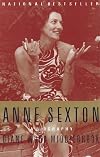
Hard to reconcile the poet from the woman. Anne definitely lived for her poetry. Her last year was difficult, lonely, full of breakdowns & not writing. The psychiatry of the day was not very helpful: nothing seemed to help her but Thorazine--and that blocked her writing energy. So she kind of had to choose-medication & stability or poetry & madness. It was a difficult life. I too felt relief and cried for her at the end.
Lists
Awards


You May Also Like


Associated Authors
Statistics
- Works
- 11
- Also by
- 1
- Members
- 2,148
- Popularity
- #11,970
- Rating
- 3.9
- Reviews
- 19
- ISBNs
- 43
- Languages
- 7
- Favorited
- 2