
Anne Katharine Stevenson
Author of Bitter Fame: A Life of Sylvia Plath
About the Author
Works by Anne Katharine Stevenson
Associated Works
Literature: An Introduction to Fiction, Poetry, and Drama (1995) — Contributor, some editions — 1,011 copies, 7 reviews
No More Masks: An Anthology of Twentieth-Century American Women Poets (1993) — Contributor, some editions — 224 copies, 3 reviews
Poetry Speaks Expanded: Hear Poets Read Their Own Work from Tennyson to Plath (2007) — Contributor — 157 copies, 2 reviews
No More Masks! An Anthology of Poems by Women (1973) — Afterword, some editions; Contributor — 124 copies
Tagged
Common Knowledge
- Birthdate
- 1933
- Gender
- female
- Education
- University of Michigan
- Places of residence
- Ann Arbor, Michigan, USA
- Associated Place (for map)
- Michigan, USA
Members
Reviews

This is one of the best biographies I've ever read. It must have been a very difficult one to write. Somehow Stevenson manages to tell what she knows about the utter craziness of Sylvia Plath's personality without being judgemental and without making the reader hate her subject (or, conversely, hate the writer).
Plath must have been one of the most difficult people to be around, evah. She could never in her own mind be wrong about anything, so any bad behavior on her part was either blamed on show more someone else or else instantly forgotten by Sylvia through her strategy of total amnesia. I have known one person like this in my life, and I associate all of the traits I read about here with toxic narcissism, although Stevenson never uses the term.
An example of "bad behavior": Sylvia was married to Ted Hughes, also a poet. They had a good marriage, in that they both respected each other's work. However, Sylvia had a jealous streak that knew no boundaries. She wanted Ted all to herself, all the time. One day Ted and a male friend went to a pub for lunch. Evidently they were gone "too long" (the friend says that for some reason "40 minutes" sticks in his mind). By the time they returned to the flat, they found that in a fit of rage and retribution Sylvia had ripped to pieces all of Ted's manuscripts, notes, and journals. And she evidently did this to him more than once--but not more than twice, because he eventually left her. However, and I don't know this to be true because I haven't read the things he published about Sylvia, his friends say that he never had a bad word to say about her--not ever.
Stevenson chose to include, in the appendix, a memoir of Sylvia written by a woman who knew her well in London. She says that there aren't that many people who are in possession of the facts about Sylvia: "among those of us who are, there must be one or two who can't afford to fall foul of feminist apartheid or risk a boycott by the Lib Lobby. Moreover, nobody I know was prepared to say a word as long as Sylvia's children were growing up, with the result that her hagiographers got a head start of two decades plus in which to shape their apotheosis, which snowballed onward and upward virtually unchallenged."
This was a fascinating, fast, compelling read. I gave it 5 stars. show less
Plath must have been one of the most difficult people to be around, evah. She could never in her own mind be wrong about anything, so any bad behavior on her part was either blamed on show more someone else or else instantly forgotten by Sylvia through her strategy of total amnesia. I have known one person like this in my life, and I associate all of the traits I read about here with toxic narcissism, although Stevenson never uses the term.
An example of "bad behavior": Sylvia was married to Ted Hughes, also a poet. They had a good marriage, in that they both respected each other's work. However, Sylvia had a jealous streak that knew no boundaries. She wanted Ted all to herself, all the time. One day Ted and a male friend went to a pub for lunch. Evidently they were gone "too long" (the friend says that for some reason "40 minutes" sticks in his mind). By the time they returned to the flat, they found that in a fit of rage and retribution Sylvia had ripped to pieces all of Ted's manuscripts, notes, and journals. And she evidently did this to him more than once--but not more than twice, because he eventually left her. However, and I don't know this to be true because I haven't read the things he published about Sylvia, his friends say that he never had a bad word to say about her--not ever.
Stevenson chose to include, in the appendix, a memoir of Sylvia written by a woman who knew her well in London. She says that there aren't that many people who are in possession of the facts about Sylvia: "among those of us who are, there must be one or two who can't afford to fall foul of feminist apartheid or risk a boycott by the Lib Lobby. Moreover, nobody I know was prepared to say a word as long as Sylvia's children were growing up, with the result that her hagiographers got a head start of two decades plus in which to shape their apotheosis, which snowballed onward and upward virtually unchallenged."
This was a fascinating, fast, compelling read. I gave it 5 stars. show less
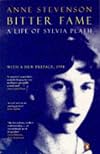
'...Earlier accounts gave us the Red Riding Hood in Plath, Stevenson gives us the wolf as well...'

I've read many Plath bios and this one is my least favorite. Stevenson seemed to be more concerned with avoiding the wrath of Olwyn Hughes than writing an informative biography.
There are some absolute crackers in here and some really poignant observations and bits of wisdom.
I particularly liked The Loom and The Password.
I particularly liked The Loom and The Password.
Lists
Awards


You May Also Like


Associated Authors
Statistics
- Works
- 34
- Also by
- 10
- Members
- 749
- Popularity
- #33,950
- Rating
- 4.0
- Reviews
- 5
- ISBNs
- 59
- Languages
- 4