
Charles Grier Sellers (1923–2021)
Author of The Market Revolution: Jacksonian America, 1815-1846
About the Author
Series
Works by Charles Grier Sellers
Associated Works
Journal of the Early Republic: Winter 1992 Vol.12, No.4 — Contributor — 1 copy
Tagged
Common Knowledge
- Legal name
- Sellers, Charles Grier, Jr.
- Birthdate
- 1923-09-09
- Date of death
- 2021-09-23
- Gender
- male
- Education
- Harvard University (BA | History)
University of North Carolina, Chapel Hill (PhD) - Occupations
- historian
professor
political activist - Organizations
- University of California, Berkeley
- Awards and honors
- Guggenheim Fellow (1963)
- Relationships
- Merchant, Carolyn (spouse)
- Nationality
- USA
- Birthplace
- Charlotte, North Carolina, USA
- Place of death
- Berkeley, California, USA
- Associated Place (for map)
- USA
Members
Reviews

For more reviews and bookish posts visit: https://www.ManofLaBook.com
James K. Polk, Vol. 2: Continentalist, 1843-1846 by Charles Grier Sellers is the first volume in a proposed trilogy studying the 11th President of the United States. Mr. Sellers is a historian, a Southern liberal specializing in antebellum America.
The first book, Jacksonian, was a bit dry and ended right before Mr. Polk became President. I felt that James Polk, actually, played a secondary character in his own biography. I show more was looking forward to read the second volume assuming it would be more interesting, and less dry than the first.
It seems that the author had a change of heart about his subject, which might explain why the “trilogy” only consists of two books. The introduction of James K. Polk, Vol. 2: Continentalist, 1843-1846 by Charles Grier Sellers judges Polk as a person, and as a President. Yes, he achieved all his goals, but how did these goals benefit the United States, and what was Polk’s role in achieving them?
Polk, it seems, was a master manipulator, an ambitious man who rose from political limbo to the highest office in the land. In the process, the author describes the steps that went into forming his government in great detail. I felt this section of the book was overly written and, frankly, quite boring.
Mr. Sellers shines, however, when he covers the war with Mexico, and the Oregon issues. While he stops a step shy of flat-out saying Polk provoked the war, he does write about the fact that Polk was painting the Mexicans into a financial corner with no-way out. Polk’s hunger for land, and hatred of Mexicans also played a role in the decisions.
There is very little about Polk’s family and his life outside politics. His personal life is mentioned in the context of his administration to explain motives. While the work seems to be mostly academic, I appreciated the author attempt to liven it up with a few one-liners and metaphors which made me chuckle several times.
Then the book just… ends!!
These two volumes certainly made me appreciate President Polk much more. His presidency was complex, and Mr. Sellers does not worship his subject like other biographers. He’s not afraid o criticize Polk, as well as praise he when deserved. show less
James K. Polk, Vol. 2: Continentalist, 1843-1846 by Charles Grier Sellers is the first volume in a proposed trilogy studying the 11th President of the United States. Mr. Sellers is a historian, a Southern liberal specializing in antebellum America.
The first book, Jacksonian, was a bit dry and ended right before Mr. Polk became President. I felt that James Polk, actually, played a secondary character in his own biography. I show more was looking forward to read the second volume assuming it would be more interesting, and less dry than the first.
It seems that the author had a change of heart about his subject, which might explain why the “trilogy” only consists of two books. The introduction of James K. Polk, Vol. 2: Continentalist, 1843-1846 by Charles Grier Sellers judges Polk as a person, and as a President. Yes, he achieved all his goals, but how did these goals benefit the United States, and what was Polk’s role in achieving them?
Polk, it seems, was a master manipulator, an ambitious man who rose from political limbo to the highest office in the land. In the process, the author describes the steps that went into forming his government in great detail. I felt this section of the book was overly written and, frankly, quite boring.
Mr. Sellers shines, however, when he covers the war with Mexico, and the Oregon issues. While he stops a step shy of flat-out saying Polk provoked the war, he does write about the fact that Polk was painting the Mexicans into a financial corner with no-way out. Polk’s hunger for land, and hatred of Mexicans also played a role in the decisions.
There is very little about Polk’s family and his life outside politics. His personal life is mentioned in the context of his administration to explain motives. While the work seems to be mostly academic, I appreciated the author attempt to liven it up with a few one-liners and metaphors which made me chuckle several times.
Then the book just… ends!!
These two volumes certainly made me appreciate President Polk much more. His presidency was complex, and Mr. Sellers does not worship his subject like other biographers. He’s not afraid o criticize Polk, as well as praise he when deserved. show less
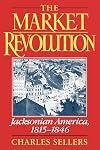
very good marxist-ish history of the USA in the first half of the 1800s. I really appreciate having a book about this period which is not genocidal Jackson apologia, but still sympathetically tries to understand the mass social forces which swept him to power. Mainly focused on politics, but contains detailed sections on gender, culture, and religion. Suffers somewhat from being organized around a specific narrative of "rising bourgeoisie developmentalism versus rural settler-colonial show more democracy". This is a reasonable story to frame history through but is is distinctly *a story*. show less

2016 James K. Polk: Continentalist 1843-1846, by Charles Sellers (read 20 Jul 1986) This is the second volume of Sellers' masterful biography of James K. Polk. This covers the period from Aug 1843 to Aug 1846. It is an extremely fascinating story and time. Polk received no votes on the first seven ballots at Baltimore, but on the 8th ballot, New Hampshire (the second state called--they called states in geographical order) gave all its six votes to Polk. He won on the ninth ballot. This book show more is just fascinating in its detail. The Mexican War really seems indefensible by any standard, the U.S. clearly being in the wrong and Polk eager for war. But how glad I can't help but be that all that vast area is a part of the U.S. This biography is excellent. I hope I can get the third volume. [Years later I determined the third volume was never written, or at least never published.] show less

2016 James K. Polk: Continentalist 1843-1846, by Charles Sellers (read 20 Jul 1986) This is the second volume of Sellers' masterful biography of James K. Polk. This covers the period from Aug 1843 to Aug 1846. It is an extremely fascinating story and time. Polk received no votes on the first seven ballots at Baltimore, but on the 8th ballot, New Hampshire (the second state called--they called states in geographical order) gave all its six votes to Polk. He won on the ninth ballot. This book show more is just fascinating in its detail. The Mexican War really seems indefensible by any standard, the U.S. clearly being in the wrong and Polk eager for war. But how glad I can't help but be that all that vast area is a part of the U.S. This biography is excellent. I hope I can get the third volume. [Years later I determined the third volume was never written, or at least never published.] show less
Lists
Awards

You May Also Like


Associated Authors
Statistics
- Works
- 15
- Also by
- 3
- Members
- 620
- Popularity
- #40,586
- Rating
- 3.6
- Reviews
- 6
- ISBNs
- 37
- Languages
- 2