
Michael S. Reynolds (1939–2000)
Author of Hemingway: The Paris Years
About the Author
Michael Reynolds is the author of the masterful biography of Hemingway that includes these works: the National Book Award-nominated The Young Hemingway, Hemingway: The Homecoming, Hemingway: The 1930s, and Hemingway: The Final Years, all available from Norton. He lives in New Mexico.
Series
Works by Michael S. Reynolds
Hemingway's First War the Making of a Farewell to Arms: The Making of "a Farewell to Arms (1976) 14 copies
Hemingway's First War 1 copy
Hemingway 1 copy
Associated Works
At the Hemingways: With Fifty Years of Correspondence Between Ernest and Marcelline Hemingway (1999) — Foreword, some editions — 7 copies
Tagged
Common Knowledge
- Birthdate
- 1939
- Date of death
- 2000-08-15
- Gender
- male
- Education
- Duke University (PhD)
Rice University - Occupations
- professor
biographer - Organizations
- North Carolina State University
- Nationality
- USA
- Birthplace
- Kansas City, Missouri, USA
- Place of death
- Santa Fe, New Mexico, USA
- Associated Place (for map)
- USA
Members
Reviews
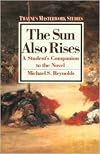
I like to go into a novel cold so that I form my own impressions of it. This week, I finally read Hemingway’s debut novel, The Sun Also Rises. But I decided to follow it up with this slim volume that bills itself as a “Students’ Companion” since it had found its way onto my shelves a few years ago. It was an interesting exercise. I found some of my first impressions confirmed; Reynolds cast other things I had noticed into a new light. And he pointed out many things I missed. That’s show more ok; I don’t expect to read a novel like an English professor would the first time through.
I nearly lost patience with it at the outset, though. Before getting to the novel itself, Reynolds offers three short chapters on the historical context, the importance of the work, and its critical reception that managed to be both superficial and wordy.
The following six chapters examine various aspects of the book, and I found them helpful. The first of them (chapter four in all) discusses the narrator, Jake Barnes. One insight stood out: Jake is, among the friends he has shepherded to Pamplona, like the steer in the ring among the bulls. How did I miss that? Well, in my defense, Hemingway put in a misdirect: Mike (one of those boorish, insufferable drunks) maintains that Cohn was a steer. He wasn’t, of course. How could he have spent a week frolicking in San Sebastian with Mike’s fiancée, Brett, if he had no “horns.”
In chapter five, on structural unity, Reynolds asserts that Hemingway’s inexperience as a novelist made Sun a poorly planned novel (yet in chapter eight, on Signs, Motifs, and Themes, he defends Hemingway from the charge that inconsistent time markers point to a similar lack of control over his material; the effect is to show that time is out of joint). Yet, chapter five shows how Hemingway achieves a satisfying unity through stylistic elements (repetition, for instance) and symbols (water, for one). In addition, the chapter includes a reference to Hemingway’s use of the adjective “nice.” I had noticed its frequent appearance when I read Sun but totally missed the tone of irony in its use that Reynolds demonstrates.
The next chapter, on Geography and History, deals with an aspect of the book I had noticed in my own reading: Hemingway’s detailed and accurate notation of streets, restaurants, and cafes. One could use Sun as a travel guide and find one’s way. In this, as well as with the dispassionate (hard-boiled) dialogues, Hemingway influenced generations of spy and detective novelists.
Chapter seven deals with virtues. Reynolds points out that Jake and his friends have no faith in traditional moral values due to the recent war. His friends are promiscuous, bibulous, and financially irresponsible. Unlike them, Jake is punctual, works for a living, and spends less than he earns. To Reynolds, these are not moral virtues but social. Jake’s responsible yet generous approach to money demonstrates that this is the only value left in a world that no longer holds any others. Jake is clear-eyed about it; he only hopes to get value for his money.
Reynolds returns to this in the next chapter, Signs, Motifs, and Themes. He writes: “If money has become the only operative value for this postwar generation, then it is spiritually sicker than it knows.”
This chapter also deals with an aspect of geography Reynolds hadn’t mentioned in chapter six. Jake and a friend go fishing near where Roland took his stand, in the country of Don Quixote. The allusions suggest that Jake, too, is a doomed, deluded romantic hero. He loves Brett and obeys her summons to come to gather her in Madrid after the departure of Romero, the young bullfighter. But because the war has made him into a steer, she’ll remain his unapproachable Dulcinea. He had even introduced her to Romero, an action that costs him his standing among the aficionados at the Hotel Montoya. He can never go back.
Reynolds has a clear take on Barnes. Jake knows his way around. He looks after his friends, representatives of the lost generation. An incredible quantity of alcohol is consumed in the book, but the one time Jake gets blindingly drunk is in the wake of the climactic event, when he is “gored” by Cohn. Jake pimped for the woman he loved, introducing her to the best of the young generation of bullfighters. Montoya will no longer look him in the eye. He rescues Brett in Madrid, but this clean-up action doesn’t cleanse him. Reynolds doesn’t say so, but his portrayal makes it seem that Jake’s relative sobriety and sense of responsibility—compared to that of his friends—only makes him more acutely aware that he, too, is one of the lost.
I’m glad that I didn’t read this book before reading the novel itself, but I was glad to have it nearby to supplement my own take. show less
I nearly lost patience with it at the outset, though. Before getting to the novel itself, Reynolds offers three short chapters on the historical context, the importance of the work, and its critical reception that managed to be both superficial and wordy.
The following six chapters examine various aspects of the book, and I found them helpful. The first of them (chapter four in all) discusses the narrator, Jake Barnes. One insight stood out: Jake is, among the friends he has shepherded to Pamplona, like the steer in the ring among the bulls. How did I miss that? Well, in my defense, Hemingway put in a misdirect: Mike (one of those boorish, insufferable drunks) maintains that Cohn was a steer. He wasn’t, of course. How could he have spent a week frolicking in San Sebastian with Mike’s fiancée, Brett, if he had no “horns.”
In chapter five, on structural unity, Reynolds asserts that Hemingway’s inexperience as a novelist made Sun a poorly planned novel (yet in chapter eight, on Signs, Motifs, and Themes, he defends Hemingway from the charge that inconsistent time markers point to a similar lack of control over his material; the effect is to show that time is out of joint). Yet, chapter five shows how Hemingway achieves a satisfying unity through stylistic elements (repetition, for instance) and symbols (water, for one). In addition, the chapter includes a reference to Hemingway’s use of the adjective “nice.” I had noticed its frequent appearance when I read Sun but totally missed the tone of irony in its use that Reynolds demonstrates.
The next chapter, on Geography and History, deals with an aspect of the book I had noticed in my own reading: Hemingway’s detailed and accurate notation of streets, restaurants, and cafes. One could use Sun as a travel guide and find one’s way. In this, as well as with the dispassionate (hard-boiled) dialogues, Hemingway influenced generations of spy and detective novelists.
Chapter seven deals with virtues. Reynolds points out that Jake and his friends have no faith in traditional moral values due to the recent war. His friends are promiscuous, bibulous, and financially irresponsible. Unlike them, Jake is punctual, works for a living, and spends less than he earns. To Reynolds, these are not moral virtues but social. Jake’s responsible yet generous approach to money demonstrates that this is the only value left in a world that no longer holds any others. Jake is clear-eyed about it; he only hopes to get value for his money.
Reynolds returns to this in the next chapter, Signs, Motifs, and Themes. He writes: “If money has become the only operative value for this postwar generation, then it is spiritually sicker than it knows.”
This chapter also deals with an aspect of geography Reynolds hadn’t mentioned in chapter six. Jake and a friend go fishing near where Roland took his stand, in the country of Don Quixote. The allusions suggest that Jake, too, is a doomed, deluded romantic hero. He loves Brett and obeys her summons to come to gather her in Madrid after the departure of Romero, the young bullfighter. But because the war has made him into a steer, she’ll remain his unapproachable Dulcinea. He had even introduced her to Romero, an action that costs him his standing among the aficionados at the Hotel Montoya. He can never go back.
Reynolds has a clear take on Barnes. Jake knows his way around. He looks after his friends, representatives of the lost generation. An incredible quantity of alcohol is consumed in the book, but the one time Jake gets blindingly drunk is in the wake of the climactic event, when he is “gored” by Cohn. Jake pimped for the woman he loved, introducing her to the best of the young generation of bullfighters. Montoya will no longer look him in the eye. He rescues Brett in Madrid, but this clean-up action doesn’t cleanse him. Reynolds doesn’t say so, but his portrayal makes it seem that Jake’s relative sobriety and sense of responsibility—compared to that of his friends—only makes him more acutely aware that he, too, is one of the lost.
I’m glad that I didn’t read this book before reading the novel itself, but I was glad to have it nearby to supplement my own take. show less

This is the perfect companion volume to A Moveable Feast. It takes Hemingway's memoir and puts it in chronological order, explains Hemingway's many jabs and offhand comments and corrects where Hemingway either embellished the story or made things up. What emerges is the story of a developing writer, a man desperate to both escape his upbringing and to impress the folks back home, a man quick to toss out an insult, but even quicker to take offense. Arriving in Paris, Hemingway was a mediocre show more writer of sentimental stories, but in just a few, intense years, he had made himself into one of the best writers of a very fertile time in American writing. Of course, he had help along the way, in the form of friendship and support from the likes of Gertrude Stein, Ezra Pound and even Ford Madox Ford, who supported Hemingway despite of Hemingway's scorn and his own preference for traditional 19th century writing. Hemingway needed help, even as he wanted to be a self-made man, leading him to form intense friendships that never lasted long -- Hemingway was not given to gratitude and preferred to burn his bridges once he had walked over them.
Reynolds discusses Hemingway's writing during that time in detail. I was interested to find that my favorites of Hemingway's many short stories were written during his years in Paris. He worked tirelessly at his craft, and when he was doing well, he wrote quickly. He was also able to edit his stories down; removing everything that didn't need to be said, leaving no unnecessary scenes or even words. A disastrous trip to Pamplona to watch the running of the bulls was the inspiration for The Sun Also Rises.
Reynolds' also puts Hemingway within his time and place, explaining the events of the time as well as providing a vivid picture of Paris in the 1920s.
It was a thrill to read that when Hemingway went to New York to negotiate the publishing contract for The Sun Also Rises he hung out at the Algonquin, spending time with Robert Benchley and Dorothy Parker, both of whom would accompany him on the ship back to Paris. I would have liked to have been on that boat. show less
Reynolds discusses Hemingway's writing during that time in detail. I was interested to find that my favorites of Hemingway's many short stories were written during his years in Paris. He worked tirelessly at his craft, and when he was doing well, he wrote quickly. He was also able to edit his stories down; removing everything that didn't need to be said, leaving no unnecessary scenes or even words. A disastrous trip to Pamplona to watch the running of the bulls was the inspiration for The Sun Also Rises.
Reynolds' also puts Hemingway within his time and place, explaining the events of the time as well as providing a vivid picture of Paris in the 1920s.
It was a thrill to read that when Hemingway went to New York to negotiate the publishing contract for The Sun Also Rises he hung out at the Algonquin, spending time with Robert Benchley and Dorothy Parker, both of whom would accompany him on the ship back to Paris. I would have liked to have been on that boat. show less
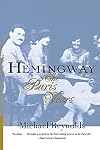
This is the second of a five-volume biography and it focuses on the years Hemingway spent in Paris (1921-1926) as a “struggling artist” perfecting his craft of writing. A lot of the book is devoted to Hemingway’s writing--when he wrote, where he wrote, the other writers and artists he sought out and their influences on him, what he was trying to accomplish (“I’m trying in all my stories to get the feeling of actual life -- not to just depict life -- or criticize it -- but to show more actually make it alive.”). Not being a huge fan of Hemingway’s writing I was surprised at how interesting this part of the book was. Hemingway clearly had a passion for writing and was obsessed with mastering it.
When not writing during these years, Hemingway was busy being a “man of action” (skiing in the Alps, attending the bullfights in Pamplona, going to horse races and boxing matches). “Always he reached out for the active, physical life, refusing to let the sedentary and contemplative role of writer control who he was.” Even in his twenties, he was dealing with periods of depression and mania and his mood shifts often were accompanied by a mean streak. His celebrated friendships didn’t always last long.
I thought Reynolds presented a very balanced picture of Hemingway’s life and I generally loved his writing (I sometimes felt like I was reading a novel). The only reason I’m not giving the book 5 stars was it did drag at times (generally when nothing much was happening in Hemingway’s life) and it took me almost 3 months to finish. In looking back over the number of things I underlined or marked with a post-it note, however, it clearly was a memorable read and one I would highly recommend. I already have Reynold’s previous volume in the biography (The Young Hemingway) waiting to be read. Somewhat to my own dismay, I'm becoming a Hemingway fanatic.
A favorite quote: “Early in his career, Hemingway began revising and editing what would become his longest and most well-known work: the legend of his own life, where there was never a clear line between fiction and reality.” show less
When not writing during these years, Hemingway was busy being a “man of action” (skiing in the Alps, attending the bullfights in Pamplona, going to horse races and boxing matches). “Always he reached out for the active, physical life, refusing to let the sedentary and contemplative role of writer control who he was.” Even in his twenties, he was dealing with periods of depression and mania and his mood shifts often were accompanied by a mean streak. His celebrated friendships didn’t always last long.
I thought Reynolds presented a very balanced picture of Hemingway’s life and I generally loved his writing (I sometimes felt like I was reading a novel). The only reason I’m not giving the book 5 stars was it did drag at times (generally when nothing much was happening in Hemingway’s life) and it took me almost 3 months to finish. In looking back over the number of things I underlined or marked with a post-it note, however, it clearly was a memorable read and one I would highly recommend. I already have Reynold’s previous volume in the biography (The Young Hemingway) waiting to be read. Somewhat to my own dismay, I'm becoming a Hemingway fanatic.
A favorite quote: “Early in his career, Hemingway began revising and editing what would become his longest and most well-known work: the legend of his own life, where there was never a clear line between fiction and reality.” show less
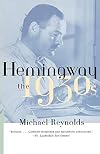
I was saddened to learn, as I went to write this review, that Michael Reynolds died in 2000. Initially, the concept of the book made me wonder whether Reynolds' work is merely a retelling of the master's work: whether Reynolds had much talent at all and simply used another's carefully-crafted public image as a topic for elevating one's own status. Moreover, my first thoughts were that chronologically-ordered books tend to be a hard slog to read. Australian war historian Lex McAulay came to show more mind as he writes very well-referenced, precisely-detailed and scholarly work which can be incredibly difficult to read other than for research purposes and I couldn't help seeing the similarities in style from a "readability" perspective. Nonetheless, Reynolds successfully melds chronology, at-times lengthy quotations, details and historical context with his own blend of character depictions and descriptions, without ever appearing to over-step the mark and over-dramatise history in what is an essentially good, scholarly and entertaining read. Reynolds' ability to capture the history of a character who was synonymous with the spirit of so many of the more romantic elements of the twentieth century is remarkable. I was reading Hemingway's "A Moveable Feast" and a number of his famous short stories while also reading Reynolds' work, an approach which I intend to continue as I read and study more of Hemingway's legacy while reading Reynolds' "The Paris Years". Nevertheless, I couldn't help but notice how the chronologically-ordered chapters move from year to year until the last few chapters where the years are suddenly jammed together as if the author became frustrated with the approach and forsook the planned structure in order to finish the book using less words than originally intended. On learning of Reynolds' death, and reflecting on Hemingway's witnessing the beginnings of his own legacy, however, i cannot help but think that Reynolds' work stands on its own two feet and is worthy of much praise as a historical piece. While not in the same vein as Hemingway's oft more glamorous career, I can not help but think that Reynolds' lifetime effort to record for posterity the lifetime of another was, in its own way, a life worth living. With that in mind, I suspect the true greatness of Reynolds' work is in the entire series on Hemingway, and not just this one volume. show less
Awards

You May Also Like


Statistics
- Works
- 14
- Also by
- 1
- Members
- 531
- Popularity
- #46,873
- Rating
- 4.0
- Reviews
- 6
- ISBNs
- 23