
Michael L. Morgan
Author of Classics of Moral and Political Theory
About the Author
Michael L. Morgan is the Chancellor's Professor Emeritus of Philosophy and Jewish Studies at Indiana University. Steven Weitzmanm is the Abraham M. Ellis Professor of Hebrew and Semitic Languages and Literature at the University of Pennsylvania and director of the Herbert D. Katz Center for show more Advanced Judaic Studies show less
Image credit: from Indiana University faculty page
Works by Michael L. Morgan
Associated Works
History of Jewish Philosophy (Routledge History of World Philosophies) (1997) — Contributor — 37 copies
Tagged
Common Knowledge
- Birthdate
- 1944
- Gender
- male
- Education
- University of Toronto (PhD)
- Occupations
- Philosophy and Jewish Studies professor, Indiana University, Bloomington
rabbi
Members
Reviews
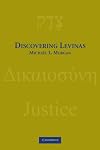
This book is extraordinary - it gives a full and plausible account of the whole of Levinasian thought and its significance; and it does so in terms which are simple, clear, and accessible. Emmanuel Levinas, of course, is the GREAT philosopher of the centrality of justice to our human understanding and identity. This survey of his work begins with Auschwitz as the condition with which we, and the 'modern world' as a whole perhaps, are confronted; it moves then to Levinas' understanding of the show more importance of the 'Face-to-Face' as the beginning of any plausible way forward; it continues with 'God', and with the relationship between Levinasian ethics and contemporary moral philosophy more widely; it considers his understanding of language - and here relates his work in particular to that of Jacques Derrida, but in a way which ought to make no potential reader anxious; and finally comes back to Levinas' Judaism, his understanding of Torah and his work not only as a philosopher but as an exegete, and his response to the Holocaust and the end of theodicy. I say: no potential reader should feel anxious - because in none of this does Michael Morgan evade the extreme complexity and density of Levinas' thought, nor that of the philosophers with whom he was in dialogue; nor does he evade the full moral actuality of the Shoah: these things are exhausting, though important. But he writes always in a way which is lucid, coherent, and easy to follow. I copy just a few quotations from his concluding remarks to give an indication of the clarity and simplicity with which this is done: 'One can summarize Levinas's central thought this way: He combines Kant's commitment to the primacy of morality with Kierkegaard's faith in God'; 'Ethics is primary not because it is a restricted but preeminent domain - of rules or virtues or ideals. It is primary because it is unrestricted and present everywhere'. Or what about this as an exhortation to the realistic prospects of a positive moral life: 'We should not feel an extraordinary strain or frustration because our lives are always torn in many directions, because we cannot act as we would like. We should feel the need for all of us to do what we can and ought, so that the aid given to all and the efforts to alleviate suffering, can be maximal.... Even if I cannot care for many alone or do much on my own, we all, working together, can accomplish a great deal. We can collectively do much to reduce suffering, to feed the hungry, to clothe the naked, and to provide others with decent, humane lives.' One of the best: read it. show less
Lists
You May Also Like


Associated Authors
Statistics
- Works
- 18
- Also by
- 3
- Members
- 632
- Popularity
- #39,872
- Rating
- 4.0
- Reviews
- 2
- ISBNs
- 63