
Ben Hubbard
Author of Poison: The History of Potions, Powders and Murderous Practitioners
About the Author
Ben Hubbard is an author of nonfiction for children and adults and has over 60 titles to his name. His books on many different subjects include science, technology, and "how things work" encyclopedias.
Series
Works by Ben Hubbard
The Viking Warrior: The Norse Raiders who Terrorized Medieval Europe (Landscape History) (2015) 57 copies
The Samurai Warrior: The Golden Age of Japan's Elite Warriors 1560-1615 (Landscape History) (2014) 38 copies
Flashpoints in History: Exploring the Cause, Effects and Triggers of Major 20th Century Events (2016) 24 copies
The Viking Warrior: The Raiders, Pillagers and Explorers Who Terrorized Medieval Europe (2017) 22 copies
Space Race: The Story of Space Exploration to the Moon and Beyond. With FREE Augmented Reality App (2019) 10 copies
Stories of Women During the Industrial Revolution: Changing Roles, Changing Lives (Women's Stories from History) (2015) 5 copies
Project X Origins Graphic Texts: Dark Red Book Band, Oxford Level 19: Great Engineers (2016) 4 copies
How We Lived in Ancient Times: Meet everyday children throughout history (How We Lived…, 1) (2020) 4 copies
Our Future in Space: Imagining Moon Bases, Missions to Mars, and More (Smithsonian Editions) (2023) 4 copies, 1 review
Reading Planet KS2 - Artificial Intelligence - Level 6: Jupiter/Blue band (Rising Stars Reading Planet) (2020) 3 copies
Myths and Legends Ultimate Handbook: More than 200 Heroes, Villains and Mythical Creatures from Around the World (DK's Ultimate Handbook) (2025) 3 copies
Jak se žilo v dávných dobách 1 copy
The Celts, Picts, Scoti and Romans (Raintree Perspectives: Settlers and Invaders of Britain) (2019) 1 copy
The Viking Warrier 1 copy
Vergif 1 copy
Tagged
Common Knowledge
- Gender
- male
Members
Reviews

The WHO HQ series fills a very specific niche: histories and biographies which cover the topic in sufficient detail for elementary aged students, written in an engaging way with short, easy-to-read chapters and line drawings. They are perfect for filling in gaps, expanding on a curriculum point, or offering enrichment.
I liked this installment for the way it stepped through the history of theories about the Nazca Lines, and how those theories evolved over time. It describes the Nazca people show more (and their predecessors), the scientists and others who have studied the lines, the climate factors, and mentions other geoglyphs around the world. It complimented our studies of the Nazca nicely. show less
I liked this installment for the way it stepped through the history of theories about the Nazca Lines, and how those theories evolved over time. It describes the Nazca people show more (and their predecessors), the scientists and others who have studied the lines, the climate factors, and mentions other geoglyphs around the world. It complimented our studies of the Nazca nicely. show less
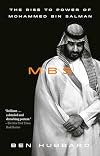
Unless something very unexpected happens, Mohammed bin Salman (MBS) will be the next ruler of Saudi Arabia. Of course, MBS's rise to be the Crown Prince and éminence grise behind the Saudi throne was itself unexpected. He outmanoeuvered a number of his more prominent and better connected relatives in order to secure power. Ben Hubbard's book covers what is known about MBS, his attempts to remake the Saudi economy and to change some aspects of Saudi society, and his involvement with major show more incidents such as the brutal assassination of journalist Jamal Khashoggi and the bizarre hostage-taking of Lebanese prime minister Saad Hariri.
It's a fluid and accessible synthesis, but while Hubbard has been to the country on a number of occasions, I'm not sure his account gave me much by way of insight into MBS that I hadn't already picked up on from newspaper articles over the years. Too few people who know MBS or his inner circles are willing or able to speak to foreign journalists; Hubbard has Saudi friends and contacts, but mostly of the moneyed middle-to-upper classes with university educations and international connections. So we get nothing on, for instance, on MBS's personal life (he's married with five children; I don't think there's a single confirmed picture of his wife available online, but there are reports that MBS is a domestic abuser), nor any first-hand accounts on how his reforms have affected the lives of the many thousands of poor migrant workers whose do the jobs that Saudis won't. Hubbard is also writing with an eye to what an American audience will find most interesting or important—which, fair enough, he's an American—but I have a suspicion that there are angles or factors left out here that Saudis themselves would find vital to understanding MBS and his context.
A useful overview of what we can know about MBS and his activities right now, but I feel like it can and will be superseded. show less
It's a fluid and accessible synthesis, but while Hubbard has been to the country on a number of occasions, I'm not sure his account gave me much by way of insight into MBS that I hadn't already picked up on from newspaper articles over the years. Too few people who know MBS or his inner circles are willing or able to speak to foreign journalists; Hubbard has Saudi friends and contacts, but mostly of the moneyed middle-to-upper classes with university educations and international connections. So we get nothing on, for instance, on MBS's personal life (he's married with five children; I don't think there's a single confirmed picture of his wife available online, but there are reports that MBS is a domestic abuser), nor any first-hand accounts on how his reforms have affected the lives of the many thousands of poor migrant workers whose do the jobs that Saudis won't. Hubbard is also writing with an eye to what an American audience will find most interesting or important—which, fair enough, he's an American—but I have a suspicion that there are angles or factors left out here that Saudis themselves would find vital to understanding MBS and his context.
A useful overview of what we can know about MBS and his activities right now, but I feel like it can and will be superseded. show less

[Written entirely in a personal capacity and not to be construed otherwise]
I must confess to finding this book a disappointment but then I was disappointed by Kim Ghattas' 'Black Wave' which I reviewed in June 2020 and for much the same reasons. I think there is a general problem emerging with senior journalists moving from reportage to analysis.
I will try not to repeat that general critique (I refer you to the earlier review) but will be very specific about this book whose faults and show more problems cannot be entirely laid at the door of a journalist who has been severely circumscribed in his access to sources and the subject he is covering.
Too much of what analysis there is depends on sources who are not close to the centres of decision-making in the Kingdom (which, as I say, is certainly not Hubbard's fault) or who have reason to resent or be disappointed by MBS' approach to policy.
I have another problem (mine not his) in that, unlike the Middle East as a whole where I can say what I like, I am limited in the comments I can make on Saudi Arabia (and perhaps two or three other nations) because of my professional interests. I have to respect these.
My reviews usually try to do two things - critique constructively a book and draw wider conclusions from the critique - but I am afraid that those professional interests mean that I cannot comment on MBS, the Saudi dynasty, Saudi Arabia or even Western relations with the Kingdom in any depth.
So, let us stick to the book and be straight up front by saying that Hubbard, who is a conscientious journalist covering a wide beat, will admit to only restricted access to the Kingdom and, when he is there, will tend to meet representatives of his own cosmopolitan class.
This is the Kim Ghattas problem again - a class of commentators who operate as subaltern critics of their own order which they implicitly believe as having universal moral value and who tend to associate with upper middle class like-minded people in exile or, more guardedly, in-country.
I certainly cannot criticise Hubbard for trying. The American elite market in particular was crying out for a coherent explanation of the phenomenon of MBS. It incidentally desperately wanted to understand the post-election 'volte face' of the man they most like to hate - ex-President Trump.
Somebody had to do it and, as an honest journalist, Hubbard could only do this by taking his sparse sources (no other mainstream Western journalist could do it better) and constructing a sufficiently plausible narrative which met with the moral expectations of his audience.
As a result, although there is some new material, the book is essentially one of taking the news stories of the last few years and binding them into that plausible narrative, adding some nuggets of experience from dealing with similar Saudi subalterns to create the whole.
It is thus a reasonably reliable account of the facts of the case as they are available (our Western intelligence services almost certainly do not know much more than Hubbard) but one suspects it is merely a temporary paradigm. It is certainly not an analysis.
If one wants a working model of the Saudi conundrum that will 'do' to be going along with, the book is definitely worth getting. Indeed, the Saudi leadership should read it because, true or false, it is what most influential Americans tend to think of their country and of their Crown Prince.
However (I am definitely not trying to pull rank because I have seen Saudis from the inside during crisis situations), the book does not manage to communicate the complexity of the situation or be fair about the reasoning that leads to what Americans and many Europeans think of as blunders.
Perhaps because of its audience or perhaps because of the material available, Hubbard concentrates on Khashoggi and female human rights activists in a way that distorts the total picture. These are stories engaged liberal Americans care about but they are not central to calculations in Riyadh.
There is a form of implicit neo-imperialist assumption that countries like the Kingdom should care about what East Coast Americans care about. That assumption gets confused with the 'realpolitik' involved in arms deals, oil, strategic regional influence and trade.
What matters is the nexus between moral fervour (bad things must be punished) and the realities of power. The tragedy for the East Coasters is that the terms of political trade no longer connect the two so readily or as they had hoped. Their ideological triumph comes as American power wanes.
US power is still substantial but has materially declined in recent years. The last real hold that the liberals have over states like the Kingdom is the threat of investor or consumer revolts over inappropriate dealings or perhaps an ending of arms sales.
The first means the French Chinese, Russians or Turks will try to fill the gap in a competitve market. The second (as Trump liked to point out implicitly in praising the value of arms deals) means job losses and business failures in an economy over-tied to military-industrial production.
Similarly, we do not know if the Saudi opening up of the country to foreign tourists will work or not but there are signs that the sports industry and its customers do not give a stuff about 'sportswashing' - the acquisition of Newcastle United by the Saudis was welcomed locally.
East Coasters want to be both rich and moral or rather powerful and moral because the fantastic rise of the US to global power has also been an exercise in morality. Where the US has not been moral (frequently), its intelligentsia have forced it to become moral or at least appear to be so.
This 'beacon on the hill' approach to foreign affairs (exemplified by the sponsorship of the United Nations and the Nuremburg War Crimes Tribunal) has been influential, limiting barbarism elsewhere, not least in the collapse of the European empires and even within Communism.
It is, as Sellars and Yeatman might put it, generally a 'good thing' but sometimes it takes on a life of its own, becomes detached from reality and seems to ignore the fact that the beacon sheds poor light on problems at home and that sometimes brutal realpolitik is also what Democrats do.
Forget Saudi Arabia for a moment and consider the position of any country faced with an America (or increasingly Europe) that mixes real tradeable advantages over power and resources with ideological or moral fervour. That country is likely to be get puzzled and resentful.
The Russians today sit puzzled as the Europeans seem to want to undermine their sphere of influence in Belarus and seek regime change (with Navalny) in Moscow yet have some 40% (roughly) of their core energy supplies dependent on Russian gas reserves.
The result is as we see it today. Not that the Russians are actually doing anything to restrict gas supplies (on the contrary, they religiously meet contract and want to supply more through NordStream 2) but that 'anti-Russianism' led to a failure to contract.
It may be that the alliance of greens and liberals in Europe may create an own goal where their 'morality' results in inflationary pressures that start to grant ammunition to populists. Moral foreign policy is always risky when it comes to dealing with resource or trade dependencies.
Look outward from such countries and they get confused because America has, during the war on terror, been ruthless (with the approval of its liberal elite) towards its enemies - which include people like Assange about whom there are reliable reports of a least a discussion of a kidnapping.
Extraordinary rendition was normalised (as, briefly, was torture) during the War on Terror and drone and missile attacks (currently and rightly a subject of criticism in Yemen) once routinely destroyed wedding parties in an Afghanistan in a war that proved futile.
They also see regular reports of excessive force used by American police against 'black' citizens even if they are not fully aware of the scale of America's prison population. It is not that 'liberals' do not also protest against such things but foreigners get confused as to who speaks for the West.
This is also not to be anti-Western or anti-American (quite the contrary - I consider myself a British patriot and god help any Russky who attempts a landing on our shores) but simply to say that analysis requires analysis not of what should be but of what is to get to what should be.
This is also not to justify or condone anything by anyone (Russian, Saudi, Chinese) but only to suggest that long-lasting reform in any national situation comes from a realistic, almost Machiavellian, understanding of the political reality and social forces that reformers have inherited.
Thus, a book must be either an advocate for liberal reform, sharing the values of its expected readership and friends in the region, or be an analytical description of the socio-political reality of the world of its subject matter. It cannot easily be both.
If the latter, then more time should be spent on the nexus of power between international capital and the Gulf and on the dynamics of the relationship with the US at a strategic level and less on a single influential depressed journalist or the radical wing of feminism in a conservative culture.
In fact, Hubbard does us a service by giving us some important new background on why Khashoggi was potentially more of a threat to the regime than simply 'speaking out for reform'. The evidence shows that he was being drawn heavily into a Turkic-Qatari network anathema to Riyadh.
He was also toying (although one suspects naively by 'friends') with engagement in what would amount to an electronic warfare operation against the regime. Only the most naive would not understand that, today, cyberwarfare of all types is a form of warfare implying 'treason' to some.
Similarly, there is perhaps insufficient understanding on the US East Coast (this applies to situations elsewhere in the world) that dissent is also a serious game. It is interpreted, rightly or wrongly, as representing foreign influence and destabilisation.
This is not an argument against dissent (on the contrary, intelligent dissent is the agent of socio-political transformation) but that dissenters without a strategy who concentrate on single issues are likely to get ground down because that issue may unravel complex negotiated settlements.
This is especially so when dissent appears to represent class or special interests and is not argued for in terms of the national or general interest. The best argument for feminism in Saudi Arabia at the moment is not 'rights' (a Western concept) but the unleashing of female power in the economy.
So, for lack of any other sound single volume account of the rise of MBS from the perspective of the West, I can recommend this book but as a 'true account' of the politics I have my doubts - too much concentration on the defeated elements in the elite and the views of moneyed cosmopolitans.
As to MBS himself, whether he will ascend the throne, whether he will settle the atrocious Yemeni War through some form of rapprochement with Iran, whether he will transform the Saudi economy (Hubbard is too downbeat on this) are matters I cannot comment on.
I will also not comment on US-Saudi relations except to say that many countries like the Kingdom can afford to play a long game because American politics tend to be a succession of short games.
For the 'liberal' view of the universe to become the new global norm, the US has to see liberals win the mid-terms and then the Presidential for 2024 and then see the Republican opposition swing back to the centre and become bipartisan again.
Here in the West, we seem to be coming to the end of our public health crisis but we are already entering an economic one (more one of uncertainty than deterioration) and economic crises invariably lead to socio-political tensions and almost certainly some form of class conflict.
That gives the 'illiberal' part of the global world order good reason to be cautious about kow-towing to liberal norms too quickly or not on their own terms. In fact, most 'illiberal' leaders have modernisation strategies of a sort that ultimately lead to liberalisation ... but perhaps not yet.
All in all, get this book if you want a basic run-down of the facts in a clear and well-written narrative or if you want your liberal prejudices given a bit more useful ammunition but you may have to wait a little longer for the information that will give you a definitive picture of MBS. show less
I must confess to finding this book a disappointment but then I was disappointed by Kim Ghattas' 'Black Wave' which I reviewed in June 2020 and for much the same reasons. I think there is a general problem emerging with senior journalists moving from reportage to analysis.
I will try not to repeat that general critique (I refer you to the earlier review) but will be very specific about this book whose faults and show more problems cannot be entirely laid at the door of a journalist who has been severely circumscribed in his access to sources and the subject he is covering.
Too much of what analysis there is depends on sources who are not close to the centres of decision-making in the Kingdom (which, as I say, is certainly not Hubbard's fault) or who have reason to resent or be disappointed by MBS' approach to policy.
I have another problem (mine not his) in that, unlike the Middle East as a whole where I can say what I like, I am limited in the comments I can make on Saudi Arabia (and perhaps two or three other nations) because of my professional interests. I have to respect these.
My reviews usually try to do two things - critique constructively a book and draw wider conclusions from the critique - but I am afraid that those professional interests mean that I cannot comment on MBS, the Saudi dynasty, Saudi Arabia or even Western relations with the Kingdom in any depth.
So, let us stick to the book and be straight up front by saying that Hubbard, who is a conscientious journalist covering a wide beat, will admit to only restricted access to the Kingdom and, when he is there, will tend to meet representatives of his own cosmopolitan class.
This is the Kim Ghattas problem again - a class of commentators who operate as subaltern critics of their own order which they implicitly believe as having universal moral value and who tend to associate with upper middle class like-minded people in exile or, more guardedly, in-country.
I certainly cannot criticise Hubbard for trying. The American elite market in particular was crying out for a coherent explanation of the phenomenon of MBS. It incidentally desperately wanted to understand the post-election 'volte face' of the man they most like to hate - ex-President Trump.
Somebody had to do it and, as an honest journalist, Hubbard could only do this by taking his sparse sources (no other mainstream Western journalist could do it better) and constructing a sufficiently plausible narrative which met with the moral expectations of his audience.
As a result, although there is some new material, the book is essentially one of taking the news stories of the last few years and binding them into that plausible narrative, adding some nuggets of experience from dealing with similar Saudi subalterns to create the whole.
It is thus a reasonably reliable account of the facts of the case as they are available (our Western intelligence services almost certainly do not know much more than Hubbard) but one suspects it is merely a temporary paradigm. It is certainly not an analysis.
If one wants a working model of the Saudi conundrum that will 'do' to be going along with, the book is definitely worth getting. Indeed, the Saudi leadership should read it because, true or false, it is what most influential Americans tend to think of their country and of their Crown Prince.
However (I am definitely not trying to pull rank because I have seen Saudis from the inside during crisis situations), the book does not manage to communicate the complexity of the situation or be fair about the reasoning that leads to what Americans and many Europeans think of as blunders.
Perhaps because of its audience or perhaps because of the material available, Hubbard concentrates on Khashoggi and female human rights activists in a way that distorts the total picture. These are stories engaged liberal Americans care about but they are not central to calculations in Riyadh.
There is a form of implicit neo-imperialist assumption that countries like the Kingdom should care about what East Coast Americans care about. That assumption gets confused with the 'realpolitik' involved in arms deals, oil, strategic regional influence and trade.
What matters is the nexus between moral fervour (bad things must be punished) and the realities of power. The tragedy for the East Coasters is that the terms of political trade no longer connect the two so readily or as they had hoped. Their ideological triumph comes as American power wanes.
US power is still substantial but has materially declined in recent years. The last real hold that the liberals have over states like the Kingdom is the threat of investor or consumer revolts over inappropriate dealings or perhaps an ending of arms sales.
The first means the French Chinese, Russians or Turks will try to fill the gap in a competitve market. The second (as Trump liked to point out implicitly in praising the value of arms deals) means job losses and business failures in an economy over-tied to military-industrial production.
Similarly, we do not know if the Saudi opening up of the country to foreign tourists will work or not but there are signs that the sports industry and its customers do not give a stuff about 'sportswashing' - the acquisition of Newcastle United by the Saudis was welcomed locally.
East Coasters want to be both rich and moral or rather powerful and moral because the fantastic rise of the US to global power has also been an exercise in morality. Where the US has not been moral (frequently), its intelligentsia have forced it to become moral or at least appear to be so.
This 'beacon on the hill' approach to foreign affairs (exemplified by the sponsorship of the United Nations and the Nuremburg War Crimes Tribunal) has been influential, limiting barbarism elsewhere, not least in the collapse of the European empires and even within Communism.
It is, as Sellars and Yeatman might put it, generally a 'good thing' but sometimes it takes on a life of its own, becomes detached from reality and seems to ignore the fact that the beacon sheds poor light on problems at home and that sometimes brutal realpolitik is also what Democrats do.
Forget Saudi Arabia for a moment and consider the position of any country faced with an America (or increasingly Europe) that mixes real tradeable advantages over power and resources with ideological or moral fervour. That country is likely to be get puzzled and resentful.
The Russians today sit puzzled as the Europeans seem to want to undermine their sphere of influence in Belarus and seek regime change (with Navalny) in Moscow yet have some 40% (roughly) of their core energy supplies dependent on Russian gas reserves.
The result is as we see it today. Not that the Russians are actually doing anything to restrict gas supplies (on the contrary, they religiously meet contract and want to supply more through NordStream 2) but that 'anti-Russianism' led to a failure to contract.
It may be that the alliance of greens and liberals in Europe may create an own goal where their 'morality' results in inflationary pressures that start to grant ammunition to populists. Moral foreign policy is always risky when it comes to dealing with resource or trade dependencies.
Look outward from such countries and they get confused because America has, during the war on terror, been ruthless (with the approval of its liberal elite) towards its enemies - which include people like Assange about whom there are reliable reports of a least a discussion of a kidnapping.
Extraordinary rendition was normalised (as, briefly, was torture) during the War on Terror and drone and missile attacks (currently and rightly a subject of criticism in Yemen) once routinely destroyed wedding parties in an Afghanistan in a war that proved futile.
They also see regular reports of excessive force used by American police against 'black' citizens even if they are not fully aware of the scale of America's prison population. It is not that 'liberals' do not also protest against such things but foreigners get confused as to who speaks for the West.
This is also not to be anti-Western or anti-American (quite the contrary - I consider myself a British patriot and god help any Russky who attempts a landing on our shores) but simply to say that analysis requires analysis not of what should be but of what is to get to what should be.
This is also not to justify or condone anything by anyone (Russian, Saudi, Chinese) but only to suggest that long-lasting reform in any national situation comes from a realistic, almost Machiavellian, understanding of the political reality and social forces that reformers have inherited.
Thus, a book must be either an advocate for liberal reform, sharing the values of its expected readership and friends in the region, or be an analytical description of the socio-political reality of the world of its subject matter. It cannot easily be both.
If the latter, then more time should be spent on the nexus of power between international capital and the Gulf and on the dynamics of the relationship with the US at a strategic level and less on a single influential depressed journalist or the radical wing of feminism in a conservative culture.
In fact, Hubbard does us a service by giving us some important new background on why Khashoggi was potentially more of a threat to the regime than simply 'speaking out for reform'. The evidence shows that he was being drawn heavily into a Turkic-Qatari network anathema to Riyadh.
He was also toying (although one suspects naively by 'friends') with engagement in what would amount to an electronic warfare operation against the regime. Only the most naive would not understand that, today, cyberwarfare of all types is a form of warfare implying 'treason' to some.
Similarly, there is perhaps insufficient understanding on the US East Coast (this applies to situations elsewhere in the world) that dissent is also a serious game. It is interpreted, rightly or wrongly, as representing foreign influence and destabilisation.
This is not an argument against dissent (on the contrary, intelligent dissent is the agent of socio-political transformation) but that dissenters without a strategy who concentrate on single issues are likely to get ground down because that issue may unravel complex negotiated settlements.
This is especially so when dissent appears to represent class or special interests and is not argued for in terms of the national or general interest. The best argument for feminism in Saudi Arabia at the moment is not 'rights' (a Western concept) but the unleashing of female power in the economy.
So, for lack of any other sound single volume account of the rise of MBS from the perspective of the West, I can recommend this book but as a 'true account' of the politics I have my doubts - too much concentration on the defeated elements in the elite and the views of moneyed cosmopolitans.
As to MBS himself, whether he will ascend the throne, whether he will settle the atrocious Yemeni War through some form of rapprochement with Iran, whether he will transform the Saudi economy (Hubbard is too downbeat on this) are matters I cannot comment on.
I will also not comment on US-Saudi relations except to say that many countries like the Kingdom can afford to play a long game because American politics tend to be a succession of short games.
For the 'liberal' view of the universe to become the new global norm, the US has to see liberals win the mid-terms and then the Presidential for 2024 and then see the Republican opposition swing back to the centre and become bipartisan again.
Here in the West, we seem to be coming to the end of our public health crisis but we are already entering an economic one (more one of uncertainty than deterioration) and economic crises invariably lead to socio-political tensions and almost certainly some form of class conflict.
That gives the 'illiberal' part of the global world order good reason to be cautious about kow-towing to liberal norms too quickly or not on their own terms. In fact, most 'illiberal' leaders have modernisation strategies of a sort that ultimately lead to liberalisation ... but perhaps not yet.
All in all, get this book if you want a basic run-down of the facts in a clear and well-written narrative or if you want your liberal prejudices given a bit more useful ammunition but you may have to wait a little longer for the information that will give you a definitive picture of MBS. show less
I was excited coming into this book, because I knew very little about MBS. Apparently for good reason! What I got out of this book is that nobody knows anything. That was disappointing. On the other hand, Hubbard does provide a good summary of recent history in Saudi Arabia. There's nothing new here, but it was nice to read it all in one place, versus scattered across newspaper articles. I did feel that the presentation was very biased, from an American perspective of Saudi Arabia. This was show more especially so in the choice of topics. The topics were exactly those that have made headlines in the NY Times, primarily: Kashoggi's murder, the Yemen war, the Ritz crackdown, the kidnapping of Lebanese PM Hariri, and Saudi women driving. Of course there is a good reason for that, but MBS must have done many other things, that are interesting enough for a book but not for an American newspaper. My interest in Saudi Arabia is not infinite, but I wouldn't have minded going a little bit deeper.
> What is clear is everything MBS did not do before he burst onto the scene in 2015. He never ran a company that made a mark. He never acquired military experience. He never studied at a foreign university. He never mastered, or even become functional in, a foreign language. He never spent significant time in the United States, Europe, or elsewhere in the West
> They had grown angry with him in 2011 for saying that President Hosni Mubarak of Egypt should leave power amid mass protests against his rule. Their frustrations grew when Obama did not provide more support to the rebels in Syria and declined to bomb President al-Assad after he used chemical weapons on his people in 2013, a tactic that Obama had previously declared a "red line." They then learned that the Obama administration had engaged in intensive negotiations with Iran about its nuclear program. The talks had been kept secret from the Saudis, solidifying the feeling that they had been betrayed by their most important ally.
> The kingdom had championed foreign jihad in Afghanistan in the 1980s (in cooperation with the CIA), but that idea had gone out of style by the time I arrived, and government clerics focused their teaching on another tenet of Wahhabism: obedience to the ruler. I heard little disparaging talk about Christians and Jews, but the clerics persistently attacked Shiites, for ideological reasons and as part of the rivalry with Iran. The only Saudis who ever called me an infidel were children.
> The hardest part of discussing Wahhabism with Saudis was their tendency to deny its existence, for a range of reasons. Even the most devout Saudis did not identify themselves as Wahhabis and argued that Muhammed ibn Abdul-Wahhab had not established a new creed, but merely restored Islam to its roots.
> For most of his career, [Jamal Kashoggi] was not a reporter in the Western sense, as in a journalist who dug up facts to hold reluctant powers accountable. More accurately, he was an i'laami, Arabic for a "media figure," who wrote, ran newspapers, and appeared on television as much to transmit the government’s views as to promote his own. Sometimes, that meant writing for cash, as when a contact wired him $100,000 in 2009 to do a sympathetic interview with Prime Minister Najib Razak of Malaysia
> Of the many ironies of the Trump era, one of the greatest was that Trump, after demeaning Saudi Arabia and its faith throughout the campaign, would, in the course of a few months, anoint Saudi Arabia a preferred American partner and the lynchpin of his Middle East policy
> MBS rewrote the rules for public discussion in Saudi Arabia, scaling back the types of comments and criticisms that were permitted while greatly upping the price Saudis would pay for crossing the new red lines.
> In his push for change, MBS had an advantage embedded in Wahhabism itself. Along with its quest for religious purity was an injunction to obey the ruler, even if he was unjust, as long as he did not hinder the practice of Islam. MBS was well aware of that tenet and leveraged it against the clerics, who mostly kept their grumbling to themselves.
> The kingdom no longer invested in foreign missionary activity as it had in the past, and it no longer held the same prominence in global Islam. Salafism, the hyper-conservative trend to which Wahhabism belongs, was alive and well in many Islamic countries with little connection to Saudi Arabia. And the continued ferocity of Al Qaeda and the Islamic State, which had borrowed from Wahhabism before going their own way, showed they could thrive without it.
> "We have been influenced by you in the U.S. a lot," he had said the year before. "Not because anybody exerted pressure on us—if anyone puts pressure on us, we go the other way. But if you put a movie in the cinema and I watch it, I will be influenced." Without that American influence, he said, "we would have ended up like North Korea." The warm welcome MBS received also showed that the disturbing events he had authored on the other side of the planet—the Yemen intervention, the arrest campaigns, the kidnapping of Saad Hariri, the Ritz crackdown—had not affected how powerful Americans viewed him. At least not yet.
> "the Supreme Leader is trying to conquer the world. He believes he owns the world. They are both evil guys. He is the Hitler of the Middle East." In other interviews, MBS accused Iran of seeking to take over Mecca. "We are an essential target of the Iranian regime," he said. "We will not wait until the battle is in Saudi Arabia. Instead, we'll work so that the battle is for them in Iran." So when MBS looked for other regional powers who shared his view, he found Israel, setting in motion a major regional shift. … the fact that the likely next ruler of Saudi Arabia sees Israel not as a foe, but as a legitimate neighbor with shared political and economic interests could lead to a lasting realignment of the Middle East. show less
> What is clear is everything MBS did not do before he burst onto the scene in 2015. He never ran a company that made a mark. He never acquired military experience. He never studied at a foreign university. He never mastered, or even become functional in, a foreign language. He never spent significant time in the United States, Europe, or elsewhere in the West
> They had grown angry with him in 2011 for saying that President Hosni Mubarak of Egypt should leave power amid mass protests against his rule. Their frustrations grew when Obama did not provide more support to the rebels in Syria and declined to bomb President al-Assad after he used chemical weapons on his people in 2013, a tactic that Obama had previously declared a "red line." They then learned that the Obama administration had engaged in intensive negotiations with Iran about its nuclear program. The talks had been kept secret from the Saudis, solidifying the feeling that they had been betrayed by their most important ally.
> The kingdom had championed foreign jihad in Afghanistan in the 1980s (in cooperation with the CIA), but that idea had gone out of style by the time I arrived, and government clerics focused their teaching on another tenet of Wahhabism: obedience to the ruler. I heard little disparaging talk about Christians and Jews, but the clerics persistently attacked Shiites, for ideological reasons and as part of the rivalry with Iran. The only Saudis who ever called me an infidel were children.
> The hardest part of discussing Wahhabism with Saudis was their tendency to deny its existence, for a range of reasons. Even the most devout Saudis did not identify themselves as Wahhabis and argued that Muhammed ibn Abdul-Wahhab had not established a new creed, but merely restored Islam to its roots.
> For most of his career, [Jamal Kashoggi] was not a reporter in the Western sense, as in a journalist who dug up facts to hold reluctant powers accountable. More accurately, he was an i'laami, Arabic for a "media figure," who wrote, ran newspapers, and appeared on television as much to transmit the government’s views as to promote his own. Sometimes, that meant writing for cash, as when a contact wired him $100,000 in 2009 to do a sympathetic interview with Prime Minister Najib Razak of Malaysia
> Of the many ironies of the Trump era, one of the greatest was that Trump, after demeaning Saudi Arabia and its faith throughout the campaign, would, in the course of a few months, anoint Saudi Arabia a preferred American partner and the lynchpin of his Middle East policy
> MBS rewrote the rules for public discussion in Saudi Arabia, scaling back the types of comments and criticisms that were permitted while greatly upping the price Saudis would pay for crossing the new red lines.
> In his push for change, MBS had an advantage embedded in Wahhabism itself. Along with its quest for religious purity was an injunction to obey the ruler, even if he was unjust, as long as he did not hinder the practice of Islam. MBS was well aware of that tenet and leveraged it against the clerics, who mostly kept their grumbling to themselves.
> The kingdom no longer invested in foreign missionary activity as it had in the past, and it no longer held the same prominence in global Islam. Salafism, the hyper-conservative trend to which Wahhabism belongs, was alive and well in many Islamic countries with little connection to Saudi Arabia. And the continued ferocity of Al Qaeda and the Islamic State, which had borrowed from Wahhabism before going their own way, showed they could thrive without it.
> "We have been influenced by you in the U.S. a lot," he had said the year before. "Not because anybody exerted pressure on us—if anyone puts pressure on us, we go the other way. But if you put a movie in the cinema and I watch it, I will be influenced." Without that American influence, he said, "we would have ended up like North Korea." The warm welcome MBS received also showed that the disturbing events he had authored on the other side of the planet—the Yemen intervention, the arrest campaigns, the kidnapping of Saad Hariri, the Ritz crackdown—had not affected how powerful Americans viewed him. At least not yet.
> "the Supreme Leader is trying to conquer the world. He believes he owns the world. They are both evil guys. He is the Hitler of the Middle East." In other interviews, MBS accused Iran of seeking to take over Mecca. "We are an essential target of the Iranian regime," he said. "We will not wait until the battle is in Saudi Arabia. Instead, we'll work so that the battle is for them in Iran." So when MBS looked for other regional powers who shared his view, he found Israel, setting in motion a major regional shift. … the fact that the likely next ruler of Saudi Arabia sees Israel not as a foe, but as a legitimate neighbor with shared political and economic interests could lead to a lasting realignment of the Middle East. show less
Awards


You May Also Like


Associated Authors
Statistics
- Works
- 141
- Members
- 1,567
- Popularity
- #16,469
- Rating
- 4.0
- Reviews
- 20
- ISBNs
- 372
- Languages
- 9
