
Martin J. Dougherty
Author of Great Battles
About the Author
Martin J. Dougherty is a British Master level Assessor with the Self-Defence Federation in Britain, holding black belts in two styles of Ju-jitsu. His martial arts career has encompassed Ju-jitsu, kickboxing, and self-defense, as well as military combative systems. Martin has written books on a show more variety of subjects, including self-defense, military history, and warfare, in addition to his work in the defense and security industry, where he is an expert on weapons systems and asymmetric conflict. show less
Series
Works by Martin J. Dougherty
Battles of the Ancient World 1285 BC - AD 451: From Kadesh to Catalaunian Field (2007) 194 copies, 1 review
Weapons & Fighting Techniques of the Medieval Warrior, 1000 - 1500 Ad (Blue Jacket Bks) (2008) 110 copies
Special Forces Unarmed Combat Guide: Hand-to-Hand Fighting Skills From The World's Most Elite Military Units (2010) 96 copies, 2 reviews
Battles That Changed Warfare: 1457 BC - AD 1999 From Chariot Warfare to Stealth Bombers (2008) — Author — 88 copies, 2 reviews
The World's Worst Weapons (From Exploding Guns to Malfunctioning Missiles) (2007) 77 copies, 2 reviews
King Arthur and the Knights of the Round Table: Stories of Camelot and the Quest for the Holy Grail (Histories) (2016) 43 copies
Unarmed Combat: Hand-to-Hand Fighting Skills from the World's Most Elite Military Units (SAS and Elite Forces Guide) (2010) 38 copies
The Aztec, Inca and Maya Empires: The Illustrated History of the Ancient Peoples of Mesoamerica & South America (Histories) (2018) 26 copies, 1 review
Celtic Ancient Origins: Stories Of People & Civilization (Flame Tree Collector's Editions) (2024) 18 copies
SAS and Elite Forces Guide Extreme Unarmed Combat: Hand-To-Hand Fighting Skills From The World's Elite Military Units (2012) 15 copies
World's Worst Weapons: Exploding Tanks, Uncontrollable Ships, and Unflyable Aircraft (2018) 15 copies
Special forces sporting guns : weapons, skills, and techniques for the competitive shooting sports (2014) 3 copies
Amber Books Tanks - The World's Best 2 copies
Traveller: Cluster Truck 2 copies
Traveller: Personal Weapons of Charted Space (Traveller: Science-Fiction Adventure In the Far Future) (2002) 2 copies
Borderland Profile: Tanith 2 copies
Pirates of Drinax: The Theev Cluster 2 copies
Borderland Profile: Wildeman 2 copies
Pirates of Drinax: Gods of Marduk 2 copies
High Guard: Deployment Shuttle 2 copies
High Guard: Aslan 2 copies
Armed Combat: Defending yourself against hand-held weapons (SAS and Elite Forces Guide) (2013) 2 copies
Into The Borderland 2 copies
Borderland Profile: Arunisiir 2 copies
Borderland Profile: Inurin 2 copies
Borderland Profile: Umemii 2 copies
Nahkampftraining: Extrem: Die Nahkampf- und Selbstverteidigungstechniken der Eliteeinheiten (2020) 2 copies
Diaspora Phönix Traveller Fiction 2 copies
Naval Campaign Sourcebook 1 copy
Traveller - Element Cruisers 1 copy
Behind The Claw 1 copy
Camouflage at War 1 copy
A Brevet For The Guillotine 1 copy
Önvédelem - Kézikönyv - Tanulj fegyvertelen közelharcot a világ legjobb elit alakulataitól (2013) 1 copy
Traveller T20 Lite 1 copy
Element Class Cruisers 1 copy
Counterweights And Measures 1 copy
Traveller: Rim Expeditions 1 copy
The Art of Self Defense: How to Dodge, Deflect and Fight Your Way Out of Difficult Situations 1 copy
Associated Works
Tagged
Common Knowledge
- Birthdate
- 1969-12-25
- Gender
- male
- Occupations
- writer
games designer
engineer
teacher
defense analyst - Organizations
- British Federation for Historical Swordplay
All-Styles Martial Arts Association
Self-Defence Federation - Short biography
- [from Weapons and Fighting Techniques of the Medieval Warrior]
Martin J. Dougherty is a freelance writer and editor specializing in weapons technology, military history, and combat techniques. He has previoulsy contributed to Battles of the Ancient World, Battles of the Medieval World, and Battles of the Crusades. - Nationality
- UK
- Birthplace
- Sunderland, Durham, England, UK
- Associated Place (for map)
- England, UK
Members
Reviews
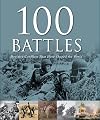
I have read a lot of books in this genre (shorts 100 about battles, guns, tanks, uniforms, aircrafts and so on) and while some were bad and most were goodish, this is clearly the jewel of its kind. First, it is not dumbed down for dummies, as I see the nowadays trend grows - so it dares to lose some potential readers (the mentioned dummies) but manages to not annoy the regulars. Second, though using only 2 pages for a battle, it still manages to convey plenty of data, and, most crucial, the show more really significant facts, supported with maps, general and tactical, well-selected pictures and snippet-descriptions and illustrations of relevant units, weapons or generals. Therefore, the whole image is way bigger than just the article itself. Even further, every battle has an excellent ”Battle Facts” abstract (who, what, where, when, why, outcome) - which in a few lines summarizes and irons into the readers memory the essence of the battle. show less
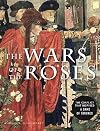
The Wars of the Roses by Martin J Dougherty is an informative overview of this tumultuous and pivotal period.
This is not, nor do I think it intended to be, an exhaustive history of the period. There are many excellent books on the details and the rationales behind the various machinations. What this book offers, and where it succeeds, is an outline of what happened fleshed out with general explanations of reasons as well as some general background to the culture and norms of the time. If you show more thought a book just over 200 pages was going to go into detail about every nuance, every player in the many conflicts that took place over about a thirty plus year span, well, I don't know what to say. That expectation is unreasonable and I think, based on the complaints I saw, disingenuous. Even the family trees are accurate, can't help some don't know how to read when a person is made a ward of a person and thus, while not blood, is indeed a branch spliced onto that tree. So much for "untrained" librarians.
While the bibliography is not extensive, anyone wanting to know more can certainly start with what is there and, armed with the information in the book, find plenty of academic works that delve more deeply into whatever aspect interests them. As for the GOT connection, if that is the main reason for reading or your only point of comparison, well, remember, this was just one of Martin's influences for the works, no one is trying to "usurp" anything. Take a pill of chill.
I would recommend this to readers who have little to no knowledge of the period, which includes those with only a GOT connection. Those who studied this in school will probably enjoy the recap but likely won't learn a whole lot new. It is, however, an accessible and pleasant read so worth the time.
Reviewed from a copy made available by the publisher via NetGalley. show less
This is not, nor do I think it intended to be, an exhaustive history of the period. There are many excellent books on the details and the rationales behind the various machinations. What this book offers, and where it succeeds, is an outline of what happened fleshed out with general explanations of reasons as well as some general background to the culture and norms of the time. If you show more thought a book just over 200 pages was going to go into detail about every nuance, every player in the many conflicts that took place over about a thirty plus year span, well, I don't know what to say. That expectation is unreasonable and I think, based on the complaints I saw, disingenuous. Even the family trees are accurate, can't help some don't know how to read when a person is made a ward of a person and thus, while not blood, is indeed a branch spliced onto that tree. So much for "untrained" librarians.
While the bibliography is not extensive, anyone wanting to know more can certainly start with what is there and, armed with the information in the book, find plenty of academic works that delve more deeply into whatever aspect interests them. As for the GOT connection, if that is the main reason for reading or your only point of comparison, well, remember, this was just one of Martin's influences for the works, no one is trying to "usurp" anything. Take a pill of chill.
I would recommend this to readers who have little to no knowledge of the period, which includes those with only a GOT connection. Those who studied this in school will probably enjoy the recap but likely won't learn a whole lot new. It is, however, an accessible and pleasant read so worth the time.
Reviewed from a copy made available by the publisher via NetGalley. show less

Standing Together is the sequel to Standing Alone. The War for British Independence from the European Federation rages on. The Euros still occupy the southern half of England but the valiant fighting of the Brits has convinced the Americans to join their cause. But are the British dumping their Euro overlords only to be annexed by the US? The Nordic League offers Lady Elizabeth Sinclaire another option: League Protectorate. Meanwhile, "Shotgun" Mike Halsey runs a special operations unit show more answerable only to Sinclaire. And when she can drink enough whisky (or even whiskey) to drown out her guilt, she'll send him out on another suicide mission because she has no other choice.
Once again, Dougherty provides a story that's heavy on the action—even more than the first book—and bound to please military sci-fi fans. Heck, even if you like contemporary military stories or you're a World War II buff, you'll like this story. Even though meks—that tank with arms and legs on the book's cover—figure prominently in most of the battles, the tech talk is not far enough out there to alienate these audiences. There's still enough dogfights, naval battles, and infantry action to go around. Dougherty, a military history buff and defense analyst, knows his stuff. I would not be surprised if he ran war games in his basement just to validate the battles that appear in the book.
There isn't any new character development for Halsley or Sinclaire. They're the same blokes they were in the first book. Some minor characters who survived the first book make appearances and receive some more time in the spotlight. The good guys fight valiantly; the bad guys twirl their mustaches. There's little time for introspection or reflection. People are dying after all. One exception is an interesting exchange between Halsley and the Napoleonic General Lavelle during a ceasefire that stirs the sub-plot regarding Halsley's past. Dougherty also offers glimpses into the political machinations of the day; stuff that makes Halliburton's foray in Iraq seem like a picnic. But these serve more as hints of what's to come in future installments of the series.
One unfortunate move that was made was the inclusion of a Forward and Introduction. While the Forward contained some interesting information about military philosophy, I think it could've been left out or saved for an "Afterward". It delays the reader from getting into the action, which starts in the Prologue. The Introduction all but summarizes the events that took place in Standing Alone. While adding another delay for readers, it might also discourage them from picking up a copy of that book, which would be a shame.
Yes, my skepticism regarding an ascendent European Federation still stands, but it was easy enough to set aside and just enjoy Standing Together for what it is: good military fiction.
This review also appears at the New Podler Review of Books. I received a copy of this book in exchange for an honest review. show less
Once again, Dougherty provides a story that's heavy on the action—even more than the first book—and bound to please military sci-fi fans. Heck, even if you like contemporary military stories or you're a World War II buff, you'll like this story. Even though meks—that tank with arms and legs on the book's cover—figure prominently in most of the battles, the tech talk is not far enough out there to alienate these audiences. There's still enough dogfights, naval battles, and infantry action to go around. Dougherty, a military history buff and defense analyst, knows his stuff. I would not be surprised if he ran war games in his basement just to validate the battles that appear in the book.
There isn't any new character development for Halsley or Sinclaire. They're the same blokes they were in the first book. Some minor characters who survived the first book make appearances and receive some more time in the spotlight. The good guys fight valiantly; the bad guys twirl their mustaches. There's little time for introspection or reflection. People are dying after all. One exception is an interesting exchange between Halsley and the Napoleonic General Lavelle during a ceasefire that stirs the sub-plot regarding Halsley's past. Dougherty also offers glimpses into the political machinations of the day; stuff that makes Halliburton's foray in Iraq seem like a picnic. But these serve more as hints of what's to come in future installments of the series.
One unfortunate move that was made was the inclusion of a Forward and Introduction. While the Forward contained some interesting information about military philosophy, I think it could've been left out or saved for an "Afterward". It delays the reader from getting into the action, which starts in the Prologue. The Introduction all but summarizes the events that took place in Standing Alone. While adding another delay for readers, it might also discourage them from picking up a copy of that book, which would be a shame.
Yes, my skepticism regarding an ascendent European Federation still stands, but it was easy enough to set aside and just enjoy Standing Together for what it is: good military fiction.
This review also appears at the New Podler Review of Books. I received a copy of this book in exchange for an honest review. show less

This book was honestly amazing. I've always loved the Celts and Celtic history, but I've been a little obsessed with them lately since getting back home from Nova Scotia (I even took 2 semesters of Gaelic up there).
A Dark History: Celts is definitely a good introduction to the Celtic history, especially since it's focusing on the less romantic (as the title suggests) side. I highly recommend this as a read.
A Dark History: Celts is definitely a good introduction to the Celtic history, especially since it's focusing on the less romantic (as the title suggests) side. I highly recommend this as a read.
Awards

You May Also Like


Associated Authors
Statistics
- Works
- 211
- Also by
- 2
- Members
- 3,314
- Popularity
- #7,720
- Rating
- 3.7
- Reviews
- 30
- ISBNs
- 288
- Languages
- 12