
Kelly DeVries
Author of Battles of the Medieval World 1000-1500
About the Author
Image credit: http://www.loyola.edu/academic/history/faculty/devries
Works by Kelly DeVries
Fighting Techniques of the Medieval World: Equipment, Combat Skills and Tactics (2005) — Author — 302 copies, 2 reviews
Battles of the Ancient World 1285 BC - AD 451: From Kadesh to Catalaunian Field (2007) 198 copies, 1 review
Battles That Changed Warfare: 1457 BC - AD 1999 From Chariot Warfare to Stealth Bombers (2008) — Author — 91 copies, 2 reviews
Infantry Warfare in the Early Fourteenth Century: Discipline, Tactics, and Technology (1996) 56 copies, 2 reviews
Associated Works
The Battle of the Golden Spurs (Courtrai, 11 July 1302): A Contribution to the History of Flanders' War of Liberation, 1297-1305 (1952) — Editor, some editions — 22 copies
The Normans and their Adversaries at War: Essays in Memory of C. Warren Hollister (2001) — Contributor — 18 copies
Journal of Medieval Military History: Volume VII: The Age of the Hundred Years War (2009) — Editor — 14 copies
The Circle of War in the Middle Ages: Essays on Medieval Military and Naval History (1999) — Contributor — 10 copies
The Medieval Way of War: Studies in Medieval Military History in Honor of Bernard S. Bachrach (2015) — Contributor — 7 copies
Crusaders, Condottieri, and Cannon: Medieval Warfare in Societies Around the Mediterranean (2002) — Contributor — 6 copies
Military Cultures and Martial Enterprises In the Middle Ages: Essays in Honour of Richard P. Abels (2020) — Contributor — 3 copies
Desperta Ferro Antigua y Medieval. La Guerra de los Cien Años (I) — Contributor — 2 copies
Tagged
Common Knowledge
- Canonical name
- DeVries, Kelly
- Birthdate
- 1956-12-23
- Gender
- male
- Education
- PhD in Medieval Studies, University of Toronto, Center for Medieval Studies (1987)
- Occupations
- professor (History, Loyola University, Maryland)
- Organizations
- De Re Militari
- Short biography
- American historian specializing in the warfare of the Middle Ages. He is often featured as an expert commentator on television documentaries. He is professor of history at Loyola University Maryland and Honorary Historical Consultant at the Royal Armouries, UK.
- Nationality
- USA
- Birthplace
- Utah, USA
- Places of residence
- Provo, Utah, USA
Maryland, USA
Charleston, South Carolina, USA - Associated Place (for map)
- USA
Members
Reviews

A fairly brief (244pp incl copious endnotes) biography focusing on the military side of Joan's career. As biographers not uncommonly do, DeVries openly sympathizes with his subject and tends to interpret events in the most flattering light possible for her. He thinks very highly of her tactical acumen, which one feels is not fully borne out by the actual narrative - the impression I get, at any rate, is that her effectiveness as a commander (which was undeniably considerable) was more due to show more charisma and contagious confidence than clever stratagems. Her favourite tactic was a direct assault, after all.
Don't let that discourage you from picking up the book however. DeVries's sympathies are clear enough, but he explains how he arrives at his interpretations, sometimes notes alternative ones, and generally leaves you well able to arrive at your own. The notes and bibliography are extensive (although for obvious reasons much of the relevant literature is in French), leaving those so inclined with every opportunity to dig deeper that could be asked for.
Having some basic background knowledge of the Hundred Years War helps, but it should be accessible to almost anybody. show less
Don't let that discourage you from picking up the book however. DeVries's sympathies are clear enough, but he explains how he arrives at his interpretations, sometimes notes alternative ones, and generally leaves you well able to arrive at your own. The notes and bibliography are extensive (although for obvious reasons much of the relevant literature is in French), leaving those so inclined with every opportunity to dig deeper that could be asked for.
Having some basic background knowledge of the Hundred Years War helps, but it should be accessible to almost anybody. show less
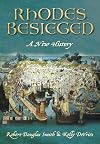
The two sieges of Rhodes 1480 and 1522 lend themselves to now politically incorrect great stories about the battle of the (Western) few against the onslaught of the Eastern hordes. In the 1980s, during a visit to Rome, I thoroughly enjoyed the son-et-lumière spectacle that presented the siege in a Lord of the Rings with the valiant knights trying to keep the hordes of Mordor at bay. Due to the backwardness of most Greek websites, it remains unclear whether the son-et-lumière is currently show more shown or whether it succumbed to the twin forces of the Greek crash and political correctness. Anyway, if you have a chance to see the old spectacle (if it resumes and has not been politically neutered), this is one highlight of any visit - apart from the fact that a huge amount of the fortress is still standing and one can wander around and along the old siege walls that first resisted and then were crushed under the Ottoman assault
The focus of the two authors, as in their earlier book about the Burgundian artillery, lies on .the power and change of artillery as a decisive factor why the one siege failed and the other succeeded. Nearly half of the book is dedicated to a "cannon catalogue" and the "walls" (an inventory of the defensive structures). The constraints of budget and space made the latter part not as sumptuous as it could/should have been. The numerous 2 cm x 3 cm pictures are just too small to reveal much. This project should better have been set up as a joint book and website where the tiny pictures in the book led to large images on the web. Content-wise, the discussion of the arms race between gunmakers and fortress engineers is well done and interestingly presented.
The highlight of the book, however, is the contemporary altar piece from 1485 illustrating the first siege of 1480 which is depicted in the book in high quality color images. The great story of the two sieges is well told in a hundred pages.This is rather too short. I would have preferred a longer narrative part and shorter appendices. Overall, it is still a great addition to any library of a reader interested in this tiny side show at the border of cultural Europe. The big revenge of the Hospitalers in 1565, the Ottoman's one island too far is also not given an extensive discussion. It is, however, a good sign if one craves for more information and the next book of the two authors. show less
The focus of the two authors, as in their earlier book about the Burgundian artillery, lies on .the power and change of artillery as a decisive factor why the one siege failed and the other succeeded. Nearly half of the book is dedicated to a "cannon catalogue" and the "walls" (an inventory of the defensive structures). The constraints of budget and space made the latter part not as sumptuous as it could/should have been. The numerous 2 cm x 3 cm pictures are just too small to reveal much. This project should better have been set up as a joint book and website where the tiny pictures in the book led to large images on the web. Content-wise, the discussion of the arms race between gunmakers and fortress engineers is well done and interestingly presented.
The highlight of the book, however, is the contemporary altar piece from 1485 illustrating the first siege of 1480 which is depicted in the book in high quality color images. The great story of the two sieges is well told in a hundred pages.This is rather too short. I would have preferred a longer narrative part and shorter appendices. Overall, it is still a great addition to any library of a reader interested in this tiny side show at the border of cultural Europe. The big revenge of the Hospitalers in 1565, the Ottoman's one island too far is also not given an extensive discussion. It is, however, a good sign if one craves for more information and the next book of the two authors. show less
Infantry Warfare in the Early Fourteenth Century: Discipline, Tactics, and Technology (Warfare in History) by Kelly DeVries
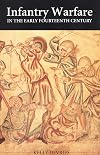
The theme of this book can be summed up in one phrase; the superiority of the tactical defensive.
A more interesting question this study begs is where did the infantry fighters detailed find the tactical coherence to stand in the face of the heavy-cavalry charge when they couldn't do so before. Granted that this was a time of growing populations, was it merely a question of reaching a certain critical mass?
A more interesting question this study begs is where did the infantry fighters detailed find the tactical coherence to stand in the face of the heavy-cavalry charge when they couldn't do so before. Granted that this was a time of growing populations, was it merely a question of reaching a certain critical mass?

Perhaps because of the dual authorship, the book has a strange disposition: the first part is a history of gunpowder weapons with a focus on Burgundy, while the second part is a military history of Burgundy with a focus on gunpowder weapons. Much repetition results. The third part then consists of a survey of the information available in Burgundian records about various sorts of guns (which is often sketchy or ambiguous, not helped by the customary obscurity and inconsistency of medieval show more technical terminology), while the fourth is an illustrated catalogue of surviving gunpowder weapons of certain or probable Burgundian origin (mostly pieces taking as booty by the Swiss after the battles of Grandson and Murten/Morat).
A book, obviously, only for those with a great interest in military history. But if one has, don't let the organizational weakness deter you - the subject is dealt with in as much depth as one could hope for. show less
A book, obviously, only for those with a great interest in military history. But if one has, don't let the organizational weakness deter you - the subject is dealt with in as much depth as one could hope for. show less
Awards
You May Also Like


Associated Authors
Statistics
- Works
- 27
- Also by
- 19
- Members
- 1,645
- Popularity
- #15,615
- Rating
- 3.8
- Reviews
- 15
- ISBNs
- 88
- Languages
- 7
- Favorited
- 1