
MacKinlay Kantor (1904–1977)
Author of Andersonville
About the Author
MacKinlay Kantor is the Pulitzer Prize-winning author of Andersonville, the novel about the horrifying Confederate prisoner-of-war camp in Georgia. Kantor is also known as a war correspondent and as the author of the novella and eventual screenplay The Best Years of Our Lives, a film that won seven show more Academy Awards. Kantor died in 1977 at the age of seventy-three. show less
Works by MacKinlay Kantor
Three Great Novels of the Civil War: The Killer Angels / Andersonville / The Red Badge of Courage (1994) 102 copies, 1 review
Best-in-Books: Grand Hotel / Voice of Bugle Ann / Life with Father / Mutiny on the Bounty / Postman Always Rings Twice (1962) — Contributor — 3 copies
Author's Choice (abridged) 2 copies
El goes south 2 copies
The Sickle And The Hounds 2 copies
The boy in the dark 2 copies
La polvere e la gloria 1 copy
Das Geheimnis des Sumpfes 1 copy
Ennemi, mon frère 1 copy
The Grave Grass Quivers 1 copy
Then Came the Legions 1 copy
The Moon-Caller 1 copy
Associated Works
75 Short Masterpieces: Stories from the World's Literature (1961) — Contributor — 316 copies, 2 reviews
The Lincoln Anthology: Great Writers on His Life and Legacy from 1860 to Now (2008) — Contributor — 172 copies, 1 review
The lucifer society;: Macabre tales by great modern writers (1972) — Contributor — 52 copies, 1 review
100 Best True Stories of World War II (WW2) (with 32 illustrations) (2011) — Contributor — 36 copies
Reader's Digest Condensed Books 1956 v01: Andersonville / Island in the Sun / An Episode of Sparrows / Minding Our Own Business / The Long Ride Home (1956) — Author; Author — 35 copies
To the Queen's Taste: The First Supplement to 101 Years Entertainment Consisting of the Best Stories Published in the First Four Years of Ellery Queen's Mystery Magazine (1946) — Contributor — 28 copies
Reader's Digest Condensed Books 1957 v04: Lobo / The Century of the Surgeon / By Love Possessed / Duel with a Witch Doctor / Warm Bodies (1957) — Author — 21 copies
The night before Chancellorsville, and other Civil War stories (1957) — Contributor — 14 copies, 1 review
My Most Inspiring Moment: Encounters with Destiny Relived by Thirty-Eight Best-Selling Authors (1965) 12 copies
The Work of Saint Francis / The Story of the Trapp Family Singers / So Great a Lover / Star Over the Frontier (1961) 4 copies
Reader's Digest Condensed Books: Lobo / The Century of the Surgeon / Letter from Peking / Bon Voyage / The Nymph and the Lamp (1950) — Author — 3 copies
O. Henry Memorial Award Prize Stories of 1935 — Contributor — 2 copies
Tagged
Common Knowledge
- Canonical name
- Kantor, MacKinlay
- Legal name
- Kantor, Benjamin MacKinlay
- Other names
- Graceland Cemetery, Webster City, Iowa, USA
- Birthdate
- 1904-02-04
- Date of death
- 1977-10-11
- Gender
- male
- Occupations
- novelist
short story writer
reporter
columnist - Relationships
- Kantor, Tim (son)
Shroder, Thomas (grandson) - Nationality
- USA
- Birthplace
- Webster City, Iowa, USA
- Place of death
- Sarasota, Florida, USA
- Associated Place (for map)
- USA
Members
Discussions
MacKinlay Kantor... in Pro and Con (February 2014)
Reviews

“You call yourself a reader,” someone might say, “and here you’ve reviewed fifty books and not a single one of them adult fiction?”
Hmm. I wonder why.
I think there are two superficial reasons and one substantive one. Superficial #1: many of the novels I might like to review, have already been reviewed more than enough times. With 58 reviews of Prayer for Owen Meany on LibraryThing, why would I want to add another one. OK, it’s one of my favorite American novels. Am I likely to show more convince someone else? Why would I want to? Superficial #2: Novels that I read years ago—some that I have reread at least once—linger in my mind. I would like to share them with others. The problem is that, though I have a vivid memory of the aura of the novel, of my intense pleasure in reading it at the time, I no longer have a good memory for details. Good reviews, in my opinion, depend upon significant details, not generalities and abstractions about aura.
But I must admit that the more substantive reason is that, novel-reader than I am and have been since I was eight or ten years old, the more significant books in my life have usually been nonfiction. Poetry books that I browse in and return to again and again. Books of literary criticism that guided me in my reading. Books on teaching that encouraged me in my profession. Books on religion and spiritual values that have shaped my world view. Books on current affairs that enhance my civic awareness. Books of Americana that I collect and luxuriate in. And, especially, books of history and biography that I read both for their stories, and also for their emphasis on character development, their vision of a world that was, and their sense of values in the world that is.
Novels? A pastime, often. A significant life experience? Seldom.
And then there are Great Expectations (42 reviews) and Wuthering Heights (88 reviews) and Mayor of Casterbridge (16 reviews) and Light in August (10 reviews) and Toni Morrison’s Beloved (56 reviews). And, yes, Prayer for Owen Meany.
So I’ll begin simple. The Voice of Bugle Ann (Globe, 1935) is listed by only eight other LibraryThing’ers, and no one has reviewed it yet, but it’s a favorite of mine. So here goes.
It’s a novelette really, only eight short chapters, 115 pages. It’s set in Missouri, one of my home states. It’s an authentic story of local color. It recovers a time in the recent past that is vanishing now. And it speaks to me personally. It deals with old-time fox hunters.
My father was a fox hunter. Oh, not a fox hunter of the fashionable British sort, wearing red coats and fancy hats, riding their horses furiously over the countryside, following the hounds, bringing back a fox’s brush as a trophy. Uh-uh. Not one of those. My father was a fox hunter in Tennessee (I wept to be taken with him when I was four years old) who set their hounds loose in the dark and sat around a campfire, listening, listening. They all recognized their own hounds’ voices. They knew when she caught the scent and began trailing the fox through woods, along streams, over hills, down in gulches, circling and recircling. They knew (and rejoiced, but silently) when she led the pack. They loved the fox too, the wilier the better, never expecting or even wanting to catch him, knowing he would eventually find his hole and disappear—until another night. The joy was in the chase, and in the sound of a good hound’s voice.
Bugle Ann is such a hound. “Her cry soared ahead—high, round, with that queer and brassy resonance which made you think that ghosts were out there somewhere, sounding Taps without any armies to follow them.” She belongs to Springfield Davis. “Waited seventy years to have a dog like that,” he says.
But the voice of Bugle Ann is silenced, at least for a time. An old man is sent to prison, two lovers are separated, a young man gives up fox-hunting and turns all his attention to his crops, and old-time fox-hunters swear they hear the ghost of Bugle Ann one dark night.
A story is a story is a story. The villain is villainous; the fair maiden is more than fair; friends are faithful, a loyal son keeps his father’s vision alive, and the voice of Bugle Ann can still be heard in the foothills of the Ozarks.
This may not be the Great American novel. I’ll still give that honor to The Adventures of Huckleberry Finn. I know, I know. Others would contend it’s Moby Dick or The Scarlet Letter or O Pioneers! or The Great Gatsby or Gravity’s Rainbow. In later reviews I’ll probably shout my hosanna for Eudora Welty’s Losing Battles and John Gardner’s Sunlight Dialogues. And there’s always Prayer for Owen Meany. I may even become #59 to have my say about that one.
But in honor of those old-time fox-hunters in Missouri and Tennessee and everywhere else where they have kept their stories alive around campfires, this is my salute to the simplicity and the authenticity and the enchantment of The Voice of Bugle Ann. show less
Hmm. I wonder why.
I think there are two superficial reasons and one substantive one. Superficial #1: many of the novels I might like to review, have already been reviewed more than enough times. With 58 reviews of Prayer for Owen Meany on LibraryThing, why would I want to add another one. OK, it’s one of my favorite American novels. Am I likely to show more convince someone else? Why would I want to? Superficial #2: Novels that I read years ago—some that I have reread at least once—linger in my mind. I would like to share them with others. The problem is that, though I have a vivid memory of the aura of the novel, of my intense pleasure in reading it at the time, I no longer have a good memory for details. Good reviews, in my opinion, depend upon significant details, not generalities and abstractions about aura.
But I must admit that the more substantive reason is that, novel-reader than I am and have been since I was eight or ten years old, the more significant books in my life have usually been nonfiction. Poetry books that I browse in and return to again and again. Books of literary criticism that guided me in my reading. Books on teaching that encouraged me in my profession. Books on religion and spiritual values that have shaped my world view. Books on current affairs that enhance my civic awareness. Books of Americana that I collect and luxuriate in. And, especially, books of history and biography that I read both for their stories, and also for their emphasis on character development, their vision of a world that was, and their sense of values in the world that is.
Novels? A pastime, often. A significant life experience? Seldom.
And then there are Great Expectations (42 reviews) and Wuthering Heights (88 reviews) and Mayor of Casterbridge (16 reviews) and Light in August (10 reviews) and Toni Morrison’s Beloved (56 reviews). And, yes, Prayer for Owen Meany.
So I’ll begin simple. The Voice of Bugle Ann (Globe, 1935) is listed by only eight other LibraryThing’ers, and no one has reviewed it yet, but it’s a favorite of mine. So here goes.
It’s a novelette really, only eight short chapters, 115 pages. It’s set in Missouri, one of my home states. It’s an authentic story of local color. It recovers a time in the recent past that is vanishing now. And it speaks to me personally. It deals with old-time fox hunters.
My father was a fox hunter. Oh, not a fox hunter of the fashionable British sort, wearing red coats and fancy hats, riding their horses furiously over the countryside, following the hounds, bringing back a fox’s brush as a trophy. Uh-uh. Not one of those. My father was a fox hunter in Tennessee (I wept to be taken with him when I was four years old) who set their hounds loose in the dark and sat around a campfire, listening, listening. They all recognized their own hounds’ voices. They knew when she caught the scent and began trailing the fox through woods, along streams, over hills, down in gulches, circling and recircling. They knew (and rejoiced, but silently) when she led the pack. They loved the fox too, the wilier the better, never expecting or even wanting to catch him, knowing he would eventually find his hole and disappear—until another night. The joy was in the chase, and in the sound of a good hound’s voice.
Bugle Ann is such a hound. “Her cry soared ahead—high, round, with that queer and brassy resonance which made you think that ghosts were out there somewhere, sounding Taps without any armies to follow them.” She belongs to Springfield Davis. “Waited seventy years to have a dog like that,” he says.
But the voice of Bugle Ann is silenced, at least for a time. An old man is sent to prison, two lovers are separated, a young man gives up fox-hunting and turns all his attention to his crops, and old-time fox-hunters swear they hear the ghost of Bugle Ann one dark night.
A story is a story is a story. The villain is villainous; the fair maiden is more than fair; friends are faithful, a loyal son keeps his father’s vision alive, and the voice of Bugle Ann can still be heard in the foothills of the Ozarks.
This may not be the Great American novel. I’ll still give that honor to The Adventures of Huckleberry Finn. I know, I know. Others would contend it’s Moby Dick or The Scarlet Letter or O Pioneers! or The Great Gatsby or Gravity’s Rainbow. In later reviews I’ll probably shout my hosanna for Eudora Welty’s Losing Battles and John Gardner’s Sunlight Dialogues. And there’s always Prayer for Owen Meany. I may even become #59 to have my say about that one.
But in honor of those old-time fox-hunters in Missouri and Tennessee and everywhere else where they have kept their stories alive around campfires, this is my salute to the simplicity and the authenticity and the enchantment of The Voice of Bugle Ann. show less
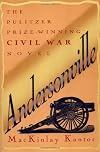
I prophesy with all the terrible ardor I can muster: this will be a stench in the nostrils of history.
Perhaps the biggest disgrace in the entire history of the Civil War is the story of Andersonville. I wonder how MacKinlay Kantor bore to do the research and spend the time required with this material in order to tell this story. It is 766 pages of misery, sorrow, and shame.
What is somewhat amazing to me is that he was able to deal even-handedly with the civilian Southerners, who were also show more caught in this tragedy. There could have been an overwhelming temptation to paint everyone with the same brush, which, of course, would have been unfair but understandable in light of the egregiousness of this trespass against humanity.
Kantor said he began this project with his own experience in World War II in mind. He was among those who freed the camp at Buchenwald, and struggled with what to think of the German citizens who surrounded the camp and its horrors. He certainly did a marvelous job of separating the citizens, flawed though they certainly were, from the officers and guards at Andersonville. I felt it was clear that he believed the atrocities of Andersonville overshadowed any other aspect of leadership in the Southern ranks.
What matters a chivalrous Lee if we have a Winder? What matters the sacrifice of a Hood, if we have a Captain Wirz? What matters the competence of a Johnston or the spiritual strength of a sickly Stephens, if we have at home only the incompetence of venal surgeons, incompetence of a Seddon, frailty and futility of a sickly Seddon.
He has presented us with some very memorable and complex characters in Ira Claffey, Lucy Claffey and Harry Elkins. There is a growth of understanding in these people that one would surely hope to see in any human being bearing even the remotest witness to such a place. Ira, who has lost his three sons to the war and has sufficient reason to hate Northerners, comes full circle and performs several acts of kindness and bravery as he embraces again the idea that we are all humanity, regardless of our origins. And, he finds somewhere in the midst of all this loss and carnage a kind of hope.
But if he put mind and heart into the soil where his sons had gone, and where the human wastage of Andersonville had gone, and where that enormous blood-curdling fraction of America’s young males had gone, North and South--eventually the stalks might rise, toughen; beards would dry out, husks turn to parchment; and those hands who’d made his crop might reach in memory to carry him in salute to the crop, the fields, the earth itself.
Lucy, his daughter, and Harry Elkins, a young surgeon, who struggles with the conditions of the camp and the total lack of concern or decency from the officers, also struggle with how to keep a spark of love alive in the face of so much sorrow and hatred.
“I don’t believe he’s right. Do you? Shouldn’t love be bigger than--? And embrace more than just--? I mean, whether there were a stockade and a hospital or not? Or even a war. Seems like there’ve always been wars going on, one place or another. And boys dying in them. But people still managed to love one another.”
But, this is not primarily a Southern tale, this is to a greater extent a Northern one. Interspersed with the events that are the lives of the families Claffey and Tebbs, Kantor tells us, in detail, the lives of the true victims of this sinkhole, and he paints for us no happy endings, because those were almost unknown in Andersonville. The lives of Eben Dolliver, Edward Blamey, Nathan Dreyfoos, Eric Torrioson are imprinted on me forever, along with the disgusting likes of Willie Collins, who is among those who are hanged by the prisoners themselves for the crimes they commit against their fellows.
The carnage, the suffering, was so extreme, I had to stop often and just take refuge from the camp myself. I kept hoping for someone to escape, someone to prevail, then for someone to just survive, but over and over again, Kantor told me this is fiction that is history and I will not change the outcome for any of these men. I wept when Eric, who tried to escape by pretending to be dead and lying among the rotted bodies in the death house, a feat that was only possible because the living and the dead were almost indistinguishable, became one of their number.
I was elated to read the story of Nazareth Stricker, who is saved by a rebel soldier, Coral Tebbs, in the most unlikely but believable turn of events in the book. But, this elation was tempered by the knowledge of how many, some 14,000 men, had not been so lucky.
The cruelty of General John Winder and Captain Henry Wirz, if even remotely as chronicled, merits them a special place in hell. I feel sure Dante would place them in the seventh circle of hell and we would find them submerged in the boiling blood of human beings, right up to their eyebrows, for all eternity.
I have tried to review this book on its own merits. It is a work of fiction, but based on history. I am not sure anyone actually knows the entire truth of Andersonville. The victors write the history, and there are certainly alternative views of this one, as there are of anything part of a distant war. Noted historian Shelby Foote has said when asked about Andersonville:
“there’s no attention to Camp Chase or any of the northern camps. And that’s wrong. They were almost as bad. And less forgivable, because those prisoners in Andersonville got the rations the Confederate soldier was getting. The southern prisoners in northern camps did not get the rations northern soldiers were getting. Many of the deaths in northern camps were due to cold weather at Lake Michigan and other places where they didn’t have blankets to cover themselves with and so forth.”
Kantor clearly says that the prisoners at Andersonville did not get the same rations as Confederate soldiers, so one or the other of these men is wrong. Kantor is writing fiction, so perhaps this is a license he has taken. No such license is needed--this tragedy is sufficient without embellishment. It is also, however, immaterial whether atrocities were committed elsewhere, nothing erases what happened here. Perhaps it is the sheer numbers that overwhelm; 14,000 men died at Andersonville, 2000 men died at Camp Chase.
Nothing mitigates the horror of war. When will we ever learn?
A note beyond the scope of the book, which ends with the liberation of Andersonville: Henry Wirz was the only officer executed for war crimes in the Civil War. show less
Perhaps the biggest disgrace in the entire history of the Civil War is the story of Andersonville. I wonder how MacKinlay Kantor bore to do the research and spend the time required with this material in order to tell this story. It is 766 pages of misery, sorrow, and shame.
What is somewhat amazing to me is that he was able to deal even-handedly with the civilian Southerners, who were also show more caught in this tragedy. There could have been an overwhelming temptation to paint everyone with the same brush, which, of course, would have been unfair but understandable in light of the egregiousness of this trespass against humanity.
Kantor said he began this project with his own experience in World War II in mind. He was among those who freed the camp at Buchenwald, and struggled with what to think of the German citizens who surrounded the camp and its horrors. He certainly did a marvelous job of separating the citizens, flawed though they certainly were, from the officers and guards at Andersonville. I felt it was clear that he believed the atrocities of Andersonville overshadowed any other aspect of leadership in the Southern ranks.
What matters a chivalrous Lee if we have a Winder? What matters the sacrifice of a Hood, if we have a Captain Wirz? What matters the competence of a Johnston or the spiritual strength of a sickly Stephens, if we have at home only the incompetence of venal surgeons, incompetence of a Seddon, frailty and futility of a sickly Seddon.
He has presented us with some very memorable and complex characters in Ira Claffey, Lucy Claffey and Harry Elkins. There is a growth of understanding in these people that one would surely hope to see in any human being bearing even the remotest witness to such a place. Ira, who has lost his three sons to the war and has sufficient reason to hate Northerners, comes full circle and performs several acts of kindness and bravery as he embraces again the idea that we are all humanity, regardless of our origins. And, he finds somewhere in the midst of all this loss and carnage a kind of hope.
But if he put mind and heart into the soil where his sons had gone, and where the human wastage of Andersonville had gone, and where that enormous blood-curdling fraction of America’s young males had gone, North and South--eventually the stalks might rise, toughen; beards would dry out, husks turn to parchment; and those hands who’d made his crop might reach in memory to carry him in salute to the crop, the fields, the earth itself.
Lucy, his daughter, and Harry Elkins, a young surgeon, who struggles with the conditions of the camp and the total lack of concern or decency from the officers, also struggle with how to keep a spark of love alive in the face of so much sorrow and hatred.
“I don’t believe he’s right. Do you? Shouldn’t love be bigger than--? And embrace more than just--? I mean, whether there were a stockade and a hospital or not? Or even a war. Seems like there’ve always been wars going on, one place or another. And boys dying in them. But people still managed to love one another.”
But, this is not primarily a Southern tale, this is to a greater extent a Northern one. Interspersed with the events that are the lives of the families Claffey and Tebbs, Kantor tells us, in detail, the lives of the true victims of this sinkhole, and he paints for us no happy endings, because those were almost unknown in Andersonville. The lives of Eben Dolliver, Edward Blamey, Nathan Dreyfoos, Eric Torrioson are imprinted on me forever, along with the disgusting likes of Willie Collins, who is among those who are hanged by the prisoners themselves for the crimes they commit against their fellows.
The carnage, the suffering, was so extreme, I had to stop often and just take refuge from the camp myself. I kept hoping for someone to escape, someone to prevail, then for someone to just survive, but over and over again, Kantor told me this is fiction that is history and I will not change the outcome for any of these men. I wept when Eric, who tried to escape by pretending to be dead and lying among the rotted bodies in the death house, a feat that was only possible because the living and the dead were almost indistinguishable, became one of their number.
I was elated to read the story of Nazareth Stricker, who is saved by a rebel soldier, Coral Tebbs, in the most unlikely but believable turn of events in the book. But, this elation was tempered by the knowledge of how many, some 14,000 men, had not been so lucky.
The cruelty of General John Winder and Captain Henry Wirz, if even remotely as chronicled, merits them a special place in hell. I feel sure Dante would place them in the seventh circle of hell and we would find them submerged in the boiling blood of human beings, right up to their eyebrows, for all eternity.
I have tried to review this book on its own merits. It is a work of fiction, but based on history. I am not sure anyone actually knows the entire truth of Andersonville. The victors write the history, and there are certainly alternative views of this one, as there are of anything part of a distant war. Noted historian Shelby Foote has said when asked about Andersonville:
“there’s no attention to Camp Chase or any of the northern camps. And that’s wrong. They were almost as bad. And less forgivable, because those prisoners in Andersonville got the rations the Confederate soldier was getting. The southern prisoners in northern camps did not get the rations northern soldiers were getting. Many of the deaths in northern camps were due to cold weather at Lake Michigan and other places where they didn’t have blankets to cover themselves with and so forth.”
Kantor clearly says that the prisoners at Andersonville did not get the same rations as Confederate soldiers, so one or the other of these men is wrong. Kantor is writing fiction, so perhaps this is a license he has taken. No such license is needed--this tragedy is sufficient without embellishment. It is also, however, immaterial whether atrocities were committed elsewhere, nothing erases what happened here. Perhaps it is the sheer numbers that overwhelm; 14,000 men died at Andersonville, 2000 men died at Camp Chase.
Nothing mitigates the horror of war. When will we ever learn?
A note beyond the scope of the book, which ends with the liberation of Andersonville: Henry Wirz was the only officer executed for war crimes in the Civil War. show less
I read the Reader’s Digest condensed version of this novel before I was in high school, more than fifty years ago. Before I could understand most of the horror I was reading. Before I understood better the larger stage of the Civil War era, and its myriad causes and conditions. In the midst of violent racial unrest in the late 1960s. Since then, I studied American History extensively, both formally (my B.A.) and informally, and re-reading the full novel more than half a century after my show more first truncated encounter with it was an entirely different experience. I might never have stumbled upon it again had it not been for a reading challenge with the prompt: an award-winning book from the year were born. Andersonville won the Pulitzer Prize for Fiction the year I was born. In school, we certainly did not learn much about the Civil War prisons and the people in the surrounding areas whose lives were so displaced – you hear about the battles and the glorious victories and defeats, the drama in Washington and Richmond where politicians warred among themselves. We should teach more about Andersonville, which was more than just a prison camp, but really more of a death camp, where the smallest scratch was almost a death sentence because of the filthy conditions, inadequate shelter, scurvy, predation.
The protagonist of this book is essentially Andersonville prison, hastily constructed by the Confederacy during the Civil War on parts of several landowners’ properties in a remote Georgia area not far from the rail line that would transport the Yankee prisoners of war. We first meet the fictional Ira Claffey, whose plantation is near what becomes an open-air house of horrors – the only structure is the walls that surround the acres of a hellish landscape on which an estimated 40,000 prisoners were crammed into a space meant for no more than 10,000, with poor sanitation, inadequate food, with a large percentage dying from exposure, disease, starvation, infected wounds, and about a 25% mortality rate. The conditions, horrible as they were, seemed to be less the result of malice on the part of the Confederate officers charged with the prisoners’ incarceration, but rather incompetence and indifference on the part of the upper echelon.
The closest to a protagonist of a human variety is Ira Claffey and his daughter Lucy – his wife descended into madness after their three sons who reached adulthood died in service to the Confederacy – and how they are affected by the proximity of Andersonville, and the horrors of the miserable, unlivable conditions the prisoners are subjected to. Throughout the book, we meet some of the (fictional) inhabitants of the area, learn a little about them. And we meet some of the fictional Yankee prisoners, learn a little of their lives before their time in Andersonville, often glimpses of their childhood, during their incarceration, and if they are lucky, which is rare, after. Certain Confederate officers and doctors tried to improve conditions but were then branded as traitors by Generals who were hell-bent on keeping the conditions the most miserable possible and expending the least amount of money, particularly as the tide of war turns away; yet despite their efforts, after the war they took the fall and were convicted of crimes against humanity. I understand the Confederate military figures in the book are real people. Also, some of the POWs mentioned – Boston Corbett, Chickamauga, John Ransom, John McElroy – also existed in real life. Ira Claffey and some of the other civilian agrarian neighbors around the prison showed compassion toward the prisoners and were also accused of treasonous behavior. Kantor certainly uses the conditions at Andersonville to raise philosophical and moral questions with which various characters grapple, but never explicitly answer.
While most of the male characters are richly drawn, the female characters are largely one-dimensional and almost always object rather than subject. I ascribe that deficiency more to prevailing attitudes about women’s place during the time period during which Kantor researched and wrote this novel (from the 1930s to the 1950s) than to any actual representation of women during the Civil War era. He probably had very little in the way of research materials for women’s accounts of their experiences during the war that might have helped flesh them out. In addition, I cringed near the end where Kantor perpetuates the happy slave myth when the war ends and Ira Claffey tells his enslaved human workers that they are free, and they are so grateful and will stay loyal, etc. It seemed almost a cartoonish or Hollywood ending.
But again, Kantor wrote during a different time, and in the interim more published journals or letters or oral histories of women and enslaved people have emerged. Accordingly, subtracting from the overall five-star rating of a mid-20th century book based on 21st century sensibilities is unwarranted. Some people have complained about the length of this book – my 60th anniversary edition is 754 pages – and have said the story could have been told in fewer pages, but I disagree. The pictures he painted and the little stories he told were so vivid that I feel I visited with this place for as long as the prison stood, and that is both disconcerting and remarkable, particularly since the focus of these stories is not the pompous politicians and generals, but on how this horrendous place affected the lives of those whose lives it touched inside and outside its walls. This book will stay with me for a long time. show less
The protagonist of this book is essentially Andersonville prison, hastily constructed by the Confederacy during the Civil War on parts of several landowners’ properties in a remote Georgia area not far from the rail line that would transport the Yankee prisoners of war. We first meet the fictional Ira Claffey, whose plantation is near what becomes an open-air house of horrors – the only structure is the walls that surround the acres of a hellish landscape on which an estimated 40,000 prisoners were crammed into a space meant for no more than 10,000, with poor sanitation, inadequate food, with a large percentage dying from exposure, disease, starvation, infected wounds, and about a 25% mortality rate. The conditions, horrible as they were, seemed to be less the result of malice on the part of the Confederate officers charged with the prisoners’ incarceration, but rather incompetence and indifference on the part of the upper echelon.
The closest to a protagonist of a human variety is Ira Claffey and his daughter Lucy – his wife descended into madness after their three sons who reached adulthood died in service to the Confederacy – and how they are affected by the proximity of Andersonville, and the horrors of the miserable, unlivable conditions the prisoners are subjected to. Throughout the book, we meet some of the (fictional) inhabitants of the area, learn a little about them. And we meet some of the fictional Yankee prisoners, learn a little of their lives before their time in Andersonville, often glimpses of their childhood, during their incarceration, and if they are lucky, which is rare, after. Certain Confederate officers and doctors tried to improve conditions but were then branded as traitors by Generals who were hell-bent on keeping the conditions the most miserable possible and expending the least amount of money, particularly as the tide of war turns away; yet despite their efforts, after the war they took the fall and were convicted of crimes against humanity. I understand the Confederate military figures in the book are real people. Also, some of the POWs mentioned – Boston Corbett, Chickamauga, John Ransom, John McElroy – also existed in real life. Ira Claffey and some of the other civilian agrarian neighbors around the prison showed compassion toward the prisoners and were also accused of treasonous behavior. Kantor certainly uses the conditions at Andersonville to raise philosophical and moral questions with which various characters grapple, but never explicitly answer.
While most of the male characters are richly drawn, the female characters are largely one-dimensional and almost always object rather than subject. I ascribe that deficiency more to prevailing attitudes about women’s place during the time period during which Kantor researched and wrote this novel (from the 1930s to the 1950s) than to any actual representation of women during the Civil War era. He probably had very little in the way of research materials for women’s accounts of their experiences during the war that might have helped flesh them out. In addition, I cringed near the end where Kantor perpetuates the happy slave myth when the war ends and Ira Claffey tells his enslaved human workers that they are free, and they are so grateful and will stay loyal, etc. It seemed almost a cartoonish or Hollywood ending.
But again, Kantor wrote during a different time, and in the interim more published journals or letters or oral histories of women and enslaved people have emerged. Accordingly, subtracting from the overall five-star rating of a mid-20th century book based on 21st century sensibilities is unwarranted. Some people have complained about the length of this book – my 60th anniversary edition is 754 pages – and have said the story could have been told in fewer pages, but I disagree. The pictures he painted and the little stories he told were so vivid that I feel I visited with this place for as long as the prison stood, and that is both disconcerting and remarkable, particularly since the focus of these stories is not the pompous politicians and generals, but on how this horrendous place affected the lives of those whose lives it touched inside and outside its walls. This book will stay with me for a long time. show less
Oh my. This is brutal, brutal, brutal. I don't think I have ever read anything so horrifying as this story of the Andersonville prison in Georgia which contained some thirty thousand desperate souls during the last year of the Civil War. This was unapologeticaly heinous, yet written exquisitely, brilliantly . . I really can't put into words how hauntingly affecting this novel is.
Kantor weaves in the lives of many of the Union soldiers, many mere boys -- we are immersed in their pre-War show more lives, loves, vocations, and how they came to be in the stockade -- their stories permeate the narrative, making their fate all the more tragic. We also come to know Ira Claffey, the neighboring beneficient plantation owner -- his dignity and humanity in the face of his staggering continued losses -- this gives the novel its core of hope and somehow manages to lift the reader's heart above the morass that was Andersonville.
This novel is a masterpiece - well worth it's Pulitzer. It is not for the faint of heart, it is quite long, and there are countless side stories - but it has been one of the finest reading experieces I have ever had. An amazing amalgamation of horror and beauty. . . show less
Kantor weaves in the lives of many of the Union soldiers, many mere boys -- we are immersed in their pre-War show more lives, loves, vocations, and how they came to be in the stockade -- their stories permeate the narrative, making their fate all the more tragic. We also come to know Ira Claffey, the neighboring beneficient plantation owner -- his dignity and humanity in the face of his staggering continued losses -- this gives the novel its core of hope and somehow manages to lift the reader's heart above the morass that was Andersonville.
This novel is a masterpiece - well worth it's Pulitzer. It is not for the faint of heart, it is quite long, and there are countless side stories - but it has been one of the finest reading experieces I have ever had. An amazing amalgamation of horror and beauty. . . show less
Lists
Discontinued (1)
AlphaKIT: Brown (1)
Awards


You May Also Like


Associated Authors
Statistics
- Works
- 70
- Also by
- 59
- Members
- 3,955
- Popularity
- #6,391
- Rating
- 3.9
- Reviews
- 53
- ISBNs
- 100
- Languages
- 2
- Favorited
- 3
