
D. G. Compton (1930–2023)
Author of The Continuous Katherine Mortenhoe
About the Author
Disambiguation Notice:
(dut) Do not combine with Frances Lynch, because there a several writers with the same name.
Do not combine with Frances Lynch, because there are several writers with the same name.
Series
Works by D. G. Compton
Associated Works
Reader's Digest Condensed Books 1979 v01: Eye of the Needle / Orphan Train / Overload / A Dangerous Magic (1979) — Author — 32 copies
The Profession of Science Fiction: SF Writers on Their Craft and Ideas (1992) — Contributor — 6 copies
Tagged
Common Knowledge
- Canonical name
- Compton, David G.
- Legal name
- Compton, David Guy
- Other names
- Compton, Guy (crime novels)
Compton, D. G.
Lynch, Frances (romance novels) - Birthdate
- 1930-08-19
- Date of death
- 2023-11-10
- Gender
- male
- Education
- Cheltenham College
- Occupations
- fiction writer
book editor - Organizations
- Reader's Digest (book editor)
- Awards and honors
- Science Fiction and Fantasy Writers of America, Author Emeritus (2005)
Cordwainer Smith Rediscovery Award (2021) - Agent
- Virginia Kidd Agency
- Relationships
- Cross, Gerald (parent)
Sigmund, Elizabeth (former spouse | divorced) - Nationality
- England
UK - Birthplace
- London, England, UK
- Place of death
- Maine, USA
- Map Location
- England, UK
- Disambiguation notice
- Do not combine with Frances Lynch, because there are several writers with the same name.
Members
Reviews

"Rights and wrongs are irrelevant."
This was a page-turner for me! The astute attention given to half a dozen main characters by Compton is what made it a smashing stand out. Not only are incredible obstacles of life on a penal planet that is nearly devoid of life wondrously awful to ponder, but the adaptations and changes of the new arrivals' psychology gives this an extended depth I've not often seen in my sci fi reading.
There are no human rights, no democracy, only regulations and show more enforcement. Everything has been redefined. Your crimes on Earth might have gotten you sent to Mars but forget those. This small society had to re-invent itself and is unapologetically fine-tuned for survival.
One of the characters has been reading an omnibus of Dickens's classic novels that some one had brought with them. She has read it once and is about to start over. It is a pleasure she describes as "magnificently irrelevant," which I found poignant. Earth life is so distant.
This novel is an example of my favorite kind of writing. Compton struck the perfect balance: he said what he had to say, said it well, and stopped when he was done.
(What a boon it is to have discovered OpenLibrary.org. Reading scanned books reconciles my desire for the old-fashioned look and experience of a printed book with the wonders of digital access.) show less
This was a page-turner for me! The astute attention given to half a dozen main characters by Compton is what made it a smashing stand out. Not only are incredible obstacles of life on a penal planet that is nearly devoid of life wondrously awful to ponder, but the adaptations and changes of the new arrivals' psychology gives this an extended depth I've not often seen in my sci fi reading.
There are no human rights, no democracy, only regulations and show more enforcement. Everything has been redefined. Your crimes on Earth might have gotten you sent to Mars but forget those. This small society had to re-invent itself and is unapologetically fine-tuned for survival.
One of the characters has been reading an omnibus of Dickens's classic novels that some one had brought with them. She has read it once and is about to start over. It is a pleasure she describes as "magnificently irrelevant," which I found poignant. Earth life is so distant.
This novel is an example of my favorite kind of writing. Compton struck the perfect balance: he said what he had to say, said it well, and stopped when he was done.
(What a boon it is to have discovered OpenLibrary.org. Reading scanned books reconciles my desire for the old-fashioned look and experience of a printed book with the wonders of digital access.) show less

Compton is a science fiction writer I admire a great deal. I think his prose is far far better than 99% of genre writers, living or dead, and his relatively low profile is not only due to the quality of his prose (many sf readers consider such prose either irrelevant or a hindrance), nor the fact his last novel was published in 1996 and only the SF Gateway has any of his books currently in print (as ebooks and omnibuses), although he does have one novel in the SF Masterworks series… but show more chiefly because the bulk of his fiction has a very British flavour and a lot of it is really quite miserable. Nomansland displays both these last two qualities, despite being set in an invented, and unnamed, European country, and because the world of the novel is forty years into the “Attrition”, an epidemic which causes pregant women to reject male embryos. In other words, only female babies have been born for nearly half a century. Nomansland also uses another common Compton technique – the double unsynchronised narrative, which is probably not the best way to describe it, but refers to paired narratives which differ in ways other than just POV. In Nomansland, one narrative is loosely-coupled third-person, set forty years after the Attrition, and focusing on scientist Dr Harriet Ryder-Kahn, who has just discovered a cure for MERS, Male Embryo Rejection Syndrome, but is being blocked from publication by her bosses at the Ministry of Science. The second narrative begins some ten years after the start of the Attrition, when Harriet is a young girl, and is first-person. It traces her history up to the 40-years-after narrative. There’s an elephant in the room in this story, and it takes two-thirds of the novel before anyone even mentions it: the world is a much nicer place now there are so few men (they’re still in charge, but they’re hugely outnumbered by women, and dying out). So the question becomes, is it worth actually curing MERS? Isn’t it better to leave the population as it is? Of course, the men – and few of them in this novel are painted in a flattering light – would like their own kind to be back in charge, but… I’m entirely sympathetic to the view a massively-majority, or entirely, female population would turn the planet into a much more pleasant place; and I can think of no good reason why men should be re-introduced, given a solution to reproductive needs. For all the crap we’re fed in the right-wing press about vile behaviour by other cultures, most of it is more a product of toxic masculinity than it is actual culture. In Nomansland, Compton is also clearly sympathetic, but he tries to present a balanced view and often undermines his point. MRA types will object to the characterisation of the male characters, but fuck ’em, they have no opinions worth treating seriously. If there is a problem, it’s that Compton is, if his fiction is any indication, somewhat misanthropic, and so even his female characters are far from sympathetic. Ryder-Kahn, for example, is fixated on publication, and does not seem to understand the impact of her cure. Nomansland is by no means one of Compton’s best, although my admiration for his writing remains undimmed. show less
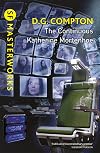
First something I must get off my chest: I heartily dislike the new goodreads homepage. It’s far too busy, I much preferred the less cluttered old version. Secondly, this is a short novel and only took me three days to read because it is, pardon my French, grim as fuck. A bitterer, more cynical sci-fi novel I have rarely come across. The conceit is as follows: Katherine Mortenhoe is diagnosed with a terminal illness that will kill her in mere weeks. As such illnesses are vanishingly rare, show more she immediately becomes a celebrity and is hounded by the media. A man with TV cameras in his eyes follows her around, trying to make a reality TV show about her. Although there is a dark humour about all this, it’s a nasty, angry sort of humour that isn’t really funny. The writing is at times witty, yet never in a light-hearted fashion. For example this moment when Katherine has just been diagnosed and phones a church.
This novel (which has also been published under the name [b:The Unsleeping Eye|676077|The Unsleeping Eye|D.G. Compton|https://images.gr-assets.com/books/1403632836s/676077.jpg|4465059]) first came out in 1974 and reads as unsettlingly prescient. The voyeuristic media obsession with unusual categories of suffering and the pervasiveness of reality TV are foreseen very clearly. Many background details of world-building seem entirely too convincing: tokenistic privacy laws, rampant inequality, and constant protest marches that are ignored and disregarded. The book has aged pretty well as the focus is on social change, not technological. It’s a particularly cynical analysis of social and individual psychology. Despite the proximity of Katherine to the reader - the point of view is split between her and the cameraman - it’s hard to sympathise with her as a person. The narrative places you in such a similar position to those watching her dying on TV that reading about her becomes uncomfortable. Knowing how she feels seems voyeuristic, a clever effect to pull off in a novel.
I should also add that to me the most horrible incident in the book doesn’t involve Katherine at all. At one point when Rod the cameraman is driving, he comes across a protest blocking the road. Impatient, he tries to get through line of marchers by slipping after another vehicle. In the process he runs over two people, killing one. The callous atmosphere surrounding this murder (manslaughter?) is absolutely chilling and Rod recounts the episode with an air of self-justification, mixed with disbelief that his actions could have such serious consequences. The police pick him up then assure him there will be no charges and no-one will care. The dead woman and injured man are nameless, faceless, disregarded. I think this scene (which had no plot purpose that I could discern) demonstrated both the dangerous mindset that driving can breed and that media voyeurism is as much about what is not shown as what is splashed everywhere. Whereas Katherine’s illness apparently justifies a huge amount of media time and money, deaths in road ‘accidents’ and on untelegenic protests create no interest whatsoever. Plus ça change.
‘The Continuous Katherine Mortenhoe’ is a smart book, albeit one shot through with both petty and grand cruelties and seemingly determined to undermine the reader’s faith in humanity. It is a powerful and memorable piece of fiction, but not at all pleasant to read. It was no surprise to find the ending just as depressing as the rest. Thus I can only give it three stars. show less
"Vicar Pemberton speaking."
So then it was too late for her to change her mind. "I’m going to die," she said.
"You wouldn’t have rung me if you really believed that. What have you taken?"
"I’ve taken umbrage."
This novel (which has also been published under the name [b:The Unsleeping Eye|676077|The Unsleeping Eye|D.G. Compton|https://images.gr-assets.com/books/1403632836s/676077.jpg|4465059]) first came out in 1974 and reads as unsettlingly prescient. The voyeuristic media obsession with unusual categories of suffering and the pervasiveness of reality TV are foreseen very clearly. Many background details of world-building seem entirely too convincing: tokenistic privacy laws, rampant inequality, and constant protest marches that are ignored and disregarded. The book has aged pretty well as the focus is on social change, not technological. It’s a particularly cynical analysis of social and individual psychology. Despite the proximity of Katherine to the reader - the point of view is split between her and the cameraman - it’s hard to sympathise with her as a person. The narrative places you in such a similar position to those watching her dying on TV that reading about her becomes uncomfortable. Knowing how she feels seems voyeuristic, a clever effect to pull off in a novel.
‘The Continuous Katherine Mortenhoe’ is a smart book, albeit one shot through with both petty and grand cruelties and seemingly determined to undermine the reader’s faith in humanity. It is a powerful and memorable piece of fiction, but not at all pleasant to read. It was no surprise to find the ending just as depressing as the rest. Thus I can only give it three stars. show less
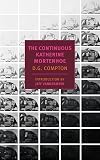
What an odd novel this is. I do not mean that in any way negatively. I have never read anything quite like it. The story as such, is told from two perspectives, those of the two main characters. One is dying, the other is watching her die in ways she cannot suspect. Human love, human kindness, help one make it to the end of the story, but my no means does love triumph. The exploitation of a person who is dying, making them into a reality TV star in effect, constantly grounds one in the show more sordidness of our society. Normally I find the endings of novels their weakest points. Not in this case. Both characters meet their futures, better for their experiences together. Strongly recommended. show less
Lists
Awards


You May Also Like


Associated Authors
Statistics
- Works
- 39
- Also by
- 10
- Members
- 1,421
- Popularity
- #18,108
- Rating
- 3.3
- Reviews
- 21
- ISBNs
- 97
- Languages
- 4
- Favorited
- 3