
Josephine Winslow Johnson (1910–1990)
Author of Now in November
About the Author
Works by Josephine Winslow Johnson
Now in December 1 copy
Associated Works
Sisters of the Earth: Women's Prose and Poetry About Nature (1991) — Contributor — 441 copies, 6 reviews
McSweeney's 45: Hitchcock and Bradbury Fistfight in Heaven (2013) — Contributor — 119 copies, 6 reviews
Modern Short Stories — Contributor — 3 copies
O. Henry Memorial Award Prize Stories of 1935 — Contributor — 2 copies
Modern Short Stories — Contributor — 2 copies
Tagged
Common Knowledge
- Legal name
- Johnson, Josephine Winslow
- Birthdate
- 1910-06-20
- Date of death
- 1990-02-27
- Gender
- female
- Education
- Washington University, St. Louis, Missouri, USA
- Occupations
- essayist
novelist
poet - Organizations
- University of Iowa
- Awards and honors
- American Academy of Arts and Letters Academy Award (Literature ∙ 1974)
Pulitzer Prize (Fiction, 1935) for Now in November - Nationality
- USA
- Birthplace
- Kirkwood, Missouri, USA
- Places of residence
- Kirkwood, Missouri, USA
Webster Groves, Missouri, USA
Iowa City, Iowa, USA
Ohio, USA - Place of death
- Batavia, Ohio, USA
- Map Location
- USA
Members
Reviews
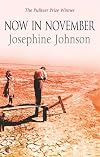
[b:Now in November|267115|Now in November|Josephine Winslow Johnson|https://i.gr-assets.com/images/S/compressed.photo.goodreads.com/books/1390983337l/267115._SY75_.jpg|258987] is [a:Josephine Winslow Johnson|736298|Josephine Winslow Johnson|https://images.gr-assets.com/authors/1371513942p2/736298.jpg]’s novel of a depression era farming family, caught up in the everyday hardness of the farm and the growing darkness of a world in financial crisis. The drought that overtakes Marget and her show more family, is more than a drought of the land, it is a drought of the soul.
The interpersonal relationships described by Marget are those of people caught in an eddy that drags them deeper and deeper into themselves and separates them further and further from one another. There is a genuine sense of desperation in each of the three daughters, Kerrin, Marget, and Merle, and there is a shadow of unavoidable failure that encompasses the father, who must try to keep a farm alive in the absence of sons.
although I was quick to hate him when he would turn on us suddenly and shout out, “eat your dinner, you girls, stop messing with your food!” But all the time I would feel us there on his shoulders, heavy as stone on his mind--all four of our lives to carry everywhere. And no money.
While the book is about the depression and the struggle to survive against nature and obligation, it is also about what it is to love, or at least to seek love, hopelessly.
Hate is always easier to speak of than love. How can I make love go through the sieve of words and come out something besides a pulp?
It is about how to survive, or at least how to keep moving forward, against a headwind that never diminishes.
I was afraid though and prayed--Lord make me satisfied with small things. Make me content to live on the outside of life. God make me love the rind!
Finally, it is about loss, looking back, finding that the days you thought hard were the closest you would get to days of joy and lightness.
Once I thought there were words for all things except love and intolerable beauty. Now I know that there is a third thing beyond expression--the sense of loss. There are no words for death.
When you put this book into the perspective of being the debut work of a 24 year old writer and then consider that it won the Pulitzer Prize for 1935, you realize just how remarkable a work of fiction it truly is. I felt akin to these people and wrapped up in their travails and their fates, and a bit hopeless in the face of their sorrows. show less
The interpersonal relationships described by Marget are those of people caught in an eddy that drags them deeper and deeper into themselves and separates them further and further from one another. There is a genuine sense of desperation in each of the three daughters, Kerrin, Marget, and Merle, and there is a shadow of unavoidable failure that encompasses the father, who must try to keep a farm alive in the absence of sons.
although I was quick to hate him when he would turn on us suddenly and shout out, “eat your dinner, you girls, stop messing with your food!” But all the time I would feel us there on his shoulders, heavy as stone on his mind--all four of our lives to carry everywhere. And no money.
While the book is about the depression and the struggle to survive against nature and obligation, it is also about what it is to love, or at least to seek love, hopelessly.
Hate is always easier to speak of than love. How can I make love go through the sieve of words and come out something besides a pulp?
It is about how to survive, or at least how to keep moving forward, against a headwind that never diminishes.
I was afraid though and prayed--Lord make me satisfied with small things. Make me content to live on the outside of life. God make me love the rind!
Finally, it is about loss, looking back, finding that the days you thought hard were the closest you would get to days of joy and lightness.
Once I thought there were words for all things except love and intolerable beauty. Now I know that there is a third thing beyond expression--the sense of loss. There are no words for death.
When you put this book into the perspective of being the debut work of a 24 year old writer and then consider that it won the Pulitzer Prize for 1935, you realize just how remarkable a work of fiction it truly is. I felt akin to these people and wrapped up in their travails and their fates, and a bit hopeless in the face of their sorrows. show less
This relatively short, exquisitely crafted novel set on a failing farm in the Great Depression won the Pulitzer Prize several years before Steinbeck's Grapes of Wrath tackled the same subject in more epic fashion with the same result. Johnson's novel is both more intense and less melodramatic; it has no "sweep", but rather penetrates deep into the hearts and psyches of a farm family in an unspecified part of the drought stricken mid-West as they toil through year after unprofitable year, show more making no headway against their mortgage debt. Even as they watch their neighbors pack up and move on...somewhere...there is never a suggestion that the Haldmarne family will think about giving in. Next year...next year will surely be better. The prose is full of evocative poetic nuggets-- "The wild cherries were in bloom. It was hot still, and ink-blotter clouds messed up the sky but brought no rain. The spring green was like green sunlight or green fire--something, anyway, more lovely than just leaves..."--but not always pretty ones--"The wires lay down across the field with the charred posts left at intervals like burned crows caught between the barbs." As others have pointed out in several excellent on-site reviews of this novel, it is incredible to contemplate that it was written by a 24-year-old woman, and despite the enthusiasm of its contemporary reception, including that Pulitzer Prize, it has now become a work that needs to be sought after, unlike the GAN that seems to have completely overshadowed it. My recommendation: Find it. Read it. Weep. show less
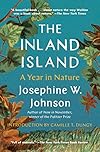
Josephine W. Johnson gives an intimate and in depth look at nature and wildlife over the course of a year at her 37 acre farm in Ohio in The Island Island. Written where one chapter covers a month, we see the seasonal and phenological changes of a year in Ohio. Johnson's writing makes everything seem beautiful, even when it is bleak. She has a talent for making the everyday and mundane leap off the page. I enjoyed her descriptions of the birds, toads, flowers and the weather. Johnson focuses show more on more than just the big picture. I loved when she got excited at new animal sightings. More than just descriptive of the world around her, Johnson incorporates her feelings into her observations and at the time she wrote The Inland Island, her feelings of the Vietnam War are heavily on her mind and mixed into her observations of the natural world. Reading The Inland Island felt like taking a walk through my backyard with a friend, enjoyable, eye-opening and peaceful.
This book was received for free in return for an honest review. show less
This book was received for free in return for an honest review. show less
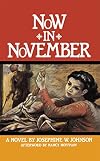
This book was easily the best book I've read this year. It's hard to say, so soon after having read this book, how much it will still be with me in the long run but I do believe it will remain as one of my Top 5 books ever read.
If you like The Grapes of Wrath you will love this book. In fact, TGoW is my all time favorite book and yet I still think that Johnson did a better job of telling the story of the Great Depression.
Now in November won the Pulitzer in 1935, 5 years before The Grapes of show more Wrath won it. It tells the story of a family on a farm in Nowhereville, America who is having trouble making their mortgage. People starve to death. People are evicted from their land. People die choking on the clouds of dust. The local teacher lady goes crazy. It's all very depressing and very touching and extremely moving.
The writing style is very simple. I found myself reading this book much more slowly than I normally do, as I wanted to give the words time to drip down and seep in.
In summation : This book should be required reading in every American high school. show less
If you like The Grapes of Wrath you will love this book. In fact, TGoW is my all time favorite book and yet I still think that Johnson did a better job of telling the story of the Great Depression.
Now in November won the Pulitzer in 1935, 5 years before The Grapes of show more Wrath won it. It tells the story of a family on a farm in Nowhereville, America who is having trouble making their mortgage. People starve to death. People are evicted from their land. People die choking on the clouds of dust. The local teacher lady goes crazy. It's all very depressing and very touching and extremely moving.
The writing style is very simple. I found myself reading this book much more slowly than I normally do, as I wanted to give the words time to drip down and seep in.
In summation : This book should be required reading in every American high school. show less
Lists
Awards


You May Also Like


Associated Authors
Statistics
- Works
- 12
- Also by
- 14
- Members
- 540
- Popularity
- #46,138
- Rating
- 3.7
- Reviews
- 17
- ISBNs
- 37
- Languages
- 4
- Favorited
- 1

