
Edgar P. Jacobs (1904–1987)
Author of The Yellow M
About the Author
Series
Works by Edgar P. Jacobs
Les aventures de Blake et Mortimer : Le Mystère de la Grande Pyramide : Edition intégrale (1998) 32 copies, 3 reviews
Blake & Mortimer - Intégrales - tome 5 - 3 formules du Professeur Satô (Les) - Intégrale complète (2015) 7 copies
Die Abenteuer von Blake und Mortimer – Blake und Mortimer Bibliothek – 07 – Die Diamanten-Affäre (2025) 3 copies
Autour de Blake & Mortimer - tome 13 - Scientifiction - Catalogue d'exposition (Arts et Métiers) (2019) 2 copies
BLAKE Y MORTIMER. INTEGRAL 3 1 copy
Blake & Mortimer: S.O.S. Meteores, Le Piege Diabolique, L'Affaire du Colllier, Les 3 Formules du Prof. Sato (1983) 1 copy
Blake & Mortimer nr 4 - 12 1 copy
Box Blake & Mortimer 1 copy
Associated Works
Tagged
Common Knowledge
- Canonical name
- Jacobs, Edgar P.
- Legal name
- Jacobs, Edgard Félix Pierre
- Birthdate
- 1904-03-30
- Date of death
- 1987-02-20
- Gender
- male
- Occupations
- comic book artist
extra
singer
set designer
illustrator
colorist - Nationality
- Belgium
- Birthplace
- Brussels, Belgium
- Place of death
- Lasne-Chapelle-Saint-Lambert, Belgium
- Map Location
- Belgium
Members
Reviews
The Secret of the Swordfish, Part 1: The Incredible Chase: The Adventures of Blake and Mortimer Volume 15 by Edgar P. Jacobs
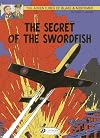
I had wondered why the English translation of the original Blake and Mortimer adventure had been left so late, given that a lot of the earlier translated stories refer to events in the three volume The Secret of the Swordfish. Now that I've read this first installment, I understand why: it's very much a product of it's time. There's a lot of gung-ho, jingoistic rhetoric, with Blake and Mortimer out to give treacherous Johnny Foreigner types the damn good thrashing they deserve! This is show more particularly noticeable in the first half of the book, where the caricature representation of the people of the "Yellow Empire" seems offensive to the modern sensibility. Had this story been my first taste of the Daring Duo's adventures, I'm not sure that I'd have come back for more.
Getting past that, Blake and Mortimer have their first encounter with Ahmed Nasir, who will be their companion on several later adventures, and he is presented in a heroic and independent light in this introduction to his character.
The adventure itself involves a 'Yellow Peril' type plot, with a surprise atomic attack on principal Western cities being the result of complacent post-War government's refusal to head the warnings given by Blake and Mortimer of the mounting threat in the East. Some of these devastated cities are visited in subsequent adventures, although they seem to have readily shrugged off the atomic holocaust unleashed by Basam Damdu.
As the subtitle, The Incredible Chase, suggests, most of the story is spent by Blake and Mortimer fleeing from Olrik in order to reach their secret base where the mysterious Swordfish Project promises to provide the means of turning the tide against the invading enemy. It's straight-forward action adventure stuff in the mold of the "Gott in Himmel!" style war comics that were popular up to the mid-1970s. I was able to enjoy it by suspending part of my critical faculty. If this is your first exposure to Blake and Mortimer, persevere: they get better. show less
Getting past that, Blake and Mortimer have their first encounter with Ahmed Nasir, who will be their companion on several later adventures, and he is presented in a heroic and independent light in this introduction to his character.
The adventure itself involves a 'Yellow Peril' type plot, with a surprise atomic attack on principal Western cities being the result of complacent post-War government's refusal to head the warnings given by Blake and Mortimer of the mounting threat in the East. Some of these devastated cities are visited in subsequent adventures, although they seem to have readily shrugged off the atomic holocaust unleashed by Basam Damdu.
As the subtitle, The Incredible Chase, suggests, most of the story is spent by Blake and Mortimer fleeing from Olrik in order to reach their secret base where the mysterious Swordfish Project promises to provide the means of turning the tide against the invading enemy. It's straight-forward action adventure stuff in the mold of the "Gott in Himmel!" style war comics that were popular up to the mid-1970s. I was able to enjoy it by suspending part of my critical faculty. If this is your first exposure to Blake and Mortimer, persevere: they get better. show less
The Mystery of the Great Pyramid Part 2: The Chamber of Horus: Blake and Mortimer Volume 3 by Edgar P. Jacobs

An enjoyable conclusion to the Egyptian adventures of Blake and Mortimer.
Actually, Blake is more conspicuous by his absence in this story, rather like Holmes in The Hound of the Baskerville's, so most of the action is carried by Professor Mortimer, who does a pretty good job of it. When Captain Blake does appear, it is in a very Holmesian way, which I took as an homage to the Great Detective rather than a cliché, though I guess it could be seen either way depending upon your inclination.
The show more supernatural element is similarly debatable: was magic actually used, or were suggestion and hypnotism employed? It could easily be either, and the story does not suffer for the ambiguity - another mystery to ponder!
I'm reading these stories in the order they were published in English, so chronologically this story come before the one I read first, The Yellow M. The stories are enjoyable in whatever order you read them, but it would make sense to read them chronologically. show less
Actually, Blake is more conspicuous by his absence in this story, rather like Holmes in The Hound of the Baskerville's, so most of the action is carried by Professor Mortimer, who does a pretty good job of it. When Captain Blake does appear, it is in a very Holmesian way, which I took as an homage to the Great Detective rather than a cliché, though I guess it could be seen either way depending upon your inclination.
The show more supernatural element is similarly debatable: was magic actually used, or were suggestion and hypnotism employed? It could easily be either, and the story does not suffer for the ambiguity - another mystery to ponder!
I'm reading these stories in the order they were published in English, so chronologically this story come before the one I read first, The Yellow M. The stories are enjoyable in whatever order you read them, but it would make sense to read them chronologically. show less

Edgar P. Jacobs was a contemporary and colleague of his fellow countryman, Hergé, assisting the latter with some of his Tintin stories. Comparison is therefore inevitable, and it is to Jacobs' credit.
Jacobs' artwork has the same clean lines as Hergé's, but his figures are drawn more realistically, without the elements of caricature found in the adventures of Tintin. Having only read The Yellow 'M' at the time of writing this review, I found the narrative style somewhat denser; there is show more none of the slapstick found in Tintin, little in the way of humour, actually, with the action being played seriously. There are no talking animals, apoplectic sea-captains, bungling detectives or comically absent-minded professors. The writing is seemingly aimed at an older, if still juvenile, audience than Hergé went for with Tintin. Accordingly, and with an extra 9-10 pages in which to expand the story, I found this first foray with Blake and Mortimer much more satisfying than most of the Tintin albums.
Written in the 1950s, there are a number of stock tropes which, depending upon the reader's viewpoint, will be found either stylistically comforting or clichéd (I obviously incline to the former). Blake is cast in the same mold as Dennis Nayland Smith from the Fu Manchu stories: a capable and influential establishment figure with a military background. Mortimer is the epitome of British scientific know-how, akin to Professor Quatermass. The villain(s) are a blend of Fu Manchu, Fantômas, Rastapopoulos, et al.
The story involves an evil mastermind terrorising the country, stealing (part of) the crown jewels, bent on a mysterious vengeance plot, manifesting seemingly superhuman powers and generally outwitting Scotland Yard at every turn. The action is well-paced, if somewhat formulaic: comfort-food for the brain.
The English translations of the Blake and Mortimer stories have been published out of the order in which they were written. Consequently, a few characters appear with little or no introduction, as we are expected to have met them previously. Also, some minor plot elements refer back to the earlier stories. None of which seriously detracted from my enjoyment of the story, if anything whetting my appetite for more. show less
Jacobs' artwork has the same clean lines as Hergé's, but his figures are drawn more realistically, without the elements of caricature found in the adventures of Tintin. Having only read The Yellow 'M' at the time of writing this review, I found the narrative style somewhat denser; there is show more none of the slapstick found in Tintin, little in the way of humour, actually, with the action being played seriously. There are no talking animals, apoplectic sea-captains, bungling detectives or comically absent-minded professors. The writing is seemingly aimed at an older, if still juvenile, audience than Hergé went for with Tintin. Accordingly, and with an extra 9-10 pages in which to expand the story, I found this first foray with Blake and Mortimer much more satisfying than most of the Tintin albums.
Written in the 1950s, there are a number of stock tropes which, depending upon the reader's viewpoint, will be found either stylistically comforting or clichéd (I obviously incline to the former). Blake is cast in the same mold as Dennis Nayland Smith from the Fu Manchu stories: a capable and influential establishment figure with a military background. Mortimer is the epitome of British scientific know-how, akin to Professor Quatermass. The villain(s) are a blend of Fu Manchu, Fantômas, Rastapopoulos, et al.
The story involves an evil mastermind terrorising the country, stealing (part of) the crown jewels, bent on a mysterious vengeance plot, manifesting seemingly superhuman powers and generally outwitting Scotland Yard at every turn. The action is well-paced, if somewhat formulaic: comfort-food for the brain.
The English translations of the Blake and Mortimer stories have been published out of the order in which they were written. Consequently, a few characters appear with little or no introduction, as we are expected to have met them previously. Also, some minor plot elements refer back to the earlier stories. None of which seriously detracted from my enjoyment of the story, if anything whetting my appetite for more. show less

Whilst trying, with only partial success, to follow Professor Mortimer's investigations on a map of the area (a lot has obviously changed since 1954 when Jacobs wrote the story), I was pleasantly surprised to find that the good citizens of Toussus-le-Noble, a town that plays host to some of the action in this album, have named a road after the writer: Rue Ep Jacobs: Bien fait, mes amis!
I like the atmosphere in this one, all dark, rainy and brooding. The usual protagonists and villains, which show more you are either starting to get bored of or find comforting, like a bowl of your favourite soup after a cold, wet day. I incline to the latter. show less
I like the atmosphere in this one, all dark, rainy and brooding. The usual protagonists and villains, which show more you are either starting to get bored of or find comforting, like a bowl of your favourite soup after a cold, wet day. I incline to the latter. show less
Lists
Awards

You May Also Like


Associated Authors
Statistics
- Works
- 40
- Also by
- 1
- Members
- 4,278
- Popularity
- #5,874
- Rating
- 4.0
- Reviews
- 58
- ISBNs
- 354
- Languages
- 10
- Favorited
- 4