
James Cawthorn (1929–2008)
Author of Fantasy: The 100 Best Books
About the Author
Works by James Cawthorn
The Michael Moorcock Library: Hawkmoon - History of the Runestaff Vol 1 (The James Cawthorn Collection) (2019) 13 copies, 2 reviews
Associated Works
The Great Captains (The Epic Romance of King Arthur) (1956) — Illustrator, some editions — 63 copies, 1 review
Conan Saga #6 — Contributor — 1 copy
Conan the Barbarian [1970] #015 — Contributor — 1 copy
Conan the Barbarian [1970] #014 — Contributor — 1 copy
Tagged
Common Knowledge
- Legal name
- Cawthorn, James Philip
- Other names
- Cawthorn, Jim
Cawthorn, James
Cawthorne, James - Birthdate
- 1929-12-21
- Date of death
- 2008-12-02
- Gender
- male
- Occupations
- illustrator
critic
science fiction writer - Nationality
- England
UK - Birthplace
- Gateshead, Durham, England, UK
- Place of death
- Gateshead, Durham, England, UK
- Associated Place (for map)
- Gateshead, Durham, England, UK
Members
Reviews
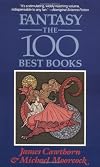
Published in 1988 (although there are later editions), this book is largely the work of Cawthorn. Moorcock honourably admits as much in his short addition to Cawthorn's Introduction. Moorcock's name sold amongst genre fans so there seems to have been agreement to share bragging rights.
Cawthorn on his own is perfectly capable of good, if at times idiosyncratic (assuming the idiosyncrasies are not those of Moorcock), assessments. 100 books and nearly 100 authors get useful and interesting two show more page summaries from Jonathan Swift to Tom Holt.
Some of the later entries might not stand the test of time, there are omissions (Moorcroft himself notes that Robert Holdstock is missing) and many of the books were no longer available (some still are not despite the rise of Kindle) but the general run of judgement is sound.
There are suggestive discoveries here. Cawthorn takes special pleasure in finding some genre significant works that show that he knows his subject and does not rely on someone else's canon. Already I find myself reading Pratt and De Sprague's 'Land of Unreason' as a result.
It remains surprising thirty years on what is still not easily available - for example, I could find no integrated volume of Clark Ashton Smith's 'Zothique' stories despite him coming back into appreciation with a Penguin special edition in recent years.
Similarly Marjorie Bowen's 'Black Magic' and David Garnett's 'A Man at the Zoo' are hard to get hold of as is Van Vogt's 'The Book of Ptath' outside US E-Bay sellers. Frank S. Stuart's 'Caravan for China' appears to have dropped off the face of the earth bar one antique E-Bay hard-back.
Compared to the state of affairs in 1988, we can be thankful for Kindle reviving many 'ancient texts' and to E-Bay for re-circulating others that might have been pulped because a market has been created. The 'Fantasy Masterworks' series has also served a purpose in the intervening years.
As guides go, this is definitely not the last word on the subject of 'best fantasy' but the 100 works cited here from 'Gullivers Travels' through Merritt's 'Dwellers in the Mirage' to Kingsley Amis' 'The Green Man' and beyond is a worthy attempt at creating the basis for a canon of sorts. show less
Cawthorn on his own is perfectly capable of good, if at times idiosyncratic (assuming the idiosyncrasies are not those of Moorcock), assessments. 100 books and nearly 100 authors get useful and interesting two show more page summaries from Jonathan Swift to Tom Holt.
Some of the later entries might not stand the test of time, there are omissions (Moorcroft himself notes that Robert Holdstock is missing) and many of the books were no longer available (some still are not despite the rise of Kindle) but the general run of judgement is sound.
There are suggestive discoveries here. Cawthorn takes special pleasure in finding some genre significant works that show that he knows his subject and does not rely on someone else's canon. Already I find myself reading Pratt and De Sprague's 'Land of Unreason' as a result.
It remains surprising thirty years on what is still not easily available - for example, I could find no integrated volume of Clark Ashton Smith's 'Zothique' stories despite him coming back into appreciation with a Penguin special edition in recent years.
Similarly Marjorie Bowen's 'Black Magic' and David Garnett's 'A Man at the Zoo' are hard to get hold of as is Van Vogt's 'The Book of Ptath' outside US E-Bay sellers. Frank S. Stuart's 'Caravan for China' appears to have dropped off the face of the earth bar one antique E-Bay hard-back.
Compared to the state of affairs in 1988, we can be thankful for Kindle reviving many 'ancient texts' and to E-Bay for re-circulating others that might have been pulped because a market has been created. The 'Fantasy Masterworks' series has also served a purpose in the intervening years.
As guides go, this is definitely not the last word on the subject of 'best fantasy' but the 100 works cited here from 'Gullivers Travels' through Merritt's 'Dwellers in the Mirage' to Kingsley Amis' 'The Green Man' and beyond is a worthy attempt at creating the basis for a canon of sorts. show less
The Michael Moorcock Library: Savoy 1: The Jewel In The Skull / The Crystal and the Amulet (The James Cawthorn Collection) by James Cawthorn
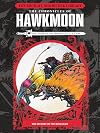
Not the best adaptation I've read. Cawthorn's art is frustrating. At times, especially in wider landscape scenes or big battle scenes, it's simply stunning and imaginative. But for the scene-to-scene shots with actual characters, the quality becomes very spotty when it comes to quality. At times, it's beautiful, but mostly, it's sketchy and somewhat stiff.
And then there's the actual pacing and delivery of the adaptation. Someone else mentioned it's choppy, and I can't think of a better show more description. The reader is thrown from scene to scene with nary a transition to be found. It makes for an extremely disjointed reading experience.
I don't think it helps that the dialogue isn't presented in the standard comic book format (it's more of the 70s magazine style with the words under the panel). This, along with the sometimes confusing artwork, lack of descriptors, and unanticipated jumps, makes this a somewhat difficult read as well.
Hawkmoon has never been my favourite of Moorcock's creations, and this adaptation is okay at best, but it's still worth the read. show less
And then there's the actual pacing and delivery of the adaptation. Someone else mentioned it's choppy, and I can't think of a better show more description. The reader is thrown from scene to scene with nary a transition to be found. It makes for an extremely disjointed reading experience.
I don't think it helps that the dialogue isn't presented in the standard comic book format (it's more of the 70s magazine style with the words under the panel). This, along with the sometimes confusing artwork, lack of descriptors, and unanticipated jumps, makes this a somewhat difficult read as well.
Hawkmoon has never been my favourite of Moorcock's creations, and this adaptation is okay at best, but it's still worth the read. show less
The Michael Moorcock Library: The Chronicles of Hawkmoon: History of the Runestaff Vol. 1 (The James Cawthorn Collection) by James Cawthorn
It is time after the great destruction of the civilization as we know it. On the ruins of advanced civilizations new ones are raising, most powerful being Granbretan (guess where this is located :)) that starts the conquest of the entire world using their legions led by Wolf Legion and recovered deadly technology (fire lances, flying machines to name the few) arming the soldiers.
On their way (somewhere in France I think) lies Kamarg and Count Brass, warrior, scientist. He also managed to show more recover some of the ancient weaponry and systems and now represents obstacle that Granbretan wants to overcome. And to overcome it they use Hawkmoon, defeated leader of Koeln resistance.
And thus starts our story. Entire book is full of W40K vibe, only difference being that Emperor is enemy here (he leads the Granbretan).
Art is more golden age style - there are no balloons, but lots of text under the panels. If you ever read Brick Bradford or Prince Valiant you will be familiar with the layout. Art itself is very dark (inline with the overall atmosphere) and at some points might become slightly confusing (it is definitely missing some light). But overall it is very good black and white art. At times art looks little bit stiff but on the good side author manages to create beautiful panoramas, especially of the Emperor's palace.
Very interesting book, definitely brought back some memories. For fans of post-apocalyptic societies and W40K highly recommended. show less
On their way (somewhere in France I think) lies Kamarg and Count Brass, warrior, scientist. He also managed to show more recover some of the ancient weaponry and systems and now represents obstacle that Granbretan wants to overcome. And to overcome it they use Hawkmoon, defeated leader of Koeln resistance.
And thus starts our story. Entire book is full of W40K vibe, only difference being that Emperor is enemy here (he leads the Granbretan).
Art is more golden age style - there are no balloons, but lots of text under the panels. If you ever read Brick Bradford or Prince Valiant you will be familiar with the layout. Art itself is very dark (inline with the overall atmosphere) and at some points might become slightly confusing (it is definitely missing some light). But overall it is very good black and white art. At times art looks little bit stiff but on the good side author manages to create beautiful panoramas, especially of the Emperor's palace.
Very interesting book, definitely brought back some memories. For fans of post-apocalyptic societies and W40K highly recommended. show less

Interesting to read, but an eccentric selection -- perhaps 'Our 100 Favorite' rather than 'The 100 Best' would be more appropriate. There are multiple titles by David Lindsay, A. Merritt, HP Lovecraft, Edgar Rice Burroughs, Thorne Smith, CL Moore, L Ron Hubbard (!), Fritz Leiber (4!), Henry Treece, Poul Anderson... but nothing at all by George MacDonald, L. Frank Baum, Arthur Machen, James Branch Cabell, Ernest Bramah, Evangeline Walton,Peter Beagle. Lloyd Alexander, Gene Wolfe and no trace show more of numerous lonely gems like Lud-in-the-Mist or Silverlock. Cawthorn and Moorcock do not however omit a selection by, ahem, Michael Moorcock. And Wuthering Heights and Moby-Dick are fantasy novels?? show less
You May Also Like


Associated Authors
Statistics
- Works
- 5
- Also by
- 17
- Members
- 199
- Popularity
- #110,456
- Rating
- 3.8
- Reviews
- 5
- ISBNs
- 8
- Favorited
- 1