
Victor J. Banis (1937–2019)
Author of Deadly Nightshade (Deadly Mystery, #1)
About the Author
Disambiguation Notice:
Victor Banis wrote gothic romances using the pseudonym Jan Alexander. He wrote gay comic novels under the pseudonym Don Holliday. Other pseudonyms include Lynn Benedict, Victor Jay, J.X. Williams (a house pseudonym), Jay Vickery and several others.
Series
Works by Victor J. Banis
Gay-safe 5 copies
Gay Buddies 4 copies
The Canals of Mars 3 copies
Village Hipster 3 copies
The Emerald Mountain {short story} 2 copies
Time's Rainbow: Writing Ourselves Back into American History (Time's Rainbow Series) (Volume 1) (2017) — Contributor — 2 copies
Stud's paradise 1 copy
Gay haunt 1 copy
Daughters of Sappho 1 copy
Parisian passions 1 copy
The Unsucsexful Swap 1 copy
Brandon's Boy (Adult) 1 copy
Seamy Town 1 copy
ACID SWAP 1 copy
Peep Show 1 copy
Lust Lady 1 copy
Hypno-Sin 1 copy
Daughters of Sappho 1 copy
Oh, Daddy! It’s Only Incest 1 copy
House At Rose Point 1 copy
Her 1 copy
I Will Always Love You 1 copy
The Curse of Bloodstone 1 copy
The Immortals 1 copy
CAMP Cookbook, The 1 copy
AC-DC Stud 1 copy
The C.A.M.P. Cookbook 1 copy
Sin Brothers 1 copy
Lust Master 1 copy
Devil's Dance 1 copy
Jackie's Back 1 copy
Borderline 1 copy
Gay Trap - SR-602, The 1 copy
Shame Street 1 copy
Beast of Shame 1 copy
Lust Camera 1 copy
Tramps On Tour 1 copy
Luster's Lane 1 copy
Welcome the Wicked 1 copy
Runaway Beach 1 copy
Singles Pad 1 copy
Wanted: Sin Men 1 copy
Man from CAMP, The 1 copy
Associated Works
Pulp Friction: Uncovering the Golden Age of Gay Male Pulps (2003) — Contributor — 221 copies, 3 reviews
Wishing on a Blue Star: An Anthology Dedicated to the Inspiration of the Human Spirit (2011) — Contributor — 20 copies
Tagged
Common Knowledge
- Canonical name
- Victor J. Banis
- Legal name
- Banis, Victor Jerome
- Other names
- Jay, Victor
Williams, J. X.
Vickery, Jay
Benedict, Lynn
Holliday, Don
Alexander, Jan - Birthdate
- 1937
- Date of death
- 2019-02-22
- Gender
- male
- Nationality
- USA
- Places of residence
- Huntingdon County, Pennsylvania, USA
Eaton, Ohio, USA
Birmingham, Alabama, USA
Dayton, Ohio, USA
Los Angeles, California, USA
Big Bear, California, USA (show all 8)
San Francisco, California, USA
Martinsburg, West Virginia, USA - Disambiguation notice
- Victor Banis wrote gothic romances using the pseudonym Jan Alexander. He wrote gay comic novels under the pseudonym Don Holliday. Other pseudonyms include Lynn Benedict, Victor Jay, J.X. Williams (a house pseudonym), Jay Vickery and several others.
- Associated Place (for map)
- USA
Members
Reviews

My two friends that supply me with tons of these books just handed me this and said, "We haven't read it yet. Thought you could be our guinea pig". Not sure if that was intended to express my great evaluation of literature or if they were expressing something that I might not want to examine too closely. Nonetheless...read it I did...and I liked it. I felt rather sorry for poor Tom. He was not expecting Stanly or the effect that Stanly had on him. He thought it was a bad case of indigestion show more but Pepcid was not helping any and every time Stanly looked at him he had to take some more. Them working that out was almost as good as the rest of the story. In Deadly Nightshade, we are introduced to the transgender world of San Francisco and certain parts are an eye opener for me....since I didn't know much about the transgender population. The story is layered with suspense and I never guessed the murderer. As for the ending, it is one exciting climax. I'm going to tell my two friends they can purchase book #2 anytime now. show less

NEIGHBORS by Victor J. Banis is a short story that says a lot. Linda is married to Ray but the luster of marriage has dimmed. She hears that her new neighbor Amy is a lesbian and she is intrigued but fears Ray’s reaction if she pursues a relationship with Amy. Ray is crude in his words and Linda does not want to be embarrassed by him. But she wonders what would happen if she is just neighborly with Linda.
While NEIGHBORS is short, Victor J. Banis says so much in it. No word is superfluous. show more Each is important to portray what Linda’s life is like with Ray and to let us into her thoughts, wishes, hopes. I loved NEIGHBORS. It made me think of what happens inside a person and how much is bottled up from fear of saying what is important and being misinterpreted and ridiculed. I could not walk away without thinking of the similarities in my life. show less
While NEIGHBORS is short, Victor J. Banis says so much in it. No word is superfluous. show more Each is important to portray what Linda’s life is like with Ray and to let us into her thoughts, wishes, hopes. I loved NEIGHBORS. It made me think of what happens inside a person and how much is bottled up from fear of saying what is important and being misinterpreted and ridiculed. I could not walk away without thinking of the similarities in my life. show less
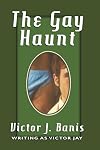
To review this book, it's kind of important to place it in its time, place and when it was written: LA, California in 1970. I say this because if you don't, what happens with the characters, their interactions and reactions don't really register right; if you try to make this a modern (within the past 15 or so years) story, it becomes too jarring and out of place. That said:
Paul is within weeks of marrying Margo, the daughter of the president and CEO of Sellers & Sellers, the company Paul show more works for. Paul, in the mistaken belief that he can "go straight" (calling homosexuality a "disease" and swearing off the "Gay scene"), proposed to Margo, who is at best a cold fish -for instance, she can only do the deed in the dark- naive and surprisingly blind to her fiance's odd little quirks. For instance, toward the end of the story when Paul finally tells Margo he's gay, she says "I want you to be happy Paul." He has to lay it out for her.
Since he's marrying the boss's daughter, Paul has "earned" a place in the company hierarchy without any real authority. He doesn't seem to realize that his position is more honorary than real and he thinks the future is promising.
All of Paul's illusions are shattered when, without warning, Paul's dead lover Lorin, as a ghost, shows up at a cocktail party Paul and Margo are hosting at Paul's flat, quite starkers. Only Paul can see Lorin, a man who loved to live life on the edge and evidently has no compunctions about bending the rules even in the ever-after. Lorin immediately sets about destroying Paul's relationship with Margo and reawaken desires Paul has been denying since Lorin died five years before*. Soon enough, Paul is seeking out a long-time boyfriend with whom he'd lived at one point, Elliot (who deserves kudos for patience), and discovering the joys of spending time with Margo's cousin Don.
Elliot reminds Paul of another part of his life he's forgotten, that he wanted to be a writer, before falling in with Lorin and his free-wheeling life. Lorin claims Elliot to be boring, but Paul feels a contentment and connextion with the other man he left behind when he followed Lorin. It's something he's been missing from his life and Paul begins to realize not only is he not truly happy with his current life, he's most definitely not in love with Margo.
At first glance, Paul seems to have no self control as he seems ready and willing to sleep with anyone who catches his interest, but I would like to point out that several other characters who share this trait: from Margo's own mother (who makes a pass at Paul, much to his dismay), to Don, Margo's cousin, to the lady through whose window Paul climbs after an outrageous chase on, of all things, a ladder truck, and a few other scattered folks. Again, I attribute this to the time period with its free love, which was well before the horror and shock that came in the early 80s with AIDS.
Though it took me nearly half a year to finally finish this book, I'm glad I did. It's interesting to see how a book written in 1970 approaches certain situations as opposed to one written, say in the past 5 years. How attitudes towards homosexuality/gays have changed in the past 40 years. It's no longer a "disease" nor a "scene" but becoming more and more part of the norm (in spite of certain narrow minded individuals). I'm sure members of PFLAG would have something to say about those words, none of them complementary. Everyone who does the horizontal dance in this book does so w/o protection, which is a bit of a shock if you're not used to reading such things, especially since everyone switches partners without thinking about any possible consequences. The only one who could get away with that these days is Lorin, since in essence, he's a ghost.
*choking on a diamond, no less, if appropriate! show less
Since he's marrying the boss's daughter, Paul has "earned" a place in the company hierarchy without any real authority. He doesn't seem to realize that his position is more honorary than real and he thinks the future is promising.
All of Paul's illusions are shattered when, without warning, Paul's dead lover Lorin, as a ghost, shows up at a cocktail party Paul and Margo are hosting at Paul's flat, quite starkers. Only Paul can see Lorin, a man who loved to live life on the edge and evidently has no compunctions about bending the rules even in the ever-after. Lorin immediately sets about destroying Paul's relationship with Margo and reawaken desires Paul has been denying since Lorin died five years before*. Soon enough, Paul is seeking out a long-time boyfriend with whom he'd lived at one point, Elliot (who deserves kudos for patience), and discovering the joys of spending time with Margo's cousin Don.
Elliot reminds Paul of another part of his life he's forgotten, that he wanted to be a writer, before falling in with Lorin and his free-wheeling life. Lorin claims Elliot to be boring, but Paul feels a contentment and connextion with the other man he left behind when he followed Lorin. It's something he's been missing from his life and Paul begins to realize not only is he not truly happy with his current life, he's most definitely not in love with Margo.
At first glance, Paul seems to have no self control as he seems ready and willing to sleep with anyone who catches his interest, but I would like to point out that several other characters who share this trait: from Margo's own mother (who makes a pass at Paul, much to his dismay), to Don, Margo's cousin, to the lady through whose window Paul climbs after an outrageous chase on, of all things, a ladder truck, and a few other scattered folks. Again, I attribute this to the time period with its free love, which was well before the horror and shock that came in the early 80s with AIDS.
Though it took me nearly half a year to finally finish this book, I'm glad I did. It's interesting to see how a book written in 1970 approaches certain situations as opposed to one written, say in the past 5 years. How attitudes towards homosexuality/gays have changed in the past 40 years. It's no longer a "disease" nor a "scene" but becoming more and more part of the norm (in spite of certain narrow minded individuals). I'm sure members of PFLAG would have something to say about those words, none of them complementary. Everyone who does the horizontal dance in this book does so w/o protection, which is a bit of a shock if you're not used to reading such things, especially since everyone switches partners without thinking about any possible consequences. The only one who could get away with that these days is Lorin, since in essence, he's a ghost.
*choking on a diamond, no less, if appropriate!

Reviewed on Hearts On Fire... http://heartsonfirereviews.com/
Vic Banis is a master storyteller from his days of writing some of the earliest gay pulp fiction to his works today. He is one of those few writers that actually has enough life experience to pour emotions into a story that stirs the reader whether it's a comedy or a western or a beautiful bittersweet short like this one. Mike Patterson and Adam Cooper were married in every real sense of the word. As soul mates they raised five show more children together, loved a passionately and completed each other. Adam died four days ago and with him most of old Mike died also. The grown children take turns keeping an eye on Daddy Mike but is Adam somehow watching over Mike too? I loved the character Mike and cried with him, felt his amazement at seeing the hawk and identified with his independent, crusty exterior. Not many people find that forever kind of love that Adam and Mike shared but those few of you who have found it definitely need to read this excellent story. show less
Vic Banis is a master storyteller from his days of writing some of the earliest gay pulp fiction to his works today. He is one of those few writers that actually has enough life experience to pour emotions into a story that stirs the reader whether it's a comedy or a western or a beautiful bittersweet short like this one. Mike Patterson and Adam Cooper were married in every real sense of the word. As soul mates they raised five show more children together, loved a passionately and completed each other. Adam died four days ago and with him most of old Mike died also. The grown children take turns keeping an eye on Daddy Mike but is Adam somehow watching over Mike too? I loved the character Mike and cried with him, felt his amazement at seeing the hawk and identified with his independent, crusty exterior. Not many people find that forever kind of love that Adam and Mike shared but those few of you who have found it definitely need to read this excellent story. show less
Lists
You May Also Like


Associated Authors
Statistics
- Works
- 201
- Also by
- 10
- Members
- 1,166
- Popularity
- #22,047
- Rating
- 3.7
- Reviews
- 45
- ISBNs
- 202
- Languages
- 4