

P. N. Elrod
Author of My Big Fat Supernatural Wedding
About the Author
Patricia Nead Elrod is a interesting woman who took her three favorite subjects (Vampire stories, gangster films, and pulp magazines) and combined them into one. The unique style of this award winning author, she has published over 20 novels in her literary career. As a resident of Texas, she lives show more with her dogs, books and TARDIS. (Bowker Author Biography) show less
Image credit: Amazon profile photo
Series
Works by P. N. Elrod
Stepping Through the Stargate: Science, Archaeology and the Military in Stargate SG1 (2004) — Editor; Contributor — 104 copies, 1 review
P. N. Elrod 9 copies
Wolf and Hound [short story] 3 copies
All Shook Up 2 copies
Lunch Time Reading Omnibus 1 copy
Her Mother's Daughter 1 copy
Ben, Strahd, Azalin'le Savaş 1 copy
Grave-Robbed 1 copy
Catching Midnight 1 copy
Hecate's Golden Eye 1 copy
Associated Works
White House Pet Detectives: Tales of Crime and Mystery at the White House from a Pet's-Eye View (2002) — Contributor — 17 copies
Tagged
Common Knowledge
- Legal name
- Elrod, Patricia Nead
- Birthdate
- 1954
- Gender
- female
- Agent
- Lucienne Diver
- Nationality
- USA
- Birthplace
- Texas, USA
- Places of residence
- Texas, USA
- Associated Place (for map)
- Texas, USA
Members
Discussions
Short story about cursed immortal sailors in Name that Book (January 2016)
Reviews

IN A NUTSHELL
That was great fun. It was a book that I returned to eagerly each day. A fast-paced plot. Original ideas. A few surprises along the way and a strong, relatable female lead. It was a romp in the best possible way. It took itself seriously. The alternate Victorian London it built made sense. All the action happened within a couple of days. Through the many action set-pieces, the intrigues and the puzzle-solving the story remained focused on our heroine's emotional journey. I wish show more there had been a sequel.
I'm sorry to say that this book languished in my TBR for NINE YEARS. I don't know how that came about. Perhaps it's that neither the cover nor the title are particularly compelling. The important thing is that I was missing out on a really fun read..
Sometimes books set in an alternate version of history can take a while to find their feet. 'The Hanged Man' pulled me in from the first page. I was propelled through the first two chapters by the mystery and by the artfully dropped details of how this alternate Victorian London worked. I knew immediately that this was going to be a romp of an adventure with a solid mystery at its heart.
The rapid pace of the action in the first quarter of the book swept me along. I was impressed by the author's ability to deliver so much vivid, exciting action and still sketch a plausible alternate Victorian London and make the lead character, Alex Pendlebury, engaging.
By the middle of the book, I was rooting for Alex She was clever, brave and absolutely determined not to let the men around her get in her way. She made the perfect heroine for me to cheer for as she negotiated the twists and turns of this ripping yarn. She confronted monsters, some human, some not so much. She found secret passages. She disguised herself and penetrated the heart of the bad guys' lair. She built alliances and stood up to authority and when violence was needed, she never hesitated in delivering it. And she did all of this while mourning the violent death of her father.
Many alternate history mysteries reach for that larger-than-life, Indiana Jones meets Sherlock Holmes sort of gothic adventure but very few succeed. This book hit the mark. The mystery was twisty but solid. The characters were both believable and surprising. The monsters were original and quite scary.
I think this would make a great TV series. I'm surprised none of the streaming companies have picked it up and expanded on it. Maybe someone needs to turn it into a graphic novel before they'll see it's potential. show less
That was great fun. It was a book that I returned to eagerly each day. A fast-paced plot. Original ideas. A few surprises along the way and a strong, relatable female lead. It was a romp in the best possible way. It took itself seriously. The alternate Victorian London it built made sense. All the action happened within a couple of days. Through the many action set-pieces, the intrigues and the puzzle-solving the story remained focused on our heroine's emotional journey. I wish show more there had been a sequel.
I'm sorry to say that this book languished in my TBR for NINE YEARS. I don't know how that came about. Perhaps it's that neither the cover nor the title are particularly compelling. The important thing is that I was missing out on a really fun read..
Sometimes books set in an alternate version of history can take a while to find their feet. 'The Hanged Man' pulled me in from the first page. I was propelled through the first two chapters by the mystery and by the artfully dropped details of how this alternate Victorian London worked. I knew immediately that this was going to be a romp of an adventure with a solid mystery at its heart.
The rapid pace of the action in the first quarter of the book swept me along. I was impressed by the author's ability to deliver so much vivid, exciting action and still sketch a plausible alternate Victorian London and make the lead character, Alex Pendlebury, engaging.
By the middle of the book, I was rooting for Alex She was clever, brave and absolutely determined not to let the men around her get in her way. She made the perfect heroine for me to cheer for as she negotiated the twists and turns of this ripping yarn. She confronted monsters, some human, some not so much. She found secret passages. She disguised herself and penetrated the heart of the bad guys' lair. She built alliances and stood up to authority and when violence was needed, she never hesitated in delivering it. And she did all of this while mourning the violent death of her father.
Many alternate history mysteries reach for that larger-than-life, Indiana Jones meets Sherlock Holmes sort of gothic adventure but very few succeed. This book hit the mark. The mystery was twisty but solid. The characters were both believable and surprising. The monsters were original and quite scary.
I think this would make a great TV series. I'm surprised none of the streaming companies have picked it up and expanded on it. Maybe someone needs to turn it into a graphic novel before they'll see it's potential. show less
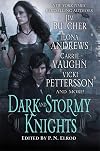
No, really. LOTS of SPOILERS.
And I got my Kitty fix and I got my Dresden fix and I got my Kate Daniels fix allinthesamebookanditwassocool!!!
I could jump on board with this anthology thing.....
The Kitty story directly interrogates the question of monstrosity. Pitting Cormac against a werewolf, who admittedly is beginning to lose control, but who has never killed a human being leaves both the reader and Cormac questioning the nature of monstrosity. There is no reference to where in the Kitty show more timeline this takes place, I would suspect earlier rather than later since Cormac's crush on Kitty and his cousin getting all monstrosified should have led him to this question far earlier in the series than where this sits by publication date.
Really, this question is at the heart of so much of the horror genre. What is humanity? What is monstrosity? Let's blur those lines a bit, now what do they look like, is that what they "really" are? Silence of the Lambs is a good example of this line blurring. Sure it is easy enough to code Buffalo Bill as a "monster," he's kidnapping and killing young women for their skins and all. But what about Lector? Monster? Yes.....killing people and making them into, ah, works of art is an easy monstrosity codification. But he also provides invaluable help in catching Buffalo Bill. That makes him, at the very least, a selectively helpful monster. And there is this aspect to his character like a flame to the metaphorical moth that we, the audience, embody. He is an old school gentleman. How does that quality jive with his cannibalistic and violent tendencies? We find ourselves unable to look away from his cleverness in manipulating the police who strive to keep him locked up. We even find ourselves rooting for him, maybe just a little, when he tries to escape his windowless prison. If he is a monster, why do we feel this way? This conundrum is the question of monstrosity that faces Cormac, and so many other characters (and their readers) in Urban Fantasy.
The Dresden story follows Johnny Marcone, suuuuuuuuper mobboss. This story confirmed my theory that Marcone is another form of condoned masculinity in the Dresdenverse. Motivated by the "dark secret" of a girl who took a bullet meant for him, Marcone has her closeted away on life support; not even the girl's mother knows the kid is alive (she incidentally was an antagonist in the first book and now works as a madame for Marcone and probably betrayed him in Small Favor). Here we learn that Marcone's one rule is "No Children." As in, keep the kids out of the crime. It comes out that he disguises this as protecting his business interests, but both the reader and his magical consultant (female, btw) are led to question this "business" as his sole motivation. Particularly after Harry rooting out the kid's existence and understanding the MASSIVE trouble Marcone went to with the Shroud to try curing her.
Harry is totally OCD about saving kids, even more so than he is about saving damsels in distress, and yes, he does categorize said dames in that manner.
Michael is a literal knight in shining armor who met his wife while saving her from a dragon. Doesn't get more classic than that, which was the point. He gets "completely irrational" (Father Forthill, Dark and Stormy Knights) where his children are concerned.
Billy is also a sanctioned representation of masculinity, he's all about protecting his own and gets to deal with that failure in Turn Coat, just like Harry in the Grave Peril-Summer Knight arc via Susan.
Butters is a sanctioned portrayal of masculinity, more interesting that a lot of the others because he is originally coded as a victim, and while he "overcomes" this "deficiency" with some difficulty, he continues to be portrayed as a much less classically macho version of masculinity. His geekness is sanctioned as masculine by Harry when the latter brings the former over to Billy's place to continue the gaming nights with the introduction that Butter's "geek dick" is bigger than everyone elses. Here a premium is put on a high level of geekness, a social subgroup that perceives itself as somewhat disenfranchised and disempowered by more mainstream ideals of masculinity. (This is arguable since geek-dom tends to be extremely male dominated and frequently perpetrates many of the gender issues seen in mainstream patriarchy while loudly pontificating that this cannot possibly be so because of their masculinely disenfranchised state. See blog "From Texas A&M to College Station" for more on the gender complexities of being a female "geek"). Nonetheless, Butters presents a sanctioned, and comparatively disparate, version of masculinity in Butcher's works.
Morgan is also sanctioned....Nicodemus is actually sort of in this category. Maybe. Must think more on that one.....After this short story Hendricks definitely falls here.....Ramirez definitely falls here too....
Anyway.
Andrew's story takes place prior to the rest of the series and provides the explanation of Saiman's and Kate's meeting and the following business, at least on Kate's part, relationship. The range of mythology incorporated lives up to precedent (not a small thing), and fully delivers on characterization and cohesiveness in plot and action. There is an interesting bit about Saimen not being able to mimic viable ovum, thus leaving the actual creation of life in more normal realms. This could potentially be an interesting point of inquiry along the lines of the domestic/public sphere conflict critiqued by Shelley in Frankenstine.
Beyond that, we have Kate married to her very masculine job, a female/male merc team which brings the merc gender count for this story to 2f:1m. Kate gamely sticks to the job, there may be something to that aspect. And she and Saiman debate sexual mores, which definitely bears further scrutiny.
Throughout UF, there seems to be a longing for the mythos of The White Picket Fence while also critiquing it and sometimes rejecting it outright as impractical at best. Harry comments about Michaels house that there probably isn't a place like that for him, homey and full of life. Kate believes that she will also be excluded from mainstream aspects of life because of her bloodline, though she adopts an orphan and does "crazy aunt" pretty well. Anita Blake is scared to death of the normalcy promised her by her upbringing and potentially manifest in the form of Richard. The narrative here argues that WPFM is impractical, dangerous, unrealistic, and nonexistent in general and definitely for Ms. Blake specifically. That being said, she carves out a version of domestic normalcy and finds peace within it. Kitty mourns when she learns that her lycanthropy precludes carrying a pregnancy to term and observes early on that there will be no house in the suburbs with 2.5 kids and a golden retriever in the back yard for her. This doesn't come up so much for Mercy in Briggs' books, or maybe it does since her coyoteness is a portal of sorts by which Adam (or any other werewolf, say, Samuel) might more easily and less painfully acquire WPFM. That is going to make the kid question particularly impactful in this series.
All these books are approaching the point where the question of biological reproduction will be introduced. The books are targeted toward young adult, for the most part, women. With strong female protagonists negotiating a world that tries to dominate, control, kill, use, disempower, and instruct them, it offers a symbolic manifestation of patriarchy and all the subtle dangers that go with it. In a world where a woman can choose to marry, shack up and live happily in sin, go it alone, choose either a female or male partner, be the family bread winner, or have her own valuable and viable career, the question of choosing to reproduce has become socially charged. In so many ways, a woman's supposed value is connected to her physicality (the value thereof ascribed by the male gaze), which in turn connects to her potential to bear children. Much of our culture focuses around supporting this valuation, which makes sound evolutionary sense, but may or may not have a valid place on today's over populated planet.
What does it mean to be a woman who chooses not to have or rear children? UF is about to launch right into this question. What does it mean to be a strong woman and choose to reproduce/rear children? How does this get balanced? Perhaps male nurturers is an answer to this question as well as its parallel in masculinity. What does it mean to be a man in a society whose women can defend themselves? What does it mean to be a man in this society and choose to reproduce/rear children in a society where a man is not necessarily the primary bread winner or protector?
These, I think, are some of the crisis questions of this generation. Reconciling a new culture with older ideals. Perhaps that is always the way of it.
In other reviews, I love the story "Even a Rabbit Will Bite." It has a nice twist and is evidence of short stories lack of need to preserve their main characters. show less
And I got my Kitty fix and I got my Dresden fix and I got my Kate Daniels fix allinthesamebookanditwassocool!!!
I could jump on board with this anthology thing.....
The Kitty story directly interrogates the question of monstrosity. Pitting Cormac against a werewolf, who admittedly is beginning to lose control, but who has never killed a human being leaves both the reader and Cormac questioning the nature of monstrosity. There is no reference to where in the Kitty show more timeline this takes place, I would suspect earlier rather than later since Cormac's crush on Kitty and his cousin getting all monstrosified should have led him to this question far earlier in the series than where this sits by publication date.
Really, this question is at the heart of so much of the horror genre. What is humanity? What is monstrosity? Let's blur those lines a bit, now what do they look like, is that what they "really" are? Silence of the Lambs is a good example of this line blurring. Sure it is easy enough to code Buffalo Bill as a "monster," he's kidnapping and killing young women for their skins and all. But what about Lector? Monster? Yes.....killing people and making them into, ah, works of art is an easy monstrosity codification. But he also provides invaluable help in catching Buffalo Bill. That makes him, at the very least, a selectively helpful monster. And there is this aspect to his character like a flame to the metaphorical moth that we, the audience, embody. He is an old school gentleman. How does that quality jive with his cannibalistic and violent tendencies? We find ourselves unable to look away from his cleverness in manipulating the police who strive to keep him locked up. We even find ourselves rooting for him, maybe just a little, when he tries to escape his windowless prison. If he is a monster, why do we feel this way? This conundrum is the question of monstrosity that faces Cormac, and so many other characters (and their readers) in Urban Fantasy.
The Dresden story follows Johnny Marcone, suuuuuuuuper mobboss. This story confirmed my theory that Marcone is another form of condoned masculinity in the Dresdenverse. Motivated by the "dark secret" of a girl who took a bullet meant for him, Marcone has her closeted away on life support; not even the girl's mother knows the kid is alive (she incidentally was an antagonist in the first book and now works as a madame for Marcone and probably betrayed him in Small Favor). Here we learn that Marcone's one rule is "No Children." As in, keep the kids out of the crime. It comes out that he disguises this as protecting his business interests, but both the reader and his magical consultant (female, btw) are led to question this "business" as his sole motivation. Particularly after Harry rooting out the kid's existence and understanding the MASSIVE trouble Marcone went to with the Shroud to try curing her.
Harry is totally OCD about saving kids, even more so than he is about saving damsels in distress, and yes, he does categorize said dames in that manner.
Michael is a literal knight in shining armor who met his wife while saving her from a dragon. Doesn't get more classic than that, which was the point. He gets "completely irrational" (Father Forthill, Dark and Stormy Knights) where his children are concerned.
Billy is also a sanctioned representation of masculinity, he's all about protecting his own and gets to deal with that failure in Turn Coat, just like Harry in the Grave Peril-Summer Knight arc via Susan.
Butters is a sanctioned portrayal of masculinity, more interesting that a lot of the others because he is originally coded as a victim, and while he "overcomes" this "deficiency" with some difficulty, he continues to be portrayed as a much less classically macho version of masculinity. His geekness is sanctioned as masculine by Harry when the latter brings the former over to Billy's place to continue the gaming nights with the introduction that Butter's "geek dick" is bigger than everyone elses. Here a premium is put on a high level of geekness, a social subgroup that perceives itself as somewhat disenfranchised and disempowered by more mainstream ideals of masculinity. (This is arguable since geek-dom tends to be extremely male dominated and frequently perpetrates many of the gender issues seen in mainstream patriarchy while loudly pontificating that this cannot possibly be so because of their masculinely disenfranchised state. See blog "From Texas A&M to College Station" for more on the gender complexities of being a female "geek"). Nonetheless, Butters presents a sanctioned, and comparatively disparate, version of masculinity in Butcher's works.
Morgan is also sanctioned....Nicodemus is actually sort of in this category. Maybe. Must think more on that one.....After this short story Hendricks definitely falls here.....Ramirez definitely falls here too....
Anyway.
Andrew's story takes place prior to the rest of the series and provides the explanation of Saiman's and Kate's meeting and the following business, at least on Kate's part, relationship. The range of mythology incorporated lives up to precedent (not a small thing), and fully delivers on characterization and cohesiveness in plot and action. There is an interesting bit about Saimen not being able to mimic viable ovum, thus leaving the actual creation of life in more normal realms. This could potentially be an interesting point of inquiry along the lines of the domestic/public sphere conflict critiqued by Shelley in Frankenstine.
Beyond that, we have Kate married to her very masculine job, a female/male merc team which brings the merc gender count for this story to 2f:1m. Kate gamely sticks to the job, there may be something to that aspect. And she and Saiman debate sexual mores, which definitely bears further scrutiny.
Throughout UF, there seems to be a longing for the mythos of The White Picket Fence while also critiquing it and sometimes rejecting it outright as impractical at best. Harry comments about Michaels house that there probably isn't a place like that for him, homey and full of life. Kate believes that she will also be excluded from mainstream aspects of life because of her bloodline, though she adopts an orphan and does "crazy aunt" pretty well. Anita Blake is scared to death of the normalcy promised her by her upbringing and potentially manifest in the form of Richard. The narrative here argues that WPFM is impractical, dangerous, unrealistic, and nonexistent in general and definitely for Ms. Blake specifically. That being said, she carves out a version of domestic normalcy and finds peace within it. Kitty mourns when she learns that her lycanthropy precludes carrying a pregnancy to term and observes early on that there will be no house in the suburbs with 2.5 kids and a golden retriever in the back yard for her. This doesn't come up so much for Mercy in Briggs' books, or maybe it does since her coyoteness is a portal of sorts by which Adam (or any other werewolf, say, Samuel) might more easily and less painfully acquire WPFM. That is going to make the kid question particularly impactful in this series.
All these books are approaching the point where the question of biological reproduction will be introduced. The books are targeted toward young adult, for the most part, women. With strong female protagonists negotiating a world that tries to dominate, control, kill, use, disempower, and instruct them, it offers a symbolic manifestation of patriarchy and all the subtle dangers that go with it. In a world where a woman can choose to marry, shack up and live happily in sin, go it alone, choose either a female or male partner, be the family bread winner, or have her own valuable and viable career, the question of choosing to reproduce has become socially charged. In so many ways, a woman's supposed value is connected to her physicality (the value thereof ascribed by the male gaze), which in turn connects to her potential to bear children. Much of our culture focuses around supporting this valuation, which makes sound evolutionary sense, but may or may not have a valid place on today's over populated planet.
What does it mean to be a woman who chooses not to have or rear children? UF is about to launch right into this question. What does it mean to be a strong woman and choose to reproduce/rear children? How does this get balanced? Perhaps male nurturers is an answer to this question as well as its parallel in masculinity. What does it mean to be a man in a society whose women can defend themselves? What does it mean to be a man in this society and choose to reproduce/rear children in a society where a man is not necessarily the primary bread winner or protector?
These, I think, are some of the crisis questions of this generation. Reconciling a new culture with older ideals. Perhaps that is always the way of it.
In other reviews, I love the story "Even a Rabbit Will Bite." It has a nice twist and is evidence of short stories lack of need to preserve their main characters. show less
The Vampire Files Volume Two (Art in the Blood, Fire in the Blood, Blood on the Water) by P. N. Elrod

Art in the Blood***** This is the earliest 'Vampire Files' book I've read and it's number four. Jack Fleming hasn't been a vampire that long, but he's putting his new abilities to good use (good, that is, if one is not a bad guy). His undead life is being spent in Chicago during the days of the gangsters and the Great Depression.
Jack's lover, a beautiful nightclub singer named Bobbi Smythe, is hired to sing at a party given by a well known and popular artist named Leighton Brett. Jack is her show more date. There he helps an abstract painter named Evan Robley when the young fool gets in trouble gambling (Evan's fault). Evan is a friend of Brett and his fiancee, Reva, as is Evan's more practical sister, Sandra Robley. Sandra is the one keeping the siblings afloat financially, producing paintings for both the WPA (Works Progress Administration) and an interior decorating firm.
The other artist in this entry is Alex Adrian. Alex was famous, but he hasn't painted since his wife, Celia, died. Celia apparently committed suicide, but the newspapers hinted that Alex killed her.
Jack and his human partner, Charles Escott, will be investigating a murder, dealing with an attempted murder, and finding out whether Celia's death was suicide or murder. There's plenty of action and the main characters are engaging. Now and then Ms. Elrod breaks the mood for me by having an educated character following modern usage that would have been an error for the period, but if you don't know that, it shouldn't bother you.
Notes:
See chapter one for Charles Escott's story about what happened to him the last time he was bored (which was in 1920).
The Lamont Cranston Fleming mentions in chapter 7 was one of the secret identities of that pulp magazine/radio superhero, The Shadow (the one who knew what evil lurks in the minds of men).
See chapter 11 for Charles Escott's opinion of Hitler. No, it's not flattering. show less
Jack's lover, a beautiful nightclub singer named Bobbi Smythe, is hired to sing at a party given by a well known and popular artist named Leighton Brett. Jack is her show more date. There he helps an abstract painter named Evan Robley when the young fool gets in trouble gambling (Evan's fault). Evan is a friend of Brett and his fiancee, Reva, as is Evan's more practical sister, Sandra Robley. Sandra is the one keeping the siblings afloat financially, producing paintings for both the WPA (Works Progress Administration) and an interior decorating firm.
The other artist in this entry is Alex Adrian. Alex was famous, but he hasn't painted since his wife, Celia, died. Celia apparently committed suicide, but the newspapers hinted that Alex killed her.
Jack and his human partner, Charles Escott, will be investigating a murder, dealing with an attempted murder, and finding out whether Celia's death was suicide or murder. There's plenty of action and the main characters are engaging. Now and then Ms. Elrod breaks the mood for me by having an educated character following modern usage that would have been an error for the period, but if you don't know that, it shouldn't bother you.
Notes:
See chapter one for Charles Escott's story about what happened to him the last time he was bored (which was in 1920).
The Lamont Cranston Fleming mentions in chapter 7 was one of the secret identities of that pulp magazine/radio superhero, The Shadow (the one who knew what evil lurks in the minds of men).
See chapter 11 for Charles Escott's opinion of Hitler. No, it's not flattering. show less
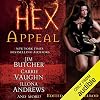
If audiobooks collected dust, opening this one would have had me sneezing. It's been on my shelves since 2013. Somewhere along the way, I lost track of it. The cover and the title seem very dated now.
The collection itself was a bit of a disappointment. Of the nine stories in the collection, only the ones by Ilona Andrews, Jim Butcher and Carrie Vaughn, stood out. They were all entertaining and demonstrated how much fun Urban Fantasy can be. Three of the stories I abandoned before the end show more and one of the ones I finished was an uphill struggle.
I've commented on each of the stories below in the order they appear in the collection.
RETRIBUTION CLAUSE by Ilona Andrews ★★★★★
I skipped this one because I read it recently in 'Small Magics' Here's what I said then:
"This is a story about two supernaturals working for an insurance company. That may sound dull. It wasn’t. The two supernaturals were tasked with executing a ‘Retribution Clause’ which is when a client pays a premium so that, in the event of their death, the person who killed them will be killed by the insurance company’s agents.
I love these excursions into the lives of subsidiary characters in the Kate Daniels universe. They show me how thoroughly imagined that universe is. They pull me into the lives of the characters, just as I was pulled into Kate’sworld when her first words to the Beast Lord were “Here, kitty kitty. kitty”.
‘Retribution Clause’ had lots of violence, a few neat plot twists, a puzzle to be solved and unresolved sexual tension between the two agents. What more could I ask for? The story worked as a standalone and left me wishing there was a spin-off novel out there."
BIGFOOT ON CAMPUS by Jim Butcher ★★★★★
Tnis was fun. It's a story from when Harry was easy to like. When he hadn't died yet. When he wasn't the Winter Knight. When he was still hopeful. I liked that Harry was telling the story to the police officer who had arrested him on campus. The police officers you're-actually-serious-about-this-aren't-you? questions made it easy for Harry to explain what was going on, allowing the story to be read and enjoyed without any prior knowledge of the Dresden Files.
Harry was on campus looking for Bigfoot's son (Harry has history with both of them) who Bigfoot thinks is in danger. The danger turns out to be the cute, pleasant, loving girl that Bigfoot's son, Irwin, has fallen in love with. She's not what she seems, although neither she nor Irwin knows that.
Trying to keep Irwin safe from a threat he doesn't see and which Harry isn't sure is there, gets comically complicated.Until the bad guys turn up and the fighting and explosions start.
I liked that Harry, even though he's a wizard, wasn't even close to being the most powerful person in the melee but he keeps swinging anyway.
I enjpyed the humour and the optimism as much as the fighting and the magic. This was classic Dresden.
HOLLY'S BALM by Rachel Caine ★★★
There were some clever ideas in this, like the dead having no legal rights so killing revenants wasn't murder. The text felt a little stodgy and the romance felt like it was trying too hard. The plot worked well enough to keep this an entertaining piece.
SNOW JOB by Carole Nelson Douglas DNF
Nope. The humour in this didn't work for me. It felt more like a skit than a story. I set it aside.
OUTSIDE THE BOX by P. N. Elrod ★★★
I liked the originality of the premise: a powerful but secret company with a mission to greet, document and constrain the newly risen undead, sends a team of one witch and one vampire to wait for a rising foreseen by their seers. The two-person team is a low-level witch, still on probation with the company and an experienced vampire. The start of the storyfelt a little like a documentary, with the witch explaining what she was there to do. It was deliberately undramatic, with a focus on explaining that even dying doesn't exempt you from bureaucracy if you come back. That was amusing but not compelling. Then came the plot twist and everything changed. Suddenly the story was packed with action and danger, made all the more powerful because it was unexpected.
HOW DO YOU FEEL by Simon R. Green DNF
I tried this, even though I don't normally like Simon R. Green's work. I didn't like this one either. I don't like the Nightside world his stories are set in. It's not the details of the world that I dislike but the tone of it. The storytelling has a self-consciously hard-boiled style but the view it's pushing is a romantic one. It glamourises the sleaze, desperation and despair of Nightside and its residents. I have no sympathy for the place or the people. The glamour Green projects doesn't work for me. So, I guess it's time for me to stop stepping into Nightside.
THERE WILL BE DEMONS by Lori Handeland ★★
This was well enough done that I finished it but it was an uphill struggle. I'm not a fan of Urban Fantasy based on Christian myths, especially when they involve fallen angels. I find them harder to believe in than vampires (I blame my Catholic education). I'm also not a fan of paranormal romance, especially when it stays within the conventions of Romance Writers of America. Still, the pace was fast, the main character's voice was unconventional and the Navajo setting was pretty.
CHERRY KISSES by Erica Hayes DNF
This was another one I couldn't finish. It was a trek through Hell. This Hell was a fairly conventional imagining of the Christian myth. The main character has to hack her way through it to retrieve a magical object. I stopped reading because I was bored. I think elements of the story, particularly the opening scene in the nightclub, were meant to feel transgressive and our heroine was meant to be seen as a chancer. I was unconvinced. The atmosphere and the actions were seedy in a dreary way but with none of the impact of the truly transgressive. The passion in the story felt manufactured. The violence was clichéd. The quest plot was tediously predictable. The upside is that I can cross Eric Hayes' 'Shadowfae Chronicles' off my wishlist.
THE ARCANE ART OF MISDIRECTION by Carrie Vaughn ★★★★
This was fun. I enjoyed meeting Odysseus Grant, the Las Vegas magician who really can do magic, again. Seeing him through the eyes of a blackjack dealer who knows something strange is happening at her table and is determined to find out what it is, kept the tale fresh. show less
The collection itself was a bit of a disappointment. Of the nine stories in the collection, only the ones by Ilona Andrews, Jim Butcher and Carrie Vaughn, stood out. They were all entertaining and demonstrated how much fun Urban Fantasy can be. Three of the stories I abandoned before the end show more and one of the ones I finished was an uphill struggle.
I've commented on each of the stories below in the order they appear in the collection.
RETRIBUTION CLAUSE by Ilona Andrews ★★★★★
I skipped this one because I read it recently in 'Small Magics' Here's what I said then:
"This is a story about two supernaturals working for an insurance company. That may sound dull. It wasn’t. The two supernaturals were tasked with executing a ‘Retribution Clause’ which is when a client pays a premium so that, in the event of their death, the person who killed them will be killed by the insurance company’s agents.
I love these excursions into the lives of subsidiary characters in the Kate Daniels universe. They show me how thoroughly imagined that universe is. They pull me into the lives of the characters, just as I was pulled into Kate’sworld when her first words to the Beast Lord were “Here, kitty kitty. kitty”.
‘Retribution Clause’ had lots of violence, a few neat plot twists, a puzzle to be solved and unresolved sexual tension between the two agents. What more could I ask for? The story worked as a standalone and left me wishing there was a spin-off novel out there."
BIGFOOT ON CAMPUS by Jim Butcher ★★★★★
Tnis was fun. It's a story from when Harry was easy to like. When he hadn't died yet. When he wasn't the Winter Knight. When he was still hopeful. I liked that Harry was telling the story to the police officer who had arrested him on campus. The police officers you're-actually-serious-about-this-aren't-you? questions made it easy for Harry to explain what was going on, allowing the story to be read and enjoyed without any prior knowledge of the Dresden Files.
Harry was on campus looking for Bigfoot's son (Harry has history with both of them) who Bigfoot thinks is in danger. The danger turns out to be the cute, pleasant, loving girl that Bigfoot's son, Irwin, has fallen in love with. She's not what she seems, although neither she nor Irwin knows that.
Trying to keep Irwin safe from a threat he doesn't see and which Harry isn't sure is there, gets comically complicated.Until the bad guys turn up and the fighting and explosions start.
I liked that Harry, even though he's a wizard, wasn't even close to being the most powerful person in the melee but he keeps swinging anyway.
I enjpyed the humour and the optimism as much as the fighting and the magic. This was classic Dresden.
HOLLY'S BALM by Rachel Caine ★★★
There were some clever ideas in this, like the dead having no legal rights so killing revenants wasn't murder. The text felt a little stodgy and the romance felt like it was trying too hard. The plot worked well enough to keep this an entertaining piece.
SNOW JOB by Carole Nelson Douglas DNF
Nope. The humour in this didn't work for me. It felt more like a skit than a story. I set it aside.
OUTSIDE THE BOX by P. N. Elrod ★★★
I liked the originality of the premise: a powerful but secret company with a mission to greet, document and constrain the newly risen undead, sends a team of one witch and one vampire to wait for a rising foreseen by their seers. The two-person team is a low-level witch, still on probation with the company and an experienced vampire. The start of the storyfelt a little like a documentary, with the witch explaining what she was there to do. It was deliberately undramatic, with a focus on explaining that even dying doesn't exempt you from bureaucracy if you come back. That was amusing but not compelling. Then came the plot twist and everything changed. Suddenly the story was packed with action and danger, made all the more powerful because it was unexpected.
HOW DO YOU FEEL by Simon R. Green DNF
I tried this, even though I don't normally like Simon R. Green's work. I didn't like this one either. I don't like the Nightside world his stories are set in. It's not the details of the world that I dislike but the tone of it. The storytelling has a self-consciously hard-boiled style but the view it's pushing is a romantic one. It glamourises the sleaze, desperation and despair of Nightside and its residents. I have no sympathy for the place or the people. The glamour Green projects doesn't work for me. So, I guess it's time for me to stop stepping into Nightside.
THERE WILL BE DEMONS by Lori Handeland ★★
This was well enough done that I finished it but it was an uphill struggle. I'm not a fan of Urban Fantasy based on Christian myths, especially when they involve fallen angels. I find them harder to believe in than vampires (I blame my Catholic education). I'm also not a fan of paranormal romance, especially when it stays within the conventions of Romance Writers of America. Still, the pace was fast, the main character's voice was unconventional and the Navajo setting was pretty.
CHERRY KISSES by Erica Hayes DNF
This was another one I couldn't finish. It was a trek through Hell. This Hell was a fairly conventional imagining of the Christian myth. The main character has to hack her way through it to retrieve a magical object. I stopped reading because I was bored. I think elements of the story, particularly the opening scene in the nightclub, were meant to feel transgressive and our heroine was meant to be seen as a chancer. I was unconvinced. The atmosphere and the actions were seedy in a dreary way but with none of the impact of the truly transgressive. The passion in the story felt manufactured. The violence was clichéd. The quest plot was tediously predictable. The upside is that I can cross Eric Hayes' 'Shadowfae Chronicles' off my wishlist.
THE ARCANE ART OF MISDIRECTION by Carrie Vaughn ★★★★
This was fun. I enjoyed meeting Odysseus Grant, the Las Vegas magician who really can do magic, again. Seeing him through the eyes of a blackjack dealer who knows something strange is happening at her table and is determined to find out what it is, kept the tale fresh. show less
Lists
al.vick-series (1)
Awards


You May Also Like


Associated Authors
Statistics
- Works
- 55
- Also by
- 28
- Members
- 12,116
- Popularity
- #1,935
- Rating
- 3.6
- Reviews
- 330
- ISBNs
- 165
- Languages
- 8
- Favorited
- 18
