

Fred Saberhagen (1930–2007)
Author of The Complete Book of Swords (Omnibus, Volumes 1, 2, 3)
About the Author
Author Fred Saberhagen was born in Chicago, Illinois on May 18, 1930. Before writing full time, he served in the Air Force, worked as an electronics technician, and wrote and edited for the Encyclopaedia Britannica. His first novel, The Golden People, was published in 1964. He has written science show more fiction, fantasy, alternate history, and historical fantasy. The novel Berserker was published in 1967 and became the first book in his popular Berserker series. His company, Berserker Works, Ltd., has produced several computer games based on his characters. He died on June 29, 2007. (Bowker Author Biography) show less
Series
Works by Fred Saberhagen
Without a Thought 8 copies
Starsong 5 copies
Sign of the Wolf 5 copies
Pressure [Berserker's Prey] 4 copies
Vampiro: romanzo 4 copies
Mr Jester [short story] 4 copies
The Peacemaker 4 copies
Martha [short story] 4 copies
Smasher 3 copies
Box Number Fifty [short story] 3 copies
Period of Totality 3 copies
Planeteer 3 copies
Stone Place 3 copies
Goodlife 3 copies
Young Girl At An Open Half-door 3 copies
Some Events At The Templar Radiant 3 copies
The Winged Helmet 3 copies
Il mondo di Ardneh 2 copies
Le Iali nere del tempo 2 copies
Le montagne nere 2 copies
Vampiro: romanzo 2 copies
From the Tree of Time 2 copies
Blind Man's Blade 2 copies
Saberhagen, Fred 2 copies
Le Guerre Dei Berserker 2 copies
Recessional 2 copies
The White Bull [short story] 2 copies
Volume Paa-pyx 2 copies
The Smile 2 copies
What T And I Did 2 copies
The Face Of The Deep 2 copies
Stone Man 2 copies
In The Temple Of Mars 2 copies
Brother Berserker [Short Story] 2 copies
Patron Of The Arts 2 copies
Seven Doors To Education 2 copies
Deep Space 2 copies
Calendars 2 copies
The Second Book of Swords 1 copy
HIl Itrono dei Berserker 1 copy
HIl Ipianeta Berserker 1 copy
HIl Imondo dei Berserker 1 copy
HI Iberserker uccidono 1 copy
HLe Iguerre dei Berserker 1 copy
Irmão assassino 1 copy
As máquinas da destruição 1 copy
The Complete Books of Swords 1 copy
Empire of the east triology 1 copy
Iczelion 1 copy
Intermission 1 copy
Victory 1 copy
Wilderness 1 copy
The Graphic of Dorian Gray 1 copy
Servant Of Death 1 copy
Urania 0710 - DIETRO IL MURO 1 copy
The Blavk Mountains 1 copy
The Second Triad 1 copy
Dracula 03 - The Vlad Tapes 1 copy
Earthshade 1 copy
සිටුවර drakula 1 copy
Saberhagen, Fred - Swords 3 1 copy
We the Underpeople 1 copy
The Dracula File 1 copy
The Game 1 copy
The Dracula Series: 1. The Dracula Tape; 2. The Holmes-Dracula File; 3. An Old Friend of the Family; 4. Thorn; 5. Dominion (1990) 1 copy
Track One 1 copy
Dracula Tape—an Excerpt 1 copy
nueva dimensión - 066 1 copy
Saberhagen, Fred - Swords 1 1 copy
The Bad Machines 1 copy
Saberhagen, Fred - Swords 2 1 copy
Berserker The Introduction 1 copy
Beneath the Hills of Azlaroc 1 copy
acc. erase 1 copy
To Mark The Year On Azlaroc 1 copy
The Dracula Tape 1 copy
Associated Works
Lord of the Fantastic: Stories in Honor of Roger Zelazny (1998) — Introduction — 174 copies, 1 review
The Prentice Hall Anthology of Science Fiction and Fantasy (2000) — Contributor — 100 copies, 2 reviews
Prom Night: All Original Tales of That Special, Once-In-A-Lifetime Night as No One Has Ever Experienced It! (1999) — Contributor — 81 copies
Isaac Asimov's Science Fiction Magazine: Vol. 1, No. 1 [Spring 1977] (1977) — Contributor, some editions — 38 copies, 1 review
A Very Large Array: New Mexico Science Fiction and Fantasy (1987) — Contributor — 36 copies, 3 reviews
Analog Science Fiction/Science Fact: Vol. XCIV, No. 2 (October 1974) (1974) — Contributor — 26 copies
The War of the Worlds: Fresh Perspectives on the H. G. Wells Classic (2005) — Contributor — 17 copies
Worlds of If Science Fiction 173, July/August 1974 (Vol. 22, No. 6) (1974) — Contributor — 17 copies, 1 review
The Magazine of Fantasy and Science Fiction June 1979, Vol. 56, No. 6 (1979) — Contributor — 14 copies
Tagged
Common Knowledge
- Legal name
- Saberhagen, Fred Thomas
- Birthdate
- 1930-05-18
- Date of death
- 2007-06-29
- Gender
- male
- Occupations
- electronics technician
writer
editor - Organizations
- Encyclopædia Britannica
Science Fiction and Fantasy Writers of America
Motorola - Relationships
- Spicci, Joan (wife)
- Cause of death
- cancer
- Nationality
- USA
- Birthplace
- Chicago, Illinois, USA
- Place of death
- Albuquerque, New Mexico, USA
- Map Location
- Illinois, USA
Members
Discussions
Dominion (Dracula series #5) in Good Show Sir! — bad science fiction and fantasy covers (October 2025)
The Broken Lands in Good Show Sir! — bad science fiction and fantasy covers (October 2025)
The Computer Wore a Six Shooter in Good Show Sir! — bad science fiction and fantasy covers (July 2025)
Collection of things! in Good Show Sir! — bad science fiction and fantasy covers (June 2025)
Saberhagen? in Science Fiction Fans (December 2012)
Reviews
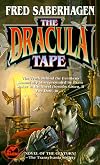
First in what would be a series of nine books offering an alternative history of Dracula, 'The Dracula Tape' (1975) is a witty detournement of Bram Stoker's novel that tells the story of his Dracula from the point of view of the Count. And a very subversive version it is too.
To explain the title, Dracula appears in the snow-bound car of Harker's descendants in 1960s Devon and tapes the true account of the events of the 1890s 'for the record'. The context is only explained in the epilogue and show more so no spoilers here.
The Count proves a resourceful but often hapless character trying to find a way to integrate with the modern world but constantly facing (except in the instance of Mina Harker) the inherent stupidity and fear of humanity. His aristocratic code comes up against a dim Anglo-American middle class.
Van Helsing is a malignant and murderous old fraud who drags the 'boys' into futile adventures. Jonathan Harker a paranoid and not-too-bright representative of that middle class. Renfield simply an irritating murderous sociopath with no serious connection to the Count.
Saberhagen mirrors Stoker's text, not afraid to quote lengthy passages on occasion so that we see them through a new light - that of the Count trying to do the right thing in the face of accident, strange coincidence and ignorance. Wolves and gypsies are the good guys here.
Occasionally (especially towards the end), Saberhagen slyly points out flaws in Stoker's plotting and sometimes manages them with some highly inventive story-telling that does not contravene the ur-text. 'Dracula' is notoriously full of holes and the author has fun filling some of them.
The result is not so much 'horror' as 'humour' with many places where the reader is going to find himself (or herself) having a wry smile (it helps to know the original text to get the best of the irony but the book survives ignorance) and even one or two laugh out loud moments at the human farce.
The author does not try to explain away Dracula's supernatural aspects however. He maintains the lore, stripping it only of the superstitious aspects. Dracula (as species) becomes just a little more plausible. It turns out that he is still a Christian of an unexcitable sort.
Van Helsing's comical strewing of consecrated hosts and garlic is presented as just so much flummery hiding his ultimately murderous purpose in driving stakes into an equally sentient if different species. The infamous baby incident turns out to be a suckling pig.
Part of the pleasure lies in Saberhagen's subversion of the gender dynamics. The Count turns out to be both more ancient and yet more modern in his relationships with women. Mina Harker, intelligent, tough, questioning and resourceful, responds accordingly.
The 'boys' are patronising and (placing Renfield to one side as a potential serial killer of exceptionally vicious tastes) Van Helsing is the cause of the murder (in effect) of Lucy Westenra. He seems to have his beady eye on doing in Mina at the first excuse.
The three female vampires (the Count's 'old flames') are just vexing minxes with less loyalty to him than his gypsies but they don't deserve their fate. Otherwise it is the women who excite our sympathy and some of this becomes reflected in sympathy for Dracula just trying to do his best in a bad world.
And this is the crux of the matter - as in Stoker, the Count is the 'other' but, where feared in late imperial Britain, in 1970s America he has become a subject for liberal understanding. He is the immigrant trying to find a better life and facing prejudice.
Saberhagen also has a nice easy and popular prose style. Its easy read (wholly appropriate for such a story) allows us to appreciate some fine characterisation and literary satire that never slips into pastiche. I might move on to Dracula's adventure with Holmes (Book 2) one day. show less
To explain the title, Dracula appears in the snow-bound car of Harker's descendants in 1960s Devon and tapes the true account of the events of the 1890s 'for the record'. The context is only explained in the epilogue and show more so no spoilers here.
The Count proves a resourceful but often hapless character trying to find a way to integrate with the modern world but constantly facing (except in the instance of Mina Harker) the inherent stupidity and fear of humanity. His aristocratic code comes up against a dim Anglo-American middle class.
Van Helsing is a malignant and murderous old fraud who drags the 'boys' into futile adventures. Jonathan Harker a paranoid and not-too-bright representative of that middle class. Renfield simply an irritating murderous sociopath with no serious connection to the Count.
Saberhagen mirrors Stoker's text, not afraid to quote lengthy passages on occasion so that we see them through a new light - that of the Count trying to do the right thing in the face of accident, strange coincidence and ignorance. Wolves and gypsies are the good guys here.
Occasionally (especially towards the end), Saberhagen slyly points out flaws in Stoker's plotting and sometimes manages them with some highly inventive story-telling that does not contravene the ur-text. 'Dracula' is notoriously full of holes and the author has fun filling some of them.
The result is not so much 'horror' as 'humour' with many places where the reader is going to find himself (or herself) having a wry smile (it helps to know the original text to get the best of the irony but the book survives ignorance) and even one or two laugh out loud moments at the human farce.
The author does not try to explain away Dracula's supernatural aspects however. He maintains the lore, stripping it only of the superstitious aspects. Dracula (as species) becomes just a little more plausible. It turns out that he is still a Christian of an unexcitable sort.
Van Helsing's comical strewing of consecrated hosts and garlic is presented as just so much flummery hiding his ultimately murderous purpose in driving stakes into an equally sentient if different species. The infamous baby incident turns out to be a suckling pig.
Part of the pleasure lies in Saberhagen's subversion of the gender dynamics. The Count turns out to be both more ancient and yet more modern in his relationships with women. Mina Harker, intelligent, tough, questioning and resourceful, responds accordingly.
The 'boys' are patronising and (placing Renfield to one side as a potential serial killer of exceptionally vicious tastes) Van Helsing is the cause of the murder (in effect) of Lucy Westenra. He seems to have his beady eye on doing in Mina at the first excuse.
The three female vampires (the Count's 'old flames') are just vexing minxes with less loyalty to him than his gypsies but they don't deserve their fate. Otherwise it is the women who excite our sympathy and some of this becomes reflected in sympathy for Dracula just trying to do his best in a bad world.
And this is the crux of the matter - as in Stoker, the Count is the 'other' but, where feared in late imperial Britain, in 1970s America he has become a subject for liberal understanding. He is the immigrant trying to find a better life and facing prejudice.
Saberhagen also has a nice easy and popular prose style. Its easy read (wholly appropriate for such a story) allows us to appreciate some fine characterisation and literary satire that never slips into pastiche. I might move on to Dracula's adventure with Holmes (Book 2) one day. show less

Let me start with a confession: Saberhagen is one of my guilty pleasures.
His ideas are fun and interesting, his books have the urgency of an Dan Brown novel, keeping you turning the pages, but in all fairness, if his character started today? Comic books, and not so much the big over-arching crossover narratives. Most characters are sketch lineaments of slightly realized archetypes, you hurdle from crisis to crisis, and in the end, it feels like the good guys in fact won easily.
ALL OF THAT show more SAID, I have a shelf of Saberhagen books in my library for a reason. His ideas are different, whether it be the healing Lake of Life that can give life to the dead and gets its healing mostly right that is used to slay an undead man, or ARDNEH itself, who rides the Oliphant and wields the lightning, a supercomputer defense system who has gained sentience after reducing the probability of nuclear fission to near zero, leading the energy that would have been released thereby to express as magic instead.
This series is very 1970s post-Apocalyptic; the standard "there was a nuclear war, then magic appears" that one saw everywhere from Thundarr the Barbarian to Sword of Shannara, but then Saberhagen starts making it his own. It is set in a medieval, post-apocalyptic North American continent, where the Empire of the East that venerates greed and self-absorption (capitalism gone wrong), ally of demons, is finally subduing the free peoples of the West (libertarians), who are aided in their struggle by the mysterious ARDNEH.
This omnibus edition takes the series into something the length of a standard fantasy book today, humorously, but it is all there and is worth looking at. This series is a background- of sorts- to Saberhagen's later Swords universe, and is populated with interesting characters. A personal favorite of mine is John Ominor, the most ordinary looking man in the world- and the most evil, Emperor of the East after he imprisoned the demonic founder Orcus, a man who enjoys his afternoon tea and biscuits in his lakeshore gardens on a summer's day, as he listens to his impaled enemies slide down their impaling poles and he casually dips his biscuits in their blood. A critic described him as evil Mr. Rogers- rather that, or for the Gen X/millenials, an evil Owens from Gargoyles. Or Charmian, a woman who is interested only in her own advancement, who is magically irresistible to all who see her- except her technical husband, Chup, who sees her for exactly the vain creature she is, but in the end, proves to love her anyway.
These are a fun read, and reflective of a different and perversely, more optimistic time, not something one would think to use to describe a post-apocalyptic setting. Although Rolf is the main character, it is Chup who steals the show- a character who could have inspired Chumbawumba. show less
His ideas are fun and interesting, his books have the urgency of an Dan Brown novel, keeping you turning the pages, but in all fairness, if his character started today? Comic books, and not so much the big over-arching crossover narratives. Most characters are sketch lineaments of slightly realized archetypes, you hurdle from crisis to crisis, and in the end, it feels like the good guys in fact won easily.
ALL OF THAT show more SAID, I have a shelf of Saberhagen books in my library for a reason. His ideas are different, whether it be the healing Lake of Life that can give life to the dead and gets its healing mostly right that is used to slay an undead man, or ARDNEH itself, who rides the Oliphant and wields the lightning, a supercomputer defense system who has gained sentience after reducing the probability of nuclear fission to near zero, leading the energy that would have been released thereby to express as magic instead.
This series is very 1970s post-Apocalyptic; the standard "there was a nuclear war, then magic appears" that one saw everywhere from Thundarr the Barbarian to Sword of Shannara, but then Saberhagen starts making it his own. It is set in a medieval, post-apocalyptic North American continent, where the Empire of the East that venerates greed and self-absorption (capitalism gone wrong), ally of demons, is finally subduing the free peoples of the West (libertarians), who are aided in their struggle by the mysterious ARDNEH.
This omnibus edition takes the series into something the length of a standard fantasy book today, humorously, but it is all there and is worth looking at. This series is a background- of sorts- to Saberhagen's later Swords universe, and is populated with interesting characters. A personal favorite of mine is John Ominor, the most ordinary looking man in the world- and the most evil, Emperor of the East after he imprisoned the demonic founder Orcus, a man who enjoys his afternoon tea and biscuits in his lakeshore gardens on a summer's day, as he listens to his impaled enemies slide down their impaling poles and he casually dips his biscuits in their blood. A critic described him as evil Mr. Rogers- rather that, or for the Gen X/millenials, an evil Owens from Gargoyles. Or Charmian, a woman who is interested only in her own advancement, who is magically irresistible to all who see her- except her technical husband, Chup, who sees her for exactly the vain creature she is, but in the end, proves to love her anyway.
These are a fun read, and reflective of a different and perversely, more optimistic time, not something one would think to use to describe a post-apocalyptic setting. Although Rolf is the main character, it is Chup who steals the show- a character who could have inspired Chumbawumba. show less

Fred Saberhagen (1930-2007) fue una figura fundamental en la consolidación de la ciencia ficción y la fantasía moderna estadounidense. Aunque alcanzó la fama con su serie Berserker, donde exploró el horror cósmico de máquinas autoconscientes programadas para destruir la vida, su contribución más original fue la humanización del mito del vampiro. Con su saga de Drácula, de la cual "Sherlock Holmes-Drácula: el encuentro" (The Holmes-Dracula File, 1978) es una pieza clave, show more Saberhagen rescató al personaje de Bram Stoker de la caricatura maligna, dotándolo de un código de honor caballeresco y una voz melancólica y sofisticada que prefiguró el auge del vampiro moderno.
Londres, 1897. La capital del Imperio se ve sacudida por una serie de crímenes atroces que evocan el fantasma de Jack el Destripador. Sin embargo, la amenaza es mucho más insidiosa: una conspiración de chantaje masivo que utiliza ratas infectadas con una cepa letal de peste negra para poner de rodillas a la metrópoli. En el centro del torbellino se encuentra Sherlock Holmes, cuyo comportamiento es más errático que nunca. Paralelamente, un anciano caballero extranjero despierta amnésico y encadenado en un hospital clandestino, dándose cuenta pronto de que posee una fuerza inhumana y una sed que el agua no puede saciar. Las vidas del detective y el Conde Drácula se entrelazan en una investigación donde las identidades se confunden, literal y metafóricamente, para detener una catástrofe biológica.
Escribir un pastiche literario es un ejercicio de equilibrismo que suele subestimarse; requiere no solo replicar una voz ajena, sino hacerlo sin caer en la parodia. En esta obra, Saberhagen asume un riesgo doble al intentar amalgamar dos universos tan codificados y dispares como el canon de Sherlock Holmes y la mitología de Drácula. No se trata meramente de un cruce de personajes, sino de la convivencia de dos estructuras narrativas: el racionalismo deductivo de Conan Doyle frente al horror gótico de Stoker.
Desde un punto de vista objetivo, la novela logra integrar ambas facetas mediante un recurso técnico eficaz: el uso de perspectivas alternas entre Watson y el propio Conde. Si bien la trama detectivesca sobre el chantaje biológico cumple con los estándares del género, es en la caracterización donde el autor muestra mayor oficio. Saberhagen evita el enfrentamiento previsible y opta por una cooperación pragmática que, aunque funcional, puede resultar forzada para los puristas de ambos cánones. El ritmo es constante, pero la resolución de ciertos conflictos se apoya en una conveniencia entre los protagonistas que bordea lo inverosímil. En definitiva, es un trabajo técnico sólido que demuestra las dificultades de gestionar dos mitos literarios bajo un mismo arco argumental. show less
Londres, 1897. La capital del Imperio se ve sacudida por una serie de crímenes atroces que evocan el fantasma de Jack el Destripador. Sin embargo, la amenaza es mucho más insidiosa: una conspiración de chantaje masivo que utiliza ratas infectadas con una cepa letal de peste negra para poner de rodillas a la metrópoli. En el centro del torbellino se encuentra Sherlock Holmes, cuyo comportamiento es más errático que nunca. Paralelamente, un anciano caballero extranjero despierta amnésico y encadenado en un hospital clandestino, dándose cuenta pronto de que posee una fuerza inhumana y una sed que el agua no puede saciar. Las vidas del detective y el Conde Drácula se entrelazan en una investigación donde las identidades se confunden, literal y metafóricamente, para detener una catástrofe biológica.
Escribir un pastiche literario es un ejercicio de equilibrismo que suele subestimarse; requiere no solo replicar una voz ajena, sino hacerlo sin caer en la parodia. En esta obra, Saberhagen asume un riesgo doble al intentar amalgamar dos universos tan codificados y dispares como el canon de Sherlock Holmes y la mitología de Drácula. No se trata meramente de un cruce de personajes, sino de la convivencia de dos estructuras narrativas: el racionalismo deductivo de Conan Doyle frente al horror gótico de Stoker.
Desde un punto de vista objetivo, la novela logra integrar ambas facetas mediante un recurso técnico eficaz: el uso de perspectivas alternas entre Watson y el propio Conde. Si bien la trama detectivesca sobre el chantaje biológico cumple con los estándares del género, es en la caracterización donde el autor muestra mayor oficio. Saberhagen evita el enfrentamiento previsible y opta por una cooperación pragmática que, aunque funcional, puede resultar forzada para los puristas de ambos cánones. El ritmo es constante, pero la resolución de ciertos conflictos se apoya en una conveniencia entre los protagonistas que bordea lo inverosímil. En definitiva, es un trabajo técnico sólido que demuestra las dificultades de gestionar dos mitos literarios bajo un mismo arco argumental. show less

So this is a bit of a new one: A heist-flick-as-fantasy-novel.
Considering the saga of the Swords universe, there are three religious edifices that are truly global:
The White Temple, revering ARDNEH (Remember him from Empire of the East) and dedicated to healing
The Red Temple, dedicated to vice and pleasure in all its forms. Like Vegas but without rules.
And the Blue Temple, which worships wealth and acts as the world bank.
Ben of Purkinje has found the location of the Blue Temple's Top Secret show more Treasure Vault, and plans a heist with his now-grown friend Mark, who wishes to bring treasure to aid Sir Andrew's resistance army. Meanwhile, totally-not-Sean-Connery-or-Michael-Caine, equipped with Wayfinder, is gathering a team for the same purpose.
This is a romp of a book. It adds, but very little, to the overall Swords universe, but it doesn't ever present itself as anything but a good time dungeon crawl. Recommended as an installment in the series but not a first entry. show less
Considering the saga of the Swords universe, there are three religious edifices that are truly global:
The White Temple, revering ARDNEH (Remember him from Empire of the East) and dedicated to healing
The Red Temple, dedicated to vice and pleasure in all its forms. Like Vegas but without rules.
And the Blue Temple, which worships wealth and acts as the world bank.
Ben of Purkinje has found the location of the Blue Temple's Top Secret show more Treasure Vault, and plans a heist with his now-grown friend Mark, who wishes to bring treasure to aid Sir Andrew's resistance army. Meanwhile, totally-not-Sean-Connery-or-Michael-Caine, equipped with Wayfinder, is gathering a team for the same purpose.
This is a romp of a book. It adds, but very little, to the overall Swords universe, but it doesn't ever present itself as anything but a good time dungeon crawl. Recommended as an installment in the series but not a first entry. show less
Lists
Awards


You May Also Like


Associated Authors
Statistics
- Works
- 193
- Also by
- 49
- Members
- 24,496
- Popularity
- #856
- Rating
- 3.5
- Reviews
- 271
- ISBNs
- 490
- Languages
- 13
- Favorited
- 37
