
Vladimir Il'ich Lenin (1870–1924)
Author of State and Revolution
About the Author
Creator of the former Soviet Union, Vladimir Ilyich Lenin (family name Ulianov) was born on April 10, 1870 in Simbirsk (later Ulianovsk), Russia, the son of a schools inspector. Lenin received upper class education and obtained a law degree in 1891, but he was moved to oppose the czarist Russian show more government, partly due to the execution of his brother, Alexander, who had participated in a plot to assassinate the Russian emperor. For taking part in revolutionary activities, Lenin was eventually imprisoned, publishing his work, The Development of Capitalism in Russia, from prison in 1899. Three years later, his pamphlet "What Is to Be Done" became the model for Communist philosophy. Lenin helped the Bolshevist movement that overthrew the czarist government and brought an end to Russia's war against Germany. As head of the new government, he put land in the hands of the peasants and brought industry under government control. An assassination attempt in 1918 wounded him, and two strokes in 1922 forced him to severely curtail government duty. He retreated to his country home in Gorki, where he died on January 21, 1924. (Bowker Author Biography) show less
Image credit: Vladimir Ilyich Ulyanov known as Lenin at the congress of the III International. Moscow March 1919
Series
Works by Vladimir Il'ich Lenin
The Emancipation of Women; From the Writings of V. I. Lenin (New World paperbacks, NW-130) (1969) 160 copies, 1 review
The Proletarian Revolution and Renegade Kautsky (Little Lenin Library, Vol. 21) (1975) 133 copies, 1 review
The three sources and three component parts of Marxism. Karl Marx. Frederick Engels (1975) 80 copies, 3 reviews
V. I. Lenin: Selected Works - A One-Volume Selection of Lenin's Most Essential Writings (1971) 39 copies
What the "Friends of the People" Are and How They Fight the Social-Democrats (1894) 38 copies, 1 review
Revolution, Democracy, Socialism: Selected Writings of V.I. Lenin (Get Political) (2008) 24 copies, 1 review
Marxism on the state: Preparatory material for the book The state and revolution (1976) 20 copies, 1 review
The revolutionary phrase; "left-communist" mistakes on the Brest peace (articles and speeches) (1975) 18 copies
Lenin : Collected Works : Volume 34 : Letters : November 1895 - November 1911 (1966) 18 copies, 1 review
Selected Works in Twelve Volumes, Volume XII: Theory of the Agrarian Question (1977) 18 copies, 1 review
Selected Works in Twelve Volumes, Volume IV: The Years of Reaction and of the New Revival (1908-1914) (1943) 12 copies
Selected Works in Twelve Volumes, Volume V: Imperialism and Imperialist War (1914-1917) (1935) 11 copies
he Beginning of the Revolution in Russia; The Revolutionary Army and the Revolutionary Government; Lecture on the 1905 Revolution (1971) 11 copies
Selected Works in Twelve Volumes, Volume IX: New Economic Policy / Socialist Construction (1952) 10 copies
Die grosse Initiative : 4 Arbeiten zu Ökonomie u. Politik d. sozialist. Aufbaus / W. I. Lenin (1988) 9 copies
Selected Works in Twelve Volumes, Volume VIII: The Period of War Communism (1918-1920) (1943) 9 copies
On Cooperation 9 copies
Toward the seizure of power : the Revolution of 1917: from the July days to the October Revolution (1932) 8 copies
Selected Works in Twelve Volumes, Volume VI: From the Bourgeois Revolution to the Proletarian Revolution (1935) 8 copies
On Public Education 8 copies
Selected Works in Twelve Volumes, Volume I: The Prerequisites of the First Russian Revolution (1894-1899) (1943) 8 copies
Keuze uit zijn werken, deel 1 8 copies
The United States of Europe Slogan [and]: The War Programme of the Proletarian Revolution (1966) 7 copies
The Economic Content of Narodism and the Criticism of it in Mr. Struve's Book (The Reflection of Marxism in Bourgeois Literature) (1974) 7 copies
Selected Works in Twelve Volumes, Volume II: The Struggle for the Bolshevik Party [1900-1904] (1934) 6 copies
Lenins kamp mot "ekonomisterna" 6 copies
Valda verk i två band 6 copies
Karl Marx en zijn leer 5 copies
Ausgewählte Werke. Bd. 3 5 copies
The Iskra Period 1900-1902 Book 1 5 copies
A great beginning: The heroism of the workers in the rear : on "Communist subbotniks" (1977) 5 copies
On the socialist state 5 copies
Valda verk : i två band. 2:1 4 copies
British labour and British imperialism: a compilation of writings by Lenin on Britain (1969) 4 copies
Valda verk : i två band. 2:2 4 copies
Valda verk : i två band. 1:1 4 copies
Keuze uit zijn werken, deel 3 4 copies
Opportunism and social-chauvinism 4 copies
Lenin and library organisation 4 copies
Valda verk : i två band. 1:2 4 copies
Lenin: Collected Works - Volume 9 4 copies
Acerca de la prensa y la literatura 4 copies
Lessons of the Revolution 4 copies
Keuze uit zijn werken, deel 2 4 copies
L'Etat et la Révolution 3 copies
Samlade skrifter i urval. Bd 15 3 copies
Contre le courant 3 copies
The heritage we renounce 3 copies
Acerca de la democracia socialista 3 copies
Revolutionen och staten 3 copies
La costruzione del socialismo 3 copies
Obras escogidas 3 copies
V. I. Lenin on Marxism 3 copies
Rivoluzione e polemica sul partito 3 copies
The April conference 3 copies
Lenin on language 3 copies
May Day 3 copies
Obras escolhidas 1 3 copies
Om bolsjevikkerne og filosofien : tekster 1908-1922 til belysning af Lenins filosofiske kamp (1977) 3 copies
Sankalit Rachnayen 1/1 2 copies
Opere scelte (in sei volumi). Vol. 6 2 copies
Sankalit Rachnayen 2/1 2 copies
Imperializm Kak Noveishii Etap Kapitalizma (Populiarnyi Ocherk) [Imperialism as the Latest Stage of Capitalism (Popular study)] 2 copies, 1 review
Valitut teokset osa 1 2 copies
Opere scelte (in sei volumi). Vol. 4 2 copies
Valitut teokset osa 2 2 copies
Lenin: Collected Works - Volume 7 2 copies
Opere scelte, volume I 2 copies
lenin on Youth 2 copies
On the Soviet State Apparatus 2 copies
The Socialist Revolution 2 copies
One Step Forward, Two Steps Bacl 2 copies
Über Klassen und Klassenkampf 2 copies
Rivoluzione e indipendenza nazionale 2 copies
Tre scritti sul marxismo 2 copies
The April Conference 2 copies
Dibattito sull'estremismo 2 copies
Su Trotskij 2 copies
W. I. Lenin : keuze uit zijn werken 2 copies
Lenin: Selected Works - Volume 1 2 copies
Lenin: Selected Works - Volume 2 2 copies
Lenin: Selected Works - Volume 3 2 copies
Lenin and Stalin on propaganda 2 copies
Lenin: Collected Works - Volume 2 2 copies
Lenin: Collected Works - Volume 1 2 copies
Opere scelte (in sei volumi). Vol. 3 2 copies
Opere scelte (in sei volumi). Vol. 2 2 copies
Udvalgte Værker Bind 6: Den imperialistiske Krig. Den anden Revolution i Rusland (1914-1917) 2 copies, 1 review
Lucha sindical y lucha política 2 copies
Obras Completas. TOMOS: XXVII - XXVIII - XXIX - XXX - XXXII - XXXV - XXXVI - XXXVII- XXXVIII - XXXIX - XL. (1957) 2 copies
The soviets at work : The international position of the Russian soviet republic and the fundamental problems of the social (1918) 2 copies
A kommunista erkölcsről 2 copies
Valitut teokset neljässä osassa. 1 2 copies
Oorlog en revolutie 2 copies
Como Iludir o Povo 2 copies
Samlade skrifter i urval. Bd 3 2 copies
Lenin and Stalin on the state 2 copies
The Vladimir Lenin Collection: State and Revolution, What Is to Be Done?, & Imperialism: The Final Stage of Capitalism (2021) 2 copies
Lenin E L'Italia 2 copies
Opere scelte (in sei volumi). Vol. 1 2 copies
New Economic Developments in Peasant Life (On V. Y. Postnikov's Peasant Farming in South Russia) 2 copies
Udvalgte værker 2 copies
Staat und Revolution 2 copies
l'imperialismo 1 copy
L'emancipazione delle donne 1 copy
Obras completas, XIII 1 copy
Obras completas, XIV 1 copy
Rok 1917 1 copy
Obras completas, XI 1 copy
Revolutionair avonturisme 1 copy
Staat en revolutie 1 copy
Obras completas, XII 1 copy
Obras completas XXXIV 1 copy
Lenin 52 Cartas 1 copy
V. I. Lenin : cuestiones de la organización socialista de la economía nacional : recopilación 1 copy
On Cooperation 1 copy
Le Opere 1 copy
Obras completas III 1 copy
Sobre la Guerra y la paz 1 copy
Obras completas VI 1 copy
Obras completas, VII 1 copy
Obras completas II 1 copy
Bukhárin, teórico marxista 1 copy
Obras completas I 1 copy
Sankalit Rachnayen 3/1 1 copy
Obras completas, VIII 1 copy
Obras completas, X 1 copy
Obras completas, XV 1 copy
The Second Congress of the Communist International : July 19 - August 7, 1920 : speeches and reports 1 copy
Obras completas XXXVIII 1 copy
Obras completas, XXV 1 copy
Enthu cheyanam ed 2 1 copy
Obras completas, XXVI 1 copy
Obras completas, XXVII 1 copy
Colloqui con i giornalisti 1 copy
Obras completas, XXIII 1 copy
Obra completas, XXVIII 1 copy
Obras completas, XXIX 1 copy
Obras completas, XXX 1 copy
Obras completas, XXXI 1 copy
Obras completas XXXV 1 copy
Obras completas XXXII 1 copy
On Public Education 1 copy
Obras completas, XXIV 1 copy
OBRAS ESCOGIDAS 2 tomos 1 copy
Om krigen 1 copy
LOS SOCIALISTAS Y LA GUERRA 1 copy
ACERCA DEL MOVIMIENTO 1 copy
Obras completas XXXIII 1 copy
Obras completas, XVI 1 copy
Obras completas, XVII 1 copy
Obras completas, XVIII 1 copy
Obras completas, V 1 copy
Obras completas XLI 1 copy
Obras completas, XIX 1 copy
Obras completas, XXII 1 copy
Obras completas, XX 1 copy
L'Informazione Di Classe 1 copy
Obras completas XLIV 1 copy
Obras completas XLIII 1 copy
Obras completas XLII 1 copy
Obras completas XL 1 copy
Obras completas XXXIX 1 copy
Udvalgte Vr̆ker 1 copy
A aliança operário-camponesa 1 copy
O Marxu in marksizmu 1 copy
O kulturi in umetnosti 1 copy
Pisma Gorkemu 1 copy
On climbing a high mountain 1 copy
To the rural poor 1 copy
Obras Escolhidas, vol. 2 1 copy
The Lenin Reader 1 copy
Об Азербайджане [Сборник] 1 copy
Correspondencia : V. Lenin 1 copy
Marks, Engels, Marksizm 1 copy
Opere scelte in sei volumi 1 copy
Stato e rivoluzione 1 copy
[1]: Che fare? 1 copy
Sm̃tliche Werke 1 copy
Over vreedzame coëxistentie 1 copy
Dzieła wybrane, tom I, II 1 copy
レーニン選集〈第2〉 1 copy
Karol Marks 1 copy
Krótka biografia 1 copy
Uzaktan Mektuplar 1 copy
Devrimin Aynası Tolstoy 1 copy
Dekrétum a békéről 1 copy
Carlo Marx 1 copy
レーニン選集〈第1〉 1 copy
Państwo a rewolucja 1 copy
פון פעווראל ביז אקטיאבר 1 copy
Marks Engels Marksizm 1 copy
Dzieła Tom TI 1 copy
Dzieła Tom T V 1 copy
דיא טאקטיק פון באלשעוויזם 1 copy
אויסגעוויילט ווערק 1 copy
נאציאנאלע און אידישע פראגע 1 copy
Oeuvres Choisies, Tome 3 1 copy
Que Faire? 1 copy
Oeuvres, Tome 14 1908 1 copy
Oeuvres Choisies, Tome 1 1 copy
Il pensiero di Lenin 1 copy
Scritti sul programma 1 copy
Lettera al Congresso 1 copy
Oeuvres Choisies, Tome 2 1 copy
OBRAS COMPLETAS. TOMO II 1 copy
Briefe 1905 - November 1910 1 copy
The teachings of Karl Marx 1 copy
Opere scelte 1 copy
Lenin e a religião 1 copy
Opere scelte, volume 2 1 copy
19: Marzo-dicembre 1913 1 copy
23: Agosto 1916-marzo 1917 1 copy
27: Febbraio-luglio 1918 1 copy
28: Luglio 1918-marzo 1919 1 copy
29: Marzo-agosto 1919 1 copy
31: Aprile-dicembre 1920 1 copy
Prensa y literatura 1 copy
14: 1908 1 copy
1: 1893-1894 1 copy
Scioperi rivoluzionari 1 copy
Ausgewählte Schriften 1 copy
Quaderni filosofici 1 copy
6: Gennaio 1902-agosto 1903 1 copy
8: Gennaio-luglio 1905 1 copy
9: Giugno-novembre 1905 1 copy
11: Giugno 1906-gennaio 1907 1 copy
L'emancipazione della donna 1 copy
Om Juniusbroschyren 1 copy
Om strejker 1 copy
Om partiet 1 copy
Vybrané spisy II. 1 copy
Vybrané spisy III. 1 copy
Vybrané spisy IV. 1 copy
Vybrané spisy V. 1 copy
V.I.Lenin On Britain 1 copy
Vybrané spisy I. 1 copy
Temas de Ciências Humanas, 7 1 copy
The Handicraft Census of 1894-95 in Perm Gubernia and General Problems of “Handicraft” Industry 1 copy
Dzieła wybrane, tom II 1 copy
Partiye Qurulushi Heqqide 1 copy
Utvalgte verker i 12 bind 11 "Venstre"-kommunismen - en barnesjukdom og andre artikler og taler, juli 1919 - oktober 1920 (1976) 1 copy
Utvalgte verker i 12 bind 12 Overgangen til fredeleg arbeid med å gjenoppbyggja nasjonaløkonomien (1978) 1 copy
Works by V. I. Lenin 1 copy
V.I. LENIN I URVAL 1 copy
Gegen den Strom 1 copy
Imperializm Kak Noveishii Etap Kapitalizma (Populiarnyi Ocherk) Izdanie 3-E [Imperialism as the latest stage of capitalism (Popular study) 3rd edition] 1 copy, 1 review
Women and Society 1 copy
Las tareas de la Revolución 1 copy
La guerra y la revolución 1 copy
Teokset : suomennos neljännestä venäjänkielisestä painoksesta. [19. osa : maaliskuu - joulukuu 1913] 1 copy
Lenin Werke 1 copy
Jefes, partidos y masas 1 copy
TOLSTOI 1 copy
The April Theses 1 copy
Udvalgte værker 1 copy
Selección de textos 1 copy
Obras completas IV 1 copy
Arte, literatura y prensa 1 copy
What Lenin means to us 1 copy
Lenin on democracy and the trade unions : reports at the second All-Russian Trade Union Congress 1 copy
Opere scelte 1 copy
The young generation 1 copy
Lenin reader 1 copy
The birth of Bolshevism 1 copy
Long live Leninism 1 copy
Lenin on Marxism 1 copy
Письмо в редакцию 'Искры' 1 copy
Bolcheviques en el poder: Una antologia del pensamiento revolucionario (Spanish Edition) (2011) 1 copy
Selections from Lenin 1 copy
ስለፓርቲና ስለፓርቲ ሕይወት ድንጋጌዎች 1 copy
Lenin: Selected Works Vol. 1 1 copy
Κριτικά Σημειώματα Πάνω στο Εθνικό Ζήτημα - Για το Δικαίωμα Αυτοδιάθεσης των Λαών - Η Σοσιαλιστική… (1992) 1 copy
On proletarian culture 1 copy
Marx - Engels - marxisme 1 copy
Για το προλεταριακό κόμμα νέου τύπου: 100 χρόνια από την ίδρυση του μπολσεβίκικου κόμματος (2008) 1 copy
Una caricatura del marxismo 1 copy
EBTEKARE AZIM 1 copy
Utvalgte verker i 12 bind 1 copy
Udvalgte Værker, Bind 11 1 copy
Lenin Reader 1 copy
In Siberian Exile 1 copy
Lenin művei 32 1 copy
O estado e a revolução 1 copy
Opere 1 copy
Sull'arte e la letteratura 1 copy
Oeuvres V. Lénine 1 copy
Teokset 1, 1893-1894 1 copy
Proletarskaia Revoliutsiia i Renegat Kautskii [The Proletarian Revolution and the Renegade Kautsky] 1 copy
Essential Lenin, The 1 copy
Populismo y Marxismo 1 copy
OBRAS COMPLETAS 1 copy
EL ESTADO Y LA REVOLUCIÓN 1 copy
ACERCA DE LA PRENSA 1 copy
LA FORMACIÓN DE LOS CUADROS 1 copy
Sobre la Cooperación 1 copy
Vad bör göras? 1 copy
Collected Works VOLUME XXIII 1 copy
Collected Works--Volume 9 1 copy
I Giovani E Il Socialismo 1 copy
Il Socialismo E La Guerra 1 copy
L'imperialismo 1 copy
Φιλοσοφικά τετράδια 1 copy
The Irish Question 1 copy
Imperialism: The Highest Stage of Capitalism (Penguin Great Ideas) by Vladimir Lenin (2010-08-26) 1 copy
Contra la burocracia 1 copy
Collected Works Volume 30 1 copy
L’État et la Révolution 1 copy
Τί νά κάνουμε; 1 copy
Lenin's Under a False Flag 1 copy
On Guerrilla Warfare 1 copy
Obras escolhidas 2 1 copy
Party Work in the Masses 1 copy
Articles on the Revolutionary Press, Volume 1: Lenin — Contributor — 1 copy
On Proletarian Culture 1 copy
O književnosti 1 copy
Marks, Engels, Marksizm 1 copy
Obras escolhidas 3 1 copy
Obras escolhidas 1 copy
Lenine 1 copy
Oeuvres choisies : Lénine 1 copy
Sobre a guerra e a paz 1 copy
Lenin and Stalin on Youth 1 copy
Marx Engels marxisme 1 copy
The Deception Of The People 1 copy
¿Qué hacer? 1 copy
Marxbaad 1 copy
Dharma aur Lenin 1 copy
MIT© ON TEHT©V© / LENIN 1 copy
O Socialismo e a Guerra 1 copy
Como Iludir o Povo 1 copy
Selected works V. I. Lenin 1 copy
Vom Aufstieg 1 copy
W. I. Lenin 1 copy
Werke 1 copy
Ausgewählte Werke - Band 1 1 copy
Ausgewählte Werke - Band 2 1 copy
Ausgewählte Werke - Band 3 1 copy
Werke Band 24 1 copy
Ausgewählte Werke Band III 1 copy
Lenin Werke Band 1-40 1 copy
Associated Works
The Origin of the Family, Private Property and the State (1884) — Introduction, some editions — 1,790 copies, 17 reviews
Social and Political Philosophy: Readings From Plato to Gandhi (1963) — Contributor — 275 copies, 1 review
Selected correspondence of Karl Marx and Frederick Engels (1975) — Contributor, some editions — 65 copies
The German Revolution and the Debate on Soviet Power: Documents, 1918-1919; Preparing the Founding Congress (1986) — Contributor — 31 copies
A Documentary History of Communism and the World: From Revolution to Collapse (1960) — Contributor — 14 copies
The Revolutionary Philosophy of Marxism: Selected Writings on Dialectical Materialism (2018) — Contributor — 9 copies
Teoría económica y economía política en la construcción del socialismo — Contributor — 3 copies
Dialectical Materialism: An Introduction to Marxist Philosophy — Contributor — 1 copy
Centa datreveno de la naskigo de Vladimir Iljiĉ’ Lenin : [tezoj de Centra Komitato de Komunista Partio de Soveta Unio] — Associated Name — 1 copy
Illustrated history of the Russian revolution — Contributor — 1 copy
Tagged
Common Knowledge
- Legal name
- Lenin, Vladimir Ilyich
- Other names
- Ulyanov, Vladimir Ilyich
- Birthdate
- 1870-04-22
- Date of death
- 1924-01-21
- Gender
- male
- Education
- Kazan State University (1887 | Law | expelled)
University of Saint Petersburg (1892 | Law) - Occupations
- Chairman of the Council of People’s Commissars of the Soviet Union (1922-1924)
Chairman of the Council of People's Commissars of the Russian Socialist Federative Republic (1917-1924)
Member of the Politburo of the Central Committee of the Communist Party of the Soviet Union (1917-1917)
Member of the Politburo of the Central Committee of the Communist Party of the Soviet Union (1919-1924) - Organizations
- Bolshevik Party
Central Committee of the Communist Party of the Soviet Union - Relationships
- Krupskaya, Nadezhda Konstantinovna (spouse)
- Short biography
- Lenin was a communist theorist and revolutionary who oversaw a working class victory during the Russian Revolution and the establishment of the Soviet Union. He was one of the most important authors in the theory and history of Marxism-Leninism, and his writings have been used by worker's movements in every country.
Lenin's theory is remembered for his introduction of the concept of the Vanguard Party and for the application of Marxism onto modern imperialism, which had emerged after Marx's death. - Nationality
- Russia
- Birthplace
- Ulyanovsk, Russia
- Places of residence
- Simbirsk, Russian Empire (birth)
- Place of death
- Gorki Leninskiye, Moscow, Russia, Soviet Union
- Burial location
- The Lenin Mausoleum, Red Square, Moscow, Russia
- Map Location
- Russia
Members
Reviews
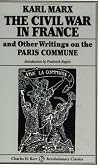
I got a lovely old edition of this from the University Library. It has a slightly grudging introduction by Engels and appendices of resolutions by the General Council of the International Working Men's Association. Most interestingly, there is a speech given by Lenin in 1908 on lessons from the Commune, which brings out the point that the initial French Revolution has begun a tide of European nationalism, but by the turn of the 20th century patriotic feeling had become damaging to the show more revolutionary cause. This is also notable as the international significance of the Commune seems to be judged by history as much smaller than the 1789-94 revolution. Which is emphasised, I suppose, by the title of this book, 'The Civil War in France'. Although the Commune had geopolitical significance, its ideas didn't reverberate around the world in the same way as those of the initial ('Great') French Revolution.
As Lenin was speaking decades after the Commune, his tone is measured. Marx's central work, by contrast, is very angry indeed. It consists of an address delivered mere days after the fall of the Commune. He spends quite a bit of it personally abusing Thiers, the French president he holds personally responsible for the repression of the Commune and resulting wholesale slaughter. More broadly, his analysis brings home the sheer complexity of political factionalism in France at the time. It also highlights the achievements of the Commune's short lifespan, which were impressively pragmatic economic and administrative reforms.
As mentioned before, it is fascinating to compare the 1789-1794 revolution with the Paris Commune, which could be seen as a later manifestation of the former's ideas. What strikes me, in this commentary and elsewhere, is that the first revolution was one of young, idealistic men, whereas the Commune consisted of middle aged men, disillusioned by war and political infighting. Whereas strong personalities emerged from 1789-1794, there is no Robespierre or Danton in 1871. That said, the Commune didn't last long enough, managing a mere 70 days, for this happen. Moreover, you could argue that the lack personality politics demonstrates a more fundamental democracy was at work, a genuine 'dictatorship of the proletariat'. Marx certainly really doesn't single out particular Communards for praise, despite excoriating many on the other side by name.
I recommend this book to supplement your understanding of the Paris Commune and its immediate aftermath, but not as an introduction. Marx assumes total understanding of events straight off. I suggest, 'That Terrible Year' by Alaistair Horne as a good starting point. show less
As Lenin was speaking decades after the Commune, his tone is measured. Marx's central work, by contrast, is very angry indeed. It consists of an address delivered mere days after the fall of the Commune. He spends quite a bit of it personally abusing Thiers, the French president he holds personally responsible for the repression of the Commune and resulting wholesale slaughter. More broadly, his analysis brings home the sheer complexity of political factionalism in France at the time. It also highlights the achievements of the Commune's short lifespan, which were impressively pragmatic economic and administrative reforms.
As mentioned before, it is fascinating to compare the 1789-1794 revolution with the Paris Commune, which could be seen as a later manifestation of the former's ideas. What strikes me, in this commentary and elsewhere, is that the first revolution was one of young, idealistic men, whereas the Commune consisted of middle aged men, disillusioned by war and political infighting. Whereas strong personalities emerged from 1789-1794, there is no Robespierre or Danton in 1871. That said, the Commune didn't last long enough, managing a mere 70 days, for this happen. Moreover, you could argue that the lack personality politics demonstrates a more fundamental democracy was at work, a genuine 'dictatorship of the proletariat'. Marx certainly really doesn't single out particular Communards for praise, despite excoriating many on the other side by name.
I recommend this book to supplement your understanding of the Paris Commune and its immediate aftermath, but not as an introduction. Marx assumes total understanding of events straight off. I suggest, 'That Terrible Year' by Alaistair Horne as a good starting point. show less
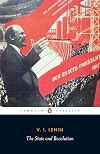
Many people dismiss Lenin, and Marxism in general, because they are usually associated with the bureaucratic tyranny of the Stalinist regimes of Russia, Eastern Europe, China etc. But these regimes had/have nothing to do with genuine Marxism, as anyone who reads this book will see. The so-called “communist” states were actually state capitalist systems controlled by a ruling class of bureaucrats who betrayed the democratic aims of the 1917 Russian Revolution.
Lenin follows Marx and Engels show more in showing that the existence of the state is a result of the existence of class exploitation and class conflict in society. (In pre-class societies, the state did not exist.) As Marx said, “...the state is nothing but a machine for the oppression of one class by another...”
This is obvious in the case of ancient Roman slave society or medieval feudalism, but it is less obvious in modern capitalist societies, because capitalists usually hide their class rule behind a veneer of “democracy”. But as Lenin says in this book:
“Bourgeois democracy, although a great historical advance in comparison with medievalism, always remains, and under capitalism is bound to remain, restricted, truncated, false and hypocritical, a paradise for the rich, and a snare and deception for the exploited...”
In modern capitalist “democracies” the electorate and parliaments do not have real power. The ruling class capitalists can use their economic power to force governments into line; they control the media and the top levels of the civil service; and if all else fails they can resort to force, through their control of the police and armed forces.
Lenin agreed with Marx’s view that a revolution was necessary in order to achieve socialism for two reasons: firstly, because the ruling class would not give up power peacefully; and secondly, because it was by going through the experience of class struggle that the working class’s ideas would change on a mass scale and the majority would be won over to socialist ideas and become “fitted to found society anew.”
Lenin did not want to seize power in a coup. He wanted to win over the majority of the exploited and for THEM to take power. When Marx and Lenin talked about the “dictatorship of the proletariat”, they did not mean that Marxists would rule OVER the working class, they meant rule BY the working class. This workers’ state would then gradually be replaced by a classless society in which the state would “wither away”.
Marx’s model for a democratic workers’ state was the short-lived Paris Commune, where all officials were elected, subject to recall at any time, and paid only an average worker’s wage; and where the army and police were replaced by a workers’ militia. Lenin’s idea was that the soviets (workers’ councils) would also follow this highly democratic model. Bourgeois “democracy” should be replaced by something much MORE democratic. John Reed's book "Ten Days That Shook The World", for example, shows how democratic the soviets were in their early days.
The February Revolution of 1917 had got rid of the Tsar, but it brought to power the Provisional Government which continued to take part in the bloodbath of World War One. Lenin argued for a new revolution, which eventually took place in October.
October would only be a "coup" if the Bolsheviks took power without majority support. In fact they only took power when they had won a majority on the soviets, with the previous majority of SRs and Mensheviks having been voted out. Even the Menshevik Martov admitted that the workers were solidly behind the Bolsheviks by October.
Lenin’s idea was that the Bolshevik party should compete with other parties on the soviets. The fact that the soviets later ended up as being a one-party system was a sign of the FAILURE of the revolution: it was not what Lenin had intended.
Lenin expected the Russian Revolution to spark off revolutions in other countries. (Indeed there was a failed revolution in Germany.) But the isolation of the Russian Revolution, the horrors of the Civil War initiated by the “Whites” and intervention by foreign powers in support of the White armies combined to destroy the foundations of the new regime.
It is claimed by anti-Marxist historians that Leninism led directly to Stalinism. But Stalin actually had to DESTROY the last vestiges of genuine Leninism in order to consolidate his counter-revolution. Incidentally, given that it was the isolation of the Russian Revolution which ultimately led to its demise under Stalin, it was not the politics of Lenin's Bolsheviks which led to Stalinism, it was the LACK of mass Leninist parties in other countries.
After Lenin’s death Trotsky kept alive the genuine Marxist idea that socialism means workers’ democracy, but unfortunately he clung to the idea that Russia had become a degenerated workers’ state, whereas in fact it had become under Stalin a bureaucratic state capitalist regime. show less
Lenin follows Marx and Engels show more in showing that the existence of the state is a result of the existence of class exploitation and class conflict in society. (In pre-class societies, the state did not exist.) As Marx said, “...the state is nothing but a machine for the oppression of one class by another...”
This is obvious in the case of ancient Roman slave society or medieval feudalism, but it is less obvious in modern capitalist societies, because capitalists usually hide their class rule behind a veneer of “democracy”. But as Lenin says in this book:
“Bourgeois democracy, although a great historical advance in comparison with medievalism, always remains, and under capitalism is bound to remain, restricted, truncated, false and hypocritical, a paradise for the rich, and a snare and deception for the exploited...”
In modern capitalist “democracies” the electorate and parliaments do not have real power. The ruling class capitalists can use their economic power to force governments into line; they control the media and the top levels of the civil service; and if all else fails they can resort to force, through their control of the police and armed forces.
Lenin agreed with Marx’s view that a revolution was necessary in order to achieve socialism for two reasons: firstly, because the ruling class would not give up power peacefully; and secondly, because it was by going through the experience of class struggle that the working class’s ideas would change on a mass scale and the majority would be won over to socialist ideas and become “fitted to found society anew.”
Lenin did not want to seize power in a coup. He wanted to win over the majority of the exploited and for THEM to take power. When Marx and Lenin talked about the “dictatorship of the proletariat”, they did not mean that Marxists would rule OVER the working class, they meant rule BY the working class. This workers’ state would then gradually be replaced by a classless society in which the state would “wither away”.
Marx’s model for a democratic workers’ state was the short-lived Paris Commune, where all officials were elected, subject to recall at any time, and paid only an average worker’s wage; and where the army and police were replaced by a workers’ militia. Lenin’s idea was that the soviets (workers’ councils) would also follow this highly democratic model. Bourgeois “democracy” should be replaced by something much MORE democratic. John Reed's book "Ten Days That Shook The World", for example, shows how democratic the soviets were in their early days.
The February Revolution of 1917 had got rid of the Tsar, but it brought to power the Provisional Government which continued to take part in the bloodbath of World War One. Lenin argued for a new revolution, which eventually took place in October.
October would only be a "coup" if the Bolsheviks took power without majority support. In fact they only took power when they had won a majority on the soviets, with the previous majority of SRs and Mensheviks having been voted out. Even the Menshevik Martov admitted that the workers were solidly behind the Bolsheviks by October.
Lenin’s idea was that the Bolshevik party should compete with other parties on the soviets. The fact that the soviets later ended up as being a one-party system was a sign of the FAILURE of the revolution: it was not what Lenin had intended.
Lenin expected the Russian Revolution to spark off revolutions in other countries. (Indeed there was a failed revolution in Germany.) But the isolation of the Russian Revolution, the horrors of the Civil War initiated by the “Whites” and intervention by foreign powers in support of the White armies combined to destroy the foundations of the new regime.
It is claimed by anti-Marxist historians that Leninism led directly to Stalinism. But Stalin actually had to DESTROY the last vestiges of genuine Leninism in order to consolidate his counter-revolution. Incidentally, given that it was the isolation of the Russian Revolution which ultimately led to its demise under Stalin, it was not the politics of Lenin's Bolsheviks which led to Stalinism, it was the LACK of mass Leninist parties in other countries.
After Lenin’s death Trotsky kept alive the genuine Marxist idea that socialism means workers’ democracy, but unfortunately he clung to the idea that Russia had become a degenerated workers’ state, whereas in fact it had become under Stalin a bureaucratic state capitalist regime. show less
This was the guidance that Lenin thought the newly minted Russian Revolution needed.
There is a lot of vibrancy in his language and it's a classic text of agitprop. He takes down his enemies much like a ruthless rapper. I swear some these ideas of the "deep state" have had an unwitting influence on Maga populists in 2025.
I love his Chapter 7 postscript. He didn't get to write it because of the hindrance of an immediate political crisis in Russia. [This chapter] "will probably have to be show more delayed for a long time; it is more pleasant and useful to undertake 'the experience of revolution' than to write about it."
This edition contains, a lengthy and detailed introduction which is a big help when it comes to context and this pamphlet's history. From that history (via Robert Service), he sums it all up by stating "The book's practical historical impact therefore outweighs its intrinsic merit as a work of political science. The State and Revolution was a choral ode to action, intolerance, combat and collectivism; it was the anthem of Bolshevism in its revolutionary era." show less
There is a lot of vibrancy in his language and it's a classic text of agitprop. He takes down his enemies much like a ruthless rapper. I swear some these ideas of the "deep state" have had an unwitting influence on Maga populists in 2025.
I love his Chapter 7 postscript. He didn't get to write it because of the hindrance of an immediate political crisis in Russia. [This chapter] "will probably have to be show more delayed for a long time; it is more pleasant and useful to undertake 'the experience of revolution' than to write about it."
This edition contains, a lengthy and detailed introduction which is a big help when it comes to context and this pamphlet's history. From that history (via Robert Service), he sums it all up by stating "The book's practical historical impact therefore outweighs its intrinsic merit as a work of political science. The State and Revolution was a choral ode to action, intolerance, combat and collectivism; it was the anthem of Bolshevism in its revolutionary era." show less
Lenin offers a competent explanation of the Marxist conception of the state. According to Lenin, the purpose of the bourgeois state is to render the contradictions of capitalism livable, which it does by dominating the proletariat. The state is therefore structurally premised on domination and can never serve to reconcile opposing classes. It is for this reason, then, that reformism appears a dead end.
But even if one accepts such a conception of the state, it is not clear why reform and show more revolution must be understood as mutually exclusive. One might instead conceive of reforms as placing pressure on the state’s capacity to dominate, thereby opening space for more radical transformation.
Lenin also makes questionable interpretive decisions in light of contemporary scholarship on Marx. For example, he endorses a deterministic reading of Marx and claims that Engels “quite definitely regards universal suffrage as a means of bourgeois domination.” The former claim has been thoroughly contested in the literature. As for the latter, in The Principles of Communism, Engels quite explicitly advocates universal suffrage as a means of emancipation. show less
But even if one accepts such a conception of the state, it is not clear why reform and show more revolution must be understood as mutually exclusive. One might instead conceive of reforms as placing pressure on the state’s capacity to dominate, thereby opening space for more radical transformation.
Lenin also makes questionable interpretive decisions in light of contemporary scholarship on Marx. For example, he endorses a deterministic reading of Marx and claims that Engels “quite definitely regards universal suffrage as a means of bourgeois domination.” The former claim has been thoroughly contested in the literature. As for the latter, in The Principles of Communism, Engels quite explicitly advocates universal suffrage as a means of emancipation. show less
Lists
Awards


You May Also Like


Associated Authors
Statistics
- Works
- 1,154
- Also by
- 23
- Members
- 12,796
- Popularity
- #1,832
- Rating
- 3.8
- Reviews
- 163
- ISBNs
- 805
- Languages
- 24
- Favorited
- 21


