
Michael E. Mann
Author of The New Climate War: The Fight to Take Back Our Planet
About the Author
Michael E. Mann is Distinguished Professor of Meteorology and director of the Earth Systems Science Center at Penn State University. Despite being in the public eye, he continues an active research program in climate science and has published over 160 peer-reviewed papers in leading scientific show more journals. He is a fellow of the American Meteorological Society and the American Geophysical Union. In 2012 he received the Hans Oeschger Medal of the European Geosciences Union. Along with other scientists, he contributed to the reports of the IPCC, which was awarded a Nobel Peace Prize in 2007. He is also a co-founder of the award-winning website, RealClimate.org. show less
Image credit: Michael E. Mann
Works by Michael E. Mann
The Madhouse Effect: How Climate Change Denial Is Threatening Our Planet, Destroying Our Politics, and Driving Us Crazy (2016) 123 copies, 6 reviews
Our Fragile Moment: How Lessons from Earth's Past Can Help Us Survive the Climate Crisis (2023) 61 copies
Science Under Siege: How to Fight the Five Most Powerful Forces that Threaten Our World (2025) 49 copies, 2 reviews
Tagged
Common Knowledge
- Canonical name
- Mann, Michael E.
- Birthdate
- 1965-12-28
- Gender
- male
- Education
- University of California, Berkeley (AB|Physics and Applied Math)
Yale University (MS|Physics)
Yale University (PhD|Geology & Geophysics) - Occupations
- climatologist
geophysicist
university professor - Organizations
- Penn State University
American Geophysical Union
American Meteorological Society - Nationality
- USA
- Birthplace
- Amherst, Massachusetts, USA
- Places of residence
- Amherst, Massachusetts, USA
California, USA - Associated Place (for map)
- USA
Members
Reviews
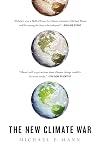
In The New Climate War, scientist Michael E. Mann dispels common myths about our current climate crisis and exposes the playbook of "climate change inactivists" for what it is: an amalgamation of lies, half-truths, distortions, misassigned blame,and deflections. He is particularly insightful in his emphasis on the evil power of "doomism" or the idea that it is too late to do anything about our changing climate, so why try to do anything? It's not too late to save the world, he writes, but show more far-reaching and perhaps painful systemic changes are necessary.
This book is not a pleasant read, but it is an important, and even hopeful, one. show less
This book is not a pleasant read, but it is an important, and even hopeful, one. show less
Science Under Siege: How to Fight the Five Most Powerful Forces that Threaten Our World by Michael E. Mann
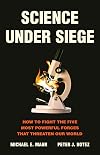
Climate Scientist Michael Mann and disease expert Peter Hotz talk discuss the gathered forces of anti-science propaganda which combine with climate change and future pandemics to create a real threat - the 1-2-3 Punch. I agree with the sentiment of this book but the execution is lacking.
The five bad actors are: Plutocrats, Petrostates, 'Pros' (academics who have sold out to the other four), Propagandists and the Press.
The problem I had with this book is that is written from the febrile show more United States in 2025. The crazy politics of that country infects the book with a rushing anti-conservative anger. Nothing it mentions is incorrect, and it is all referenced, but the tone *seems* partisan and would certainly not convince anyone from the 'other side'. That divided US politics is what makes the book less convincing and harder to read.
Written as it is by two scientists from different disciplines, there is an attempt to balance climate and pandemic misinformation examples. This muddies things. Misinformation by the Five 'Ps' is easier to explain for climate denial than for pandemic misinformation. It comes down to money for rich vested interests, using delaying and misdirection to extend lucrative fossil fuel operations. But for pandemic misinformation the motives of some of the Ps are less clear - some sort of libertarianism? The authors don't know either.
Finally the 'what can we do about it all' isn't super helpful. It uses some Lord of the Rings analogies, says we shouldn't give up, and then goes on about various governmental and non-governmental organisations which should be set up to combat anti-science information, or regulations on social media. As if *that* would happen in 2025 US politics.
I was hoping for more of an insight into how the misinformation is spread, the hows and whys of the bots and trolls; and therefore possibly identifying some weakness in that approach, which has clearly worked a treat for a decade or more. As it is, it's still a murky fight ahead. Stay true. show less
The five bad actors are: Plutocrats, Petrostates, 'Pros' (academics who have sold out to the other four), Propagandists and the Press.
The problem I had with this book is that is written from the febrile show more United States in 2025. The crazy politics of that country infects the book with a rushing anti-conservative anger. Nothing it mentions is incorrect, and it is all referenced, but the tone *seems* partisan and would certainly not convince anyone from the 'other side'. That divided US politics is what makes the book less convincing and harder to read.
Written as it is by two scientists from different disciplines, there is an attempt to balance climate and pandemic misinformation examples. This muddies things. Misinformation by the Five 'Ps' is easier to explain for climate denial than for pandemic misinformation. It comes down to money for rich vested interests, using delaying and misdirection to extend lucrative fossil fuel operations. But for pandemic misinformation the motives of some of the Ps are less clear - some sort of libertarianism? The authors don't know either.
Finally the 'what can we do about it all' isn't super helpful. It uses some Lord of the Rings analogies, says we shouldn't give up, and then goes on about various governmental and non-governmental organisations which should be set up to combat anti-science information, or regulations on social media. As if *that* would happen in 2025 US politics.
I was hoping for more of an insight into how the misinformation is spread, the hows and whys of the bots and trolls; and therefore possibly identifying some weakness in that approach, which has clearly worked a treat for a decade or more. As it is, it's still a murky fight ahead. Stay true. show less
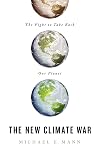
Climate change has evolved its own universe, complete with leading characters, heroes, villains, critics, trolls, bots, character assassins, misinformation, misdirection and backroom plots. It is a world largely unknown to most readers, who probably think of it as an argument among scientists. Michael Mann, arguably at the center of the vortex, tries to explain it in The New Climate War.
Mann and his co-authors published the paper showing carbon pollution as a hockey stick, rising sharply show more after centuries of trivial growth. The name stuck and made their finding famous, and infamous. Attacks began soon after, and have continued – for nearly 25 years now. Mann has a thick skin and deals with it all in its turn. He is fighting the good fight – the one with the data, the sciences and the resolve.
He tackles the naysayers head on. When hears the Green New Deal will cost too much, the answer is inaction will cost far more. He wants everyone to know real progress is being made, doom can be avoided, and sitting on the sidelines is tantamount to criminal negligence.
He is constantly correcting misinformation, as trolls, bots, and conservative politicians are forever pulling a figure out of context and using it to damn the entire issue. Or worse, an incorrect or fraudulent figure. From temperature rise to sea levels, from carbon in the atmosphere to carbon in the oceans, the constant flow of false claims makes scientists in general look bad. It takes total vigilance to get back to a level playing field. Mann says the models have proven reliable, the predictions are coming true, and action is required, right now.
Unfortunately, the Russians make their living selling oil and gas. Between them and American Big Oil, the war with climate science will continue, and it’s a dirty war.
As a child, Mann was inspired by the telegenic Carl Sagan and his Cosmos TV series. He has taken that passion and media-savvy onto his own back, and is constantly on the front lines, battling the climate change deniers, doomsayers and inactivists. He knows all the players, their strengths and weaknesses, their pluses and minuses. A lot of the book is his own reviews of their performances on the global stage. This alone is worth the price of admission, as most of the names, while possibly familiar, are largely unknowns to most readers. Their value or lack thereof is instructive. Readers can now know who to trust and why, at long last. If readers want to know more about Bjorn Lomborg and David Wallace-Wells, and how they present their “findings”, this is the place to look.
The evil villain in this play is the fossil fuel industry, taking its tactics from the tobacco story. “It includes an array of powerful Ds: disinformation, deceit, divisiveness, deflection, delay, despair-mongering, and doomism” he says. And like tobacco, oil’s war chest is bottomless.
It is consciously delaying the inevitable, even as its own scientists and executives acknowledge Big Oil’s responsibility for the climate mess. It influences lawmakers to stave off the alternatives: electric Teslas have been banned in several states at the behest of the fossil fuel industry. It has also promulgated the rumors that wind turbines cause cancer, lower property values and even UFO crashes. Anything to slow the inevitable shrinking of the problem – Big Oil itself.
My own favorite Big Oil tactic is deflection. In deflection campaigns, spokespeople – and bots – claim the industry is not to blame. It is customers who are to blame. It is redolent of the 1920s tactic of guns don’t kill people; people kill people. With the climate, it’s a choice, a lifestyle, a negligence, a luxury. Pick your reason, it is not the fault of the industry. Until and unless everyone in the world changes their way of life, the oil industry doesn’t want to hear about it. This of course has the marvelous effect of generating conflict and promoting finger-pointing, behavior-shaming, virtue-signaling, and purity tests.
One of the results is a new class of players, the inactivists. These are people so upset with what they read from the industry, they withdraw to the sidelines, taking them out of the battle. This is different from the doomists, who claim it is too late so we might as well burn all the carbon we want. The inactivists have sidelined themselves because of the deflection (it is their own fault), and the misinformation (is there any truth to any of it?). Mann seeks to reactivate them with a dose of truth and a positive outcome to cling to.
He explores the arguments around carbon taxes and the fake argument about the Gilets Jaunes in France protesting against theirs. He is also concerned that the left in the USA is coming out against carbon taxes, sometimes adding that America needs a complete banning of fossil fuels, period. Carbon taxes play no role in that scenario.
Mann cites Alex Steffen coining the phrase “predatory delay” by the oil industry, as they seek to extend their revenue stream as long as possible and without further taxes. That the left has bought into this argument is quite stunning. Personally, I still like the quote from Jeff Mulgan (2013): “Communism collapsed because it didn't let prices tell the economic truth, and capitalism will collapse because it didn't let prices tell the ecological truth.” As Mann says, the Paris Accord sees a carbon tax at about $2 per ton, but it would take $75 a ton to achieve the Paris commitments. That’s the extent of the free ride Big Oil has had on the back of the global economy.
Big Oil has the right wing media in its hip pocket. Mann asks: “What’s the real reason that Germany’s solar industry is doing so much better than the solar industry in the United States? Simple: It doesn’t have Fox News, the rest of the Murdoch media, the Koch brothers, and fossil fuel interests all joining forces to destroy it.”
He debunks, for the nth time, geoengineering, in which entrepreneurs want to deploy planet-scale engineering experiments to deflect sunlight and otherwise cool the Earth. Not only will they not work, they are also impossibly expensive and no one has any idea what the unintended consequences will be. Further screwing around with the ecological balance is not the answer. Stopping the use of fossil fuels is the real answer. Worse still, geoengineering can be weaponized, making it into a whole new problem.
Blissfully, Mann’s Conclusion is different from all the other bland and pointless concluding climate change chapters I have reviewed in the past 20 years. Typically, they devote a paragraph to various pilot projects that are climate-friendly, and then express hope that more of these experiments will take place and eventually be rolled out as real options. But that’s all to come – later.
This Conclusion is far more positive. And real. Mann shows how the fossil fuel complex is suffering at the hands of students and finally, of Wall Street. Students have been pressuring their universities to disinvest from fossil fuel firm shares, and the movement is not merely successful, but spreading. Mann says it is over a thousand schools now.
Greta Thunberg and the whole generation of teens who follow her are an existential threat to the biggest industry in the world – fossil fuels. It has said so publicly. They will do anything to discredit her, down to criticizing the boat she took to New York to avoid a flight – because the plastic hull wasn’t recyclable. Clearly, she’s got Big Oil is on the run.
Meanwhile, Wall Street is withholding funding of fossil fuel projects because it is keenly aware of the “transition risk” as more and more energy projects are of the renewable kind. Exxon Mobil was removed from the Dow Jones Industrial Average because its future prospects won’t help the Dow advance any more.
He also sees staunch Republican deniers coming around. They see the inevitability of action, and are at long last willing to buck the party stalwarts and vote in favor. This has a lot to do with public acceptance, which Mann sees as potentially jumping into a solid majority as more and more catastrophic weather events pile up. Even some of the right wing climate change denying “think tanks” are suffering from withdrawal of support, right down to pathetic attendance at their conferences.
Wind and solar power now account for 250 gigawatts of energy, some 20% of US output, as coal is clearly on its way out in the USA. Even without the levels of subsidies seen elsewhere in the world, renewables have a more than firm footing in the economy.
He also thinks there are lessons being drawn from the COVID-19 pandemic. The deniers have proven to be totally incorrect, while the models and scientists have proven to be reliable. Maybe Americans will actually listen to their climate scientists, too. Mann likens it to the massive increase in support for gay marriage, which happened in a truly remarkable short period. He hopes it can happen again.
I don’t mind saying I have never felt so good about a climate change book before reading The New Climate War.
But let me end with a quote from Mann’s inspiration, Carl Sagan (1996): “I have a foreboding of an America in my children’s or grandchildren’s time—when the United States is a service and information economy; when nearly all the manufacturing industries have slipped away to other countries; when awesome technological powers are in the hands of a very few, and no one representing the public interest can even grasp the issues; when the people have lost the ability to set their own agendas or knowledgeably question those in authority; when, clutching our crystals and nervously consulting our horoscopes, our critical faculties in decline, unable to distinguish between what feels good and what’s true, we slide, almost without noticing, back into superstition and darkness.”
This guy got it. And so does Michael Mann.
David Wineberg show less
Mann and his co-authors published the paper showing carbon pollution as a hockey stick, rising sharply show more after centuries of trivial growth. The name stuck and made their finding famous, and infamous. Attacks began soon after, and have continued – for nearly 25 years now. Mann has a thick skin and deals with it all in its turn. He is fighting the good fight – the one with the data, the sciences and the resolve.
He tackles the naysayers head on. When hears the Green New Deal will cost too much, the answer is inaction will cost far more. He wants everyone to know real progress is being made, doom can be avoided, and sitting on the sidelines is tantamount to criminal negligence.
He is constantly correcting misinformation, as trolls, bots, and conservative politicians are forever pulling a figure out of context and using it to damn the entire issue. Or worse, an incorrect or fraudulent figure. From temperature rise to sea levels, from carbon in the atmosphere to carbon in the oceans, the constant flow of false claims makes scientists in general look bad. It takes total vigilance to get back to a level playing field. Mann says the models have proven reliable, the predictions are coming true, and action is required, right now.
Unfortunately, the Russians make their living selling oil and gas. Between them and American Big Oil, the war with climate science will continue, and it’s a dirty war.
As a child, Mann was inspired by the telegenic Carl Sagan and his Cosmos TV series. He has taken that passion and media-savvy onto his own back, and is constantly on the front lines, battling the climate change deniers, doomsayers and inactivists. He knows all the players, their strengths and weaknesses, their pluses and minuses. A lot of the book is his own reviews of their performances on the global stage. This alone is worth the price of admission, as most of the names, while possibly familiar, are largely unknowns to most readers. Their value or lack thereof is instructive. Readers can now know who to trust and why, at long last. If readers want to know more about Bjorn Lomborg and David Wallace-Wells, and how they present their “findings”, this is the place to look.
The evil villain in this play is the fossil fuel industry, taking its tactics from the tobacco story. “It includes an array of powerful Ds: disinformation, deceit, divisiveness, deflection, delay, despair-mongering, and doomism” he says. And like tobacco, oil’s war chest is bottomless.
It is consciously delaying the inevitable, even as its own scientists and executives acknowledge Big Oil’s responsibility for the climate mess. It influences lawmakers to stave off the alternatives: electric Teslas have been banned in several states at the behest of the fossil fuel industry. It has also promulgated the rumors that wind turbines cause cancer, lower property values and even UFO crashes. Anything to slow the inevitable shrinking of the problem – Big Oil itself.
My own favorite Big Oil tactic is deflection. In deflection campaigns, spokespeople – and bots – claim the industry is not to blame. It is customers who are to blame. It is redolent of the 1920s tactic of guns don’t kill people; people kill people. With the climate, it’s a choice, a lifestyle, a negligence, a luxury. Pick your reason, it is not the fault of the industry. Until and unless everyone in the world changes their way of life, the oil industry doesn’t want to hear about it. This of course has the marvelous effect of generating conflict and promoting finger-pointing, behavior-shaming, virtue-signaling, and purity tests.
One of the results is a new class of players, the inactivists. These are people so upset with what they read from the industry, they withdraw to the sidelines, taking them out of the battle. This is different from the doomists, who claim it is too late so we might as well burn all the carbon we want. The inactivists have sidelined themselves because of the deflection (it is their own fault), and the misinformation (is there any truth to any of it?). Mann seeks to reactivate them with a dose of truth and a positive outcome to cling to.
He explores the arguments around carbon taxes and the fake argument about the Gilets Jaunes in France protesting against theirs. He is also concerned that the left in the USA is coming out against carbon taxes, sometimes adding that America needs a complete banning of fossil fuels, period. Carbon taxes play no role in that scenario.
Mann cites Alex Steffen coining the phrase “predatory delay” by the oil industry, as they seek to extend their revenue stream as long as possible and without further taxes. That the left has bought into this argument is quite stunning. Personally, I still like the quote from Jeff Mulgan (2013): “Communism collapsed because it didn't let prices tell the economic truth, and capitalism will collapse because it didn't let prices tell the ecological truth.” As Mann says, the Paris Accord sees a carbon tax at about $2 per ton, but it would take $75 a ton to achieve the Paris commitments. That’s the extent of the free ride Big Oil has had on the back of the global economy.
Big Oil has the right wing media in its hip pocket. Mann asks: “What’s the real reason that Germany’s solar industry is doing so much better than the solar industry in the United States? Simple: It doesn’t have Fox News, the rest of the Murdoch media, the Koch brothers, and fossil fuel interests all joining forces to destroy it.”
He debunks, for the nth time, geoengineering, in which entrepreneurs want to deploy planet-scale engineering experiments to deflect sunlight and otherwise cool the Earth. Not only will they not work, they are also impossibly expensive and no one has any idea what the unintended consequences will be. Further screwing around with the ecological balance is not the answer. Stopping the use of fossil fuels is the real answer. Worse still, geoengineering can be weaponized, making it into a whole new problem.
Blissfully, Mann’s Conclusion is different from all the other bland and pointless concluding climate change chapters I have reviewed in the past 20 years. Typically, they devote a paragraph to various pilot projects that are climate-friendly, and then express hope that more of these experiments will take place and eventually be rolled out as real options. But that’s all to come – later.
This Conclusion is far more positive. And real. Mann shows how the fossil fuel complex is suffering at the hands of students and finally, of Wall Street. Students have been pressuring their universities to disinvest from fossil fuel firm shares, and the movement is not merely successful, but spreading. Mann says it is over a thousand schools now.
Greta Thunberg and the whole generation of teens who follow her are an existential threat to the biggest industry in the world – fossil fuels. It has said so publicly. They will do anything to discredit her, down to criticizing the boat she took to New York to avoid a flight – because the plastic hull wasn’t recyclable. Clearly, she’s got Big Oil is on the run.
Meanwhile, Wall Street is withholding funding of fossil fuel projects because it is keenly aware of the “transition risk” as more and more energy projects are of the renewable kind. Exxon Mobil was removed from the Dow Jones Industrial Average because its future prospects won’t help the Dow advance any more.
He also sees staunch Republican deniers coming around. They see the inevitability of action, and are at long last willing to buck the party stalwarts and vote in favor. This has a lot to do with public acceptance, which Mann sees as potentially jumping into a solid majority as more and more catastrophic weather events pile up. Even some of the right wing climate change denying “think tanks” are suffering from withdrawal of support, right down to pathetic attendance at their conferences.
Wind and solar power now account for 250 gigawatts of energy, some 20% of US output, as coal is clearly on its way out in the USA. Even without the levels of subsidies seen elsewhere in the world, renewables have a more than firm footing in the economy.
He also thinks there are lessons being drawn from the COVID-19 pandemic. The deniers have proven to be totally incorrect, while the models and scientists have proven to be reliable. Maybe Americans will actually listen to their climate scientists, too. Mann likens it to the massive increase in support for gay marriage, which happened in a truly remarkable short period. He hopes it can happen again.
I don’t mind saying I have never felt so good about a climate change book before reading The New Climate War.
But let me end with a quote from Mann’s inspiration, Carl Sagan (1996): “I have a foreboding of an America in my children’s or grandchildren’s time—when the United States is a service and information economy; when nearly all the manufacturing industries have slipped away to other countries; when awesome technological powers are in the hands of a very few, and no one representing the public interest can even grasp the issues; when the people have lost the ability to set their own agendas or knowledgeably question those in authority; when, clutching our crystals and nervously consulting our horoscopes, our critical faculties in decline, unable to distinguish between what feels good and what’s true, we slide, almost without noticing, back into superstition and darkness.”
This guy got it. And so does Michael Mann.
David Wineberg show less
The Madhouse Effect: How Climate Change Denial Is Threatening Our Planet, Destroying Our Politics, and Driving Us Crazy by Michael Mann
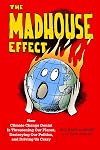
Anthropocene for Dummies
An editorial cartoonist and an environmental scientist have gotten together to lay out the truths surrounding the cacophony and din that obscures the issues of global warming. While the cartoonist has spent his career tearing down with savage wit and sarcasm, the scientist has been trying to build recognition of scientific findings. An interesting combination that The Madhouse Effect exploits to the fullest. It’s a simple overview of who’s who and what’s what in show more the unending argument.
It covers how science works, profiles major deniers, examines cockamamie geo-engineering proposals that just make everything far worse, and even a chapter on the six stages of denial, like the six stages of coping with death. There is a parallel there.
Along the way we learn some basic scientific principles:
-Skepticism used to mean holding science to the highest proofs and standards, according to Mann. Now skeptics are simply deniers, despite all the evidence around us and the solidarity of scientists worldwide.
-Any scientist who could actually show the earth is not warming would immediately rise to global stardom. But all we have is a small cadre of naysayers whose propositions are easily, and continually, refuted.
-Deniers say we should take no action until we are absolutely certain of damage from climate change. Economists say the opposite; it is the very uncertainty we face that requires immediate action to avoid the unpredictable effects of the long tail.
At bottom, there are just way too many people. When we were part of the ecological system, the earth could manage both with us and despite us. That is no longer the case. We have taken ourselves out of the system and pretend we can live above it. Not for long.
The deniers continue to maintain we can. They are headed by self-interested suspects like the Koch Brothers whose minions came up with the deathless slogan: “They call it pollution. We call it life.” Until now, that’s about as humorous as the controversy has been. The Madhouse Effect employs humor too, because otherwise it would just be rage.
David Wineberg show less
An editorial cartoonist and an environmental scientist have gotten together to lay out the truths surrounding the cacophony and din that obscures the issues of global warming. While the cartoonist has spent his career tearing down with savage wit and sarcasm, the scientist has been trying to build recognition of scientific findings. An interesting combination that The Madhouse Effect exploits to the fullest. It’s a simple overview of who’s who and what’s what in show more the unending argument.
It covers how science works, profiles major deniers, examines cockamamie geo-engineering proposals that just make everything far worse, and even a chapter on the six stages of denial, like the six stages of coping with death. There is a parallel there.
Along the way we learn some basic scientific principles:
-Skepticism used to mean holding science to the highest proofs and standards, according to Mann. Now skeptics are simply deniers, despite all the evidence around us and the solidarity of scientists worldwide.
-Any scientist who could actually show the earth is not warming would immediately rise to global stardom. But all we have is a small cadre of naysayers whose propositions are easily, and continually, refuted.
-Deniers say we should take no action until we are absolutely certain of damage from climate change. Economists say the opposite; it is the very uncertainty we face that requires immediate action to avoid the unpredictable effects of the long tail.
At bottom, there are just way too many people. When we were part of the ecological system, the earth could manage both with us and despite us. That is no longer the case. We have taken ourselves out of the system and pretend we can live above it. Not for long.
The deniers continue to maintain we can. They are headed by self-interested suspects like the Koch Brothers whose minions came up with the deathless slogan: “They call it pollution. We call it life.” Until now, that’s about as humorous as the controversy has been. The Madhouse Effect employs humor too, because otherwise it would just be rage.
David Wineberg show less
Lists
Awards


You May Also Like


Associated Authors
Statistics
- Works
- 9
- Members
- 747
- Popularity
- #34,027
- Rating
- 4.1
- Reviews
- 24
- ISBNs
- 41
- Languages
- 3