
James E. Lovelock (1919–2022)
Author of Gaia: A New Look at Life on Earth
About the Author
Series
Works by James E. Lovelock
The Ages of Gaia: A Biography of Our Living Earth (Commonwealth Fund Book Program) (1988) 501 copies, 6 reviews
Great Extinction: The Solution to One of the Great Mysteries of Science, the Disappearance of the Dinosaurs (1983) 41 copies
Associated Works
Earth Conference One: Sharing A Vision For Our Planet (1989) — Introduction, some editions — 45 copies
Sacred Gaia: Holistic Theology and Earth System Science (2000) — Foreword, some editions — 27 copies
A Better Future for the Planet Earth Vol II: Lectures by the Winners of the Blue Planet Prize 1997-2001 (2002) — Contributor — 3 copies
The Possibility of Hope [2007 film] — Scientist and Futurologist — 3 copies
Tagged
Common Knowledge
- Legal name
- Lovelock, James Ephraim
- Other names
- Lovelock, James E.
Lovelock, James
Lovelock, Jim - Birthdate
- 1919-07-26
- Date of death
- 2022-07-26
- Gender
- male
- Education
- Strand School, Tulse Hill, London
University of Manchester (BSc | Chemistry | 1941)
London School of Hygiene and Tropical Medicine (PhD | Medicine | 1948)
London University (DSc | Biophysics | 1959) - Occupations
- scientist
environmentalist
inventor
author
biologist
Quaker (conscientious objector|WWII) - Organizations
- National Institute for Medical Research, Mill Hill (1940|twenty years)
University of Houston - Awards and honors
- Royal Society (fellow|1974)
Dr A. H. Heineken Prize for Environmental Sciences (1990)
Volvo Environment Prize (1996)
Blue Planet Prize (1997)
Wollaston Medal (2006) - Relationships
- Golding, William (friend and neighbour)
- Cause of death
- a fall (complications)
- Nationality
- UK
- Birthplace
- Letchworth, Hertfordshire, England, UK
- Places of residence
- Brixton, London, England
Bowerchalke, Wiltshire, England
Coombe Mill, Cornwall (1977)
Abbotsbury, Dorset, England - Place of death
- Abbotsbury, Dorset, England (at home)
- Map Location
- England, UK
Members
Reviews
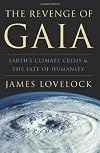
If consistency is the hobgoblin of little minds, then Lovelock is surely a giant here. A true visionary and a wonderful writer with the ability both to analyze data and convey scientific understandings metaphorically to the lay reader, he sadly seems to have become the 21st century schizoid man through his love for two wholly incompatible entities: Gaia, the living planet he first (in modern times) identified as such, and British "civilization" which has been one of the forces most show more destructive of the whole relationship to Gaia he sees as essential to human survival.
So to keep the lovely British countryside free of ugly, awful wind farms, and still give Brits the power I guess to listen to Purcell concerts and read books on tape? he advocates--nuclear reactors? Leaving aside the bomb and waste threats (which he utterly dismisses) whose farm are they going to beautify? He talks about cellphones and the internet being good things because they keep us from getting on planes and in cars, in the absence of any evidence to this effect, and the presence of much evidence that they further disconnect us from any sense of ourselves as part of the natural world. Oh, and the third world has somehow unfairly been denied the DDT that's what Africa really needs to develop, by elitist liberals in the north.
His presentation of the science behind global heating and his knowledge of how Earth's ecosystems function are solid and compelling. But his fundamental flaw is in not seeing that it's not British civilization he ought to be trying to preserve at all costs but the lifeways of millions of people who actually have a knowledge and understanding of Gaia that extends back far before Lovelock and William Golding took their now-famous walk through that English village. The rest of us in the global north, including Lovelock, ought to be learning from their example. Then maybe we could produce the knowledge-book he advocates (one of his only good suggestions in my view) as a kind of farmer's almanac for the future, that could help every household reacquire at least some of the basic skills of how to live with instead of against nature. show less
So to keep the lovely British countryside free of ugly, awful wind farms, and still give Brits the power I guess to listen to Purcell concerts and read books on tape? he advocates--nuclear reactors? Leaving aside the bomb and waste threats (which he utterly dismisses) whose farm are they going to beautify? He talks about cellphones and the internet being good things because they keep us from getting on planes and in cars, in the absence of any evidence to this effect, and the presence of much evidence that they further disconnect us from any sense of ourselves as part of the natural world. Oh, and the third world has somehow unfairly been denied the DDT that's what Africa really needs to develop, by elitist liberals in the north.
His presentation of the science behind global heating and his knowledge of how Earth's ecosystems function are solid and compelling. But his fundamental flaw is in not seeing that it's not British civilization he ought to be trying to preserve at all costs but the lifeways of millions of people who actually have a knowledge and understanding of Gaia that extends back far before Lovelock and William Golding took their now-famous walk through that English village. The rest of us in the global north, including Lovelock, ought to be learning from their example. Then maybe we could produce the knowledge-book he advocates (one of his only good suggestions in my view) as a kind of farmer's almanac for the future, that could help every household reacquire at least some of the basic skills of how to live with instead of against nature. show less
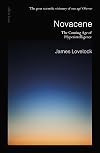
James Lovelock is a legend, genius, inventor, and futurologist, who at age ninety-nine is as much at home in the future as the past. Here, in probably his book, he prophetically throws in his lot with artificial intelligence. AI's combination of blinding speed and capacity for self-learning will largely obsolete bio-based nerve networks. This is already happening. Lovelock believes, along with singularity thinkers like Ray Kurtzweil and Elon Musk, that it's unstoppable.
Lovelock leaves some show more questions unanswered. Will cyborgs have the same rights as humans? Will they sit in the Senate? How do we learn to live with leaders we're too dim to understand, much less monitor? How do we know what goals AI progressively programs into itself? How does Darwinian natural selection morph into "intentional" selection as advanced systems displace nature (and human nature) to effect their calculated goals and visions? How are shadowy human aspects such as prejudice, greed, and rivalry to be sieved from the mix as AI systems code themselves forward in lightning flashes while nudging us forward to people their new world?
Lovelock perhaps naively believes that as AI advances to globally broadened perspectives, it will just conclude that the overriding challenge of preserving our small, fragile planet must inevitably lead it to enlightened ideals and methods. The highest intelligence must just lead, he thinks, to the most sensible outcomes. That's what his earlier Daisyworld simulation seemed to promise, with black and white daisy patches peaceably taking turns modulating Earth's albedo to maintain homeostasis. I wish I could share his kind of optimism.
Whether or not he answers all fears and concerns, Lovelock is, as always, well worth reading. He will expand your mind. show less
Lovelock leaves some show more questions unanswered. Will cyborgs have the same rights as humans? Will they sit in the Senate? How do we learn to live with leaders we're too dim to understand, much less monitor? How do we know what goals AI progressively programs into itself? How does Darwinian natural selection morph into "intentional" selection as advanced systems displace nature (and human nature) to effect their calculated goals and visions? How are shadowy human aspects such as prejudice, greed, and rivalry to be sieved from the mix as AI systems code themselves forward in lightning flashes while nudging us forward to people their new world?
Lovelock perhaps naively believes that as AI advances to globally broadened perspectives, it will just conclude that the overriding challenge of preserving our small, fragile planet must inevitably lead it to enlightened ideals and methods. The highest intelligence must just lead, he thinks, to the most sensible outcomes. That's what his earlier Daisyworld simulation seemed to promise, with black and white daisy patches peaceably taking turns modulating Earth's albedo to maintain homeostasis. I wish I could share his kind of optimism.
Whether or not he answers all fears and concerns, Lovelock is, as always, well worth reading. He will expand your mind. show less
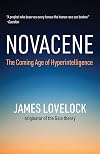
It is apparent that humans are incapable of bringing about a more equal society. Not that they don’t want to, it is simply out of their reach. Just as it is beyond our capacity to grasp the structure of reality itself. Apparently humans are reaching the limits of their understanding both in the social and scientific realm. Just ponder the enigma of Dark Matter and Dark Energy. Hence James Lovelock’s crucial observation: Gaia will soon belong to the Cyborgs in Novacene: The Coming Age of show more HyperIntelligence, by James Lovelock, with Bryan Appleyard, published in 2019 by MIT Press.
Our reign as sole understanders of the cosmos is rapidly coming to an end. We should not be afraid of this. The revolution that has just begun may be understood as a continuation of the process whereby the Earth nurtures the understanders, the beings that will lead the cosmos to self-knowledge. What is revolutionary about this moment is that the understanders of the future will not be humans but cyborgs. Must we fear the future and the surprises the Novocine might bring? I do not think so. This epoch will mark the end of what is to us nearly 4 billion years of biological life on this planet. ......we are playing a part like that of the photo-synthesisers, organisms that set the scene for the next stage of evolution.
Of course, all of that seems to overlook the moral or ethical role of humans. Only going on your precis, Lovelock seems to take the view that nothing is going in inside humans heads. The Earth isn´t nurturing anything - it´s rock with green stuff and blue stuff on it with some feeders roaming about. Lovelock is smart man in some ways but to write off the value of a single human (let alone all of us) as "playing a part" is morally vacuous.
We should be depressed that our intelligence amounted to some nice paintings and a lot of butchery and cruelty.
James Lovelock is a man of genius who can’t tell matter from metaphor... show less
Our reign as sole understanders of the cosmos is rapidly coming to an end. We should not be afraid of this. The revolution that has just begun may be understood as a continuation of the process whereby the Earth nurtures the understanders, the beings that will lead the cosmos to self-knowledge. What is revolutionary about this moment is that the understanders of the future will not be humans but cyborgs. Must we fear the future and the surprises the Novocine might bring? I do not think so. This epoch will mark the end of what is to us nearly 4 billion years of biological life on this planet. ......we are playing a part like that of the photo-synthesisers, organisms that set the scene for the next stage of evolution.
Of course, all of that seems to overlook the moral or ethical role of humans. Only going on your precis, Lovelock seems to take the view that nothing is going in inside humans heads. The Earth isn´t nurturing anything - it´s rock with green stuff and blue stuff on it with some feeders roaming about. Lovelock is smart man in some ways but to write off the value of a single human (let alone all of us) as "playing a part" is morally vacuous.
We should be depressed that our intelligence amounted to some nice paintings and a lot of butchery and cruelty.
James Lovelock is a man of genius who can’t tell matter from metaphor... show less
I do not know whether you, like me, listening to the moaning of the Greens, telling us that the world is doomed unless we give up our lifestyle, NOW. Eating lentils and chanting appear to be the only allowable pastimes. I become a rabid gain-sayer of Global Warming and the effects that planetary destruct will bring upon us. Then, we get the 'sensible view': some plutocrat in his best pin-stripe suit confidently preaching that it is all nonsense and that we should only be concerned with his show more accrual of more shiny coins to add to the mountain that he already possesses, and I am ready to lead the revolution - I might even eat the odd lentil!
This is not a healthy way in which to consider the health of our planet and so, thank God for James Lovelock. He states what he believes in a manner so lacking in the stridency of most advocates that he seems quite willing to be proved wrong - and admits to an error in one of his previous books in this text. Lovelock has a carefully considered argument, rather than a series of knee-jerk reactions. He accepts that it is impractical to suggest that we close down our way of life tomorrow and offers ideas that would slow our rape of Gaia.
This approach is far more scary than all the doom-mongers. When one is faced by a reasonable, well argued tract suggesting that it is imperative to take action now, it is hard to dig in one's heels. It is clearly time to do something and, whilst it might make us feel good to stick windmills on every bit of spare space and grow bio-fuels, Lovelock is disparaging about the likely success of these actions. He argues for nuclear power as the only system that will provide the power needed in the time available. He is not too caught up in green philosophy to accept the need for unpleasant actions.
This book should be compulsory reading by every school child. We have messed things up; it is time that we gave the next generation the tools to correct our stupidity and ignorance. show less
This is not a healthy way in which to consider the health of our planet and so, thank God for James Lovelock. He states what he believes in a manner so lacking in the stridency of most advocates that he seems quite willing to be proved wrong - and admits to an error in one of his previous books in this text. Lovelock has a carefully considered argument, rather than a series of knee-jerk reactions. He accepts that it is impractical to suggest that we close down our way of life tomorrow and offers ideas that would slow our rape of Gaia.
This approach is far more scary than all the doom-mongers. When one is faced by a reasonable, well argued tract suggesting that it is imperative to take action now, it is hard to dig in one's heels. It is clearly time to do something and, whilst it might make us feel good to stick windmills on every bit of spare space and grow bio-fuels, Lovelock is disparaging about the likely success of these actions. He argues for nuclear power as the only system that will provide the power needed in the time available. He is not too caught up in green philosophy to accept the need for unpleasant actions.
This book should be compulsory reading by every school child. We have messed things up; it is time that we gave the next generation the tools to correct our stupidity and ignorance. show less
Lists
Awards


You May Also Like


Associated Authors
Statistics
- Works
- 20
- Also by
- 6
- Members
- 3,455
- Popularity
- #7,358
- Rating
- 3.7
- Reviews
- 55
- ISBNs
- 170
- Languages
- 19
- Favorited
- 1

