
Deirdre N. McCloskey
Author of The Bourgeois Virtues: Ethics for an Age of Commerce
About the Author
Deirdre Nansen McCloskey is distinguished professor emerita of economics and history and professor emerita of English and communication at the University of Illinois at Chicago.
Disambiguation Notice:
Donald N. McCloskey is the former name of Deirdre N. McCloskey. They are the same author.
Image credit: From http://deirdremccloskey.org/main/pr.php#bio1 under "images for public use"
Works by Deirdre N. McCloskey
Bourgeois Equality: How Ideas, Not Capital or Institutions, Enriched the World (2016) 153 copies, 2 reviews
The Cult of Statistical Significance: How the Standard Error Costs Us Jobs, Justice, and Lives (Economics, Cognition, and Society) (2008) 147 copies, 1 review
Why Liberalism Works: How True Liberal Values Produce a Freer, More Equal, Prosperous World for All (2019) 62 copies, 3 reviews
Leave Me Alone and I'll Make You Rich: How the Bourgeois Deal Enriched the World (2020) 53 copies, 1 review
The Economic history of Britain since 1700 (2nd edition), Volume 1: 1700-1860 (1994) — Editor — 25 copies, 1 review
The Economic History of Britain since 1700 (1st edition), Volume 1: 1700-1860 (1981) — Editor — 16 copies
The Economic history of Britain since 1700 (2nd edition), Volume 2: 1860-1939 (1994) — Editor — 16 copies
The Economic history of Britain since 1700 (2nd edition), Volume 3: 1939-1992 (1994) — Editor — 13 copies
The Economic History of Britain since 1700 (1st edition), Volume 2: 1860-1970s (1981) — Editor — 10 copies
Measurement and Meaning in Economics: The Essential Deirdre McCloskey (Economists of the Twentieth Century Series) (2001) 9 copies, 1 review
Essays on a mature economy : papers and proceedings of the MSSB Conference on the New Economic History of Britain 1840-1930 (1971) 5 copies
Historical Impromptus: Notes, Reviews, and Responses on the British Experience and the Great Enrichment (2020) 3 copies
How to be human 1 copy
Tagged
Common Knowledge
- Canonical name
- McCloskey, Deirdre N.
- Legal name
- McCloskey, Deirdre Nansen
- Other names
- McCloskey, Donald Nansen (birth name)
- Birthdate
- 1942-09-11
- Gender
- female
- Education
- Harvard College (BA|Economics)
Harvard University (PhD|Economics) - Occupations
- economist
university professor - Organizations
- University of Illinois, Chicago
University of Chicago
The Cliff Dwellers
Cato Institute - Relationships
- McCloskey, Robert G. (father)
- Nationality
- USA
- Birthplace
- Ann Arbor, Michigan, USA
- Places of residence
- Chicago, Illinois, USA
- Disambiguation notice
- Donald N. McCloskey is the former name of Deirdre N. McCloskey. They are the same author.
- Associated Place (for map)
- USA
Members
Reviews

Highly interesting, erudite, and feisty economic history that is in effect a critical primer on attempts to explain the great fact of why massive sustained growth in productivity began only around 1800 and in Britain. McCloskey argues that the Industrial Revolution was not caused by any of the usual suspects--good institutions, high wages, the location of coal, trade, science--but by a shift in ideology to one that respected and permitted entrepreneurialism, innovation, and creative show more destruction. The negative criticism is done thoroughly and convincingly here; the positive case is presumably built up more thoroughly in the next volume ("Bourgeois Equality")... show less
Bourgeois Equality: How Ideas, Not Capital or Institutions, Enriched the World by Deirdre N. McCloskey
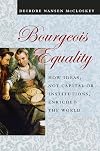
Like chocolate cake, this book is best eaten in pieces. It is more of a treatise on how liberty has made us wealthy since the mid 19th century. And in the past 40 years or so abject poverty has been eliminated in many parts of the globe. McCloskey argues that it is not capital that makes capitalism hum, but rather the freedom to use ideas that better all our lives. Her intellect and wit throughout the book make it a thoroughly enjoyable read. Its 650 pages can be intimidating but she weaves show more art, literature and culture into a wonderful economic history and dismembers the naysayers like Paul Ehrlich with ease. show less
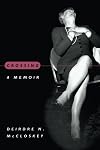
“Being a woman is what you do... not what your wear. Caring, watching, noticing.” So says Deirdre N. McCloskey, quoting lessons learned when she was still Donald. He contrasts “the self-deprecating style women use when charming others of their tribe” with “the boasting of my tribe.” And he realizes, like a New Yorker whose heart is really in the South, that he wants to be someone else.
I was an adult when I became an American. My husband and I forced a whole new world and culture show more on our children. There were times we wondered if family and friends would forgive us. But for Deirdre, the change is even bigger, and forgiveness can be hard to find. Doctors might easily offer a nose-job to woman who wants to change her face, but when a man wants plastic surgery to seem more womanly, the psychiatrists have to be called, and sometimes even lawyers. After expensive legal procedures (oh yes, we had those to become American) and stays in mental wards (we had none of those, but we did have to be physically examined to prove we were healthy), Deirdre finally embarks on a long series of operations. Insurance won’t pay, claiming she’s either ill, but not treatable, or mad and shouldn’t be treated. Complaining that “gender crossing is not a psychosis, and there is no medical evidence that it is...” Deirdre finally concludes “Identity is both made and not made,” while making for herself a very human, very normal new identity.
As an economist, Deirdre is well-established, multiply published, very observant and very learned. One thing I particularly enjoyed about this book was her recognition of differences between male and female points of view of economics in relationships. “People have two ways, exchange and identity. Men can grasp only exchange,” she says, illustrating her point with a lovely scene where a wife recites who gave her each ornament in the collection around her house. To a man they’re just items of property; to a woman they stand in for the friends who gave them.
The biggest surprise for me in this book was the author’s faith. I wasn’t expecting to see a connection drawn between finding gender and finding religion, though “rebirth” certainly makes sense in both realms. Faith does too; when he couldn’t imagine continuing as he was, Donald had the faith (and the money) to embark on his journey to Deirdre. While some readers might find it hard to imagine why, and some people of faith might find it hard to accept, Deirdre’s advice to “try to think of Jesus as a God of love” is wisely given and well-taken.
A fascinating, absorbing memoir, Crossing invites us to examine who we are, and how much we care for our neighbor, in the light of someone who learned who s/he was not.
Disclosure: I was lucky enough to get a free ecopy of this book. show less
I was an adult when I became an American. My husband and I forced a whole new world and culture show more on our children. There were times we wondered if family and friends would forgive us. But for Deirdre, the change is even bigger, and forgiveness can be hard to find. Doctors might easily offer a nose-job to woman who wants to change her face, but when a man wants plastic surgery to seem more womanly, the psychiatrists have to be called, and sometimes even lawyers. After expensive legal procedures (oh yes, we had those to become American) and stays in mental wards (we had none of those, but we did have to be physically examined to prove we were healthy), Deirdre finally embarks on a long series of operations. Insurance won’t pay, claiming she’s either ill, but not treatable, or mad and shouldn’t be treated. Complaining that “gender crossing is not a psychosis, and there is no medical evidence that it is...” Deirdre finally concludes “Identity is both made and not made,” while making for herself a very human, very normal new identity.
As an economist, Deirdre is well-established, multiply published, very observant and very learned. One thing I particularly enjoyed about this book was her recognition of differences between male and female points of view of economics in relationships. “People have two ways, exchange and identity. Men can grasp only exchange,” she says, illustrating her point with a lovely scene where a wife recites who gave her each ornament in the collection around her house. To a man they’re just items of property; to a woman they stand in for the friends who gave them.
The biggest surprise for me in this book was the author’s faith. I wasn’t expecting to see a connection drawn between finding gender and finding religion, though “rebirth” certainly makes sense in both realms. Faith does too; when he couldn’t imagine continuing as he was, Donald had the faith (and the money) to embark on his journey to Deirdre. While some readers might find it hard to imagine why, and some people of faith might find it hard to accept, Deirdre’s advice to “try to think of Jesus as a God of love” is wisely given and well-taken.
A fascinating, absorbing memoir, Crossing invites us to examine who we are, and how much we care for our neighbor, in the light of someone who learned who s/he was not.
Disclosure: I was lucky enough to get a free ecopy of this book. show less

In 1995, economics professor Donald McCloskey's second child had gone off to college, and in the empty nest he indulged a little bit more in a habit of decades: cross-dressing. But with the new freedom he found it wasn't just an isolated habit and he wanted to take it further and further, become more and more a woman: by the end of the year he'd changed his name to Deirdre and was living full-time as a woman, and by summer of 1996 Deirdre had gone to Australia for The Operation. His wife had show more divorced her (he was already a she), his daughter wouldn't talk to her—but in his profession and elsewhere, Deirdre found new support and friends.
Deirdre McCloskey doesn't want to get in your face about gender roles; she just wants to tell what it's like to want to become a woman, and then to actually do it. She tells the book in the third person, giving clear attribution to Donald's thoughts and experiences, Deirdre's, and those of "Dee" (the interim stage). It's a very quickly written book—it came out in 1999, less than two years after the last events it recounts—but that comes across not as sloppiness so much as looseness and lightness in the structure and a clear sense that there was no editing or censoring of what's on the page. This is what Deirdre thinks, period. As Deirdre the economist might say: either you find it of value, or you don't.
She's thrilled about the new social avenues and acknowledgements open to her, less thrilled about learning makeup and worrying about passing. She's grateful for the easy acceptance of her sex change in academic circles, distraught over her family's rejection (including twice being arrested and committed for psychiatric evaluation, at her sister's instigation). It's hard not to read this book as an action thriller, where the protagonist's goal is simply to make the crossing safely from hero to heroine. Several times, in fact, McCloskey brings up immigrants and others who managed "crossings" which she sees as more courageous—and, going by this example, changing sex really shouldn't be that big a deal. show less
Deirdre McCloskey doesn't want to get in your face about gender roles; she just wants to tell what it's like to want to become a woman, and then to actually do it. She tells the book in the third person, giving clear attribution to Donald's thoughts and experiences, Deirdre's, and those of "Dee" (the interim stage). It's a very quickly written book—it came out in 1999, less than two years after the last events it recounts—but that comes across not as sloppiness so much as looseness and lightness in the structure and a clear sense that there was no editing or censoring of what's on the page. This is what Deirdre thinks, period. As Deirdre the economist might say: either you find it of value, or you don't.
She's thrilled about the new social avenues and acknowledgements open to her, less thrilled about learning makeup and worrying about passing. She's grateful for the easy acceptance of her sex change in academic circles, distraught over her family's rejection (including twice being arrested and committed for psychiatric evaluation, at her sister's instigation). It's hard not to read this book as an action thriller, where the protagonist's goal is simply to make the crossing safely from hero to heroine. Several times, in fact, McCloskey brings up immigrants and others who managed "crossings" which she sees as more courageous—and, going by this example, changing sex really shouldn't be that big a deal. show less
Lists
Awards


You May Also Like


Associated Authors
Statistics
- Works
- 43
- Members
- 1,903
- Popularity
- #13,526
- Rating
- 3.9
- Reviews
- 24
- ISBNs
- 120
- Languages
- 8
- Favorited
- 7