
Lesley Blanch (1904–2007)
Author of The Wilder Shores of Love
About the Author
Image credit: Lesley Blanch en 1972
Works by Lesley Blanch
Associated Works
Harriette Wilson's Memoirs: The Greatest Courtesan of Her Age (1985) — Editor, some editions — 306 copies, 4 reviews
Tagged
Common Knowledge
- Birthdate
- 1904-06-06
- Date of death
- 2007-05-07
- Gender
- female
- Education
- Slade School of Fine Art (painting)
St. Paul's Girls' School, Hammersmith, London, England, UK - Occupations
- journalist
artist
author
illustrator
traveller
biographer - Organizations
- Vogue (UK)
- Awards and honors
- Order of the British Empire (Member, 2001)
Royal Society of Literature (Fellow)
Ordre des Arts et des Lettres - Relationships
- Gary, Romain (husband|divorced)
- Short biography
- Lesley Blanch was born in Chiswick, west London, to unconventional and cultivated parents. She developed an early passion for Russia, inspired by someone she called "the traveller," a family friend and later her lover. She attended St. Paul's Girls' School and then the Slade School. She became an illustrator, artist, and journalist. In 1932, she made the first of her five or six trips to Russia. In the mid-1930s, she went to work at British Vogue, where she served as features editor covering theatre, books, art, and people. After marrying early and divorcing, in 1945 she married the Russian-born French writer and diplomat Romain Gary. She accompanied him on postings to Sofia, Bern, New York, and Los Angeles. She also continued to travel alone in Mexico, the Balkans, Siberia, the Caucasus, central Asia, the Middle East, India, and elsewhere. In 1954, she published her first book, The Wilder Shores of Love, which became a worldwide bestseller and has never gone out of print. It describes the lives of four 19th-century European women -- Isabel Burton, Jane Digby, Aimée Dubucq de Rivery. and Isabelle Eberhardt -- who found adventure and love in travel. Her other vividly-written books included The Game of Hearts, Under a Lilac-Bleeding Star, The Nine Tiger Man, Journey Into the Mind's Eye, and The Sabres of Paradise. In the 1970s, she bought a house in the south of France, which she named Kuçuk Teppe ("little hill" in Turkish) and furnished with the treasures of her extraordinary travels. Tragically, the house and most of its contents were destroyed by fire in 1994. The French media lionized her, and her 12 books were often republished. She was named an MBE and a fellow of the Royal Society of Literature. She remained a glamorous figure well into old age.
- Nationality
- UK
- Birthplace
- London, England, UK
- Places of residence
- Paris, France
Turkey
Mexico
New York, New York, USA
Sofia, Bulgaria
Bern, Switzerland - Place of death
- Garavan, near Menton, France
Members
Reviews

An utterly original book that can't really be described as a travelogue or autobiography, since much of it is based on imagination, recollections of childhood and romance.
It is, predominantly, a homage to Russia. The author, brought up in a traditional English home, is early awakened to the magic of this realm by a mystical family friend- referred to only as 'The Traveller'. In visits, letters, gifts and books, he arouses in the child a life-long obsession with the country - a feeling that show more is undoubtedly tied up with her growing feelings for the man himself.
The vividness of the dream world he evokes informs her life. As the child-adult friendship develops to a love affair, sojourns in France together only come top life as she finds elements of Russian culture there.
And finally - after their relationship has ended- she manages to visit communist russia - alone. Yet the shade of the Traveller hangs over everything.
Quite magical andd utterly romantic. I can quite identify with her quote from Vernon Lee that "there are moments in all our lives, most often. alas! during childhood; when we possess the mystic gift of consecration, of steeping things in our soul's essence, and making them thereby different from all others, forever sovereign, and sacred to us." show less
It is, predominantly, a homage to Russia. The author, brought up in a traditional English home, is early awakened to the magic of this realm by a mystical family friend- referred to only as 'The Traveller'. In visits, letters, gifts and books, he arouses in the child a life-long obsession with the country - a feeling that show more is undoubtedly tied up with her growing feelings for the man himself.
The vividness of the dream world he evokes informs her life. As the child-adult friendship develops to a love affair, sojourns in France together only come top life as she finds elements of Russian culture there.
And finally - after their relationship has ended- she manages to visit communist russia - alone. Yet the shade of the Traveller hangs over everything.
Quite magical andd utterly romantic. I can quite identify with her quote from Vernon Lee that "there are moments in all our lives, most often. alas! during childhood; when we possess the mystic gift of consecration, of steeping things in our soul's essence, and making them thereby different from all others, forever sovereign, and sacred to us." show less
The Sabres of Paradise: Conquest and Vengeance in the Caucasus, Revised Edition (Tauris Parke Paperbacks) by Lesley Blanch
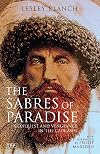
A big, bold, gorgeous, bloody, colourful epic of the mighty struggle between Shamyl the Imam of the Caucuses and Nicholas the Tsar of all the Russias. Lots of people die horribly, lots of people do horrible things, on all sides, but there is amazing heroism in the struggle, much to deplore on both sides, but some to admire. Blanch plays fair, being even-handed in her depiction, though it's clear her heart's with the fierce mountain folk in their struggle for freedom over the vast serf-owning show more empire. The descriptions are astonishing - vivid and rich, bursting with passion for the landscape, the events and most of all for the people involved. Thee are historical events depicted unashamedly as historical epic, almost overwhelming in detail and odd tangents and illustrative scenes and dramatised events. An overpowering book in many ways, that completely takes hold and refuses to let go. show less
The Wilder Shores of Love: The Exotic True-Life Stories of Isabel Burton, Aimee Dubucq de Rivery, Jane Digby, and Isabelle Eberhardt by Lesley Blanch

I found this book on the bookshelf when I was vacationing with my family in the South of France. (Wow, that is possibly one of the most pretentious sentences I've every written. But that's I was.) It's beautifully evocative, instantly transported you back through time, into the lives of these fascinating women. My only caveat is that it comes from that period of oriental exoticism which means it has some problematic racial issues for the modern reader
A reprint of the 1960 original with a new introduction. When the book was written, the Caucasus had been at “peace” for 100 years, first under the firm hand of the Tsar and then under the even firmer hand of the Soviet Union. The events of the Murid Wars were forgotten by all but specialist historians, and militant Islam was a quaint phenomena of the past. How about that?
The book is essentially a biography, with a lot of historical background and digressions into the lives of other show more participants, of Imam Shamyl the Avar, who held off a succession of Russian armies and generals for thirty years. His colorized Daguerreotype adorns the front cover of this edition, and he does look like somebody that it would be a bad idea to mess with. Shamyl belonged to a militant branch of Sufism; he became its leader by survival - he had five or six sword wounds by the time he came into power, and finished with eighteen. (If he’d been an outfielder instead of a warrior, everyone would have suspected he used steroids). As Imam, he was both absolute religious and military leader, and achieved the previously impossible accomplishment of uniting mountain tribes who devoted themselves to raiding each other, called “saying hello with sabres” in the Caucasian idiom. His regime was one of monastic adherence to fundamentalist interpretations of Islam - whole villages in the mountains were male-only “murids”, a sort of Islamic-warrior-monk - and he had his own mother stripped and flogged when she begged for mercy for a neighboring tribe who had resisted him. And he was a master of theatrics - he went everywhere with an executioner at his side, his troops (except the leaders) dressed entirely in black, with black banners, and he used his extensive and excellent spy system to detect and announce events he’d “seen in a vision” long before the common people were aware of them. He staged a dramatic raid on a Georgian estate to kidnap a princely family, who were eventually ransomed for Shamyl’s own son.
Shamyl, however, was also honorable; in the aforementioned flogging-his-own-mother incident, after five strokes he declared it had come to him from God that he could take the remainder of the punishment on himself and proceeded to receive the remaining 95 on his own back, threatening the floggers with summary execution if they held back their blows (of course, there’s a little theater in that, too). He treated prisoners reasonably, considering they were being held in mountain villages that were just a little bad luck away from starvation. And he always respected brave enemies, regardless of religion.
Shamyl’s task was helped by the Russians, who could have anticipated the WWI description of the BEF as “lions led by donkeys”. For years, the constant tactic of the Russian army in the Caucasus was to engage guerilla cavalry with infantry bayonet charges. Didn’t work very well. Matters were profoundly hindered by Tsar Nicolas I, who was so conservative that he insisted that the Russian stay with flintlock muskets long after the rest of the world had switched to percussion rifles, and who tried to manage the campaigns from St. Petersburg - something of a problem for military flexibility when it took more than a month to get a message to Tblisi and back. It’s telling that when Tsar Alexander took over and allowed his generals to run things their own way, the war ended swiftly.
Shamyl’s life after his surrender continues to be fascinating. He expected to be brutally executed and instead found himself surrounded everywhere he went by cheering crowds. He was fascinated by railroads, telegraphs, music boxes, and the ballet, and the Tsar often invited him to military maneuvers - as sort of a color commentator. Russian veterans of the Caucasus often visited him to discuss the campaigns and compare wounds, and he was allowed to leave Russia to end his life in Mecca.
The whole story, of course, had a disturbing resonance today. A leader of the Chechen terrorists/freedom fighters/whatever is Shamil Basayev (same name, different transliteration), who has acquired something of the same reputation as the Imam Shamyl among the mountain tribes. And violently militant Islamic leaders with long beards and powerful gazes who use fanatic followers to strike from mountain refuges have an unpleasant familiarity.
Lesley Blanch, the author, is almost as interesting as Shamyl. She’s 102 and still working on her autobiography. Her main career was as an editor with Vogue, and it shows in her writing style. This can be a little florid - we keep reading of “languishing Georgian beauties” and “steely-eyed mountaineers”, and there are some romance-novel type hints that being seized by a handsome raider and carried off to his harem might break the monotony of daily life. A reviewer on Amazon claims that Blanch has not allowed the exact facts to get in her way when telling a good story. I would have liked some better descriptions of the military tactics on both sides. Although there’s a good general map of the Caucasus, some smaller scale maps, especially topographic maps, would have been a great help, and some photographs or portraits of the participants would have been nice as well. Nevertheless, this is a delightful and instructive read; I want to read some more standard histories but I’ll probably check out some of Blanch’s other books, too.
Frank Herbert must have read this book; a couple of terms cross over into Dune. The Caucasian word for vendetta is kanly, the national short sword is a kindjal, and a Cossack fortified camp is a seitch. The basic plot of resistance to a mighty empire by small bands of fighters is also there, transferred from mountains to desert. show less
The book is essentially a biography, with a lot of historical background and digressions into the lives of other show more participants, of Imam Shamyl the Avar, who held off a succession of Russian armies and generals for thirty years. His colorized Daguerreotype adorns the front cover of this edition, and he does look like somebody that it would be a bad idea to mess with. Shamyl belonged to a militant branch of Sufism; he became its leader by survival - he had five or six sword wounds by the time he came into power, and finished with eighteen. (If he’d been an outfielder instead of a warrior, everyone would have suspected he used steroids). As Imam, he was both absolute religious and military leader, and achieved the previously impossible accomplishment of uniting mountain tribes who devoted themselves to raiding each other, called “saying hello with sabres” in the Caucasian idiom. His regime was one of monastic adherence to fundamentalist interpretations of Islam - whole villages in the mountains were male-only “murids”, a sort of Islamic-warrior-monk - and he had his own mother stripped and flogged when she begged for mercy for a neighboring tribe who had resisted him. And he was a master of theatrics - he went everywhere with an executioner at his side, his troops (except the leaders) dressed entirely in black, with black banners, and he used his extensive and excellent spy system to detect and announce events he’d “seen in a vision” long before the common people were aware of them. He staged a dramatic raid on a Georgian estate to kidnap a princely family, who were eventually ransomed for Shamyl’s own son.
Shamyl, however, was also honorable; in the aforementioned flogging-his-own-mother incident, after five strokes he declared it had come to him from God that he could take the remainder of the punishment on himself and proceeded to receive the remaining 95 on his own back, threatening the floggers with summary execution if they held back their blows (of course, there’s a little theater in that, too). He treated prisoners reasonably, considering they were being held in mountain villages that were just a little bad luck away from starvation. And he always respected brave enemies, regardless of religion.
Shamyl’s task was helped by the Russians, who could have anticipated the WWI description of the BEF as “lions led by donkeys”. For years, the constant tactic of the Russian army in the Caucasus was to engage guerilla cavalry with infantry bayonet charges. Didn’t work very well. Matters were profoundly hindered by Tsar Nicolas I, who was so conservative that he insisted that the Russian stay with flintlock muskets long after the rest of the world had switched to percussion rifles, and who tried to manage the campaigns from St. Petersburg - something of a problem for military flexibility when it took more than a month to get a message to Tblisi and back. It’s telling that when Tsar Alexander took over and allowed his generals to run things their own way, the war ended swiftly.
Shamyl’s life after his surrender continues to be fascinating. He expected to be brutally executed and instead found himself surrounded everywhere he went by cheering crowds. He was fascinated by railroads, telegraphs, music boxes, and the ballet, and the Tsar often invited him to military maneuvers - as sort of a color commentator. Russian veterans of the Caucasus often visited him to discuss the campaigns and compare wounds, and he was allowed to leave Russia to end his life in Mecca.
The whole story, of course, had a disturbing resonance today. A leader of the Chechen terrorists/freedom fighters/whatever is Shamil Basayev (same name, different transliteration), who has acquired something of the same reputation as the Imam Shamyl among the mountain tribes. And violently militant Islamic leaders with long beards and powerful gazes who use fanatic followers to strike from mountain refuges have an unpleasant familiarity.
Lesley Blanch, the author, is almost as interesting as Shamyl. She’s 102 and still working on her autobiography. Her main career was as an editor with Vogue, and it shows in her writing style. This can be a little florid - we keep reading of “languishing Georgian beauties” and “steely-eyed mountaineers”, and there are some romance-novel type hints that being seized by a handsome raider and carried off to his harem might break the monotony of daily life. A reviewer on Amazon claims that Blanch has not allowed the exact facts to get in her way when telling a good story. I would have liked some better descriptions of the military tactics on both sides. Although there’s a good general map of the Caucasus, some smaller scale maps, especially topographic maps, would have been a great help, and some photographs or portraits of the participants would have been nice as well. Nevertheless, this is a delightful and instructive read; I want to read some more standard histories but I’ll probably check out some of Blanch’s other books, too.
Frank Herbert must have read this book; a couple of terms cross over into Dune. The Caucasian word for vendetta is kanly, the national short sword is a kindjal, and a Cossack fortified camp is a seitch. The basic plot of resistance to a mighty empire by small bands of fighters is also there, transferred from mountains to desert. show less
Lists
Awards


You May Also Like


Associated Authors
Statistics
- Works
- 17
- Also by
- 1
- Members
- 916
- Popularity
- #27,999
- Rating
- 3.7
- Reviews
- 23
- ISBNs
- 61
- Languages
- 3
- Favorited
- 1
