
Anne Brontë (1820–1849)
Author of The Tenant of Wildfell Hall
About the Author
Anne Bronte was the daughter of an impoverished clergyman of Haworth in Yorkshire, England. Considered by many critics as the least talented of the Bronte sisters, Anne wrote two novels. Agnes Grey (1847) is the story of a governess, and The Tenant of Wildfell Hall (1848), is a tale of the evils of show more drink and profligacy. Her acquaintance with the sin and wickedness shown in her novels was so astounding that Charlotte Bronte saw fit to explain in a preface that the source of her sister's knowledge of evil was their brother Branwell's dissolute ways. A habitue of drink and drugs, he finally became an addict. Anne Bronte's other notable work is her Complete Poems. Anne Bronte died in 1849. (Bowker Author Biography) show less
Disambiguation Notice:
Also wrote under the name Acton Bell.
Do not combine Anne with either or both of her sisters. Thank you.
Works by Anne Brontë
The Complete Novels: Agnes Grey / Jane Eyre / The Professor / Shirley / The Tenant of Wildfell Hall / Villette / Wuthering Heights (2012) 365 copies, 1 review
Agnes Grey / Jane Eyre / The Professor / The Tenant of Wildfell Hall / Villette / Wuthering Heights (2018) 37 copies
The Illustrated Letters of the Brontës: The Letters, Diaries and Writings of Charlotte, Emily and Anne Brontë (2021) 25 copies, 1 review
Macmillan Readers Agnes Grey Upper-Intermediate Pack (Macmillan Readers 2015) (2015) 24 copies, 1 review
Wuthering Heights / Agnes Grey / The Tenant of Wildfell Hall / The Professor (1980) — Author — 14 copies
The Brontë Sisters: The Complete Novels A Biography of the Author (The Greatest Writers of All Time) (2017) 6 copies
Romance Classics: Jane Eyre / Mansfield Park / Lorna Doone / Far from the Madding Crowd / Middlemarch / Agnes Grey (2001) — Author — 5 copies
Agnes Grey / The Professor / Poems 4 copies
Vilette / Jane Eyre / Shirley / The Tenant of Wildfell Hall / Agnes Grey / Wuthering Heights 4 copies
Wuthering Heights, Agnes Grey, Poems 3 copies
The Anne Brontë Collection: Agnes Grey, The Tenant of Wildfell Hall, Collected Poems (2020) 3 copies
Poesie 2 copies
The Works of the Brontë Family 2 copies
The Brontë Family Collection: Complete Works of Brontë Family (Annotated and Illustrated) (Annotated Classics) (2013) 2 copies
Novels of the Sisters Bronte. Thornton Edition. In Twelve Volumes (Complete). Includes The Life of Charlotte Bronte (1905) — Author — 2 copies
Self-communion : a poem 1 copy
Inés Grey 1 copy
(all) 1 copy
Obras 1 copy
The Brontes 1 copy
SST 18 - Agnes Grey 1 copy
Tenants Agnes Grey, The 1 copy
Bronte Sisters Archive 1 copy
Novels by the Bronte sisters 1 copy
Associated Works
Tales of Glass Town, Angria, and Gondal : Selected Writings (2010) — Contributor — 100 copies, 3 reviews
The Professor to Which is Added the Poems of Currer, Ellis, and Acton Bell (2009) — Author — 20 copies, 1 review
The Professor / Tales from Angria / Emma: A Fragment / Selected Poems by Charlotte, Emily, and Anne Brontë (1954) — Contributor — 1 copy
Tagged
Common Knowledge
- Canonical name
- Brontë, Anne
- Legal name
- Brontë, Anne
- Other names
- Bell, Acton (pseudonym)
- Birthdate
- 1820-01-17
- Date of death
- 1849-05-28
- Gender
- female
- Education
- home
Roe Head, Mirfield, Yorkshire, England, UK - Occupations
- governess
novelist
poet
author
writer - Awards and honors
- Blue Plaque
- Relationships
- Brontë, Emily (sister)
Brontë, Charlotte (sister)
Brontë, Branwell (brother)
Brontë, Patrick (father) - Short biography
- Anne was the youngest of the Brontë siblings. She worked as a governess and wrote stories and poetry with her sisters. Her literary reputation is based mainly on the two novels she published before her untimely death at age 29. Like her older sisters, she used a masculine-sounding pseudonym, Acton Bell, for publication of her writing because of 19th-century prejudice against female authors.
- Cause of death
- tuberculosis
- Nationality
- UK
- Birthplace
- Thornton, Yorkshire, England, UK
- Places of residence
- Haworth, Yorkshire, England, UK
Scarborough, England, UK - Place of death
- Scarborough, England, UK
- Burial location
- Saint Mary's Churchyard, Scarborough, North Yorkshire, England, UK
- Map Location
- England, UK
- Disambiguation notice
- Also wrote under the name Acton Bell.
Do not combine Anne with either or both of her sisters. Thank you.
Members
Discussions
A wrong corrected! in Pedants' corner (September 2024)
Group Read, November 2019: The Tenant of Wildfell Hall in 1001 Books to read before you die (December 2019)
Group read: Agnes Grey by Anne Brontë in Virago Modern Classics (June 2019)
The Tenant of Wildfell Hall: March group read in 75 Books Challenge for 2017 (March 2017)
Tenant in The Brontës (March 2013)
1001 Group Read August, 2012: Agnes Grey in 1001 Books to read before you die (August 2012)
MAY group read: AGNES GREY - General Thread in The 11 in 11 Category Challenge (June 2011)
September: Bronte: the Tenant of Wildfell hall in Monthly Author Reads (September 2010)
Reviews

I am a big fan of the Brontes. While Charlotte's Jane Eyre and Emily's Wuthering Heights are deservedly all time classics, Anne's two novels are less well known and comparatively neglected; and Agnes Grey is probably less known than Anne's other novel The Tenant of Wildfell Hall. Agnes Grey is comparatively short and is a semi-autobiographical novel where Anne recounts the eponymous young lady's experiences as a governess to the children of wealthy families. When her father's business show more ventures fall apart after the sinking of a ship of his merchant business partner, young Agnes goes to work as a governess to earn the family some money, despite discouragement from her family. Her experiences are actually quite hilarious, dealing with spoiled and delinquent children and their oblivious parents who refuse to see any wrong in their offspring, particularly in the case of the Bloomfields. Later she looks after the older daughters of the Murrays, who are also a trial, being self-centred and needy, but with whom she is able eventually to establish a modus vivendi. She also falls in love with a vicar in the Murrays' local village, Mr Weston. This is a lovely and very satisfying novel, in some ways ahead of its time in dealing with "feral" children, as is Wildfell Hall in dealing with domestic abuse. A great read. show less
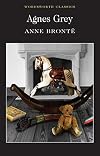
There is a stock image of the Victorian governess, isn't there: the stern, plain figure in black who is given charge of the upper- or middleclass family's children, shepherding them from classroom to drawing room, and thence to bed. It's easy to caricature this figure, as Joan Aiken did with the figure of Miss Slighcarp in The Wolves of Willoughby Chase, or to portray her as a dominatrix for men (and women) of certain tastes, but I suspect that mostly the romantic view of the governess will show more rest on the titular person of Charlotte Brontë's Jane Eyre (1847).
However, the life of many a governess is portrayed more realistically in Charlotte's sister's novel, the semi-autobiographical Agnes Grey, which even more than Jane Eyre exposed the circumstances which governesses were expected to tolerate without a murmur. Clues that much of the story of Agnes ("pure, holy") is based on Anne's own experiences come in the opening paragraphs: both their fathers are clergymen in the north of England; both young women are twice engaged as governesses, the first post being short-lived though the second lasts a few years; and both are involved in plans to begin a school with family members (though in only one case does it come to fruition). And, from what we know of Anne's life, the circumstances of Agnes' treatment parallel the author's own.
Because of her family's impoverished circumstances -- her clergyman father has made a disastrous investment -- the shy but principled Agnes chooses to offer her services as a governess to whichever family will take her on. The first family, the Bloomfields of Wellwood Mansion, abuse her greatly: the children are ungovernable, their sides taken by the parents, and Agnes given no leeway to assert any authority. The promise of her starting there is never fulfilled after her arrival:
I awoke the next morning; feeling like one whirled away by enchantment, and suddenly dropped from the clouds into a remote and unknown land, widely and completely isolated from all he had ever seen before.
She is indeed completely isolated and given no support, yet blamed for her lack of control over the four children. Not unnaturally she lasts scant months and is let go. She next applies as governess to the Murrays of Horton Lodge, a position only marginally more tolerable. The two sons thankfully soon depart for private school, making Agnes' life a little more tolerable with just two girls to supervise.
At this point the mood starts to lighten; there's a chapter where the teenage girls start a dialogue with Agnes, one that injects a moiety of humour into the proceedings, despite a moment of utter tragedy for our heroine. And in fact we begin to transition from a misery memoir to a romance of almost Austenesque sensibility as we wonder if the sympathetic parish curate Mr Weston will provide the solace and comfort that Agnes desires, for he seems to appreciate her sterling qualities as well as sharing the same interests and values.
"Reading is my favourite occupation, when I have leisure for it and books to read." -- Agnes to Mr Weston, Chapter XV
The climax takes place in a seaside town not unlike the Scarborough where Anne herself took her holidays (and where she was to end her days), for it is here that she and her mother have set up a school for gentle folk. And were it not for the more evangelical phrases that Anne employs the ending could easily be out of anything that Austen herself wrote.
Agnes Grey is, to my mind, a slightly uneven novel -- in tone at least -- but still astonishing for its realism and insights. Here for example is Agnes/Anne commenting on whether appearance matters or not in terms of others' assessment and judgement of one's worth:
If the mind be but well cultivated, and the heart well disposed, no one ever cares for the exterior. So said the teachers of our childhood; and so say we to the children of the present day. All very judicious and proper, no doubt; but are such assertions supported by experience? -- Chapter XVII
There is too often a mismatch between what ought to happen and what actually happens, is what she's saying, and this authorial voice is what distinguishes Anne and her siblings from Austen's more observational approach, and which gives the first-person narrative of Agnes Grey its particular poignancy and potency.
_______
While Agnes Grey is well aware that her in-between position as neither family member nor servant gives her precious little status, some governesses achieved great dominance in their families by sheer force of will; this allowed Joan Aiken to caricature this type in the terrifying figure of Miss Slighcarp in The Wolves of Willoughby Chase (1962), a woman who felt free to dispense with the customary drab costume governesses were expected to wear and to usurp the parental position of authority.
https://wp.me/s2oNj1-agnes show less
However, the life of many a governess is portrayed more realistically in Charlotte's sister's novel, the semi-autobiographical Agnes Grey, which even more than Jane Eyre exposed the circumstances which governesses were expected to tolerate without a murmur. Clues that much of the story of Agnes ("pure, holy") is based on Anne's own experiences come in the opening paragraphs: both their fathers are clergymen in the north of England; both young women are twice engaged as governesses, the first post being short-lived though the second lasts a few years; and both are involved in plans to begin a school with family members (though in only one case does it come to fruition). And, from what we know of Anne's life, the circumstances of Agnes' treatment parallel the author's own.
Because of her family's impoverished circumstances -- her clergyman father has made a disastrous investment -- the shy but principled Agnes chooses to offer her services as a governess to whichever family will take her on. The first family, the Bloomfields of Wellwood Mansion, abuse her greatly: the children are ungovernable, their sides taken by the parents, and Agnes given no leeway to assert any authority. The promise of her starting there is never fulfilled after her arrival:
I awoke the next morning; feeling like one whirled away by enchantment, and suddenly dropped from the clouds into a remote and unknown land, widely and completely isolated from all he had ever seen before.
She is indeed completely isolated and given no support, yet blamed for her lack of control over the four children. Not unnaturally she lasts scant months and is let go. She next applies as governess to the Murrays of Horton Lodge, a position only marginally more tolerable. The two sons thankfully soon depart for private school, making Agnes' life a little more tolerable with just two girls to supervise.
At this point the mood starts to lighten; there's a chapter where the teenage girls start a dialogue with Agnes, one that injects a moiety of humour into the proceedings, despite a moment of utter tragedy for our heroine. And in fact we begin to transition from a misery memoir to a romance of almost Austenesque sensibility as we wonder if the sympathetic parish curate Mr Weston will provide the solace and comfort that Agnes desires, for he seems to appreciate her sterling qualities as well as sharing the same interests and values.
"Reading is my favourite occupation, when I have leisure for it and books to read." -- Agnes to Mr Weston, Chapter XV
The climax takes place in a seaside town not unlike the Scarborough where Anne herself took her holidays (and where she was to end her days), for it is here that she and her mother have set up a school for gentle folk. And were it not for the more evangelical phrases that Anne employs the ending could easily be out of anything that Austen herself wrote.
Agnes Grey is, to my mind, a slightly uneven novel -- in tone at least -- but still astonishing for its realism and insights. Here for example is Agnes/Anne commenting on whether appearance matters or not in terms of others' assessment and judgement of one's worth:
If the mind be but well cultivated, and the heart well disposed, no one ever cares for the exterior. So said the teachers of our childhood; and so say we to the children of the present day. All very judicious and proper, no doubt; but are such assertions supported by experience? -- Chapter XVII
There is too often a mismatch between what ought to happen and what actually happens, is what she's saying, and this authorial voice is what distinguishes Anne and her siblings from Austen's more observational approach, and which gives the first-person narrative of Agnes Grey its particular poignancy and potency.
_______
While Agnes Grey is well aware that her in-between position as neither family member nor servant gives her precious little status, some governesses achieved great dominance in their families by sheer force of will; this allowed Joan Aiken to caricature this type in the terrifying figure of Miss Slighcarp in The Wolves of Willoughby Chase (1962), a woman who felt free to dispense with the customary drab costume governesses were expected to wear and to usurp the parental position of authority.
https://wp.me/s2oNj1-agnes show less
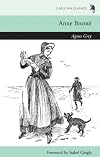
3.5, rounded up to 4 because Anne
This suffers a bit from coming after [b:The Tenant of Wildfell Hall|337113|The Tenant of Wildfell Hall|Anne Brontë|https://images.gr-assets.com/books/1479652419s/337113.jpg|1389477] for me. That book is a masterpiece, but this is Anne Brontë's first and it's still a must-read in its own right. Anne was really attentive to the way ideology is reproduced among the upper-classes, passed down from smug, privileged parents to their kids. As always, she's astute show more about how ideals of masculinity and femininity are maintained, and I don't know if that was her intention, but she really zeroes in on how hostile heterosexual relations are among the well-off; when marriage was about property and maintaining the family line.
My biggest issue with this book is that it felt too episodic, like a series of vignettes strung together. The narrative becomes a bit more fleshed out when Mr. Weston makes an appearance. If I read it before ToWH I would have loved it a little bit more; nevertheless, it is wonderful to see the progress from this to ToWH. To think about what could have come after ToWH had she lived longer! show less
This suffers a bit from coming after [b:The Tenant of Wildfell Hall|337113|The Tenant of Wildfell Hall|Anne Brontë|https://images.gr-assets.com/books/1479652419s/337113.jpg|1389477] for me. That book is a masterpiece, but this is Anne Brontë's first and it's still a must-read in its own right. Anne was really attentive to the way ideology is reproduced among the upper-classes, passed down from smug, privileged parents to their kids. As always, she's astute show more about how ideals of masculinity and femininity are maintained, and I don't know if that was her intention, but she really zeroes in on how hostile heterosexual relations are among the well-off; when marriage was about property and maintaining the family line.
My biggest issue with this book is that it felt too episodic, like a series of vignettes strung together. The narrative becomes a bit more fleshed out when Mr. Weston makes an appearance. If I read it before ToWH I would have loved it a little bit more; nevertheless, it is wonderful to see the progress from this to ToWH. To think about what could have come after ToWH had she lived longer! show less

When a mysterious and reticent young woman moves into the country abode of Wildfell Hall, with a young son but no husband, the interest and suspicions of the villagers are soon aroused. Gilbert Markham, a young farmer in the village is intrigued by the newcomer, Helen Graham. They become friends and before long Gilbert falls for Helen. However, the other residents of the village start imagining all kind of things about Helen’s past and start spreading gossip and half-truths, especially show more regarding her apparent relationship with her landlord Mr Lawrence. Gilbert confronts Helen, and it is only when she allows him to read her diary that he understands her relucatance to make friends or discuss her past – Helen has left her alcoholic and cruel husband, and has taken their son in order that her husband cannot be a bad influence upon him. But can she ever escape the spectre of her unhappy marriage, and find happiness again…?
Anne Bronte is far less celebrated than her two sisters, Charlotte and Emily. Most readers are familiar wtih Charlotte’s most famous novel, Jane Eyre (one of my personal favourites), and Emily’s only novel, Wuthering Heights. (Even people who have not read the books usually have an idea of the storylines,due to the numerous television and film adaptations.) This is the first time I have read Anne Bronte, and I am at a loss as to why she is less well known than her sisters, because I thought this book was superb.
The narrative has three distinct parts – the first and third take the forms of letters written to an unseen friend, by Gilbert Markham, in which he tells his friend about the mysterious stranger who has taken up tenancy in Wildfell Hall, and the events surrounding her arrival in the village. The middle section consists of Helen’s diary entries, which detail the events in her marriage and her flight from her husband.
For the time it was written, this was a very brave subect to tackle – no matter how badly a husband treated his wife, a wife was simply not expected to leave him. Indeed at the time, it was not possible for a woman to obtain a divorce from her husband – although there was nothing to stop a husband divorcing his wife. Helen comes across as a strong character, reluctantly but necessarily flying in the face of social convention, and finding herself the subject of salacious gossip rather than sympathy for her troubles.
Comparisons to the works of Charlotte and Emily Bronte are inevitable, and whereas Emily depicted Heathcliff as a passionate and incredibly romantic hero, Anne portrays a far more realistic picture of life with such a man – her husband is certainly attractive and passionate in the beginning, but she soon realises that he is selfish, cruel and concerned more for himself than anybody else. I rather admire Anne for daring to show this less than savoury aspect of his character.
The characters were extremely well drawn, and while Helen verges on being overly pious and religious, it is important to remember the time that the book was written, when people were expected to be devoutly Christian, and not to go to church was seen as a serious transgression (early on in the book, the local Vicar calls on Helen to admonish her for her non-attenance at church). Helen does however come across as wilful and strong in extrremely difficult circumstances, and is determined to do what she believes to be right, even if it is not what others believe to be right. She was an admirable heroine.
Gilbert was a very likable and believable haracter. He was essentially a decent young man, but perhaps due to his mother who pandered to his every whim, he sometimes could behave in a selfish or childish manner – a fact that he himself was not blind to. However, this just served to make him all the more believable and realistic.
The other main character is that of Arthur Huntingdon, Helen’s husband. He does not narrate any of the book himself, but is fully brought to life in Helen’s diary, and was a despicable and ultimately rather pathetic character.
The story had sufficient twists and turns to suprise me on many occasions, and the ending was very satisfying. There were also moments of unexpected humour, although unlike some other reviewers, I did not see any similarity with the humour of Jane Austen.
Above all, this is an exciting story, with a heroine who was ahead of her time in many ways, but trapped by the social conventions of the time in which she lived. The book kept me gripped throughout, and I would recommend this without hesitation, especially to anyone who may have read books by the other Bronte sisters, but have yet to give Anne’s work a try. show less
Anne Bronte is far less celebrated than her two sisters, Charlotte and Emily. Most readers are familiar wtih Charlotte’s most famous novel, Jane Eyre (one of my personal favourites), and Emily’s only novel, Wuthering Heights. (Even people who have not read the books usually have an idea of the storylines,due to the numerous television and film adaptations.) This is the first time I have read Anne Bronte, and I am at a loss as to why she is less well known than her sisters, because I thought this book was superb.
The narrative has three distinct parts – the first and third take the forms of letters written to an unseen friend, by Gilbert Markham, in which he tells his friend about the mysterious stranger who has taken up tenancy in Wildfell Hall, and the events surrounding her arrival in the village. The middle section consists of Helen’s diary entries, which detail the events in her marriage and her flight from her husband.
For the time it was written, this was a very brave subect to tackle – no matter how badly a husband treated his wife, a wife was simply not expected to leave him. Indeed at the time, it was not possible for a woman to obtain a divorce from her husband – although there was nothing to stop a husband divorcing his wife. Helen comes across as a strong character, reluctantly but necessarily flying in the face of social convention, and finding herself the subject of salacious gossip rather than sympathy for her troubles.
Comparisons to the works of Charlotte and Emily Bronte are inevitable, and whereas Emily depicted Heathcliff as a passionate and incredibly romantic hero, Anne portrays a far more realistic picture of life with such a man – her husband is certainly attractive and passionate in the beginning, but she soon realises that he is selfish, cruel and concerned more for himself than anybody else. I rather admire Anne for daring to show this less than savoury aspect of his character.
The characters were extremely well drawn, and while Helen verges on being overly pious and religious, it is important to remember the time that the book was written, when people were expected to be devoutly Christian, and not to go to church was seen as a serious transgression (early on in the book, the local Vicar calls on Helen to admonish her for her non-attenance at church). Helen does however come across as wilful and strong in extrremely difficult circumstances, and is determined to do what she believes to be right, even if it is not what others believe to be right. She was an admirable heroine.
Gilbert was a very likable and believable haracter. He was essentially a decent young man, but perhaps due to his mother who pandered to his every whim, he sometimes could behave in a selfish or childish manner – a fact that he himself was not blind to. However, this just served to make him all the more believable and realistic.
The other main character is that of Arthur Huntingdon, Helen’s husband. He does not narrate any of the book himself, but is fully brought to life in Helen’s diary, and was a despicable and ultimately rather pathetic character.
The story had sufficient twists and turns to suprise me on many occasions, and the ending was very satisfying. There were also moments of unexpected humour, although unlike some other reviewers, I did not see any similarity with the humour of Jane Austen.
Above all, this is an exciting story, with a heroine who was ahead of her time in many ways, but trapped by the social conventions of the time in which she lived. The book kept me gripped throughout, and I would recommend this without hesitation, especially to anyone who may have read books by the other Bronte sisters, but have yet to give Anne’s work a try. show less
Lists
Autumn books (1)
A Reading List (1)
Overdue Podcast (1)
Sense of place (1)
A Novel Cure (1)
Reading LIst (1)
Five star books (1)
Read in 2006 (1)
Which house? (1)
Epistolary Books (1)
Folio Society (2)
1840s (2)
Unread books (2)
Out of Copyright (2)
Victorian Period (2)
Female Author (2)
19th Century (2)
The "A" List (1)
Literary Witches (1)
First Novels (1)
My TBR (1)
Best Audiobooks (1)
Awards


You May Also Like


Associated Authors
Statistics
- Works
- 119
- Also by
- 12
- Members
- 18,249
- Popularity
- #1,202
- Rating
- 3.8
- Reviews
- 398
- ISBNs
- 896
- Languages
- 21
- Favorited
- 95


