
Lucy R. Lippard
Author of Pop Art
About the Author
Lucy Lippard is a highly regarded art historian and critic who has written many articles and books on contemporary and women's art.
Series
Works by Lucy R. Lippard
Defining Eye: Women Photographers of the 20th Century Selections from the Helen Kornblum Collection (1998) 48 copies
Louise Bourgeois : [cat. exp., Frankfurter Kunstverein, Steinernes Haus am Römerberg, Frankfurt am Main, 13.12.1989-28.1.1990] (1989) 31 copies
Path Breakers: The Eiteljorg Fellowship for Native American Fine Art, 2003 (Eiteljorg Fellowship Series) (2003) 14 copies
Parallaxis : fifty-five points to view : a conversation with Lucy R. Lippard and Rina Swentzell (1996) 9 copies
c. 7,500 2 copies
Tense 2 copies
New York 13 2 copies
In Touch 2 copies
Land/Art: New Mexico 1 copy
Round Robin 1 copy
Lucy Lippard: 4,492,040 1 copy
Tiguex: Raven Chacon 1 copy
Ancestors Known and Unknown 1 copy
Robert Huot: Diary Paintings 1 copy
Distant Relations 1 copy
Escape Attempts 1 copy
Pintura Mexicana: Otra Vista 1 copy
955,000 1 copy
Art In The Landscape 1 copy
Lois Dodd 1 copy
Changing 1 copy
Associated Works
Theories and Documents of Contemporary Art: A Sourcebook of Artists' Writings (1995) — Contributor — 419 copies, 1 review
David Wojnarowicz: Brush Fires in the Social Landscape (1995) — Introduction — 114 copies, 2 reviews
The Suburbanization of New York: Is the World's Greatest City Becoming Just Another Town? (2006) — Contributor — 34 copies, 1 review
The School of Paris; paintings from the Florene May Schoenborn and Samuel A. Marx collection (1965) — Notes — 30 copies
Heresies: A Feminist Publication on Art and Politics. THE GREAT GODDESS Issue, Vol. 2, No. 1, Issue 5, Revised Edition (1982) — Contributor — 20 copies
About Face, Self-Portraits by Native American, First Nations, and Intuit Artists (2006) — Contributor — 8 copies
Unmuzzled Ox 13 — Contributor — 7 copies
Big Deal #2 — Contributor — 3 copies
Tagged
Common Knowledge
- Canonical name
- Lippard, Lucy R.
- Legal name
- Lippard, Lucy Rowland
- Birthdate
- 1937-04-14
- Gender
- female
- Education
- New York University, Institute of Fine Arts (MA|1962)
Smith College (BA|1958) - Occupations
- writer
critic
curator - Organizations
- Museum of Modern Art
- Awards and honors
- Frank Jewett Mather Award (1975)
College Art Association Distinguished Lifetime Achievement Award (2015)
College Art Association Distinguished Feminist Award (2012) - Relationships
- Ryman, Robert (former spouse)
Lippard, Vernon W. (father) - Nationality
- USA
- Birthplace
- New York, New York, USA
- Places of residence
- New York, New York, USA
- Associated Place (for map)
- New York, New York, USA
Members
Reviews

As Lippard points out, Hesse's use of obsessive repetition in her works served to increase and exaggerate the absurdity she saw in her life. In many ways, her works were ”psychic models,” as Robert Smithson has said, of ”a very interior person.” In pioneering the use of ”soft” materials, her sculptures betrayed her awareness of the manner in which her experience as a woman altered her art and career. Although she died before feminism affected the art world to any great extent, show more her major works have since become talismans for succeeding generations of women artists. Eva Hesse was designed by Hesse's friends and colleagues Sol LeWitt and Pat Stier; her sculptures, drawings, and paintings are reproduced and discussed; and the text includes numerous quotations from her diaries. First published in 1976 but long out-of-print, this classic text is both an insightful critical analysis and a tribute to an artist whose genius has become increasingly apparent with the passage of time. show less

As Lippard points out, Hesses use of obsessive repetition in her works served to increase and exaggerate the absurdity she saw in her life. In many ways, her works were psychic models, as Robert Smithson has said, of a very interior person. In pioneering the use of soft materials, her sculptures betrayed her awareness of the manner in which her experience as a woman altered her art and career. Although she died before feminism affected the art world to any great extent, her show more major works have since become talismans for succeeding generations of women artists.Eva Hesse was designed by Hesses friends and colleagues Sol LeWitt and Pat Stier; her sculptures, drawings, and paintings are reproduced and discussed; and the text includes numerous quotations from her diaries. First published in 1976 but long out-of-print, this classic text is both an insightful critical analysis and a tribute to an artist whose genius has become increasingly apparent with the passage of time. show less

Apparently I used to read alotof art bks. & Lucy Lippard was one of the people I respected for writing about the newest work. Now I cd practically give a shit. Although, recently, thinking about how my social circle once included mostly painters, poets, sculptors, classical musicians, filmmakers, photographers, rock musicians, etc, I realize how boring it is that I know so few people active in some of these fields anymore. So, who cares, right? Get to the fucking review.
I reckon this was show more one of Lippard's earliest bks. Some of the essays are about older work: dadaism & surrealism; some on newer work: "The Dematerialization of Art". All of it is on something that Lippard had things of substance to say about.
Perhaps the most forward-thinking & creative of the essays is one entitled: "A1b2s19e5n14720e5e5 I9n14f6o15r18a1t20i9o15n14 a1n14d4 o15r18 C3r18i9t20i9c3i9s19m13". The original title wd have all of the letter's numbers in subscript but I don't know how to do that here. In this, Lippard give instructions for creating a piece relating to all the artists in a MoMA show that involves doing reasearch on them & getting them together w/ MoMA board members to discuss things like artists' rights & the relationship of the museum to the world at large, etc. She further specifies that no films glorifying war be shown. Here's an instance typical of the possibilities that conceptual & political art opened up: a critic details what she might do in relation to an art exhibit & then turns that into a script for an action by someone else - using it as an opportunity to examine social responsibility of all parties involved. Bravo! show less
I reckon this was show more one of Lippard's earliest bks. Some of the essays are about older work: dadaism & surrealism; some on newer work: "The Dematerialization of Art". All of it is on something that Lippard had things of substance to say about.
Perhaps the most forward-thinking & creative of the essays is one entitled: "A1b2s19e5n14720e5e5 I9n14f6o15r18a1t20i9o15n14 a1n14d4 o15r18 C3r18i9t20i9c3i9s19m13". The original title wd have all of the letter's numbers in subscript but I don't know how to do that here. In this, Lippard give instructions for creating a piece relating to all the artists in a MoMA show that involves doing reasearch on them & getting them together w/ MoMA board members to discuss things like artists' rights & the relationship of the museum to the world at large, etc. She further specifies that no films glorifying war be shown. Here's an instance typical of the possibilities that conceptual & political art opened up: a critic details what she might do in relation to an art exhibit & then turns that into a script for an action by someone else - using it as an opportunity to examine social responsibility of all parties involved. Bravo! show less
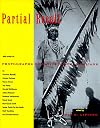
This book divides into two parts: the materials by Lippard (an introduction about the role of photography in the relationship between colonizers and the colonized, backed by an arresting, and sometimes troubling, collection of photos), and the twelve essays by Native authors, each about a individual photo.
Topically, the photos chosen by the essayists span family photos, photos of famous men (Ishi, Geronimo), photocollages by Native artists, photographs taken by white outsiders to Native show more society, or photographers like Frank Matsura, who are outsiders to both Native AND white society. Taken together, the essays explode the historical context set by Lippard in her introduction--far from the usual run of photographs of Native Americans, a la Curtis' "The Vanishing Race", these essays are narratives of resistance and self-determination. show less
Topically, the photos chosen by the essayists span family photos, photos of famous men (Ishi, Geronimo), photocollages by Native artists, photographs taken by white outsiders to Native show more society, or photographers like Frank Matsura, who are outsiders to both Native AND white society. Taken together, the essays explode the historical context set by Lippard in her introduction--far from the usual run of photographs of Native Americans, a la Curtis' "The Vanishing Race", these essays are narratives of resistance and self-determination. show less
Lists
You May Also Like


Associated Authors
Statistics
- Works
- 109
- Also by
- 16
- Members
- 2,387
- Popularity
- #10,753
- Rating
- 3.8
- Reviews
- 22
- ISBNs
- 98
- Languages
- 6
