
Caroline Preston
Author of The Scrapbook of Frankie Pratt: A Novel in Pictures
Works by Caroline Preston
Associated Works
Law in colonial Massachusetts, 1630-1800 : a conference held 6 and 7 November 1981 (1985) — Contributor — 14 copies
Tagged
Common Knowledge
- Gender
- female
- Occupations
- archivist
- Relationships
- Tilghman, Christopher (husband)
- Nationality
- USA
- Places of residence
- Charlottesville, Virginia, USA
- Associated Place (for map)
- Virginia, USA
Members
Reviews
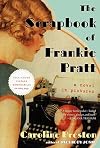
I never really understood the scrapbook craze of the early 2000s—you know, the factory-produced, mass-marketed “hobby” characterized by rubber stamps, paper stencils and tubes of glitter. My wife and I have been “scrapbooking” since we first started dating. If you go to our upstairs guest bedroom and pull down a large book with swollen pages, you'll find a pair of movie theater ticket stubs for Flashdance and a small bouquet of dried violets. It's the artifact from a particular show more night of young, heady romance.
That’s why I could never wrap my brain around the new era of scrapbooking. It’s a mystery why otherwise-perfectly-sane women would want to collect scraps of made-in-China crap and paste them in large albums, each of them looking nearly identical to the ones made by a thousand other scrapbookers with glitter-sparkles caught in their hair. These aren’t true scrapbooks, they’re merely excuses for (primarily) women to gather, gossip and glue.
(Lest you think I’m spouting male chauvinism and petty disdain for all things frilly, please bear in mind that this is coming from a man who went through a serious cross-stitching phase, circa 1987-1995, and who would still be needling long into the night if it weren’t for my failing eyesight and ever-dwindling hours for “hobbies.” So, yes, I’ve been a frequent Jo-Ann’s shopper.)
This modern pre-fab scrapbooking is nothing like the scrapbook of Jazz Age ingenue Frankie Pratt. In a self-same-titled novel by Caroline Preston, Frankie’s pages burst into life with postcards, sheet music, wine labels, playing cards, charm bracelets, gum wrappers, swatches of fabric, photographs and ads for freckle cream. The Scrapbook of Frankie Pratt is subtitled “A Novel in Pictures,” but it really should be called “A Novel of Ephemera.”
When we first meet her in 1920, the titular heroine is a spunky high school senior with worldly ambitions. The first page of her scrapbook is headed with the paper label “The Girl Who Wants to Write.” On the next page is a picture of her father’s old portable Corona typewriter (“Mice had chewed the case but it still works!”). And from there, we’re off on a whirlwind tour of Frankie’s life as a blossoming woman, all of it told completely through items in her scrapbook and the occasional typed comments.
Preston, whose previous novel was Gatsby's Girl, does a remarkable job breathing life into Frankie through the material objects she collects. We follow her as she heads off to Vassar, tries the bohemian life in Greenwich Village after graduation, finds work writing for True Story, travels to Paris aboard the S.S. Mauritania where she meets some Russian princes and a “spinster adventuress,” and eventually rents a room above the famed Shakespeare & Company bookstore run by Sylvia Beach. Along the way, she falls in love twice, has her heart broken an equal number of times, and comes to learn what true love really is by the last page of the book. It’s less Fitzgerald and more Faith Baldwin, but that shouldn’t stop anyone from falling deeply in love with this book.
Leafing through The Scrapbook of Frankie Pratt is like opening a 90-year-old time capsule from a cornerstone of Jazz Age culture. For example, Frankie types:
The most congenial spot for the unemployed is the Automat in Times Square. Search the want ads, read a novel, scribble on a story without any dirty looks from a waitress. Sit undisturbed from 8 until 6—like going to an office. All that’s required is spending a nickel every few hours on a bowl of oatmeal, an egg salad sandwich, a slice of pie (lemon meringue highly recommended), and yet another cup of coffee.
As we turn the pages of Frankie's scrapbook, the artifacts accumulate: The Charleston. Vogue patterns. Marcel-waved hair. Lillian Gish in Way Down East. A Radiola (“It runs on batteries & is totally portable. It only weighs 39 pounds.”). Cigarette holder (“to brandish like a rapier”). Josephine Baker at the Folies Bergere. Lucky Lindy in the sky.
Through this dizzying, dazzling array of bits and bobs of 1920s pop culture, Preston not only takes us on an authentic Time Machine odyssey, she so completely immerses us in one character’s life that in all honesty, I’d have to say Frankie Pratt was the most vivid and memorable of all the fictional population I encountered this year. Preston does this with a minimal amount of words and almost entirely through magazine ads, movie tickets and matchbooks.
And isn't this true of all of us? In the end, aren’t we merely the sum total of our possessions? We may not be able to judge a person by the color of their skin, but surely we can know them through the contents of their scrapbook. show less
That’s why I could never wrap my brain around the new era of scrapbooking. It’s a mystery why otherwise-perfectly-sane women would want to collect scraps of made-in-China crap and paste them in large albums, each of them looking nearly identical to the ones made by a thousand other scrapbookers with glitter-sparkles caught in their hair. These aren’t true scrapbooks, they’re merely excuses for (primarily) women to gather, gossip and glue.
(Lest you think I’m spouting male chauvinism and petty disdain for all things frilly, please bear in mind that this is coming from a man who went through a serious cross-stitching phase, circa 1987-1995, and who would still be needling long into the night if it weren’t for my failing eyesight and ever-dwindling hours for “hobbies.” So, yes, I’ve been a frequent Jo-Ann’s shopper.)
This modern pre-fab scrapbooking is nothing like the scrapbook of Jazz Age ingenue Frankie Pratt. In a self-same-titled novel by Caroline Preston, Frankie’s pages burst into life with postcards, sheet music, wine labels, playing cards, charm bracelets, gum wrappers, swatches of fabric, photographs and ads for freckle cream. The Scrapbook of Frankie Pratt is subtitled “A Novel in Pictures,” but it really should be called “A Novel of Ephemera.”
When we first meet her in 1920, the titular heroine is a spunky high school senior with worldly ambitions. The first page of her scrapbook is headed with the paper label “The Girl Who Wants to Write.” On the next page is a picture of her father’s old portable Corona typewriter (“Mice had chewed the case but it still works!”). And from there, we’re off on a whirlwind tour of Frankie’s life as a blossoming woman, all of it told completely through items in her scrapbook and the occasional typed comments.
Preston, whose previous novel was Gatsby's Girl, does a remarkable job breathing life into Frankie through the material objects she collects. We follow her as she heads off to Vassar, tries the bohemian life in Greenwich Village after graduation, finds work writing for True Story, travels to Paris aboard the S.S. Mauritania where she meets some Russian princes and a “spinster adventuress,” and eventually rents a room above the famed Shakespeare & Company bookstore run by Sylvia Beach. Along the way, she falls in love twice, has her heart broken an equal number of times, and comes to learn what true love really is by the last page of the book. It’s less Fitzgerald and more Faith Baldwin, but that shouldn’t stop anyone from falling deeply in love with this book.
Leafing through The Scrapbook of Frankie Pratt is like opening a 90-year-old time capsule from a cornerstone of Jazz Age culture. For example, Frankie types:
The most congenial spot for the unemployed is the Automat in Times Square. Search the want ads, read a novel, scribble on a story without any dirty looks from a waitress. Sit undisturbed from 8 until 6—like going to an office. All that’s required is spending a nickel every few hours on a bowl of oatmeal, an egg salad sandwich, a slice of pie (lemon meringue highly recommended), and yet another cup of coffee.
As we turn the pages of Frankie's scrapbook, the artifacts accumulate: The Charleston. Vogue patterns. Marcel-waved hair. Lillian Gish in Way Down East. A Radiola (“It runs on batteries & is totally portable. It only weighs 39 pounds.”). Cigarette holder (“to brandish like a rapier”). Josephine Baker at the Folies Bergere. Lucky Lindy in the sky.
Through this dizzying, dazzling array of bits and bobs of 1920s pop culture, Preston not only takes us on an authentic Time Machine odyssey, she so completely immerses us in one character’s life that in all honesty, I’d have to say Frankie Pratt was the most vivid and memorable of all the fictional population I encountered this year. Preston does this with a minimal amount of words and almost entirely through magazine ads, movie tickets and matchbooks.
And isn't this true of all of us? In the end, aren’t we merely the sum total of our possessions? We may not be able to judge a person by the color of their skin, but surely we can know them through the contents of their scrapbook. show less
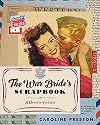
This is not your typical WWII historical fiction novel. It is nothing like The Book Thief, The Nightingale, Code Name Verity, Salt to the Sea, etc. It is the story of the American homefront, a story with many similar elements to stories that my grandmother tells my sister and I about what life was like in Philadelphia during the Second World War. And, if you have a chance to flip through the pages of The War Bride’s Scrapbook, it is, in fact, a scrapbook. It is not laid out like a show more traditional novel and is beautiful in it’s full-color ephemera splendor.
While I am a frequent reader of graphic novels, this is my first “scrapbook” book and it is a format I would be excited to read again. The storytelling is done primarily with letters between Lila and Perry as most of the scrapbook is dedicated to their time apart during the war. At first I was concerned that I would find the pacing choppy, but it is clear that either Caroline Preston is, herself, an avid scrapbooker, or, more likely, an expert storyteller who can work her craft in a very unique medium.
Given that it is Lila’s scrapbook, we, the readers, get ample insight not only into her head-space during the war, but also of society’s as a whole as she remarks on the activities of her friends and family. Perry is a character of contradictions, which adds to the point that he and Lila barely knew/know each other. There are moments of laughter, particularly when characters come together out of need, necessity or shear coincidence. And, my post 2017 understanding of women’s rights feminist self is very excited about the fact that Lila is her own person, her own character, and is not reliant on Perry for her happiness. show less
While I am a frequent reader of graphic novels, this is my first “scrapbook” book and it is a format I would be excited to read again. The storytelling is done primarily with letters between Lila and Perry as most of the scrapbook is dedicated to their time apart during the war. At first I was concerned that I would find the pacing choppy, but it is clear that either Caroline Preston is, herself, an avid scrapbooker, or, more likely, an expert storyteller who can work her craft in a very unique medium.
Given that it is Lila’s scrapbook, we, the readers, get ample insight not only into her head-space during the war, but also of society’s as a whole as she remarks on the activities of her friends and family. Perry is a character of contradictions, which adds to the point that he and Lila barely knew/know each other. There are moments of laughter, particularly when characters come together out of need, necessity or shear coincidence. And, my post 2017 understanding of women’s rights feminist self is very excited about the fact that Lila is her own person, her own character, and is not reliant on Perry for her happiness. show less
I loved this book! This is a picture book with the pictures being mementos from the 1920's with a story line that runs throughout the pictures. This is like picking up an old scrapbook of your grandmother's or your great-grandmother's and seeing all the really fun and interesting things she did when she was in her 20's. It was a clever idea to put together all these pictures in scrapbook form and then tell the story of Frankie - a Vassar graduate and "modern" woman - while we look at old ads show more about toothpaste and hair removal, old timetables and Parisian charm bracelets, excerpts from ex-pat mags in France, the schedule for a semester at Vassar (along with the report card!), antique valentines, music selections, a picture of an antique hot water heater (yes, I love that!) and so many more items I could re-read this and find more stuff.
Fun book to read! As for the story, the charm is in the pictures but you do tend to fall in love with Frankie and wish her well. At times I thought her attitude was maybe a touch TOO modern but I'm not sure about that. I'm not well-versed in 1920's American manners, other than what I glean from books.
This would be a good idea for a present for someone who likes looking at slices of American history and who also appreciates a cleverly done story. show less
Fun book to read! As for the story, the charm is in the pictures but you do tend to fall in love with Frankie and wish her well. At times I thought her attitude was maybe a touch TOO modern but I'm not sure about that. I'm not well-versed in 1920's American manners, other than what I glean from books.
This would be a good idea for a present for someone who likes looking at slices of American history and who also appreciates a cleverly done story. show less
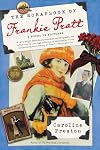
It seemed rather appropriate to start the twenty twenties with a book set in the nineteen twenties. Caroline Preston's visual delight of a novel, The Scrapbook of Frankie Pratt, follows one young woman from her genteely poor, rural life to college at Vassar, on to New York and Paris, and finally back to her hometown through this captivating decade.
Presented as a scrapbook, the story of Frankie's young adulthood is laid out in these full color pages. Her doctor father dies young, leaving her show more mother to try and support Frankie and her younger brothers herself. Frankie is quite smart and is admitted to Vassar college on scholarship but without the additionally needed money to go, she determines to stay home and get a job. Caring for a wealthy old woman, she meets and falls for the woman's nephew, who turns out to be married. With her mother's intervention in this highly inappropriate situation, the old woman gives Frankie the $500 needed to go to college, to learn to write, and to start her adult life. The collected ephemera scattered through the pages tell of college life, expectations for women, attitudes towards other religions and races, and so much more during the Roaring Twenties as Frankie grows up and begins to live her life as a writer and chronicler of her time. She is very much a modern girl.
Because it is a scrapbook, the story is mostly visual with text being sparse and simple. The reader's understanding of the characterization of Frankie, her beliefs and her intentions, come through her comments about other people with whom she crosses paths and the things she chooses to immortalize in her scrapbook. The story is probably more complete and detailed than an actual scrapbook would be, needing to keep a plot threading through all of the pieces, but even so, the story itself is a bit thin. The reader does get to see Frankie's brushes with famous people and places, her triumphs and her heartbreaks, decisions good and bad, and general life in an intriguing age. The ending is a bit abrupt although it definitely is the end of one chapter of Frankie's life so perhaps ideal as a place to finish a real scrapbook. Overall the idea is whimsical and the execution is well done. It's a cute if slightly insubstantial story. show less
Presented as a scrapbook, the story of Frankie's young adulthood is laid out in these full color pages. Her doctor father dies young, leaving her show more mother to try and support Frankie and her younger brothers herself. Frankie is quite smart and is admitted to Vassar college on scholarship but without the additionally needed money to go, she determines to stay home and get a job. Caring for a wealthy old woman, she meets and falls for the woman's nephew, who turns out to be married. With her mother's intervention in this highly inappropriate situation, the old woman gives Frankie the $500 needed to go to college, to learn to write, and to start her adult life. The collected ephemera scattered through the pages tell of college life, expectations for women, attitudes towards other religions and races, and so much more during the Roaring Twenties as Frankie grows up and begins to live her life as a writer and chronicler of her time. She is very much a modern girl.
Because it is a scrapbook, the story is mostly visual with text being sparse and simple. The reader's understanding of the characterization of Frankie, her beliefs and her intentions, come through her comments about other people with whom she crosses paths and the things she chooses to immortalize in her scrapbook. The story is probably more complete and detailed than an actual scrapbook would be, needing to keep a plot threading through all of the pieces, but even so, the story itself is a bit thin. The reader does get to see Frankie's brushes with famous people and places, her triumphs and her heartbreaks, decisions good and bad, and general life in an intriguing age. The ending is a bit abrupt although it definitely is the end of one chapter of Frankie's life so perhaps ideal as a place to finish a real scrapbook. Overall the idea is whimsical and the execution is well done. It's a cute if slightly insubstantial story. show less
Lists
Awards


You May Also Like


Associated Authors
Statistics
- Works
- 6
- Also by
- 1
- Members
- 870
- Popularity
- #29,418
- Rating
- 3.6
- Reviews
- 43
- ISBNs
- 26
- Languages
- 3