
Brian Clegg
Author of A Brief History of Infinity: The Quest to Think the Unthinkable
About the Author
Brian Clegg was always fascinated by Isaac Asimov's classic Foundation series of books, in which the future is predicted using sophisticated mathematical modeling of human psychology and behavior.
Image credit: Photo by the author
Series
Works by Brian Clegg
Light Years: An Exploration of Mankind's Enduring Fascination with Light (2001) 140 copies, 1 review
The Universe Inside You: The Extreme Science of the Human Body From Quantum Theory to the Mysteries of the Brain (2012) 101 copies, 2 reviews
Scientifica Historica: How the world's great science books chart the history of knowledge (2019) 97 copies, 1 review
Are Numbers Real?: The Uncanny Relationship of Mathematics and the Physical World (2016) 92 copies, 3 reviews
Dark Matter and Dark Energy: The Hidden 95% of the Universe (Hot Science) (2019) 80 copies, 1 review
The Quantum Age: How the Physics of the Very Small has Transformed Our Lives (2014) 65 copies, 1 review
Gravitational Waves: How Einstein’s spacetime ripples reveal the secrets of the universe (Hot Science) (2018) 50 copies, 1 review
Big Data: How the Information Revolution Is Transforming Our Lives (Hot Science) (2017) 44 copies, 1 review
Ten Billion Tomorrows: How Science Fiction Technology Became Reality and Shapes the Future (2015) 42 copies
Professor Maxwell's Duplicitous Demon: How James Clerk Maxwell unravelled the mysteries of electromagnetism and matter (2019) 41 copies
The Man Who Stopped Time: Eadweard Muybridge, Pioneer Photographer, Father of the Motion Picture, Murderer (2007) 35 copies, 1 review
The Graphene Revolution: The Weird Science of the Ultra-thin (Hot Science) (2018) 35 copies, 2 reviews
Quantum Computing: The Transformative Technology of the Qubit Revolution (2021) 30 copies, 2 reviews
Final Frontier: The Pioneering Science and Technology of Exploring the Universe (2014) 29 copies, 1 review
The Quantum Physics Bible: The Definitive Guide to 200 Years of Subatomic Science (Subject Bible) (2017) 22 copies
Extra Sensory: The Science and Pseudoscience of Telepathy and Other Powers of the Mind (2013) 22 copies
Everyday Chaos: The Mathematics of Unpredictability, from the Weather to the Stock Market (2020) 20 copies, 1 review
The Global Warming Survival Kit: The Must-have Guide to Overcoming Extreme Weather, Power Cuts, Food Shortages and Other Climate Change Disasters (2007) 18 copies
Imagination Engineering: How to Generate and Implement Great Ideas (Future Skills Series) (1996) 15 copies
Know It All Energy: The 50 Most Elemental Concepts in Energy, Each Explained in Under a Minute (2017) 10 copies
Studying Using the Web: The Student's Guide to Using the Ultimate Information Resource (Routledge Study Guides) (2006) 9 copies
30-Second Newton: The 50 Crucial Concepts, Roles and Performers, Each Explained in Half a Minute (2016) 7 copies
30-Second Energy: The 50 most fundamental concepts in energy, each explained in half a minute (2018) 5 copies
Just in Time: Motivation 2 copies
Tagged
Common Knowledge
- Canonical name
- Clegg, Brian
- Legal name
- Clegg, Brian
- Birthdate
- 1955
- Gender
- male
- Education
- University of Cambridge (MA)
Lancaster University (MA|Operational Research) - Occupations
- non-fiction writer
consultant
science writer - Organizations
- British Airways
- Awards and honors
- Royal Society of Arts (Fellow)
IVCA Clarion Award (2009) - Agent
- Cox, Peter
- Nationality
- UK
- Birthplace
- Rochdale, Lancashire, England, UK
- Places of residence
- Wiltshire, England, UK
- Associated Place (for map)
- England, UK
Members
Reviews
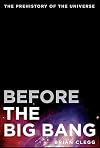
I've long thought that the cosmologists and astrophysicists were "the smartest guys in the room". I'm no longer so sure. After reading Clegg's book with it's mind-numbing number of different concepts of the universe and its formation, I'm coming around to the view put forward by Roger Penrose that a lot of this is just fantasy. And, even the big bang (in Clegg's words)..."it must be stressed that it is a best guess, not a proven fact". ....And it relies on the basic assumption, which if not show more true, would disrupt present-day theories....... that the basic constants of the universe (the speed of light and the strength of gravity, for example) do not vary in different parts of the universe, nor have they varied through time.
I appreciate his comment that Astronomers really haven’t caught up with the rest of the scientific world in using these [light years] measures (to make matters worse, they also use the “astronomical unit” or AU which at around 150 million kilometres is an approximation of the distance from the Earth to the Sun), neither of which meets international standards. They tend to use parsecs among astronomers and light-years for communication to the public, but arguably should get their act together!
I was intrigued by his comment that: We tend to assume that the universe is spherical. This goes back to the sort of reasoning Roger Bacon....However, if we assume the universe is a dodecahedron (a twelve-sided solid where each side is a pentagon) then an image coming out one side and back in another would be rotated through thirty-six degrees, reflecting the difference in orientation of the two sides.....Roukema found that if you cut rings out of the WMAP picture of the early universe and rotated them through thirty-six degrees, then it was possible to match up these rings with equivalent unrotated rings in the “opposite” side of the universe". But this seemed to be the end of the discussion about Roukema and I'm left wondering has anyone taken this observation further. It seems pretty significant to meClegg runs through a whole series of individuals and their contributions to the ever evolving story of the origins and properties of our universe. (It's almost like he is reproducing his filing cards on the mini biographies of his cast of characters). However, I did find this interesting. What I do find incredible is that the theories seem to get wilder and wilder and there seems to be no way of disproving them. So one outlandish theory is added to another. So for example with string theory and M theory, Clegg says:
"The problem with string theory and M theory for some is that it doesn't provide a clear identifiable solution, that what is observed in our universe is just one of an uncountable number of solutions the theory throws up. String theory gives no reason to choose that particular solution.......Where quantum electrodynamics makes startlingly accurate predictions, but has trouble with infinities, string theory is fine with infinities but makes no new predictions. Because of this, it is arguably useless as a scientific theory.
Lee Smolin suggested that after all this work, the theory makes no new predictions that are testable by current-or even currently conceivable- experiments......Superstring theory assumes that six of the ten dimensions are wrapped up small but as Feynman said, there's no reason whatsoever in superstring theory that it isn't eight of the ten dimensions that get wrapped up and that the result is only two dimensions, which would be completely in disagreement with experience. So the fact that it might disagree with experience is very tenuous, it doesn't...produce anything; it has to be excused most of the time. It doesn't look right".
I've been reading in many different places that its the background microwave radiation that "proves" the big bang, But Clegg says: The existence of cosmic microwave background radiation was useful supporting evidence for the Big Bang theory, but it is highly indirect evidence that could have many other reasons for existing and would later be used to support several opposing theories. There is no way that it can be regarded as absolute proof.
In principle, there should have been equal amounts of matter and anti-matter, which then should eventually have wiped each other out, leaving a universe full of energy alone.....This theory, devised by Andrei Sakharov, the Russian physicist suggests that as little as one particle in a billion survived the vast matter/ anti-matter wipe out. But that was enough......Although the Big Bang is the best accepted theory, it certainly isn’t the only one, and a number of scientists regularly pick holes in the evidence supporting it.....And, if it hadn’t been for the addition of the idea of inflation, the whole concept wouldn’t work, and the trouble with inflation is that although it’s something that would make what’s observable possible, no one can come up with a decent explanation as to why it should have happened"....."Most cosmologists speak as if these problems have been solved, but the solutions are really huge fudge factors, reminiscent of the introduction of the “luminiferous ether” centuries before". [so I find all of this a bit concerning.....they can't all be right].
And on dark energy and dark matter:......."Let’s be absolutely clear here. Dark matter and dark energy are accepted parts of the current most widely accepted model of the universe, but as was the ether before them, they are unlikely constructs, added to make an inexplicable behaviour fit the natural world....There is certainly already a range of theories that render them unnecessary" show less
I appreciate his comment that Astronomers really haven’t caught up with the rest of the scientific world in using these [light years] measures (to make matters worse, they also use the “astronomical unit” or AU which at around 150 million kilometres is an approximation of the distance from the Earth to the Sun), neither of which meets international standards. They tend to use parsecs among astronomers and light-years for communication to the public, but arguably should get their act together!
I was intrigued by his comment that: We tend to assume that the universe is spherical. This goes back to the sort of reasoning Roger Bacon....However, if we assume the universe is a dodecahedron (a twelve-sided solid where each side is a pentagon) then an image coming out one side and back in another would be rotated through thirty-six degrees, reflecting the difference in orientation of the two sides.....Roukema found that if you cut rings out of the WMAP picture of the early universe and rotated them through thirty-six degrees, then it was possible to match up these rings with equivalent unrotated rings in the “opposite” side of the universe". But this seemed to be the end of the discussion about Roukema and I'm left wondering has anyone taken this observation further. It seems pretty significant to meClegg runs through a whole series of individuals and their contributions to the ever evolving story of the origins and properties of our universe. (It's almost like he is reproducing his filing cards on the mini biographies of his cast of characters). However, I did find this interesting. What I do find incredible is that the theories seem to get wilder and wilder and there seems to be no way of disproving them. So one outlandish theory is added to another. So for example with string theory and M theory, Clegg says:
"The problem with string theory and M theory for some is that it doesn't provide a clear identifiable solution, that what is observed in our universe is just one of an uncountable number of solutions the theory throws up. String theory gives no reason to choose that particular solution.......Where quantum electrodynamics makes startlingly accurate predictions, but has trouble with infinities, string theory is fine with infinities but makes no new predictions. Because of this, it is arguably useless as a scientific theory.
Lee Smolin suggested that after all this work, the theory makes no new predictions that are testable by current-or even currently conceivable- experiments......Superstring theory assumes that six of the ten dimensions are wrapped up small but as Feynman said, there's no reason whatsoever in superstring theory that it isn't eight of the ten dimensions that get wrapped up and that the result is only two dimensions, which would be completely in disagreement with experience. So the fact that it might disagree with experience is very tenuous, it doesn't...produce anything; it has to be excused most of the time. It doesn't look right".
I've been reading in many different places that its the background microwave radiation that "proves" the big bang, But Clegg says: The existence of cosmic microwave background radiation was useful supporting evidence for the Big Bang theory, but it is highly indirect evidence that could have many other reasons for existing and would later be used to support several opposing theories. There is no way that it can be regarded as absolute proof.
In principle, there should have been equal amounts of matter and anti-matter, which then should eventually have wiped each other out, leaving a universe full of energy alone.....This theory, devised by Andrei Sakharov, the Russian physicist suggests that as little as one particle in a billion survived the vast matter/ anti-matter wipe out. But that was enough......Although the Big Bang is the best accepted theory, it certainly isn’t the only one, and a number of scientists regularly pick holes in the evidence supporting it.....And, if it hadn’t been for the addition of the idea of inflation, the whole concept wouldn’t work, and the trouble with inflation is that although it’s something that would make what’s observable possible, no one can come up with a decent explanation as to why it should have happened"....."Most cosmologists speak as if these problems have been solved, but the solutions are really huge fudge factors, reminiscent of the introduction of the “luminiferous ether” centuries before". [so I find all of this a bit concerning.....they can't all be right].
And on dark energy and dark matter:......."Let’s be absolutely clear here. Dark matter and dark energy are accepted parts of the current most widely accepted model of the universe, but as was the ether before them, they are unlikely constructs, added to make an inexplicable behaviour fit the natural world....There is certainly already a range of theories that render them unnecessary" show less

Fantastic and absolutely essential for the understanding of pros and cons of the ‘Green Movement’ and its opponents as well as all fears associated with ecology and environment protection. It takes a balanced view on both camps and demonstrates on vivid and particular examples where there is sense and where there is fanaticism or ruse. What is more important it shows how fixation on some well publicized aspects of environmental threats shifts us in tunnel vision mode thus making us show more irrational. It somewhat irreverently approaches such icons of green immaculacy as Carbon footprints, Priuses, biofuel, Fairtrade, organic products, alternative energy sources etc. inviting us to take a closer look at the arguments of their proponents and critics. It is a vastly revealing and rewarding read that without negating all those healthy kernels which are there in the above mentioned examples still helps us see cases when righteousness and/or trickery are used by both sides to take advantage of the gullible and impulsive audience that is us. Should be read in schools and universities as an example of clear and logical thinking, which takes into equation all considerations. show less
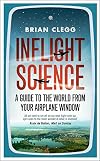
Breezy and light, this book takes readers from the departure gate to touching down in an airplane, examining the science that abounds aloft. Everything from angular momentum to x-rays is covered, in short, easy to read sections. None of the science is particularly in-depth or technical, a disappointment for some readers. But what the book lacks in depth, it makes up for in breadth. Clegg's clear style, with an occasional dash of British wit, makes for a very pleasant, if light, read.
For me show more the best science writing tells a story, perhaps examining the history of a topic, or revealing the minds and personalities that make science and technology happen. This books misses that high mark, found in such top-notch works as Rebecca Skloot's "Immortal Life of Henrietta Lacks." This book is more a collections of facts united by their relationship to flight. Clegg jumps around from topic to topic, from crop circles and meandering rivers, to cirrus clouds and the physics of lightning. Loosely stitched together, these snippets of science never quite gel into a thoughtful examination of the subject.
But in the end, if you are looking for a few cogent facts about flight, perhaps enough to get a conversation going with the attractive man or woman in the aisle seat next to you on a plane, this is the book for you. Look for depth elsewhere, but for a good quick read about flight, start here. show less
For me show more the best science writing tells a story, perhaps examining the history of a topic, or revealing the minds and personalities that make science and technology happen. This books misses that high mark, found in such top-notch works as Rebecca Skloot's "Immortal Life of Henrietta Lacks." This book is more a collections of facts united by their relationship to flight. Clegg jumps around from topic to topic, from crop circles and meandering rivers, to cirrus clouds and the physics of lightning. Loosely stitched together, these snippets of science never quite gel into a thoughtful examination of the subject.
But in the end, if you are looking for a few cogent facts about flight, perhaps enough to get a conversation going with the attractive man or woman in the aisle seat next to you on a plane, this is the book for you. Look for depth elsewhere, but for a good quick read about flight, start here. show less
 This review was written for LibraryThing Early Reviewers.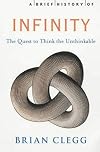
Not an easy book to review. Clegg ranges over so many historical developments as he explains how concepts of infinity were developed and as techniques emerged to deal with the innately large and the infinitely small. One of the things that I found most fascinating was his short biographies of some of the characters along the way. Cantor, for instance, being opposed and persecuted by his former mentor, Kronecker, and, eventually, Cantor suffering from mental breakdowns. Were they directly show more caused by Kronecker? Maybe. And his equally delightful pen-picture of Kurt Godel...the party boy...who later turned into a very strange old man suffering from paranoia. And, of course, Galileo...suffering at the hands of the "defenders of the faith". Faith has a lot to answer for! And having faith never seems to have turned out correct when it didn't support objective facts.
I've been struggling with writing reviews of several books recently and this is one of them. There is a heck of a lot of solid information there and Clegg ranges over so many subjects from Indian concepts of zero divided by zero, to Newton and Leibnitz's competition over the invention of calculus; Cantor's techniques for dealing with multiple infinities; Bertrand Russell and set theory (and Venn diagrams .....did Euler actually invent them?). Yes, there is certainly a lot to digest there though Clegg writes well and the historical material is quite fascinating. But if you want to get a better grasp on the nature of infinity I'd recommend "Beyond Infinity" by Eugenia Cheng. She goes into a lot more detail about how one might go about filling "Hilbert's Hotel".....with infinite rooms when every room is full and a coach load with infinite guests arrives. I enjoyed Clegg's book but don't pretend to understand all the concepts. I give it 4 stars. show less
I've been struggling with writing reviews of several books recently and this is one of them. There is a heck of a lot of solid information there and Clegg ranges over so many subjects from Indian concepts of zero divided by zero, to Newton and Leibnitz's competition over the invention of calculus; Cantor's techniques for dealing with multiple infinities; Bertrand Russell and set theory (and Venn diagrams .....did Euler actually invent them?). Yes, there is certainly a lot to digest there though Clegg writes well and the historical material is quite fascinating. But if you want to get a better grasp on the nature of infinity I'd recommend "Beyond Infinity" by Eugenia Cheng. She goes into a lot more detail about how one might go about filling "Hilbert's Hotel".....with infinite rooms when every room is full and a coach load with infinite guests arrives. I enjoyed Clegg's book but don't pretend to understand all the concepts. I give it 4 stars. show less
Lists
Awards


You May Also Like


Associated Authors
Statistics
- Works
- 107
- Members
- 3,551
- Popularity
- #7,145
- Rating
- 3.5
- Reviews
- 88
- ISBNs
- 328
- Languages
- 14
- Favorited
- 3

