

Louise Cooper (1952–2009)
Author of The Initiate
About the Author
Louise Cooper was a British fantasy writer who lived in Cornwall with her husband, Cas Sandall. She was born on May 29, 1952 and became a prolific writer of fantasy, renowned for her bestselling Time Master trilogy. She published more than 80 fantasy and supernatural novels, both for adults and show more children. She died in 2009. (Bowker Author Biography) show less
Series
Works by Louise Cooper
Causing His Name to Live: Studies in Egyptian Epigraphy and History in Memory of William J. Murnane (2009) — Editor — 4 copies
Infanta II 1 copy
Sea Horses The Talisman 1 copy
Olha Como Correm 1 copy
Atchim... Pum! 1 copy
The Glass Slip-up 1 copy
Criaturas do Natal 1 copy
Services Rendered 1 copy
Tira o Rabo do Meu Cadeirão 1 copy
O Papá Foi à Caça 1 copy
Se Fores ao Bosque 1 copy
Infanta I 1 copy
Atirei o Osso ao Cão 1 copy
Associated Works
Tagged
Common Knowledge
- Legal name
- Cooper, Louise
- Birthdate
- 1952-05-29
- Date of death
- 2009-10-21
- Gender
- female
- Occupations
- secretary
paperback blurb writer
copy editor - Organizations
- Falmouth Shout
- Awards and honors
- Trolls et Legendes Literature Award (2009)
- Agent
- Wade & Doherty Literary
- Relationships
- Sandall, Cas (husband)
- Cause of death
- aneurysm
- Nationality
- UK
- Birthplace
- Barnet, Hertfordshire, England, UK
- Places of residence
- Hertfordshire, England, UK (birthplace)
Cornwall, England, UK
London, Middlesex, England, UK
Worcestershire, England, UK - Place of death
- Cornwall, England, UK
- Map Location
- England, UK
Members
Reviews

Varka did not know what the women had seen in the temple below the ground, but he knew that they had not seen him in his clumsy disguise. He had been something other than human, something possessed, something all-powerful. Now he stood in the small clearing, and he raised his stolen sword in salute to the howling wind. The wind laughed anew, long and loud, and parted the tops of the great trees so the bland face of the moon shone down and turned the dull sword into a streak of silver show more fire.
When Varka is unjustly convicted of murdering the woman he loves, he is sentenced to be sacrificed to Darxes the Lord of the Underworld. But Darxes takes pity on him and sends him on a quest to find Limbo and return Aloethe to the land of the living, giving him the Book of Paradox to guide him on his journey.
The book is divided into 22 chapters, each named for one of the cards of the Major Arcana, beginning with the Magician (Reversed) and ending with the Fool. Each chapter begins with a description of the card's symbolism of the Tarot card, and if the card is reversed it explains how that changes its symbolism, so the reader has a general idea of how Varka's quest is going to go and who he will meet along the way. This is an unusual way of telling a story, and quite different from the way Tarot cards are used to tell stories in "The Castle of Crossed Desires" by Italo Calvino. Varka meets with paradoxes throughout his journey and the story ends with the biggest (and most intriguing) paradox of all.
This is the most interesting fantasy book I have read in a long time. show less
When Varka is unjustly convicted of murdering the woman he loves, he is sentenced to be sacrificed to Darxes the Lord of the Underworld. But Darxes takes pity on him and sends him on a quest to find Limbo and return Aloethe to the land of the living, giving him the Book of Paradox to guide him on his journey.
The book is divided into 22 chapters, each named for one of the cards of the Major Arcana, beginning with the Magician (Reversed) and ending with the Fool. Each chapter begins with a description of the card's symbolism of the Tarot card, and if the card is reversed it explains how that changes its symbolism, so the reader has a general idea of how Varka's quest is going to go and who he will meet along the way. This is an unusual way of telling a story, and quite different from the way Tarot cards are used to tell stories in "The Castle of Crossed Desires" by Italo Calvino. Varka meets with paradoxes throughout his journey and the story ends with the biggest (and most intriguing) paradox of all.
This is the most interesting fantasy book I have read in a long time. show less
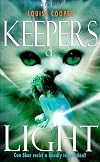
This final volume in the Daughter of Storms trilogy differs from the other two in that the action is not triggered off by Shar's enemies, as they are now all dead or, in the case of the Sixth Plane, forced to retreat back to their place of origin. Instead, Shar becomes embroiled in a project at the wizards' castle to revive a disused method of instant travel involving a patch of grass outside the castle gate - the Maze - by means of an amulet.
As a junior initiate, Shar isn't officially show more involved but her sense of entitlement means that she soon starts secretly trying to master it herself, by getting the minor elementals she can control to "borrow" the amulet each night. Her powers mean that her experiments are far more successful than the official experiments, and she is able to teleport to distant places, but she soon realises that the amulet doesn't just take her through space, but also time. She then starts to try and control the times and places she can go back to, with the aim of killing her uncle before he can murder her parents. Unfortunately, this has repercussions with time being messed up and phantoms of the past being brought into the present, and ultimately her meddling might wreck all time and space.
As usual, Shar never thinks of others, not even her friends, but her self absorption and arrogance tip over into megalomania in this volume. When her experiment to travel without the amulet's aid fails, her reaction is telling: "It wasn't fair. She was a Daughter of Storms, she was a Dark Caller, she was special. The Maze should have worked for her, and the fact that it had not felt like a personal insult." She is an overgrown toddler - a spoilt brat as the musician Reyni called her in volume 2 - and it is baffling why her friends put up with her and like her. In this volume, she became so completely without redeeming features that, for me, she switched to being the villain that other people were trying to stop, and I was amazed by the ending when she is let off lightly and the High Initiate says she might in future be the best High Initiate ever . In my opinion, she didn't learn anything from her salutary lesson at the end, as she didn't show remorse for the destruction she was inflicting on everyone else; only when she herself was affected did she suddenly become sorry. So for that reason, I have to rate this at 1-star as I found her character so unlikeable. show less
As a junior initiate, Shar isn't officially show more involved but her sense of entitlement means that she soon starts secretly trying to master it herself, by getting the minor elementals she can control to "borrow" the amulet each night. Her powers mean that her experiments are far more successful than the official experiments, and she is able to teleport to distant places, but she soon realises that the amulet doesn't just take her through space, but also time. She then starts to try and control the times and places she can go back to, with the aim of killing her uncle before he can murder her parents. Unfortunately, this has repercussions with time being messed up and phantoms of the past being brought into the present, and ultimately her meddling might wreck all time and space.
As usual, Shar never thinks of others, not even her friends, but her self absorption and arrogance tip over into megalomania in this volume. When her experiment to travel without the amulet's aid fails, her reaction is telling: "It wasn't fair. She was a Daughter of Storms, she was a Dark Caller, she was special. The Maze should have worked for her, and the fact that it had not felt like a personal insult." She is an overgrown toddler - a spoilt brat as the musician Reyni called her in volume 2 - and it is baffling why her friends put up with her and like her. In this volume, she became so completely without redeeming features that, for me, she switched to being the villain that other people were trying to stop, and I was amazed by the ending
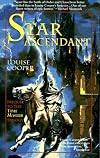
This, along with Moonset and Eclipse, form Cooper's 'Star Shadow' trilogy, a prequel to her 'Time Master' trilogy, which is one of my old favorites...
Heavily influenced by Michael Moorcock (in my opinion.. but as a matter of fact, Moorcock had this to say: "Never has the battle of Order and Chaos been better recorded than in Louise Cooper's fantasies ... One of our finest writers of epic fantasy"), these stories chronicle the conflict between the powers of Order and Chaos, and the human show more pawns caught on either side...
I still think the Time Master trilogy is the best, but these were quite enjoyable. These three cover the decline and fall of Chaos on earth, due to disorganized and megalomaniac human leaders and the disinterested non-interference of their gods, the Chaos lords. The cruelty and insanity of the leaders of Chaos spawns a pro-Order peasant rebellion, but the individuals caught on both sides are neither wholly good nor evil, though each tends to be convinced that those on the other side are evil's purest essence...
Lots of complicated relationships and shifting allegiances... Cooper tries to show us multiple facets of each point of view, but I still suspect that her personal sympathies lie with Chaos! show less
Heavily influenced by Michael Moorcock (in my opinion.. but as a matter of fact, Moorcock had this to say: "Never has the battle of Order and Chaos been better recorded than in Louise Cooper's fantasies ... One of our finest writers of epic fantasy"), these stories chronicle the conflict between the powers of Order and Chaos, and the human show more pawns caught on either side...
I still think the Time Master trilogy is the best, but these were quite enjoyable. These three cover the decline and fall of Chaos on earth, due to disorganized and megalomaniac human leaders and the disinterested non-interference of their gods, the Chaos lords. The cruelty and insanity of the leaders of Chaos spawns a pro-Order peasant rebellion, but the individuals caught on both sides are neither wholly good nor evil, though each tends to be convinced that those on the other side are evil's purest essence...
Lots of complicated relationships and shifting allegiances... Cooper tries to show us multiple facets of each point of view, but I still suspect that her personal sympathies lie with Chaos! show less

This is my second time reading Rip Tide. I first read it when it came out, a little over ten years ago, and to be honest I couldn't remember anything about it except that it took place in a fishing community, and that the Doctor took an awfully long time to get involved. Those things are both true, and in some ways, they're the strengths of the novella. Cooper brings Cornwall to life in a way that, to someone like me who has never been there, feels absolutely realistic and a little bit show more separate from the rest of the world. I think most small villages or towns have a little bit of that feeling, and if they have their own miniature economy, that sense is only heightened. Cooper has clearly spent a lot of time in this type of environment, and there's a certain enjoyment in just wandering around that prose-world, taking in all the scenery she has created. It's almost a shame that the Doctor shows up, although once he does, you almost can't get enough of him. Rip Tide was written during the period when the eighth Doctor was almost completely defined by his depiction in prose, and I think Cooper does a good of ferreting out some unique characteristics for him without turning him into a caricature, or even another, better-known Doctor with a different face. It's tempting to just follow the eighth Doctor and his lust for life around, enjoying the seaside holiday and his quiet insertion into the community. The actual mystery of the novel is so perfunctory it's almost a shame it has to take place. I'd rather stroll around Cooper's world some more, wandering the beach with a pink plastic net, watching the tide come in. show less
Lists
Awards


You May Also Like


Associated Authors
Statistics
- Works
- 101
- Also by
- 8
- Members
- 6,113
- Popularity
- #4,028
- Rating
- 3.6
- Reviews
- 73
- ISBNs
- 254
- Languages
- 8
- Favorited
- 12
