
Rod Dreher
Author of The Benedict Option: A Strategy for Christians in a Post-Christian Nation
About the Author
Rod Dreher is an American writer and editor. He attended Louisiana State University. He has worked for the New York Post, National Review, The Dallas Morning News, and other publications. Currently he is a senior editor for The American Conservative, focusing on social and cultural conservatism and show more religion. He is the author of Crunchy Cons, The Little Way of Ruthie Leming, How Dante Can Save Your Life, and The Benedict Option. (Bowker Author Biography) show less
Image credit: 9th of March, 2018, Danube Institute Budapest, Central Europe. By Elekes Andor - Own work, CC BY-SA 4.0, https://commons.wikimedia.org/w/index.php?curid=67285388
Works by Rod Dreher
The Benedict Option: A Strategy for Christians in a Post-Christian Nation (2017) 1,181 copies, 14 reviews
Crunchy Cons: How Birkenstocked Burkeans, Gun-loving Organic Gardeners, Evangelical Free-range Farmers, Hip Homeschooling Mamas, Right-wing Nature Lovers, and Their Diverse Tribe… (2006) 326 copies, 8 reviews
The Little Way of Ruthie Leming: A Southern Girl, a Small Town, and the Secret of a Good Life (2013) 253 copies, 11 reviews
Associated Works
Tagged
Common Knowledge
- Other names
- Dreher, Ray Oliver "Rod"
- Birthdate
- 1967-02-14
- Gender
- male
- Education
- Louisiana State University (BA|Journalism)
- Occupations
- writer
editor - Organizations
- National Review
American Conservative
Dallas Morning News - Nationality
- USA
- Birthplace
- Baton Rouge, Louisiana, USA
- Places of residence
- Dallas, Texas, USA
Baton Rouge, Louisiana, USA
St. Francisville, Louisiana, USA - Associated Place (for map)
- Louisiana, USA
Members
Discussions
An Important Essay by Rod Dreher in Pro and Con (May 12)
Reaching across the divide -- who do you respect? in Pro and Con (January 2014)
Reviews
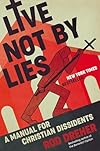
Summary: Drawing on interviews with Christians in the former Soviet Union and Czechoslovakia, Dreher warns of a rise of a similar, though “soft” totalitarianism in the U.S., and outlines what Christians must do to live in the truth.
In The Benedict Option (review), Rod Dreher outlines how he believes Christians, having lost the culture war, must live. Live Not By Lies offers an even grimmer future, the rise of a “soft” progressive totalitarianism functioning by rhetorical and social show more control, utilizing the capacities already in existence for digital surveillance.
He draws on interactions with survivors of Communism in the Czech Republic and the former Soviet Union. His title comes from a statement by Aleksandr Solzhenitsyn, in what would be his final message to the Soviet Union. Dreher writes:
What did it mean to live by lies? It meant, Solzhenitsyn writes, accepting without protest all the falsehoods and propaganda that the state compelled its citizens to affirm–or at least not to oppose–to get along peaceably under totalitarianism. Everybody says that they have no choice but to conform, says Solzhenitsyn, and to accept powerlessness. But that is the lie that gives all other lies their malign force. The ordinary man may not be able to overturn the kingdom of lies, but he can at least say that he is not going to be its loyal subject.
Dreher and his eastern bloc interlocutors recognize the same troubling trends around the suppression of truth, the attractions of progressiveness to the discontented, the loss of faith in institutions, and a combination of destructiveness and transgressiveness. He points to the safety and cancel cultures of universities that foreclose open discussion of ideas.
The second part of his work addresses how Christians ought prepare for the rise of progressive totalitarianism. He argues for the importance of cultural memory, particularly the memory of totalitarian regimes. He believes that the family and networks of small groups are critical to resistance. He believes that the church is the critical bedrock of resistance, although it is also important to stand in solidarity with others who resist. It was heartening to not see him reprise the strategic withdrawal into monastic-type communities of The Benedict Option but rather listen and draw upon the testimony of those who resisted in the urban centers of Czechoslovakia and the former Soviet Union
Perhaps his greatest challenge to Christians is to accept the possibility of suffering as testimony to the truth–not sought, but not avoided. Talking with those who suffered, he stresses both the challenge to suffer without bitterness, and the gift of suffering.
I think the two most important lessons of this book are that “it can happen here” and that Christians are woefully unprepared as yet. What troubled me in reading this was that Dreher’s apprehension of threats from the far left seems to have blinded him to threats from the far right. In warning exclusively of a progressive, Communist leaning totalitarianism, I found him more or less silent about the danger of a fascist totalitarianism. In the “survival of the extremes” character of our parties, it seems increasingly that they are moving toward one of these two polarities. The culture war no longer is Christians versus the secular culture but rather these two polarities against each other, each using parts of the Christian community to gain political leverage.
Where Dreher gets it right is that both of these extremes are built on the lie of ultimate allegiance that no Christian can accept, with a whole host of other lies paving the way to believing this big lie. I believe he is right in recognizing how we may be seduced by lies from one extreme or the other. What I wish he had addressed is how we might be people who turn neither to the Left nor the Right but who are shaped by the narrative of the Gospel of the Kingdom. But in a culture where lying is endemic, the call to not capitulate to the lies and the community that sustains a people of truth is no insignificant thing. A Czech emigre friend told the author that writing this book was a waste of time because, “People will have to live through it first to understand….Any time I try to explain current events and their meaning to my friends or acquaintances, I am met with blank stares or downright nonsense.” I hope he is wrong.
________________________________
Disclosure of Material Connection: I received a complimentary review copy of this book from the publisher via Edelweiss. The opinions I have expressed are my own. show less
In The Benedict Option (review), Rod Dreher outlines how he believes Christians, having lost the culture war, must live. Live Not By Lies offers an even grimmer future, the rise of a “soft” progressive totalitarianism functioning by rhetorical and social show more control, utilizing the capacities already in existence for digital surveillance.
He draws on interactions with survivors of Communism in the Czech Republic and the former Soviet Union. His title comes from a statement by Aleksandr Solzhenitsyn, in what would be his final message to the Soviet Union. Dreher writes:
What did it mean to live by lies? It meant, Solzhenitsyn writes, accepting without protest all the falsehoods and propaganda that the state compelled its citizens to affirm–or at least not to oppose–to get along peaceably under totalitarianism. Everybody says that they have no choice but to conform, says Solzhenitsyn, and to accept powerlessness. But that is the lie that gives all other lies their malign force. The ordinary man may not be able to overturn the kingdom of lies, but he can at least say that he is not going to be its loyal subject.
Dreher and his eastern bloc interlocutors recognize the same troubling trends around the suppression of truth, the attractions of progressiveness to the discontented, the loss of faith in institutions, and a combination of destructiveness and transgressiveness. He points to the safety and cancel cultures of universities that foreclose open discussion of ideas.
The second part of his work addresses how Christians ought prepare for the rise of progressive totalitarianism. He argues for the importance of cultural memory, particularly the memory of totalitarian regimes. He believes that the family and networks of small groups are critical to resistance. He believes that the church is the critical bedrock of resistance, although it is also important to stand in solidarity with others who resist. It was heartening to not see him reprise the strategic withdrawal into monastic-type communities of The Benedict Option but rather listen and draw upon the testimony of those who resisted in the urban centers of Czechoslovakia and the former Soviet Union
Perhaps his greatest challenge to Christians is to accept the possibility of suffering as testimony to the truth–not sought, but not avoided. Talking with those who suffered, he stresses both the challenge to suffer without bitterness, and the gift of suffering.
I think the two most important lessons of this book are that “it can happen here” and that Christians are woefully unprepared as yet. What troubled me in reading this was that Dreher’s apprehension of threats from the far left seems to have blinded him to threats from the far right. In warning exclusively of a progressive, Communist leaning totalitarianism, I found him more or less silent about the danger of a fascist totalitarianism. In the “survival of the extremes” character of our parties, it seems increasingly that they are moving toward one of these two polarities. The culture war no longer is Christians versus the secular culture but rather these two polarities against each other, each using parts of the Christian community to gain political leverage.
Where Dreher gets it right is that both of these extremes are built on the lie of ultimate allegiance that no Christian can accept, with a whole host of other lies paving the way to believing this big lie. I believe he is right in recognizing how we may be seduced by lies from one extreme or the other. What I wish he had addressed is how we might be people who turn neither to the Left nor the Right but who are shaped by the narrative of the Gospel of the Kingdom. But in a culture where lying is endemic, the call to not capitulate to the lies and the community that sustains a people of truth is no insignificant thing. A Czech emigre friend told the author that writing this book was a waste of time because, “People will have to live through it first to understand….Any time I try to explain current events and their meaning to my friends or acquaintances, I am met with blank stares or downright nonsense.” I hope he is wrong.
________________________________
Disclosure of Material Connection: I received a complimentary review copy of this book from the publisher via Edelweiss. The opinions I have expressed are my own. show less

A call, rooted in the final line of Alasdair MacIntyre's After Virtue looking for a new, and doubtless different St. Benedict, for Christians to...
...strategically create robust community to sustain their faith and hand it on to their children?
...lick their wounds from the culture war, strategically retreat while advocating for religious liberty, until a better day comes?
...save "Western civilization," or the particularly triumphalist view of Western civilization fostered among the Western show more European and American elites until recent days?
...some mishmash of the above?
In the work Dreher organizes his thoughts to some degree and makes his case for why at this particular point in time Christians need to look to themselves and their household so as to carry on not just the pretense of the faith but also its substance. He discusses how he has come to view the situation, gives a historical overview suggesting how we have reached this point over the past 800 years, introduces Benedict and his Rule, talks about the current monastery in Nursia and what it represents, and then goes through a series of practices which he thinks will help Christians survive the storm: a different political posture, a more robust community, a better conception of church, emphasis on education, economics and hard labor, a counterculture regarding sexuality, and a call for humanity in an age of machines.
Dreher has spoken much about the book and its reception on his blog. On the whole I find his "solutions" to be right, good, and appropriate: perhaps a little less high on liturgy, maybe not nearly as obsessed with sexuality, but yes - if the faith is going to be carried on, it will have to be done deliberately, intentionally, and in resistance to the powers that be...
...but hasn't that always been true?
I find the work perplexing for a few reasons.
(1) What is Dreher really looking for? At the end he wants to make it out as if he's just calling Christians to uphold the faith and keep it going, which sounds well and good but it's certainly not the whole conclusion of the work as a whole. It looks at many points like he wants to preserve a particular type of Christian-dominated civic culture, which has assumed its pretense, as if it really has ever existed. The very invocation of Benedict presumes that a "Dark Age" is coming -- but a "dark age" for whom, and why?
If one's baseline is the Way Things Were in America in 1950, then yes, it's definitely a Dark Age we're coming into - literally and figuratively. If one's primary concerns involve what society says about human sexuality, the same conceit can be granted.
But at many points Dreher would seem to recognize that not all was well in the 1950s, and there are some hints of the recognition that some of the things that have changed since then are for the better, even if they're now making him a bit uncomfortable as cultural dynamics turn against him. In fact, in consideration of the second chapter, one can be forgiven for thinking that Dreher would believe that it has only gone downhill since 1250...and yet Dreher, a big fan of religious liberty and a lot of (philosophically) liberal principles, surely would not agree with that.
There's a lot of incoherence about what is being preserved. I don't think Dreher's being malevolent or hiding anything; there might well be a lot of incoherence. But it is important to know exactly what is trying to be accomplished with this kind of thing. What is being preserved - and, most importantly, should everything which is under consideration actually be preserved? Ecclesiastes 7:10 comes to mind: the good ol'days weren't that good. They were just different.
All of this leads to the major difficulty of (2), a lack of lament and introspection. Dreher spends a lot of time lamenting how things have changed, certainly, but it tends to be from other forces. There's not much of an inward look, asking how this once "Christian nation" has become so "unChristian." I don't think Dreher really believes it's all the fault of political liberals; there are a few passing comments here and there admitting failures of the church and the like. But there's no real grappling with how many people have been alienated from Christianity, or at least its institutional expressions, because of what they saw and heard and how they and others were treated. There's certainly no grappling with Christendom and its attendant compromises, which leads to...
...difficulty (3), which is how thoroughly ensconced Dreher is in "Christendom" and imperial Christianity. He started out as a Methodist, the "Establishment" church of the American frontier if there ever was one, converted to Catholicism, the "Establishment" church of the Latin West, and is now Orthodox, the "Establishment" church of the Greek East. For anyone not associated with "Establishment" churches and their inherent compromises with political power, the Benedict option seems, mostly, just like...well...what Christianity started out as and, as far as we can tell in the New Testament, what it was expected to continue to be until the Lord returns. Only in a world conditioned by establishment churches would it ever be assumed that a person could be inculcated with societal values and generally, or automatically, turn out to be some kind of Christian; and even that could be rightly challenged as preposterous according to NT concerns. A reading of the New Testament makes it clear that its authors would assume that in the absence of strong resistance to the forces of the world a person will become like the world and thus not loyal to Christ.
Dreher has made much of Christian Smith and his understanding of people accepting moralistic therapeutic deism (MTD). I have no quibble with that perspective save that it is not the only perspective, and does not entirely explain the past. It's not like we had untold millions of rigidly doctrinally accurate, Chalcedonian compliant, saintly Christians in America until we all got deluded by the Sexual Revolution. Dreher would have been well served to consider the work of Kruse and others on the nexus of big business and Evangelicals promoting Christianity as the civic religion in the middle of the 20th century, and of Jones on the end of White Christian America to see how many other forces are at play. Recent studies have wondered how much of the decline since the 90s has happened precisely because of the political marriage of Evangelicalism and the Republican party that Dreher implicitly has accepted as a positive development of the 80s through the present: it would have alienated Christians with politically liberal temperaments, and then Dreher wonders why Democrats won't listen to people of faith - because there are too few of us to listen to. But again, this would require the introspection and lament missing in (2).
What if the problem went back far further than 1250 to 325 and the Constantinian compromise? What if it is at that point when the faith became compromised in its willingness to allow the coercive power of the state to advance its purposes? Perhaps, in truth, Christianity is just supposed to be a modified "Benedict option," of people who see themselves as exiles looking for a better homeland, living in subjection to earthly authorities but with a higher loyalty, inculcating the values and community of Jesus into their people in their own generation and those that follow them? If you never depended the state, or the culture, to legitimate you or your views, then most of the fear and apprehension driving this book evaporates.
(4) So why now? A paragraph from p. 79 says it all:
"As recently as the 1960s, with the notable exception of civil rights, moral and cultural concerns weren't make-or-break issues in U.S. politics. Americans voted largely on economics, as they had since the Great Depression. There was sufficient moral consensus in the culturally Christian nation to keep sex and sexuality apolitical. The sexual revolution changed all that."
It requires a certain perspective, one that has over-elevated sexuality as The Great Concern, to lead to a paragraph like that. In reading it you immediately know its author is white.
Could we use some historical imagination? Imagine a cultural commentator in America in 1850. They have seen the collapse of political compromises. They can see slavery remaining and the treatment of indigenous peoples. Would such a commentator not have been in the right to call for a sort of "Benedict option," to get away from a state espousing such white supremacy, oppression of other people, and active in genocide?
And yet the culture at that time was nominally Christian. It just didn't exhibit the character thereof. But, after all, they held to the pretense of Christian moral values about sexuality (even if in practice, well, they didn't).
It's also telling that we get a whole chapter devoted to Benedictines in Nursia, but nothing about the black Christian experience in America. Yes, Dreher says he spoke with many, and would have added it if space permitted - but still. What *is* in it demonstrates priorities. We hear from Benedictines in Nursia who have voluntarily left many aspects of the world, and we do not hear from the people who well know and understand what it looks like when the state doesn't like you and is always stacked against you.
All of it is a telling admission, as if now, now that the pretense of maintaining a Biblical sexual ethic has been dismantled, that now is the time for Christians to reconsider how they exist in this society.
Is society overreacting? Of course it is. That's what societies do. So is the best solution to overreact to the overreaction, and act as if the world is ending, and we're at the precipice of a new Dark Age?
Yes, Christians need to accept that society won't help them or their children remain faithful Christians, and that allowing the world to disciple your children will lead them away from the faith. But that was true in 1975, and 1950, and 1850, and, yes, even in 1250. Christians need deep community with fellow people of God and to instruct according to what God has made known, and even better, embody what that looks like. No argument.
But too much of this work seems to be an apologia for a particular brand of cultural conservatism that may actually need to die the death because it won't come to grips with where it has so spectacularly failed and all it can do is react and respond immaturely and out of proportion to all reason and wisdom. It is a time of reckoning and purging, and that is going to be ugly and distressing for those who maintain commitments to such causes.
Judgment begins at the house of God, as Peter says in 1 Peter 4. The pretense of American civic Christianity is definitely being purged. How much you think it should be missed will direct how much you like this book. show less
...strategically create robust community to sustain their faith and hand it on to their children?
...lick their wounds from the culture war, strategically retreat while advocating for religious liberty, until a better day comes?
...save "Western civilization," or the particularly triumphalist view of Western civilization fostered among the Western show more European and American elites until recent days?
...some mishmash of the above?
In the work Dreher organizes his thoughts to some degree and makes his case for why at this particular point in time Christians need to look to themselves and their household so as to carry on not just the pretense of the faith but also its substance. He discusses how he has come to view the situation, gives a historical overview suggesting how we have reached this point over the past 800 years, introduces Benedict and his Rule, talks about the current monastery in Nursia and what it represents, and then goes through a series of practices which he thinks will help Christians survive the storm: a different political posture, a more robust community, a better conception of church, emphasis on education, economics and hard labor, a counterculture regarding sexuality, and a call for humanity in an age of machines.
Dreher has spoken much about the book and its reception on his blog. On the whole I find his "solutions" to be right, good, and appropriate: perhaps a little less high on liturgy, maybe not nearly as obsessed with sexuality, but yes - if the faith is going to be carried on, it will have to be done deliberately, intentionally, and in resistance to the powers that be...
...but hasn't that always been true?
I find the work perplexing for a few reasons.
(1) What is Dreher really looking for? At the end he wants to make it out as if he's just calling Christians to uphold the faith and keep it going, which sounds well and good but it's certainly not the whole conclusion of the work as a whole. It looks at many points like he wants to preserve a particular type of Christian-dominated civic culture, which has assumed its pretense, as if it really has ever existed. The very invocation of Benedict presumes that a "Dark Age" is coming -- but a "dark age" for whom, and why?
If one's baseline is the Way Things Were in America in 1950, then yes, it's definitely a Dark Age we're coming into - literally and figuratively. If one's primary concerns involve what society says about human sexuality, the same conceit can be granted.
But at many points Dreher would seem to recognize that not all was well in the 1950s, and there are some hints of the recognition that some of the things that have changed since then are for the better, even if they're now making him a bit uncomfortable as cultural dynamics turn against him. In fact, in consideration of the second chapter, one can be forgiven for thinking that Dreher would believe that it has only gone downhill since 1250...and yet Dreher, a big fan of religious liberty and a lot of (philosophically) liberal principles, surely would not agree with that.
There's a lot of incoherence about what is being preserved. I don't think Dreher's being malevolent or hiding anything; there might well be a lot of incoherence. But it is important to know exactly what is trying to be accomplished with this kind of thing. What is being preserved - and, most importantly, should everything which is under consideration actually be preserved? Ecclesiastes 7:10 comes to mind: the good ol'days weren't that good. They were just different.
All of this leads to the major difficulty of (2), a lack of lament and introspection. Dreher spends a lot of time lamenting how things have changed, certainly, but it tends to be from other forces. There's not much of an inward look, asking how this once "Christian nation" has become so "unChristian." I don't think Dreher really believes it's all the fault of political liberals; there are a few passing comments here and there admitting failures of the church and the like. But there's no real grappling with how many people have been alienated from Christianity, or at least its institutional expressions, because of what they saw and heard and how they and others were treated. There's certainly no grappling with Christendom and its attendant compromises, which leads to...
...difficulty (3), which is how thoroughly ensconced Dreher is in "Christendom" and imperial Christianity. He started out as a Methodist, the "Establishment" church of the American frontier if there ever was one, converted to Catholicism, the "Establishment" church of the Latin West, and is now Orthodox, the "Establishment" church of the Greek East. For anyone not associated with "Establishment" churches and their inherent compromises with political power, the Benedict option seems, mostly, just like...well...what Christianity started out as and, as far as we can tell in the New Testament, what it was expected to continue to be until the Lord returns. Only in a world conditioned by establishment churches would it ever be assumed that a person could be inculcated with societal values and generally, or automatically, turn out to be some kind of Christian; and even that could be rightly challenged as preposterous according to NT concerns. A reading of the New Testament makes it clear that its authors would assume that in the absence of strong resistance to the forces of the world a person will become like the world and thus not loyal to Christ.
Dreher has made much of Christian Smith and his understanding of people accepting moralistic therapeutic deism (MTD). I have no quibble with that perspective save that it is not the only perspective, and does not entirely explain the past. It's not like we had untold millions of rigidly doctrinally accurate, Chalcedonian compliant, saintly Christians in America until we all got deluded by the Sexual Revolution. Dreher would have been well served to consider the work of Kruse and others on the nexus of big business and Evangelicals promoting Christianity as the civic religion in the middle of the 20th century, and of Jones on the end of White Christian America to see how many other forces are at play. Recent studies have wondered how much of the decline since the 90s has happened precisely because of the political marriage of Evangelicalism and the Republican party that Dreher implicitly has accepted as a positive development of the 80s through the present: it would have alienated Christians with politically liberal temperaments, and then Dreher wonders why Democrats won't listen to people of faith - because there are too few of us to listen to. But again, this would require the introspection and lament missing in (2).
What if the problem went back far further than 1250 to 325 and the Constantinian compromise? What if it is at that point when the faith became compromised in its willingness to allow the coercive power of the state to advance its purposes? Perhaps, in truth, Christianity is just supposed to be a modified "Benedict option," of people who see themselves as exiles looking for a better homeland, living in subjection to earthly authorities but with a higher loyalty, inculcating the values and community of Jesus into their people in their own generation and those that follow them? If you never depended the state, or the culture, to legitimate you or your views, then most of the fear and apprehension driving this book evaporates.
(4) So why now? A paragraph from p. 79 says it all:
"As recently as the 1960s, with the notable exception of civil rights, moral and cultural concerns weren't make-or-break issues in U.S. politics. Americans voted largely on economics, as they had since the Great Depression. There was sufficient moral consensus in the culturally Christian nation to keep sex and sexuality apolitical. The sexual revolution changed all that."
It requires a certain perspective, one that has over-elevated sexuality as The Great Concern, to lead to a paragraph like that. In reading it you immediately know its author is white.
Could we use some historical imagination? Imagine a cultural commentator in America in 1850. They have seen the collapse of political compromises. They can see slavery remaining and the treatment of indigenous peoples. Would such a commentator not have been in the right to call for a sort of "Benedict option," to get away from a state espousing such white supremacy, oppression of other people, and active in genocide?
And yet the culture at that time was nominally Christian. It just didn't exhibit the character thereof. But, after all, they held to the pretense of Christian moral values about sexuality (even if in practice, well, they didn't).
It's also telling that we get a whole chapter devoted to Benedictines in Nursia, but nothing about the black Christian experience in America. Yes, Dreher says he spoke with many, and would have added it if space permitted - but still. What *is* in it demonstrates priorities. We hear from Benedictines in Nursia who have voluntarily left many aspects of the world, and we do not hear from the people who well know and understand what it looks like when the state doesn't like you and is always stacked against you.
All of it is a telling admission, as if now, now that the pretense of maintaining a Biblical sexual ethic has been dismantled, that now is the time for Christians to reconsider how they exist in this society.
Is society overreacting? Of course it is. That's what societies do. So is the best solution to overreact to the overreaction, and act as if the world is ending, and we're at the precipice of a new Dark Age?
Yes, Christians need to accept that society won't help them or their children remain faithful Christians, and that allowing the world to disciple your children will lead them away from the faith. But that was true in 1975, and 1950, and 1850, and, yes, even in 1250. Christians need deep community with fellow people of God and to instruct according to what God has made known, and even better, embody what that looks like. No argument.
But too much of this work seems to be an apologia for a particular brand of cultural conservatism that may actually need to die the death because it won't come to grips with where it has so spectacularly failed and all it can do is react and respond immaturely and out of proportion to all reason and wisdom. It is a time of reckoning and purging, and that is going to be ugly and distressing for those who maintain commitments to such causes.
Judgment begins at the house of God, as Peter says in 1 Peter 4. The pretense of American civic Christianity is definitely being purged. How much you think it should be missed will direct how much you like this book. show less
The Little Way of Ruthie Leming: A Southern Girl, a Small Town, and the Secret of a Good Life by Rod Dreher

This is a well written and touching book about reconciliation and healing. For the writer and conservative writer Rod Dreher and his younger sister, Ruthie, their small Louisiana community defined them as he and she matured. It produced feelings of belonging to her as well as a compulsion to get out for him. Family and community meant everything to the small town people of Dreher's childhood, and they routinely congregated at Dreher’s parents’ homestead and later at Ruthie’s, but in show more his youth, he found himself at odds with his father and Ruthie. Dreher longed for experiences beyond what he saw as the imprisoning boundaries of their Southern community.
Dreher communicates movingly of the conflicts within himself and within his family, in particular with his sister. He takes us on the journey as Ruthie becomes a teacher with a tremendous influence on her students, admired by everybody in town, but with little patience for what she beleived to be Rod’s pretentious and overly academic world view and lifestyle. Eventually a permanent distance and unspoken hostility developed between the brother and sister.
Their chosen paths were significantly different. Whereas Ruthie married her high school boyfriend before finishing college and was happy to never go faraway from her hometown or parents farm, Dreher alternated employment and towns several times even after getting married to his wife and having children. It was not until Ruthie is diagnosed at 40 with cancer that Rod starts the process of re-evaluation. He takes a good hard look at his life and realizes that after over twenty years away from home he is just now ready to return, at peace with the choices he made as he begins the process of getting to know his family better and makes an effort to forgive and understand them. Through his sister’s way of life as well as in her dying, Dreher, discovers empathy, thankfulness and the ability to concentrate on the graces we each encounter everday.(less) show less
Dreher communicates movingly of the conflicts within himself and within his family, in particular with his sister. He takes us on the journey as Ruthie becomes a teacher with a tremendous influence on her students, admired by everybody in town, but with little patience for what she beleived to be Rod’s pretentious and overly academic world view and lifestyle. Eventually a permanent distance and unspoken hostility developed between the brother and sister.
Their chosen paths were significantly different. Whereas Ruthie married her high school boyfriend before finishing college and was happy to never go faraway from her hometown or parents farm, Dreher alternated employment and towns several times even after getting married to his wife and having children. It was not until Ruthie is diagnosed at 40 with cancer that Rod starts the process of re-evaluation. He takes a good hard look at his life and realizes that after over twenty years away from home he is just now ready to return, at peace with the choices he made as he begins the process of getting to know his family better and makes an effort to forgive and understand them. Through his sister’s way of life as well as in her dying, Dreher, discovers empathy, thankfulness and the ability to concentrate on the graces we each encounter everday.(less) show less
Historians are going to have a wealth of events to study from 2020. Perhaps more than the year 1968. No doubt one thing they will analyze will be the unabashed rise of totalitarianism in the West, which is the topic of Rod Dreher’s new book Live Not By Lies. Dreher analyzes the rise of what he calls “soft totalitarianism” in the US by talking to people who lived through totalitarianism in the Soviet Bloc. As he did in his book The Benedict Option, Dreher focuses on how Christians can show more preserve their faith during these troubling times.
If you’re wondering what totalitarianism is—
According to Hannah Arendt, the foremost scholar of totalitarianism, a totalitarian society is one in which an ideology seeks to displace all prior traditions and institutions, with the goal of bringing all aspects of society under control of that ideology. A totalitarian state is one that aspires to nothing less than defining and controlling reality. Truth is whatever the rulers decide it is. As Arendt has written, wherever totalitarianism has ruled, “[I]t has begun to destroy the essence of man.”
I grew up in the 1980s during the Cold War. It seems bizarre to me to even need a discussion on the dangers of totalitarianism; yet, here we are. From cancel culture having people fired for differing opinions on Twitter to mobs screaming at passive diners to raise their fists in solidarity at restaurants, totalitarianism is being accepted. Let’s be honest. It’s even being celebrated by some. I realize that not everyone will agree with that statement. Many will not agree with Dreher’s conclusions in Live Not By Lies, but it’s very difficult to ignore the facts.
Dreher interviews Christians who lived through brutal totalitarianism in the Soviet Bloc, and here’s what he found:
What makes the emerging situation in the West similar to what they fled? After all, every society has rules and taboos and mechanisms to enforce them. What unnerves those who lived under Soviet communism is this similarity: Elites and elite institutions are abandoning old-fashioned liberalism, based in defending the rights of the individual, and replacing it with a progressive creed that regards justice in terms of groups. It encourages people to identify with groups—ethnic, sexual, and otherwise—and to think of Good and Evil as a matter of power dynamics among the groups. A utopian vision drives these progressives, one that compels them to seek to rewrite history and reinvent language to reflect their ideals of social justice.
These Christians survived absolutely brutal persecution. Dreher describes horrific torture methods used by the Soviets. Many of the people he interviews or their family members spent decades in prisons or gulags. As Dreher examines how they maintained their faith, it’s obvious that there are differences in the totalitarianism we face. In some ways, what we face is even scarier. Dreher writes:
To be sure, whatever this is, it is not a carbon copy of life in the Soviet Bloc nations, with their secret police, their gulags, their strict censorship, and their material deprivation. That is precisely the problem, these people warn. The fact that relative to Soviet Bloc conditions, life in the West remains so free and so prosperous is what blinds Americans to the mounting threat to our liberty. That, and the way those who take away freedom couch it in the language of liberating victims from oppression.
Live Not By Lies starts with a brief history of the rise of totalitarianism in Russia. He looks at the sources and the parallels with what is happening in the US today. Dreher analyzes what he considers the two factors driving “soft totalitarianism” today: the social justice movement and surveillance technology, which has become a huge part of our consumerist culture.
The second part of the book examines forms, methods, and sources of resistance. Dreher attempts to answer the following questions by examining exactly what the Christians in the Soviet Bloc did in order to survive:
Why is religion and the hope it gives at the core of effective resistance? What does the willingness to suffer have to do with living in truth? Why is the family the most important cell of opposition?... How did they get through it?... Why are they so anxious about the West’s future?
Obviously, this is a contentious topic. Live Not By Lies discusses some difficult topics. Dreher has already been attacked and criticized. He doesn’t seem to accept the media-driven narrative of the death of George Floyd and the social justice movement. How exactly does he describe the soft totalitarianism affecting the US? Dreher writes:
Today’s totalitarianism demands allegiance to a set of progressive beliefs, many of which are incompatible with logic—and certainly with Christianity. Compliance is forced less by the state than by elites who form public opinion, and by private corporations that, thanks to technology, control our lives far more than we would like to admit...
Today’s left-wing totalitarianism once again appeals to an internal hunger, specifically the hunger for a just society, one that vindicates and liberates the historical victims of oppression. It masquerades as kindness, demonizing dissenters and disfavored demographic groups to protect the feelings of “victims” to bring about “social justice...”
This is what the survivors of communism are saying to us: liberalism’s admirable care for the weak and marginalized is fast turning into a monstrous ideology that, if it is not stopped, will transform liberal democracy into a softer, therapeutic form of totalitarianism.
For Christians, therein lies the rub—“liberalism’s admirable care for the weak and marginalized.” Aren’t Christians supposed to care for the weak and marginalized? The answer is yes. Christians should and do care for the weak and marginalized. The problem is ideology in these movements is king, and the ideology is ultimately atheistic and therapeutic. Christianity is allowed as long as it bends to the ideology, not the other way around.
These movements are trying to use totalitarianism to create a utopia based on their ideology. As Mark Sayers says in one of my favorite quotes, “They want to create the kingdom of heaven, but without the King.” That is their end goal. Ask yourself, what is the end goal of Christianity? What happens when the goals of the ideology clash with Christianity?
Dreher writes:
In therapeutic culture, which has everywhere triumphed, the great sin is to stand in the way of the freedom of others to find happiness as they wish. This goes hand in hand with the sexual revolution, which, along with ethnic and gender identity politics, replaced the failed economic class struggle as the utopian focus of the post-1960s radical left.
It all goes back to the original sin: the individual wants to be a god. The individual wants to create his or her own brand of heaven where the only sin is anything causing unhappiness. In that kind of culture, even using the pronouns “his or her” is controversial because it could offend someone. Dreher writes:
Christian resistance on a large scale to the anti-culture has been fruitless, and is likely to be for the foreseeable future. Why? Because the spirit of the therapeutic has conquered the churches as well—even those populated by Christians who identify as conservative. Relatively few contemporary Christians are prepared to suffer for the faith, because the therapeutic society that has formed them denies the purpose of suffering in the first place, and the idea of bearing pain for the sake of truth seems ridiculous.
Honestly, the scariest part of all this is we unsuspectingly welcome totalitarianism. We live in a far more technologically advanced society than the 1980s Soviet Bloc. The opportunities and ability to surveil private life are unbelievable. As Dreher says, “There’s nowhere left to hide.” It’s almost cliche to point out anymore. We are far more similar to the society in Huxley’s Brave New World, than we are Orwell’s 1984. Why? Because we happily invite our oppressors into every aspect of our lives, as long as we’re kept happy with endless entertainment and shiny consumer goods. We don’t want to offend anyone, and we don’t want to suffer. Dreher even recounts how one Soviet Bloc survivor he talked to is horrified at the use of smartphones and Amazon Echo in US homes. They lived the nightmare described in 1984.
The subtitle to Live Not By Lies is “A Manual For Christian Dissidents.” The second part of the book specifically gives the strategies the Christians in the Soviet Bloc used to maintain their faith and survive. If you haven’t guessed it, the title of the book has a lot to do with it. The title comes from a quote by Solzhenitsyn, a Christian who survived the gulags. And yes, their Christian faith was crucial to their survival. In fact, much of what our society wants Christians to let go of turns out to be crucial for surviving totalitarianism. Let’s not fool ourselves. There will be suffering, but we must persevere.
This is a difficult topic. It’s hard to hear these comparisons and read these stories. It’s difficult to step outside the ideologies and narratives that seem to want to help people and really see what the end goal is. I think the strategies presented in the second part of the book will be essential in the coming years. Live Not By Lies is not a happy book, but it’s a necessary book. I recommend you read it and ask yourself the hard questions. show less
If you’re wondering what totalitarianism is—
According to Hannah Arendt, the foremost scholar of totalitarianism, a totalitarian society is one in which an ideology seeks to displace all prior traditions and institutions, with the goal of bringing all aspects of society under control of that ideology. A totalitarian state is one that aspires to nothing less than defining and controlling reality. Truth is whatever the rulers decide it is. As Arendt has written, wherever totalitarianism has ruled, “[I]t has begun to destroy the essence of man.”
I grew up in the 1980s during the Cold War. It seems bizarre to me to even need a discussion on the dangers of totalitarianism; yet, here we are. From cancel culture having people fired for differing opinions on Twitter to mobs screaming at passive diners to raise their fists in solidarity at restaurants, totalitarianism is being accepted. Let’s be honest. It’s even being celebrated by some. I realize that not everyone will agree with that statement. Many will not agree with Dreher’s conclusions in Live Not By Lies, but it’s very difficult to ignore the facts.
Dreher interviews Christians who lived through brutal totalitarianism in the Soviet Bloc, and here’s what he found:
What makes the emerging situation in the West similar to what they fled? After all, every society has rules and taboos and mechanisms to enforce them. What unnerves those who lived under Soviet communism is this similarity: Elites and elite institutions are abandoning old-fashioned liberalism, based in defending the rights of the individual, and replacing it with a progressive creed that regards justice in terms of groups. It encourages people to identify with groups—ethnic, sexual, and otherwise—and to think of Good and Evil as a matter of power dynamics among the groups. A utopian vision drives these progressives, one that compels them to seek to rewrite history and reinvent language to reflect their ideals of social justice.
These Christians survived absolutely brutal persecution. Dreher describes horrific torture methods used by the Soviets. Many of the people he interviews or their family members spent decades in prisons or gulags. As Dreher examines how they maintained their faith, it’s obvious that there are differences in the totalitarianism we face. In some ways, what we face is even scarier. Dreher writes:
To be sure, whatever this is, it is not a carbon copy of life in the Soviet Bloc nations, with their secret police, their gulags, their strict censorship, and their material deprivation. That is precisely the problem, these people warn. The fact that relative to Soviet Bloc conditions, life in the West remains so free and so prosperous is what blinds Americans to the mounting threat to our liberty. That, and the way those who take away freedom couch it in the language of liberating victims from oppression.
Live Not By Lies starts with a brief history of the rise of totalitarianism in Russia. He looks at the sources and the parallels with what is happening in the US today. Dreher analyzes what he considers the two factors driving “soft totalitarianism” today: the social justice movement and surveillance technology, which has become a huge part of our consumerist culture.
The second part of the book examines forms, methods, and sources of resistance. Dreher attempts to answer the following questions by examining exactly what the Christians in the Soviet Bloc did in order to survive:
Why is religion and the hope it gives at the core of effective resistance? What does the willingness to suffer have to do with living in truth? Why is the family the most important cell of opposition?... How did they get through it?... Why are they so anxious about the West’s future?
Obviously, this is a contentious topic. Live Not By Lies discusses some difficult topics. Dreher has already been attacked and criticized. He doesn’t seem to accept the media-driven narrative of the death of George Floyd and the social justice movement. How exactly does he describe the soft totalitarianism affecting the US? Dreher writes:
Today’s totalitarianism demands allegiance to a set of progressive beliefs, many of which are incompatible with logic—and certainly with Christianity. Compliance is forced less by the state than by elites who form public opinion, and by private corporations that, thanks to technology, control our lives far more than we would like to admit...
Today’s left-wing totalitarianism once again appeals to an internal hunger, specifically the hunger for a just society, one that vindicates and liberates the historical victims of oppression. It masquerades as kindness, demonizing dissenters and disfavored demographic groups to protect the feelings of “victims” to bring about “social justice...”
This is what the survivors of communism are saying to us: liberalism’s admirable care for the weak and marginalized is fast turning into a monstrous ideology that, if it is not stopped, will transform liberal democracy into a softer, therapeutic form of totalitarianism.
For Christians, therein lies the rub—“liberalism’s admirable care for the weak and marginalized.” Aren’t Christians supposed to care for the weak and marginalized? The answer is yes. Christians should and do care for the weak and marginalized. The problem is ideology in these movements is king, and the ideology is ultimately atheistic and therapeutic. Christianity is allowed as long as it bends to the ideology, not the other way around.
These movements are trying to use totalitarianism to create a utopia based on their ideology. As Mark Sayers says in one of my favorite quotes, “They want to create the kingdom of heaven, but without the King.” That is their end goal. Ask yourself, what is the end goal of Christianity? What happens when the goals of the ideology clash with Christianity?
Dreher writes:
In therapeutic culture, which has everywhere triumphed, the great sin is to stand in the way of the freedom of others to find happiness as they wish. This goes hand in hand with the sexual revolution, which, along with ethnic and gender identity politics, replaced the failed economic class struggle as the utopian focus of the post-1960s radical left.
It all goes back to the original sin: the individual wants to be a god. The individual wants to create his or her own brand of heaven where the only sin is anything causing unhappiness. In that kind of culture, even using the pronouns “his or her” is controversial because it could offend someone. Dreher writes:
Christian resistance on a large scale to the anti-culture has been fruitless, and is likely to be for the foreseeable future. Why? Because the spirit of the therapeutic has conquered the churches as well—even those populated by Christians who identify as conservative. Relatively few contemporary Christians are prepared to suffer for the faith, because the therapeutic society that has formed them denies the purpose of suffering in the first place, and the idea of bearing pain for the sake of truth seems ridiculous.
Honestly, the scariest part of all this is we unsuspectingly welcome totalitarianism. We live in a far more technologically advanced society than the 1980s Soviet Bloc. The opportunities and ability to surveil private life are unbelievable. As Dreher says, “There’s nowhere left to hide.” It’s almost cliche to point out anymore. We are far more similar to the society in Huxley’s Brave New World, than we are Orwell’s 1984. Why? Because we happily invite our oppressors into every aspect of our lives, as long as we’re kept happy with endless entertainment and shiny consumer goods. We don’t want to offend anyone, and we don’t want to suffer. Dreher even recounts how one Soviet Bloc survivor he talked to is horrified at the use of smartphones and Amazon Echo in US homes. They lived the nightmare described in 1984.
The subtitle to Live Not By Lies is “A Manual For Christian Dissidents.” The second part of the book specifically gives the strategies the Christians in the Soviet Bloc used to maintain their faith and survive. If you haven’t guessed it, the title of the book has a lot to do with it. The title comes from a quote by Solzhenitsyn, a Christian who survived the gulags. And yes, their Christian faith was crucial to their survival. In fact, much of what our society wants Christians to let go of turns out to be crucial for surviving totalitarianism. Let’s not fool ourselves. There will be suffering, but we must persevere.
This is a difficult topic. It’s hard to hear these comparisons and read these stories. It’s difficult to step outside the ideologies and narratives that seem to want to help people and really see what the end goal is. I think the strategies presented in the second part of the book will be essential in the coming years. Live Not By Lies is not a happy book, but it’s a necessary book. I recommend you read it and ask yourself the hard questions. show less
Lists
You May Also Like


Associated Authors
Statistics
- Works
- 16
- Also by
- 1
- Members
- 3,213
- Popularity
- #7,962
- Rating
- 3.8
- Reviews
- 47
- ISBNs
- 63
- Languages
- 8