
Jan Kjærstad
Author of The Seducer
About the Author
Image credit: jankjaerstad.com
Series
Works by Jan Kjærstad
Associated Works
Donald Dock & Co - De komplette årgangene - 1962 del III — Preface — 1 copy
Tagged
Common Knowledge
- Canonical name
- Kjærstad, Jan
- Birthdate
- 1953-03-06
- Gender
- male
- Education
- University of Oslo
MF Norwegian School of Theology - Occupations
- author
editor - Awards and honors
- Aschehougprisen (1993)
Henrik-Steffens-Preis (1998)
Doblougprisen (2000)
Mads Wiel Nygaards legat (1984) - Nationality
- Norway
- Birthplace
- Oslo, Norway
- Places of residence
- Norway
- Associated Place (for map)
- Oslo, Norway
Members
Reviews
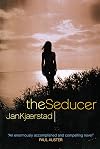
Jonas Swallows the Whale.
This is a cathedral of words.
Cocooned within these pages is a living organism. In preparations for metamorphosis, the encasing structure takes on increasing complexity, immersing the reader in its development, through stages, through time, the creature inside is the main character, Jonas, but he is also the author, and the cocoon is both the world, and this book.
The DNA of causal relationships takes on life while Jonas' desire to dissect the structure of reality show more mirrors his subsuming of physical natures. The heated passion for understanding illuminates his carnal quest. The conquering of intellectual forces, merging with physical mastery, as he engages in speed skating, tennis, art, music, or politics, no talent is out of reach, and the value of his own genetic material increases, as if he were reincarnating into his own body as different versions of himself. The ambition to swallow the entire universe, against the threat of invisibility, is inversely proportional to the extent the author buries himself beneath this dramatic persona, this living embodiment of his literary ambition.
"How do the pieces of life fit together?"
They are particles, these human masks, the psychological disguises, the whims of propriety, these densely congregated principles, these guiding facets of our being. The central wheel's relation to time seductively reaches each corner of this gamopetalous book, wherein deceptively layered complexities of form and rhythm portray profound insight into Jonas' psyche. Peering in at his escapades at intrinsic viewpoints allows us the same wish fulfillment as the author, who indulges in every excess of accomplishment.
Recursively returning to cause and effect, the interiority of stories bleeds through the framework of the novel. You have the constant contest between Bach and Mozart, Hamsun and Hitler, Ibsen and Shakespeare, and multitudes of others in Jonas' life. The competition is inherent to the far-reaching initiative of this book. The phallic fixation of his aunt, the willingness of the women to be seduced, while it all defies verisimilitude, reinforce the central career of our hero, the man among men, Jonas, as he fits together the jigsaw puzzle of his life, standing outside of it, at the defining moment, the hub of the wheel, revealed in the first chapter in the form of a dead woman. The author falls back on the 2nd person perspective for these recursive moments, outside of time, at a far remove from the action of discovering Jonas' modus operandi. Against tradition, casting a male in the role of seducer is not as original as at first glance, but it does raise many questions about the role of women within this novel, and if they are mere objects. The self-indulgence in this regard would merit scorn, if it wasn't so artfully composed - perhaps.
Several digressions into Norwegian history, politics, science, music, history, and sports, at first seemingly disparate elements, eventually coincide in their focus within the schema of Jonas' mind.
The search for the self, entailing the architectural symbolism that comprises a human, the myriads we contain, the authenticity and imitation, the layering of memory and the ghosts it paints over our experience, the tapestry radiating outward, of the generations that spawned us, all of these confluent forces charging toward some inevitable conclusion. Luckily, the tone is one of a constant unveiling of intimate secrets. The book is supremely readable. We are allowed to draw our own conclusions about the morality of conquest, and the merit of competition.
The inversion of religious imagery, the transcendence of isolated experience, the references to popular and classical music, and regional artists people the very infrequent landscapes, and inhabit a strictly intellectual panorama instead, navigating a layered political climatology, invoking the great artists of the past in every major discipline, like Mount Rushmore-size affronts to our MC's immortality.
If none of these themes interest you, how about the exploration of human archetypes? Light: a particle and a wave, representing turbulence and the dual nature of human beings as both divine and animal.
Who or what is a seductress? What seduces the seducer? Can we deduce that that seducer is a medusa?
Secrets triggering memories, many episodes marked by a peculiar odor, rites of passion, sex devoid of lasting love, events spoking out from the central point, the Wheel of Fortune revealing letter by letter the inevitable fate of our Grail-seeker. Recapturing lost childhood, longing for nostalgia, Jonas ventures farther afield in search of consequences, finding only affirmation of the dreaded summation of his career.
Kjærstad also incorporates Norway's cultural imprint on the world, the art and music scene, fashion, high society, critics, schmoozers, culture, corruption and frailty, Nationalism, in a word, and posits a contention that Jonas is the Everyman his country needs, to pull it out of the small ice cave it has become.
Our myriad selves, the nucleus of human potential - all of the people you might have been, a haunting evaluation of artistic accomplishment as a life's defining features, are we more than the sum of our works? From one step to the next - from Zambezi river rapids, budding with memento mori, to a garden of gravitas sprouting around the biographical cocoon. There's always 2 sides to every coin, 2 sides to every mirror. Every mirror has a deceptive silver lining. And the Bergensveien winding serpentine, a silver vein, the silver thread running through it all, from Jonas' very spine, this same thread, thrummed by the gods. He becomes a divine instrument, the overcomer, the proto-human, Prometheus, resulting in his intuition, or 6th sense for opportunity and conquest and significance that derives from this subtle vibration. And the charging silver train, a forward thrusting movement, until he returns to the polar bear rug and the Antarctic fascination spreading outward from it, an interstitial motif, a preoccupation with snow, death, and the story's central cavern, relegated to a base level background hum, in an absence of scenery, in the irrelevance of fame, a Faustian accumulation, the prestige, success, like weighty concentric circles, ripples, latitude lines, planetary orbits, causality, the Butterfly Effect, the hurdles he leaps. Each sport he triumphs in is a symbol, becomes part of his DNA, like the women, palimpsests laying on top of one another, like cards in a deck, stacked.
The body, blood, fluids, heart and adrenaline runs through the prose. Once again the book is a living organism, Jonas merging with the other characters, conquering one after another, sexually, physically and intellectually. If he were a chess player, he would be Magnus Carlsen.
The motif of the color silver - Nefertiti's mouth organ, frozen mammoths, the transmogrification of animals and vehicles, the merging of symbols, alongside the golden luster, the golden opportunity, the golden child, his lust and manhood, like the naked ladies on the highball glasses' interior, clothed on the outside, the 2-sided mirror, the dimensions of lives, like images trapped in the camera obscura of her dead pupils.
The Lego blocks, mirroring his near death in the fetal ice fortress, the relevance of temperatures, a fear of cold, Norway, if it can be so labeled. This is the reason Jonas' travels abroad. In order to escape.
P. 499 sums it all up in a vast atemporal vision, encompassing eras in the snapshot of the moment, Jonas sees through time to the various states of the environment as the scene transforms, regresses and progresses. In a way we glimpse our own deaths day after day, in the interrelationship of forces and concrete reality. We relegate this trauma to memory, blurring out time and reimagining ourselves anew. Our malleable clay lives, as much as we would like to mold them, are not in our own hands. Or are they? show less
This is a cathedral of words.
Cocooned within these pages is a living organism. In preparations for metamorphosis, the encasing structure takes on increasing complexity, immersing the reader in its development, through stages, through time, the creature inside is the main character, Jonas, but he is also the author, and the cocoon is both the world, and this book.
The DNA of causal relationships takes on life while Jonas' desire to dissect the structure of reality show more mirrors his subsuming of physical natures. The heated passion for understanding illuminates his carnal quest. The conquering of intellectual forces, merging with physical mastery, as he engages in speed skating, tennis, art, music, or politics, no talent is out of reach, and the value of his own genetic material increases, as if he were reincarnating into his own body as different versions of himself. The ambition to swallow the entire universe, against the threat of invisibility, is inversely proportional to the extent the author buries himself beneath this dramatic persona, this living embodiment of his literary ambition.
"How do the pieces of life fit together?"
They are particles, these human masks, the psychological disguises, the whims of propriety, these densely congregated principles, these guiding facets of our being. The central wheel's relation to time seductively reaches each corner of this gamopetalous book, wherein deceptively layered complexities of form and rhythm portray profound insight into Jonas' psyche. Peering in at his escapades at intrinsic viewpoints allows us the same wish fulfillment as the author, who indulges in every excess of accomplishment.
Recursively returning to cause and effect, the interiority of stories bleeds through the framework of the novel. You have the constant contest between Bach and Mozart, Hamsun and Hitler, Ibsen and Shakespeare, and multitudes of others in Jonas' life. The competition is inherent to the far-reaching initiative of this book. The phallic fixation of his aunt, the willingness of the women to be seduced, while it all defies verisimilitude, reinforce the central career of our hero, the man among men, Jonas, as he fits together the jigsaw puzzle of his life, standing outside of it, at the defining moment, the hub of the wheel, revealed in the first chapter in the form of a dead woman. The author falls back on the 2nd person perspective for these recursive moments, outside of time, at a far remove from the action of discovering Jonas' modus operandi. Against tradition, casting a male in the role of seducer is not as original as at first glance, but it does raise many questions about the role of women within this novel, and if they are mere objects. The self-indulgence in this regard would merit scorn, if it wasn't so artfully composed - perhaps.
Several digressions into Norwegian history, politics, science, music, history, and sports, at first seemingly disparate elements, eventually coincide in their focus within the schema of Jonas' mind.
The search for the self, entailing the architectural symbolism that comprises a human, the myriads we contain, the authenticity and imitation, the layering of memory and the ghosts it paints over our experience, the tapestry radiating outward, of the generations that spawned us, all of these confluent forces charging toward some inevitable conclusion. Luckily, the tone is one of a constant unveiling of intimate secrets. The book is supremely readable. We are allowed to draw our own conclusions about the morality of conquest, and the merit of competition.
The inversion of religious imagery, the transcendence of isolated experience, the references to popular and classical music, and regional artists people the very infrequent landscapes, and inhabit a strictly intellectual panorama instead, navigating a layered political climatology, invoking the great artists of the past in every major discipline, like Mount Rushmore-size affronts to our MC's immortality.
If none of these themes interest you, how about the exploration of human archetypes? Light: a particle and a wave, representing turbulence and the dual nature of human beings as both divine and animal.
Who or what is a seductress? What seduces the seducer? Can we deduce that that seducer is a medusa?
Secrets triggering memories, many episodes marked by a peculiar odor, rites of passion, sex devoid of lasting love, events spoking out from the central point, the Wheel of Fortune revealing letter by letter the inevitable fate of our Grail-seeker. Recapturing lost childhood, longing for nostalgia, Jonas ventures farther afield in search of consequences, finding only affirmation of the dreaded summation of his career.
Kjærstad also incorporates Norway's cultural imprint on the world, the art and music scene, fashion, high society, critics, schmoozers, culture, corruption and frailty, Nationalism, in a word, and posits a contention that Jonas is the Everyman his country needs, to pull it out of the small ice cave it has become.
Our myriad selves, the nucleus of human potential - all of the people you might have been, a haunting evaluation of artistic accomplishment as a life's defining features, are we more than the sum of our works? From one step to the next - from Zambezi river rapids, budding with memento mori, to a garden of gravitas sprouting around the biographical cocoon. There's always 2 sides to every coin, 2 sides to every mirror. Every mirror has a deceptive silver lining. And the Bergensveien winding serpentine, a silver vein, the silver thread running through it all, from Jonas' very spine, this same thread, thrummed by the gods. He becomes a divine instrument, the overcomer, the proto-human, Prometheus, resulting in his intuition, or 6th sense for opportunity and conquest and significance that derives from this subtle vibration. And the charging silver train, a forward thrusting movement, until he returns to the polar bear rug and the Antarctic fascination spreading outward from it, an interstitial motif, a preoccupation with snow, death, and the story's central cavern, relegated to a base level background hum, in an absence of scenery, in the irrelevance of fame, a Faustian accumulation, the prestige, success, like weighty concentric circles, ripples, latitude lines, planetary orbits, causality, the Butterfly Effect, the hurdles he leaps. Each sport he triumphs in is a symbol, becomes part of his DNA, like the women, palimpsests laying on top of one another, like cards in a deck, stacked.
The body, blood, fluids, heart and adrenaline runs through the prose. Once again the book is a living organism, Jonas merging with the other characters, conquering one after another, sexually, physically and intellectually. If he were a chess player, he would be Magnus Carlsen.
The motif of the color silver - Nefertiti's mouth organ, frozen mammoths, the transmogrification of animals and vehicles, the merging of symbols, alongside the golden luster, the golden opportunity, the golden child, his lust and manhood, like the naked ladies on the highball glasses' interior, clothed on the outside, the 2-sided mirror, the dimensions of lives, like images trapped in the camera obscura of her dead pupils.
The Lego blocks, mirroring his near death in the fetal ice fortress, the relevance of temperatures, a fear of cold, Norway, if it can be so labeled. This is the reason Jonas' travels abroad. In order to escape.
P. 499 sums it all up in a vast atemporal vision, encompassing eras in the snapshot of the moment, Jonas sees through time to the various states of the environment as the scene transforms, regresses and progresses. In a way we glimpse our own deaths day after day, in the interrelationship of forces and concrete reality. We relegate this trauma to memory, blurring out time and reimagining ourselves anew. Our malleable clay lives, as much as we would like to mold them, are not in our own hands. Or are they? show less
This book defies description.
Or rather, I will fail at describing it. That being said, I will willfully fail at describing this piece of new-classic Norwegian literature by calling it an extremely funny sexcapade of a magical penis. Yes, a magical penis. You've probably heard about it. They're usually attached to a Gary Stu.
AND YET, Jonas, our magical stud, is also a WIZARD at everything because he naturally gets the full sweeping talents automatically from every woman he manages to seduce. show more
It would be absolutely absurd and atrocious if it wasn't so eye-rollingly funny. And the novel doesn't even have the FEEL of a humorous piece. It reads somewhat dire and emotional because we keep bouncing around an epic framework of his wife's murder and ALL THE MEMORIES of his entire life as vignettes couched within ALL the most minor details that eventually make up an epically cool building of a single character that I admit I grew to love.
Just not because he's so stultifyingly brilliant at anything he puts his hand to.
Indeed, the whole structure of the novel is all kinds of brilliant for real. An endless tirade of moments from his life that doesn't apparently have anything to do with the dire scene in question but EVENTUALLY becomes super-important. Multiply these by a bazillion and you've got yourself a prism of a character as seen by so many instants and the effect is FREAKING AMBITIOUS.
All the props. I'm really amazed.
Of course, I was VERY often annoyed as hell about Gary and the magical penis. But oh well, right? The annoyance almost always transformed into me muttering, "Ohhhh, pllleeeeaaaaseeeee..." and enough eye-rolls to make my eyes pop out like I just came out of a Warner Brother's cartoon.
BUT it worked. Strangely enough, it worked. show less
Or rather, I will fail at describing it. That being said, I will willfully fail at describing this piece of new-classic Norwegian literature by calling it an extremely funny sexcapade of a magical penis. Yes, a magical penis. You've probably heard about it. They're usually attached to a Gary Stu.
AND YET, Jonas, our magical stud, is also a WIZARD at everything because he naturally gets the full sweeping talents automatically from every woman he manages to seduce. show more
It would be absolutely absurd and atrocious if it wasn't so eye-rollingly funny. And the novel doesn't even have the FEEL of a humorous piece. It reads somewhat dire and emotional because we keep bouncing around an epic framework of his wife's murder and ALL THE MEMORIES of his entire life as vignettes couched within ALL the most minor details that eventually make up an epically cool building of a single character that I admit I grew to love.
Just not because he's so stultifyingly brilliant at anything he puts his hand to.
Indeed, the whole structure of the novel is all kinds of brilliant for real. An endless tirade of moments from his life that doesn't apparently have anything to do with the dire scene in question but EVENTUALLY becomes super-important. Multiply these by a bazillion and you've got yourself a prism of a character as seen by so many instants and the effect is FREAKING AMBITIOUS.
All the props. I'm really amazed.
Of course, I was VERY often annoyed as hell about Gary and the magical penis. But oh well, right? The annoyance almost always transformed into me muttering, "Ohhhh, pllleeeeaaaaseeeee..." and enough eye-rolls to make my eyes pop out like I just came out of a Warner Brother's cartoon.
BUT it worked. Strangely enough, it worked. show less
Additional thoughts towards the end.
I wish I could give this six stars.
Before I start The Conqueror...
One of the aspects of current literary fashion which has me somewhat confounded is the pejorative way in which sentimentality is viewed. If only I had a dollar for every discussion of literature which compliments a writer or a book for not being sentimental. Listen to the average critic talk about sentimentality in literature and it doesn't sound much different from Bush talking about The show more Axis of Evil.
Most recently I was looking at a discussion of As You Like It which complimented Rosalind's lack of sentimentality and quoted this famous reply to the idea that Orlando might die of love:
Good old Rosalind. A jolly rolemodel for a girl, no doubt. But she is wrong. Of course people die for love....
The thing that struck me through and through while reading The Seducer is here is a man not afraid for one moment to write a book which is simply oozing with sentimentality of the most unabashedly Victorian type, something which should, if we are to believe the critics, quite offend us.
The chapter (p.323-330 in the English edition) devoted to a description of Margrete's relationship to bread could come straight out of any Victorian depiction of the joys of domesticity.
And p. 272, the most sentimental of all Victorian belief:
Jonas cannot die, there'd be no story left, but the idea is still there. Of course people die of love. The Victorians knew it. But we live in a period which views love with complete cynicism, so it is not something we would care to acknowledge.
Perhaps Jan Kjaerstad gets away with his lavish sentimentality by couching it all in an overtone of sex. One might think this is a book about a man with a magic penis who has artistic sex with all sorts of girls along the way. Yet the sex is completely irrelevant to this book. Take it away and the book would remain complete in every important respect, lacking nothing but an irrelevantly silly idea that a man - this man, the hero - can become a good mathematician by shagging a mathematician; a good musician by shagging a musician etc etc etc.
Even this amusing idea, now that I think about it, would fit nicely into a Victorian setting.
So, one of the things I'm left with after reading this book is sense of gratitude that Kjaerstad has been brave enough to re-introduce this important aspect of human nature back into literature and damn the critics if they care.
Additional thoughts.
Regarding the issue of repetition in this novel, which some regard as intolerable and which certainly took some getting used to on my part.
I've read books before which are too long and yet which seem to consist of essential words. This is something different again. In a sense it would be possible to take out many of the words in that way one often wishes to edit Victorian literature, of which this is a prime, if modern, example.
Yet I come to the conclusion that his use of repetition is necessary and important. Even his lists are purposeful, if neither necessary or important. But look at the repetition involved in his coming again and again back to the murder scene which opens the book. And another sort of repetition he uses to build up to an event, which not only builds up but also gives such a sense of being there. I think that is the key, you aren't really reading, you are being there. So, the scene that comes obviously to me as the prime example is that of the events leading to Nefertiti's death. How could you not be utterly at one with what is happening in those pages? Brilliant and moving.
As one who has tended always to be minimalist in my writing, but at the same time has increasingly moved towards short sentences and simple approaches I could not help but wonder how one sets about writing as Kjaerstad does. I keep wondering why and how does it work.
Figuring the answer to that is in practising the technique, I've been working on that. Here are some examples, and the topic is purely dictated by the magic penis theme of the book...nothing to do with my personal preferences (!)
I wasn't sure about these to begin with, but having read a couple of reviews since that are critical about the sex in this book, well, I can't get any more flak than that....can I????
What's interesting once you start trying to write like this is that you think about it all the time...and you find it is all much harder than you might expect. show less
I wish I could give this six stars.
Before I start The Conqueror...
One of the aspects of current literary fashion which has me somewhat confounded is the pejorative way in which sentimentality is viewed. If only I had a dollar for every discussion of literature which compliments a writer or a book for not being sentimental. Listen to the average critic talk about sentimentality in literature and it doesn't sound much different from Bush talking about The show more Axis of Evil.
Most recently I was looking at a discussion of As You Like It which complimented Rosalind's lack of sentimentality and quoted this famous reply to the idea that Orlando might die of love:
No, faith; die by attorney. The poor world is almost six thousand years old, and in all this time there was not any man died in his own person, videlicet, in a love-cause. Troilus had his brains dashed out with a Grecian club, yet he did what he could to die before, and he is one of the patterns of love. Leander, he would have lived many a fair year though Hero had turned nun if it had not been for a hot midsummer night, for, good youth, he went but forth to wash him in the Hellespont and, being taken with the cramp, was drowned; and the foolish chroniclers of that age found it was Hero of Sestos. But these are all lies. Men have died from time to time, and worms have eaten them, but not for love.
Good old Rosalind. A jolly rolemodel for a girl, no doubt. But she is wrong. Of course people die for love....
The thing that struck me through and through while reading The Seducer is here is a man not afraid for one moment to write a book which is simply oozing with sentimentality of the most unabashedly Victorian type, something which should, if we are to believe the critics, quite offend us.
The chapter (p.323-330 in the English edition) devoted to a description of Margrete's relationship to bread could come straight out of any Victorian depiction of the joys of domesticity.
To Jonas, this is happy married life: looking forward to breakfast. Jonas experienced many great and exciting things in his life, and yet given the choice, there was nothing to match breakfast with Margrete, her bread with wild raspberry jam and a glass of milk.
And p. 272, the most sentimental of all Victorian belief:
There comes a day when, as one writer put it, the bubble of chilhood bursts, and for Jonas that day came with Nefertiti's death. Of course Jonas had always known that Nefertiti was too good for this workd, but even so, when she died he was not prepared for it. In short, he fell aprt. He took ill, become so ill that he had to be taken to hospital. Jonas Wergeland was sick right to the marrow and so cold that he thoght he wold never be warm again. The doctors at the hospital did not know what to make of it: a ten-year old who languished in bed, pale and wan, and kept throwing up, vomiting fits for which they could find no cause, a boy with a body temperature well nigh as low as that encountered only in people who had miraculously survived record lengths of time in extreme cold. And one thing they would not have understood anyway, even if there had been gauges to measure that sort of thing, was Jonas's feeling of being totally out of joint, of lying there like a carcass that had been chopped limb from limb. Jonas had only one thing to hold onto: a crystal prism which he clenched tightly in his fist and did not let go of, not even when he was at his sickest.
Jonas cannot die, there'd be no story left, but the idea is still there. Of course people die of love. The Victorians knew it. But we live in a period which views love with complete cynicism, so it is not something we would care to acknowledge.
Perhaps Jan Kjaerstad gets away with his lavish sentimentality by couching it all in an overtone of sex. One might think this is a book about a man with a magic penis who has artistic sex with all sorts of girls along the way. Yet the sex is completely irrelevant to this book. Take it away and the book would remain complete in every important respect, lacking nothing but an irrelevantly silly idea that a man - this man, the hero - can become a good mathematician by shagging a mathematician; a good musician by shagging a musician etc etc etc.
Even this amusing idea, now that I think about it, would fit nicely into a Victorian setting.
So, one of the things I'm left with after reading this book is sense of gratitude that Kjaerstad has been brave enough to re-introduce this important aspect of human nature back into literature and damn the critics if they care.
Additional thoughts.
Regarding the issue of repetition in this novel, which some regard as intolerable and which certainly took some getting used to on my part.
I've read books before which are too long and yet which seem to consist of essential words. This is something different again. In a sense it would be possible to take out many of the words in that way one often wishes to edit Victorian literature, of which this is a prime, if modern, example.
Yet I come to the conclusion that his use of repetition is necessary and important. Even his lists are purposeful, if neither necessary or important. But look at the repetition involved in his coming again and again back to the murder scene which opens the book. And another sort of repetition he uses to build up to an event, which not only builds up but also gives such a sense of being there. I think that is the key, you aren't really reading, you are being there. So, the scene that comes obviously to me as the prime example is that of the events leading to Nefertiti's death. How could you not be utterly at one with what is happening in those pages? Brilliant and moving.
As one who has tended always to be minimalist in my writing, but at the same time has increasingly moved towards short sentences and simple approaches I could not help but wonder how one sets about writing as Kjaerstad does. I keep wondering why and how does it work.
Figuring the answer to that is in practising the technique, I've been working on that. Here are some examples, and the topic is purely dictated by the magic penis theme of the book...nothing to do with my personal preferences (!)
Lying in bed last night, thinking this – that if your cock was so available to me that I could put it in my mouth every day for ten years, every one of those days and the first day of the eleventh year and so on would be a new, wonderful thing – I did wonder if a world view dictated by my clitoris being firmly attached to my finger might be skewed and that it if wasn’t rubbing against my finger, maybe I wouldn’t think that every one of those days would be its own small heaven; but since then I can report that sitting in the E*****n, eating poached apple breakfast cumble and toast with ******* changes nothing, that sitting here lost in the idea of those ten years is no less overwhelming than if I were lying in bed, wishing my hands were yours.
Or:
There was only one thing she could put in her mouth that would make her happy and she thought not so much of ten years as three thousand and six hundred and fifty days of it, every one of which was a new chance to pay homage - as she liked to think of it - though she was taking as much pleasure as she might be giving every day, and as she lay there, her thoughts directed by where her hand was and she decided to picture those days one by one, it was clear to her what the first day would be like and day two, and even day three, but at some point as she lies there stroking herself the days, his penis, her mouth blur into one impossibly long vision of penis and mouth seeking each other out to join together in this never-ending moment of sweet sexiness, never-ending and yet different every time.
Or :
She was sure that what would restore her appetite was to be able to put the one thing in her mouth that she really wanted to be there, and not for one moment or for one day but for ten years or a hundred and every day being able to do that, rekindle her desire to eat; for 3650 days (to keep the numbers to a manageable level or because she is not greedy) to be able to part her lips and put them around his penis and taste it anew every one of those days; to have butterflies in her stomach at the very idea that today, never mind it is day 3651, she would be able to once more – and yet if once more, still for the first time, it so feels – look with her eyes and then look with her lips; dwelling upon this, wishing to play every one of those scenes slowly from start to finish, touching herself until she doesn’t need to any more she does in her mind see the whole of day one of ten years and falls asleep thinking that tomorrow she will find out what day two will be.
I wasn't sure about these to begin with, but having read a couple of reviews since that are critical about the sex in this book, well, I can't get any more flak than that....can I????
What's interesting once you start trying to write like this is that you think about it all the time...and you find it is all much harder than you might expect. show less
Additional thoughts towards the end.
I wish I could give this six stars.
Before I start The Conqueror...
One of the aspects of current literary fashion which has me somewhat confounded is the pejorative way in which sentimentality is viewed. If only I had a dollar for every discussion of literature which compliments a writer or a book for not being sentimental. Listen to the average critic talk about sentimentality in literature and it doesn't sound much different from Bush talking about The show more Axis of Evil.
Most recently I was looking at a discussion of As You Like It which complimented Rosalind's lack of sentimentality and quoted this famous reply to the idea that Orlando might die of love:
Good old Rosalind. A jolly rolemodel for a girl, no doubt. But she is wrong. Of course people die for love....
The thing that struck me through and through while reading The Seducer is here is a man not afraid for one moment to write a book which is simply oozing with sentimentality of the most unabashedly Victorian type, something which should, if we are to believe the critics, quite offend us.
The chapter (p.323-330 in the English edition) devoted to a description of Margrete's relationship to bread could come straight out of any Victorian depiction of the joys of domesticity.
And p. 272, the most sentimental of all Victorian belief:
Jonas cannot die, there'd be no story left, but the idea is still there. Of course people die of love. The Victorians knew it. But we live in a period which views love with complete cynicism, so it is not something we would care to acknowledge.
Perhaps Jan Kjaerstad gets away with his lavish sentimentality by couching it all in an overtone of sex. One might think this is a book about a man with a magic penis who has artistic sex with all sorts of girls along the way. Yet the sex is completely irrelevant to this book. Take it away and the book would remain complete in every important respect, lacking nothing but an irrelevantly silly idea that a man - this man, the hero - can become a good mathematician by shagging a mathematician; a good musician by shagging a musician etc etc etc.
Even this amusing idea, now that I think about it, would fit nicely into a Victorian setting.
So, one of the things I'm left with after reading this book is sense of gratitude that Kjaerstad has been brave enough to re-introduce this important aspect of human nature back into literature and damn the critics if they care.
Additional thoughts.
Regarding the issue of repetition in this novel, which some regard as intolerable and which certainly took some getting used to on my part.
I've read books before which are too long and yet which seem to consist of essential words. This is something different again. In a sense it would be possible to take out many of the words in that way one often wishes to edit Victorian literature, of which this is a prime, if modern, example.
Yet I come to the conclusion that his use of repetition is necessary and important. Even his lists are purposeful, if neither necessary or important. But look at the repetition involved in his coming again and again back to the murder scene which opens the book. And another sort of repetition he uses to build up to an event, which not only builds up but also gives such a sense of being there. I think that is the key, you aren't really reading, you are being there. So, the scene that comes obviously to me as the prime example is that of the events leading to Nefertiti's death. How could you not be utterly at one with what is happening in those pages? Brilliant and moving.
As one who has tended always to be minimalist in my writing, but at the same time has increasingly moved towards short sentences and simple approaches I could not help but wonder how one sets about writing as Kjaerstad does. I keep wondering why and how does it work.
Figuring the answer to that is in practising the technique, I've been working on that. Here are some examples, and the topic is purely dictated by the magic penis theme of the book...nothing to do with my personal preferences (!)
I wasn't sure about these to begin with, but having read a couple of reviews since that are critical about the sex in this book, well, I can't get any more flak than that....can I????
What's interesting once you start trying to write like this is that you think about it all the time...and you find it is all much harder than you might expect. show less
I wish I could give this six stars.
Before I start The Conqueror...
One of the aspects of current literary fashion which has me somewhat confounded is the pejorative way in which sentimentality is viewed. If only I had a dollar for every discussion of literature which compliments a writer or a book for not being sentimental. Listen to the average critic talk about sentimentality in literature and it doesn't sound much different from Bush talking about The show more Axis of Evil.
Most recently I was looking at a discussion of As You Like It which complimented Rosalind's lack of sentimentality and quoted this famous reply to the idea that Orlando might die of love:
No, faith; die by attorney. The poor world is almost six thousand years old, and in all this time there was not any man died in his own person, videlicet, in a love-cause. Troilus had his brains dashed out with a Grecian club, yet he did what he could to die before, and he is one of the patterns of love. Leander, he would have lived many a fair year though Hero had turned nun if it had not been for a hot midsummer night, for, good youth, he went but forth to wash him in the Hellespont and, being taken with the cramp, was drowned; and the foolish chroniclers of that age found it was Hero of Sestos. But these are all lies. Men have died from time to time, and worms have eaten them, but not for love.
Good old Rosalind. A jolly rolemodel for a girl, no doubt. But she is wrong. Of course people die for love....
The thing that struck me through and through while reading The Seducer is here is a man not afraid for one moment to write a book which is simply oozing with sentimentality of the most unabashedly Victorian type, something which should, if we are to believe the critics, quite offend us.
The chapter (p.323-330 in the English edition) devoted to a description of Margrete's relationship to bread could come straight out of any Victorian depiction of the joys of domesticity.
To Jonas, this is happy married life: looking forward to breakfast. Jonas experienced many great and exciting things in his life, and yet given the choice, there was nothing to match breakfast with Margrete, her bread with wild raspberry jam and a glass of milk.
And p. 272, the most sentimental of all Victorian belief:
There comes a day when, as one writer put it, the bubble of chilhood bursts, and for Jonas that day came with Nefertiti's death. Of course Jonas had always known that Nefertiti was too good for this workd, but even so, when she died he was not prepared for it. In short, he fell aprt. He took ill, become so ill that he had to be taken to hospital. Jonas Wergeland was sick right to the marrow and so cold that he thoght he wold never be warm again. The doctors at the hospital did not know what to make of it: a ten-year old who languished in bed, pale and wan, and kept throwing up, vomiting fits for which they could find no cause, a boy with a body temperature well nigh as low as that encountered only in people who had miraculously survived record lengths of time in extreme cold. And one thing they would not have understood anyway, even if there had been gauges to measure that sort of thing, was Jonas's feeling of being totally out of joint, of lying there like a carcass that had been chopped limb from limb. Jonas had only one thing to hold onto: a crystal prism which he clenched tightly in his fist and did not let go of, not even when he was at his sickest.
Jonas cannot die, there'd be no story left, but the idea is still there. Of course people die of love. The Victorians knew it. But we live in a period which views love with complete cynicism, so it is not something we would care to acknowledge.
Perhaps Jan Kjaerstad gets away with his lavish sentimentality by couching it all in an overtone of sex. One might think this is a book about a man with a magic penis who has artistic sex with all sorts of girls along the way. Yet the sex is completely irrelevant to this book. Take it away and the book would remain complete in every important respect, lacking nothing but an irrelevantly silly idea that a man - this man, the hero - can become a good mathematician by shagging a mathematician; a good musician by shagging a musician etc etc etc.
Even this amusing idea, now that I think about it, would fit nicely into a Victorian setting.
So, one of the things I'm left with after reading this book is sense of gratitude that Kjaerstad has been brave enough to re-introduce this important aspect of human nature back into literature and damn the critics if they care.
Additional thoughts.
Regarding the issue of repetition in this novel, which some regard as intolerable and which certainly took some getting used to on my part.
I've read books before which are too long and yet which seem to consist of essential words. This is something different again. In a sense it would be possible to take out many of the words in that way one often wishes to edit Victorian literature, of which this is a prime, if modern, example.
Yet I come to the conclusion that his use of repetition is necessary and important. Even his lists are purposeful, if neither necessary or important. But look at the repetition involved in his coming again and again back to the murder scene which opens the book. And another sort of repetition he uses to build up to an event, which not only builds up but also gives such a sense of being there. I think that is the key, you aren't really reading, you are being there. So, the scene that comes obviously to me as the prime example is that of the events leading to Nefertiti's death. How could you not be utterly at one with what is happening in those pages? Brilliant and moving.
As one who has tended always to be minimalist in my writing, but at the same time has increasingly moved towards short sentences and simple approaches I could not help but wonder how one sets about writing as Kjaerstad does. I keep wondering why and how does it work.
Figuring the answer to that is in practising the technique, I've been working on that. Here are some examples, and the topic is purely dictated by the magic penis theme of the book...nothing to do with my personal preferences (!)
Lying in bed last night, thinking this – that if your cock was so available to me that I could put it in my mouth every day for ten years, every one of those days and the first day of the eleventh year and so on would be a new, wonderful thing – I did wonder if a world view dictated by my clitoris being firmly attached to my finger might be skewed and that it if wasn’t rubbing against my finger, maybe I wouldn’t think that every one of those days would be its own small heaven; but since then I can report that sitting in the E*****n, eating poached apple breakfast cumble and toast with ******* changes nothing, that sitting here lost in the idea of those ten years is no less overwhelming than if I were lying in bed, wishing my hands were yours.
Or:
There was only one thing she could put in her mouth that would make her happy and she thought not so much of ten years as three thousand and six hundred and fifty days of it, every one of which was a new chance to pay homage - as she liked to think of it - though she was taking as much pleasure as she might be giving every day, and as she lay there, her thoughts directed by where her hand was and she decided to picture those days one by one, it was clear to her what the first day would be like and day two, and even day three, but at some point as she lies there stroking herself the days, his penis, her mouth blur into one impossibly long vision of penis and mouth seeking each other out to join together in this never-ending moment of sweet sexiness, never-ending and yet different every time.
Or :
She was sure that what would restore her appetite was to be able to put the one thing in her mouth that she really wanted to be there, and not for one moment or for one day but for ten years or a hundred and every day being able to do that, rekindle her desire to eat; for 3650 days (to keep the numbers to a manageable level or because she is not greedy) to be able to part her lips and put them around his penis and taste it anew every one of those days; to have butterflies in her stomach at the very idea that today, never mind it is day 3651, she would be able to once more – and yet if once more, still for the first time, it so feels – look with her eyes and then look with her lips; dwelling upon this, wishing to play every one of those scenes slowly from start to finish, touching herself until she doesn’t need to any more she does in her mind see the whole of day one of ten years and falls asleep thinking that tomorrow she will find out what day two will be.
I wasn't sure about these to begin with, but having read a couple of reviews since that are critical about the sex in this book, well, I can't get any more flak than that....can I????
What's interesting once you start trying to write like this is that you think about it all the time...and you find it is all much harder than you might expect. show less
Lists
Awards


You May Also Like


Associated Authors
Statistics
- Works
- 30
- Also by
- 3
- Members
- 1,541
- Popularity
- #16,713
- Rating
- 3.8
- Reviews
- 38
- ISBNs
- 196
- Languages
- 10
- Favorited
- 8
