
Frank Morrison
Author of Manners Mash-Up: A Goofy Guide to Good Behavior
Works by Frank Morrison
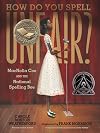
How Do You Spell Unfair? MacNolia Cox and the National Spelling Bee (2023) — Illustrator — 115 copies, 11 reviews
ADVENTURE STORIES FOR BOYS 1 copy
Associated Works
Our Children Can Soar: A Celebration of Rosa, Barack, and the Pioneers of Change (2009) — Illustrator — 255 copies, 17 reviews
Ballerina Dreams: From Orphan to Dancer (Step Into Reading, Step 4) (2014) — Illustrator — 226 copies, 1 review
Standing in the Need of Prayer: A Modern Retelling of the Classic Spiritual (2022) — Illustrator — 128 copies, 21 reviews
Stars in the Shadows: The Negro League All-Star Game of 1934 (2012) — Illustrator, some editions — 36 copies, 1 review
Selected Articles on the Closed Shop; Second Edition, Revised and Enlarged — Contributor, some editions — 1 copy
Tagged
Common Knowledge
- Gender
- male
- Awards and honors
- Coretta Scott King Book Award (Illustrator | 2021)
Members
Reviews

In a Foreword, Weatherford relates that spelling bees have not always been open to Blacks in segregated areas in the US. In 1908, a 14-year-old Black girl from Ohio led her team to victory in a nationwide spelling bee, and whites were angry. Thereafter, Blacks were barred from many local spelling bees, even in the North. She writes: “There would not be another Black finalist at a national spelling bee until 1936. This is her story.”
Weatherford uses a call and response technique in the show more style of a spelling bee to tell it. She begins with Macnolia’s love of words, and how “her idea of fun was reading the dictionary.”
In 1936, eighth grader MacNolia Cox was able to enter the Akron, Ohio, spelling bee and won. Her prize was 25 dollars and a trip to the National Spelling Bee in Washington, D.C. She also received two dictionaries to study. But there were race-related barriers ahead. When the train with MacNolia and her mother reached the Maryland state line, the two were forced to move to the Blacks-only car. In D.C., they had to stay with a Black doctor because the hotel for the spelling contestants was for whites only. At the spelling bee banquet, they weren’t even allowed on the elevator and had to take the stairs, and they were seated apart from the white families.
The next day MacNolia and the only other Black contestant, Elizabeth Kenney from New Jersey, had to enter the ballroom through a back door and sit separately from other spellers. But MacNolia, Weatherford writes, “remained calm and nailed word after word. Can you spell focus F-O-C-U-S.”
When MacNolia advanced to the final five, the judges, all white Southerners, "were becoming visibly uncomfortable," as recorded by Mabel Norris, a reporter who wrote about the bee for The Akron Beacon Journal. They then gave her a word not on the official word list and one she hadn’t studied: “nemesis.” It was listed as a proper noun in MacNolia’s dictionary, as it referred to a Greek goddess - and therefore was not supposed to be part of the spelling bee. (Can you spell unfair U-N-F-A-I-R?)
MacNolia misspelled it, and the judges ruled her out. Still, she made history by becoming a finalist, and she did take home a 75 dollar prize. Weatherford writes:
“Even though she didn’t win the championship, MacNolia had proven that African American students are as smart as anyone and can compete and excel when given a level playing field. That was MacNolia’s triumph.”
Weatherford adds an Epilogue that fills in details about MacNolia’s life after the spelling bee. She could not afford to attend college and ended up working as a maid. She died in 1976 at age 53.
Weatherford also notes that “like segregated schools, local spelling bees were slow to integrate. But as other racial barriers fell, local spelling bees opened to African Americans.”
In 2021, the author observes, a 14-year-old became the first African American to win the Scripps National Spelling Bee. That same year, the UA Senate passed a resolution honoring MacNolia’s life, legacy, and achievements.
A Select Bibliography concludes the book.
Award-winning illustrator Frank Morrison has collaborated often with Carole Boston Weatherford. His website points to the hip-hop cultural notes that can be seen through Morrison’s work, “which has been dubbed a mash-up of urban mannerism, graffiti and abstract contemporary, and reflects deeply on the lost of human stories from past eras.” Morrison cites the importance of both Ernie Barnes and Annie Lee in his own work, influences you can see in his elongated figures and depiction of body language to convey emotion.
Evaluation: This story is both inspiring and infuriating, as are the stories of many who have been discriminated against. show less
Weatherford uses a call and response technique in the show more style of a spelling bee to tell it. She begins with Macnolia’s love of words, and how “her idea of fun was reading the dictionary.”
In 1936, eighth grader MacNolia Cox was able to enter the Akron, Ohio, spelling bee and won. Her prize was 25 dollars and a trip to the National Spelling Bee in Washington, D.C. She also received two dictionaries to study. But there were race-related barriers ahead. When the train with MacNolia and her mother reached the Maryland state line, the two were forced to move to the Blacks-only car. In D.C., they had to stay with a Black doctor because the hotel for the spelling contestants was for whites only. At the spelling bee banquet, they weren’t even allowed on the elevator and had to take the stairs, and they were seated apart from the white families.
The next day MacNolia and the only other Black contestant, Elizabeth Kenney from New Jersey, had to enter the ballroom through a back door and sit separately from other spellers. But MacNolia, Weatherford writes, “remained calm and nailed word after word. Can you spell focus F-O-C-U-S.”
When MacNolia advanced to the final five, the judges, all white Southerners, "were becoming visibly uncomfortable," as recorded by Mabel Norris, a reporter who wrote about the bee for The Akron Beacon Journal. They then gave her a word not on the official word list and one she hadn’t studied: “nemesis.” It was listed as a proper noun in MacNolia’s dictionary, as it referred to a Greek goddess - and therefore was not supposed to be part of the spelling bee. (Can you spell unfair U-N-F-A-I-R?)
MacNolia misspelled it, and the judges ruled her out. Still, she made history by becoming a finalist, and she did take home a 75 dollar prize. Weatherford writes:
“Even though she didn’t win the championship, MacNolia had proven that African American students are as smart as anyone and can compete and excel when given a level playing field. That was MacNolia’s triumph.”
Weatherford adds an Epilogue that fills in details about MacNolia’s life after the spelling bee. She could not afford to attend college and ended up working as a maid. She died in 1976 at age 53.
Weatherford also notes that “like segregated schools, local spelling bees were slow to integrate. But as other racial barriers fell, local spelling bees opened to African Americans.”
In 2021, the author observes, a 14-year-old became the first African American to win the Scripps National Spelling Bee. That same year, the UA Senate passed a resolution honoring MacNolia’s life, legacy, and achievements.
A Select Bibliography concludes the book.
Award-winning illustrator Frank Morrison has collaborated often with Carole Boston Weatherford. His website points to the hip-hop cultural notes that can be seen through Morrison’s work, “which has been dubbed a mash-up of urban mannerism, graffiti and abstract contemporary, and reflects deeply on the lost of human stories from past eras.” Morrison cites the importance of both Ernie Barnes and Annie Lee in his own work, influences you can see in his elongated figures and depiction of body language to convey emotion.
Evaluation: This story is both inspiring and infuriating, as are the stories of many who have been discriminated against. show less
Family Picture Book Read-Aloud Afternoon: A Nine-Book Pile!
An interesting tidbit from history of the first Black American to make it to the final round of the National Spelling Bee in Washington, D.C. in 1936 despite segregation and blatant racism.
I'm grateful for the introduction to MacNolia Cox, but the prose is a bit too flat for a picture book, reading more like a book report than a story. I also found it odd that everyone in the book got full names except for MacNolia's mother and show more teacher: Alberta Key and Cornelia Greve, respectively. And I would have liked to know more about the other Black girl, Elizabeth Kenney, who was in the contest with MacNolia and fared quite well also. show less
An interesting tidbit from history of the first Black American to make it to the final round of the National Spelling Bee in Washington, D.C. in 1936 despite segregation and blatant racism.
I'm grateful for the introduction to MacNolia Cox, but the prose is a bit too flat for a picture book, reading more like a book report than a story. I also found it odd that everyone in the book got full names except for MacNolia's mother and show more teacher: Alberta Key and Cornelia Greve, respectively. And I would have liked to know more about the other Black girl, Elizabeth Kenney, who was in the contest with MacNolia and fared quite well also. show less
First sentence: MacNolia Cox was no ordinary kid. Her idea of fun was reading the dictionary. From A to Z, she learned words' meanings and spellings. She loved to read, study, and spell. In 1936, the eighth grader won her school spelling bee. After MacNolia passed a fifty-word written test and an oral competition, she advanced to the Beacon Journal newspaper's citywide bee.
Premise/plot: Nonfiction picture book about MacNolia Cox's experiences with the National Spelling Bee in 1936. The show more National Spelling Bee is held in Washington, D.C. She was one of two African-American children competing in the Spelling Bee--both being among the first to do so at the national level.
My thoughts: This is a picture book that explores prejudice and discrimination from a specific historic event. Chances are most readers have not heard of this particular instance. Though MacNolia Cox seems to have been greatly celebrated--especially at a local and statewide level--at the time.
I was not familiar with the history of spelling bees--regional or national. And the epilogue gives an overview of how spelling bees eventually became integrated. show less
Premise/plot: Nonfiction picture book about MacNolia Cox's experiences with the National Spelling Bee in 1936. The show more National Spelling Bee is held in Washington, D.C. She was one of two African-American children competing in the Spelling Bee--both being among the first to do so at the national level.
My thoughts: This is a picture book that explores prejudice and discrimination from a specific historic event. Chances are most readers have not heard of this particular instance. Though MacNolia Cox seems to have been greatly celebrated--especially at a local and statewide level--at the time.
I was not familiar with the history of spelling bees--regional or national. And the epilogue gives an overview of how spelling bees eventually became integrated. show less
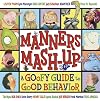
Manners mash-up: A goofy guide to good behavior by various authors
This book is just plain fun. In the style of their previous collaborations, Why did the chicken cross the road? and Knock, Knock! Fourteen illustrators give their take on etiquette.
Bob Shea instructs readers on the proper way to ride a school bus – no drooling and don’t clean the driver’s teeth, even if he’s a crocodile!
Lynn Munsinger illustrates proper cafeteria manners, although her furry pigs don’t seem to be show more following her good advice.
Henry Cole warns against staring – even when you see some pretty funny/icky stuff, especially in the school office.
Leuyen Pham has a sweet spread on playground manners.
Peter Reynolds illustrates classroom manners with several groups of excellently behaved children and dialogue that sounds like it was written for a teaching special on listening to teacher.
Tedd Arnold blasts off into outer space and illustrates good sportsmanship with slug-like aliens playing slime ball.
Adam Rex shows a hapless evil scientist trying to instill a few good table manners into his evil monster creations.
Judy Schachner has a warm and colorful spread of good manners at a happy birthday party with a huge variety of children and activities pictured.
Frank Morrison gives good advice for being a good visitor – which the wild group of kids in the living room don’t seem to have listened to!
Sophie Blackall has a darkly humorous illustration of what not to do in a doctor’s office, including the instruction “prosthetic legs aren’t toys.”
Dan Santat instructs on proper behavior at the theater – even when it’s grand opera!
Joe Berger shows some of the things you should NEVER do in a grocery store.
Kevin Sherry gives pool rules, which should be followed even by giant squids.
Tao Nyeu has a beautifully embroidered spread…about not picking in public, noses, toenails, etc.
The final pages give the authors a chance to talk about their goofiest manners mishap and gives a brief list of each author's titles.
Verdict: This is an amusing book that kids will enjoy looking over, but it’s not particularly substantial and there’s no actual plot to make it a good read-aloud. An additional purchase.
ISBN: 978-0803734807; Published February 2011 by Dial; Borrowed from the library show less
This book is just plain fun. In the style of their previous collaborations, Why did the chicken cross the road? and Knock, Knock! Fourteen illustrators give their take on etiquette.
Bob Shea instructs readers on the proper way to ride a school bus – no drooling and don’t clean the driver’s teeth, even if he’s a crocodile!
Lynn Munsinger illustrates proper cafeteria manners, although her furry pigs don’t seem to be show more following her good advice.
Henry Cole warns against staring – even when you see some pretty funny/icky stuff, especially in the school office.
Leuyen Pham has a sweet spread on playground manners.
Peter Reynolds illustrates classroom manners with several groups of excellently behaved children and dialogue that sounds like it was written for a teaching special on listening to teacher.
Tedd Arnold blasts off into outer space and illustrates good sportsmanship with slug-like aliens playing slime ball.
Adam Rex shows a hapless evil scientist trying to instill a few good table manners into his evil monster creations.
Judy Schachner has a warm and colorful spread of good manners at a happy birthday party with a huge variety of children and activities pictured.
Frank Morrison gives good advice for being a good visitor – which the wild group of kids in the living room don’t seem to have listened to!
Sophie Blackall has a darkly humorous illustration of what not to do in a doctor’s office, including the instruction “prosthetic legs aren’t toys.”
Dan Santat instructs on proper behavior at the theater – even when it’s grand opera!
Joe Berger shows some of the things you should NEVER do in a grocery store.
Kevin Sherry gives pool rules, which should be followed even by giant squids.
Tao Nyeu has a beautifully embroidered spread…about not picking in public, noses, toenails, etc.
The final pages give the authors a chance to talk about their goofiest manners mishap and gives a brief list of each author's titles.
Verdict: This is an amusing book that kids will enjoy looking over, but it’s not particularly substantial and there’s no actual plot to make it a good read-aloud. An additional purchase.
ISBN: 978-0803734807; Published February 2011 by Dial; Borrowed from the library show less
Lists
Awards


You May Also Like


Associated Authors
Statistics
- Works
- 5
- Also by
- 15
- Members
- 509
- Popularity
- #48,720
- Rating
- 4.2
- Reviews
- 19
- ISBNs
- 9