
Thomas F. Yezerski
Author of Meadowlands: A Wetlands Survival Story
About the Author
Works by Thomas F. Yezerski
Associated Works
Tagged
Common Knowledge
- Birthdate
- 1969
- Gender
- male
- Nationality
- USA
- Birthplace
- Lancaster, Pennsylvania, USA
- Associated Place (for map)
- Pennsylvania, USA
Members
Reviews

New Jersey author/illustrator Thomas F. Yezerski explores the history and current state of the Meadowlands, a wetland ecosystem in the northeastern part of the state, in this engaging work of natural history for picture book readers. Formed some 15,00 years ago when the Wisconsin Glacier retreated, the Meadowlands was once a vast 20,000 acres of swamp, marsh and bog, lying to the west of the island of Manhattan. It was for many years the home of the Lenni Lenape people, until the arrival of show more the Dutch and other Europeans, beginning in 1609. Slowly, these newcomers began to fill in the wetlands, in order to make farms and roads. As time passed and industry developed, the Meadowlands became a polluted dumping ground, and a state embarrassment, until finally the state government decided to intervene in 1969, in order to start cleaning the area up. In the decades since, the Meadowlands—now 8,400 acres—has begun to make a comeback. The book closes with the return of the first osprey in fifty years, in 2007, and with an author's note, bibliography and list of web resources...
As someone who commuted to work in Manhattan from central New Jersey for a period of time, traveling through the Meadowlands twice daily on the commuter train, I have never failed to be impressed by the beauty of this area, and saddened by the encroachment of industry and pollution upon it. I was therefore glad to discover Meadowlands: A Wetlands Survival Story, which is the second picture book I have read from Yezerski, following upon his Together in Pinecone Patch. The story it tells is sobering, chronicling the destruction of a vast wilderness, not just through settlement and urban development, but through rampant abuse, which makes the partial recovery of the area all the more heartening. The narrative here is fairly simple, giving the basic history of the region, and describing more recent developments, as wildlife slowly returns to the area. I enjoyed the artwork, which looks to be done in watercolor, appreciating both the larger, panoramic paintings, and the miniature illustrations around the border of those paintings. I thought at first these represented elements in the larger painting, but soon realized that most of what was depicted—plants, animals, human implements, waste—wan't actually depicted in the painting, but nevertheless represented elements of that part of the story. This area of the state and country doesn't always have a good name, so I was glad to read Yezerski's book, and learn about efforts to conserve what is left of the ecosystem, as well as the ways it has slowly healed over the course of the last few decades. Long may it continue! Recommended to young nature lovers, and to anyone seeking picture books about the Meadowlands, or about the natural world of New Jersey. Now, if only I could find a similar book about the Pine Barrens, in the southern part of the state... show less
As someone who commuted to work in Manhattan from central New Jersey for a period of time, traveling through the Meadowlands twice daily on the commuter train, I have never failed to be impressed by the beauty of this area, and saddened by the encroachment of industry and pollution upon it. I was therefore glad to discover Meadowlands: A Wetlands Survival Story, which is the second picture book I have read from Yezerski, following upon his Together in Pinecone Patch. The story it tells is sobering, chronicling the destruction of a vast wilderness, not just through settlement and urban development, but through rampant abuse, which makes the partial recovery of the area all the more heartening. The narrative here is fairly simple, giving the basic history of the region, and describing more recent developments, as wildlife slowly returns to the area. I enjoyed the artwork, which looks to be done in watercolor, appreciating both the larger, panoramic paintings, and the miniature illustrations around the border of those paintings. I thought at first these represented elements in the larger painting, but soon realized that most of what was depicted—plants, animals, human implements, waste—wan't actually depicted in the painting, but nevertheless represented elements of that part of the story. This area of the state and country doesn't always have a good name, so I was glad to read Yezerski's book, and learn about efforts to conserve what is left of the ecosystem, as well as the ways it has slowly healed over the course of the last few decades. Long may it continue! Recommended to young nature lovers, and to anyone seeking picture books about the Meadowlands, or about the natural world of New Jersey. Now, if only I could find a similar book about the Pine Barrens, in the southern part of the state... show less

When Keara Buckley, her mother and father, and her five older brothers, are driven from their beloved Ireland by the Great Famine, they immigrate to America, where they eventually find themselves in the dreary Pennsylvania mining town of Pinecone Patch. It is to this same town that Stefan Pazik and his widowed father come, having left their native Poland when bad harvests and unscrupulous landlords made it impossible to earn a living. Settling into rival Irish and Polish neighborhoods, Keara show more and Stefan grow up as ethnic "enemies," until one day - so tired out from the ceaseless labor of their adult lives - they unexpectedly find themselves having tea...
A lovely little "Romeo and Juliet" type tale for the picture-book set, Together in Pinecone Patch is also a perceptive exploration of the themes of immigration, ethnic tension, and the transcendent power of love - its ability to bridge barriers, and transform the drudgery of everyday life. My own mother is half Irish, half Polish, so I was quite taken with this tale of a "mixed" marriage, but I think most readers will respond to its story of love triumphing over prejudice. Yezerski's illustrations are appealing, capturing the beauty of both ancestral homelands, and the dismal atmosphere of Pinecone Patch. They are also quite humorous upon occasion, as when, in the church scene, the Polish and Irish contingents shake their fists at one another. show less
A lovely little "Romeo and Juliet" type tale for the picture-book set, Together in Pinecone Patch is also a perceptive exploration of the themes of immigration, ethnic tension, and the transcendent power of love - its ability to bridge barriers, and transform the drudgery of everyday life. My own mother is half Irish, half Polish, so I was quite taken with this tale of a "mixed" marriage, but I think most readers will respond to its story of love triumphing over prejudice. Yezerski's illustrations are appealing, capturing the beauty of both ancestral homelands, and the dismal atmosphere of Pinecone Patch. They are also quite humorous upon occasion, as when, in the church scene, the Polish and Irish contingents shake their fists at one another. show less
"From the top of the Empire State Building in New York City, you can see a flat, wet place in New Jersey. Some people think it's just smelly swamps. Others think of it as where the airport or malls or stadiums are. Most people think it's not much of a place at all. This place is called the Meadowlands."
Though the word meadow conjures thoughts of an idyllic landscape, to many New Jerseyans and nearby New Yorkers, the word Meadowlands does not. Instead, thoughts of Giants Stadium, Super Fund show more sites, and, according to the governor, the state's ugliest building come to mind. But as New Jersey resident Thomas F. Yezerski points out in Meadowlands: A Wetlands Survival Story, the Meadowlands is and always has been a changing place.
Yezerski begins the Meadowlands' story several hundred years ago when the Meadowlands was "20,000 acres of marshes, swamps, and bogs that were home to many different plants and animals," as well as the native people, the Lenni Lenape. Throughout the 1960s, 70s, and 80s, the area went through various changes - most of them for the worse. Landfills, chemical dumping, noxious smells, overcrowding, filthy water - the picture looked grim, and the Garden State's new reputation as a smelly place along the Turnpike was fixed in the nation's consciousness.
"But even after being dug out, filled in, run over, and dumped on, the wetlands still showed signs of life. The Hackensack River still flowed south. The tide still rose north from the Atlantic Ocean. The river and tide still met in the Meadowlands twice a day, as they had for 10,000 years. Because they did, the ecosystem had a chance to recover."
Meadowlands is a hopeful story. A story of the return of fish, birds, and even the marshland itself. It's a story of possibility, of the positive effect that people can have when they are so determined. Yezerski's love for the area is apparent. His pen and watercolor illustrations show that he has spent many hours and days in the Meadowlands, capturing its essence. Realistic detailing is present throughout, particularly in the birds, which approach guide book quality. Each double spread features a rectangular painting set in a frame of white space. Related icon-sized images surround the main illustration. Text appears plainly at the bottom of each page - no more than 4 lines per page.
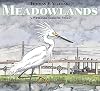
The final pages show the fragile combination of a now bird-filled marshland located within one of the nation's most densely populated urban areas. The cover art, featuring a snowy egret in this urban wilderness is stunning.
Meadowlands should be required reading for all New Jersey schoolchildren, but it has value beyond New Jersey as well. It spreads the hopeful message: If we can do it, so can you. Where there is water flowing, there is life.
Highly recommended.
Author's Note, Selected Bibliography, and Selected Web Sites are included.
www.shelf-employed.blogspot.com show less
Though the word meadow conjures thoughts of an idyllic landscape, to many New Jerseyans and nearby New Yorkers, the word Meadowlands does not. Instead, thoughts of Giants Stadium, Super Fund show more sites, and, according to the governor, the state's ugliest building come to mind. But as New Jersey resident Thomas F. Yezerski points out in Meadowlands: A Wetlands Survival Story, the Meadowlands is and always has been a changing place.
Yezerski begins the Meadowlands' story several hundred years ago when the Meadowlands was "20,000 acres of marshes, swamps, and bogs that were home to many different plants and animals," as well as the native people, the Lenni Lenape. Throughout the 1960s, 70s, and 80s, the area went through various changes - most of them for the worse. Landfills, chemical dumping, noxious smells, overcrowding, filthy water - the picture looked grim, and the Garden State's new reputation as a smelly place along the Turnpike was fixed in the nation's consciousness.
"But even after being dug out, filled in, run over, and dumped on, the wetlands still showed signs of life. The Hackensack River still flowed south. The tide still rose north from the Atlantic Ocean. The river and tide still met in the Meadowlands twice a day, as they had for 10,000 years. Because they did, the ecosystem had a chance to recover."
Meadowlands is a hopeful story. A story of the return of fish, birds, and even the marshland itself. It's a story of possibility, of the positive effect that people can have when they are so determined. Yezerski's love for the area is apparent. His pen and watercolor illustrations show that he has spent many hours and days in the Meadowlands, capturing its essence. Realistic detailing is present throughout, particularly in the birds, which approach guide book quality. Each double spread features a rectangular painting set in a frame of white space. Related icon-sized images surround the main illustration. Text appears plainly at the bottom of each page - no more than 4 lines per page.
The final pages show the fragile combination of a now bird-filled marshland located within one of the nation's most densely populated urban areas. The cover art, featuring a snowy egret in this urban wilderness is stunning.
Meadowlands should be required reading for all New Jersey schoolchildren, but it has value beyond New Jersey as well. It spreads the hopeful message: If we can do it, so can you. Where there is water flowing, there is life.
Highly recommended.
Author's Note, Selected Bibliography, and Selected Web Sites are included.
www.shelf-employed.blogspot.com show less
This is an excellent book showing the degradation and then the gradual improvement of an area that is initially sacrificed in the name of progress and almost completely destroyed. It shows some of nature's resiliency yet it does not diminish the harm done to the New Jersey meadowlands by the same perpetrators who later help salvage it—the people who live and work here. The language is simple and direct, without being too shrill or too glossy. The message is one of hope but it does not show more downplay the threat. While this picture book finds its best home in elementary school libraries, I like sharing books like this with older students as a way to open discussion about our own patterns of behavior and as a way to inspire action. show less
Awards


You May Also Like


Associated Authors
Statistics
- Works
- 4
- Also by
- 11
- Members
- 271
- Popularity
- #85,375
- Rating
- 3.8
- Reviews
- 57
- ISBNs
- 7