
Lorene Cary
Author of Black Ice
About the Author
Lorene Cary penned the highly acclaimed book, Black Ice, an autobiographical account of her years at St. Paul's Prep School in New Hampshire. Cary was among the first African American women to break into the predominantly white male establishment at the school. She believes that her primary role as show more an author is to "deliver a story that matters and tell it until it sings." In earlier years, Cary worked at TV Guide as an assistant editor, and as a writer for Newsweek. Cary now resides with her family in Philadelphia, where she is a lecturer at the University of Pennsylvania. (Bowker Author Biography) show less
Image credit: By Megrenee1908
Works by Lorene Cary
Associated Works
Writing Women's Lives: An Anthology of Autobiographical Narratives by Twentieth-Century American Women Writers (1994) — Contributor — 128 copies, 3 reviews
Shaking the Tree: A Collection of Fiction and Memoir by Black Women (2003) — Contributor — 54 copies
Tagged
Common Knowledge
- Birthdate
- 1956-11-29
- Gender
- female
- Nationality
- USA
- Associated Place (for map)
- USA
Members
Reviews
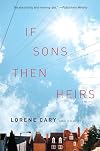
If Sons, then Heirs by Lorene Cary broke my heart by page 5. This was an especially bad thing to do since I was just peeking at the book. It showed up in my post office box near the end of the semester and I knew I wouldn't be able to touch it for weeks. It taunted me on my bookshelf. The first time in a long time a book called out to be read. When I finally got a chance to start reading it, I devoured it.
The story begins with 30-year-old Rayne searching for the mother who put him on a train show more to his grandfather's house at age 7 and then never had him return. The story plays out as if Rayne was adopted by strangers rather than his grandfather and great-grandmother, Nana Stella. Adoption is a major thread in the story as if that quest of "Who am I?" To ensure a secure retirement for his great-grandmother, he ends up having to dig up past tragedies, secrets and face the fact that his own sad tale springs from one fateful day long before his mother was even born.
The story centers on what is called "heir property," a term used for the plot of land given to one of the ancestors by their former slave master. Thus I got quite a lesson in life during Reconstruction and the Jim Crow South. Don't get me wrong, I knew facts, but what Cary does here is place those facts into lives. She makes the facts live, love and die. She makes them human. Rayne recollects the first time he heard a lynching story. His Uncle Jones tells it to him over Nana Stella's objections. "Jones didn't tell Rayne this story to cripple him, but only to let him know not to believe how things look on the surface; people lie." The harsh reality of life for African-Americans in the South is on almost every page. It's not presented as if they are victims. Rather this family is strong, hella strong.
Cary crafts a beautiful tale of love, family and forgiveness. The characters she created jump off the page, even Nana Stella shuffling along with her walker.And she turns phrases that are just delicate and powerful, like a ballerina taking a leap of faith. By the end of the book, you will feel a part of the Needham family.
I should also warn you that the last third to quarter of the book is a whole box of tissues. I warn because I read the last bits of the book in coffee houses and took all my strength to not bawl like a baby at points. And I was crying the good cry. But there are sad cries too. show less
The story begins with 30-year-old Rayne searching for the mother who put him on a train show more to his grandfather's house at age 7 and then never had him return. The story plays out as if Rayne was adopted by strangers rather than his grandfather and great-grandmother, Nana Stella. Adoption is a major thread in the story as if that quest of "Who am I?" To ensure a secure retirement for his great-grandmother, he ends up having to dig up past tragedies, secrets and face the fact that his own sad tale springs from one fateful day long before his mother was even born.
The story centers on what is called "heir property," a term used for the plot of land given to one of the ancestors by their former slave master. Thus I got quite a lesson in life during Reconstruction and the Jim Crow South. Don't get me wrong, I knew facts, but what Cary does here is place those facts into lives. She makes the facts live, love and die. She makes them human. Rayne recollects the first time he heard a lynching story. His Uncle Jones tells it to him over Nana Stella's objections. "Jones didn't tell Rayne this story to cripple him, but only to let him know not to believe how things look on the surface; people lie." The harsh reality of life for African-Americans in the South is on almost every page. It's not presented as if they are victims. Rather this family is strong, hella strong.
Cary crafts a beautiful tale of love, family and forgiveness. The characters she created jump off the page, even Nana Stella shuffling along with her walker.And she turns phrases that are just delicate and powerful, like a ballerina taking a leap of faith. By the end of the book, you will feel a part of the Needham family.
I should also warn you that the last third to quarter of the book is a whole box of tissues. I warn because I read the last bits of the book in coffee houses and took all my strength to not bawl like a baby at points. And I was crying the good cry. But there are sad cries too. show less
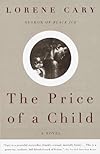
In my quest to read books about Philly, or by Philadelphia authors, or both, I picked this up at Hillside Books in Chestnut Hill. It comes highly recommended and was a One Book, One Philadelphia book some time in the past.
This book was chock full of information about Philadelphia "back in the day". Though the city (and perhaps the state) had enacted a law preventing slavery, some travelers brought their enslaved people to the city when they visited or passed through. If those enslaved show more persons chose to leave part company while in Philadelphia, they were free, though slave hunters etc could still track them down and take them back to their former lives. This story is about one such woman, who was travelling with her "master" to South America, along with two of her children. Her youngest son remained back in Virginia, a hostage to keep her from escaping. But escape she did, with the two other children, and settled in Philadelphia. The details of the city at that time fascinated me, though I was surprised there was really very little followup regarding the child left behind. show less
This book was chock full of information about Philadelphia "back in the day". Though the city (and perhaps the state) had enacted a law preventing slavery, some travelers brought their enslaved people to the city when they visited or passed through. If those enslaved show more persons chose to leave part company while in Philadelphia, they were free, though slave hunters etc could still track them down and take them back to their former lives. This story is about one such woman, who was travelling with her "master" to South America, along with two of her children. Her youngest son remained back in Virginia, a hostage to keep her from escaping. But escape she did, with the two other children, and settled in Philadelphia. The details of the city at that time fascinated me, though I was surprised there was really very little followup regarding the child left behind. show less
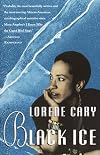
Beautifully written but, for this reader, ultimately unsatisfying, look at a black girl's years at a prestigious prep school in New Hampshire. Lorene Cary leaves a middle class life in Philadelphia in her HS sophomore year to attend St. Paul High School, circa 1972. While she feels some degree of "other-ness" she becomes amazingly assimilated into this world of prestige and money. She arrives wanting to "turn it out!" and, in the end, graduates with a respectable (if not stellar) academic show more career and winning the prestigious "Rector's Award." Along the way, she loses her virginity (in a most unromantic way), is challenged to study harder and learn more than she ever thought possible (Calculus remains her nemesis) deals with plebian summer jobs back in Phily. This reader was never sure if she "liked" St Paul's, or not. Her subsequent career brought her back to teach there and with all the detail she devotes to the various traditions, it would seem that she does. Leaving one to wonder: Did she sell out? Did she "drink the kool aid"? This reader was left wanting more and feeling somewhat cheated of the "real" story. I'd have traded all of the beautiful prose for a moment or two of real feeling. show less
St. Paul's is an elite prep school in New Hampshire. Lorene Cary's _Black Ice_ is a memoir of her time at the school, as an African-American girl from Philadelphia she finds herself in an alien environment. Unfortunately, the memories here are typical coming-of-age encounters with drugs, sex, academic and social competitiveness; the central conflict presented of trying to fit in as a minority in a traditionally white environment is not analyzed. Perhaps Cary's race did not end up mattering show more that much - we do not see the incidents of racism that we expect. show less
Lists
Awards


You May Also Like


Associated Authors
Statistics
- Works
- 7
- Also by
- 3
- Members
- 845
- Popularity
- #30,258
- Rating
- 3.6
- Reviews
- 15
- ISBNs
- 34
- Languages
- 1