
Dorothy West (1) (1907–1998)
Author of The Wedding
For other authors named Dorothy West, see the disambiguation page.
About the Author
Image credit: Source: Wellesley College
Works by Dorothy West
Associated Works
The Best Short Stories by Black Writers, 1899-1967: The Classic Anthology (1967) — Contributor — 201 copies, 1 review
Daughters of Africa: An International Anthology of Words and Writings by Women of African Descent from the Ancient Egyptian to the Present (1992) — Contributor — 186 copies
Calling the Wind: Twentieth Century African-American Short Stories (1992) — Contributor — 116 copies
On Girlhood: 15 Stories from the Well-Read Black Girl Library (2021) — Contributor — 83 copies, 1 review
The Haves and Have Nots: 30 Stories About Money and Class in America (1999) — Contributor — 36 copies
Centers of the Self: Stories by Black American Women, from the Nineteenth Century to the Present (1994) — Contributor — 31 copies
Gender in Modernism: New Geographies, Complex Intersections (2007) — Contributor — 12 copies, 1 review
Tagged
Common Knowledge
- Canonical name
- West, Dorothy
- Legal name
- West, Dorothy
- Other names
- Christopher, Mary
- Birthdate
- 1907-06-02
- Date of death
- 1998-08-16
- Gender
- female
- Education
- Columbia University School of Journalism
Boston University
Girls' Latin School - Occupations
- magazine publisher
novelist
short story writer
editor
journalist - Organizations
- Works Progress Administration's Federal Writers' Project
- Awards and honors
- Anisfield-Wolf Book Award for Lifetime Achievement (1996)
- Relationships
- Johnson, Helene (cousin)
- Cause of death
- natural causes
- Nationality
- USA
- Birthplace
- Boston, Massachusetts, USA
- Places of residence
- Boston, Massachusetts, USA
Martha's Vineyard, Massachusetts, USA
Harlem, New York, USA - Place of death
- Boston, Massachusetts, USA
- Associated Place (for map)
- Massachusetts, USA
Members
Reviews
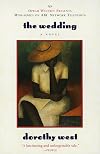
Dorothy West is a master of character development. Every member of the Martha's Vineyard Oval community is meticulously realized by their actions and reactions to events surrounding them and by the subservient relationships they keep: black and white, man and wife, neighbor and stranger, parent and child, landlord and tenant. Strangely enough, there is harmony in the contrasts.
It is the wedding of beautiful Shelby Coles. Her engagement to a white jazz musician from New York City has her show more family in turmoil. Lute McNeil would like nothing better than to steal Miss Coles for his own. He already has three young daughters by three different white women, but in his obsessive mind Shelby would make the perfect mother for his biracial children. Even though the Oval is comprised of black middle class residents, the question of belonging is pervasive. The standard assumption that blonde hair and blue eyes means white race. Everyone uses color to get what they want. Example: the preacher uses the image of white children in danger of hurting themselves around a derelict barn in order to get a white man to give him a horse that was of no use to him. The preacher is really after the barn wood.
Dorothy West forces her characters to face the question of identity. The end of The Wedding will leave you hanging. Would Shelby have given Lute a chance if tragedy had not intervened? Were Shelby's sisters right in their warnings about misguided infatuation? show less
It is the wedding of beautiful Shelby Coles. Her engagement to a white jazz musician from New York City has her show more family in turmoil. Lute McNeil would like nothing better than to steal Miss Coles for his own. He already has three young daughters by three different white women, but in his obsessive mind Shelby would make the perfect mother for his biracial children. Even though the Oval is comprised of black middle class residents, the question of belonging is pervasive. The standard assumption that blonde hair and blue eyes means white race. Everyone uses color to get what they want. Example: the preacher uses the image of white children in danger of hurting themselves around a derelict barn in order to get a white man to give him a horse that was of no use to him. The preacher is really after the barn wood.
Dorothy West forces her characters to face the question of identity. The end of The Wedding will leave you hanging. Would Shelby have given Lute a chance if tragedy had not intervened? Were Shelby's sisters right in their warnings about misguided infatuation? show less
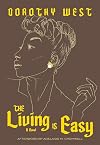
This remarkable novel by one of the youngest member of the Harlem Renaissance takes place in Boston, amid middle class Black strivers, right before WWI. It's complex and thoughtful, filled with characters who are tormented by their desires to measure up to their white neighbors. It's especially a delight for Bostonians, who will revel in the geography. Cleo Judson, a stubborn, driven woman, has married Bart, the "Boston Banana King", a successful fruit and vegetable entrepreneur, who is much show more older and tolerates her spendthrift ways because he loves her and their daughter Judy. When Cleo sees an opportunity to move to a large house on a block in Roxbury that borders all-white Brookline, she seizes it and lies to Bart about the monthly rent and about her scheme to bring her three sisters up from the South and away from their husbands. Cleo wishes to recreate her lovely Southern childhood, where, as eldest, she ruled over her sisters and idolized their loving parents. We know what happens with the best laid plans, and Cleo is no exception. Her raging and frequently contradictory feelings manifest themselves in her bullying and lying to everyone, assuring herself that it's for their own good. She's an extraordinarily memorable character, with a blazing personality, always manifesting her cruelty and kindness and continually shocking the reader, who all the while must recognize the overlying racism that forces Cleo's actions. show less
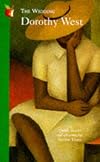
An amazingly well-written exploration of weddings as a representation of what we create and destroy when we ensnare ourselves. Elegant and profound, this novel captures a glimpse of a family that may never have existed, but that nevertheless explores the boundaries of our humanity - complicated by expectations and soothed by empathy.
"With a sigh of completion, she fell asleep, and the night folded down on the still spent forms of the forgiven."
"With a sigh of completion, she fell asleep, and the night folded down on the still spent forms of the forgiven."
What a fascinating look at the Black professional class and the snobbery of color and class. Which group is less forgiving - the white Southerners longing for their pre-Civil War "home," or the middle/upper-class Blacks looking with disdain at their less-educated brothers.
And was Tina's death punishment for Lute's daring to move up in rank? Or for his dalliances with white women? Or for his gross mistreatment of women?
Lists
Awards


You May Also Like


Associated Authors
Statistics
- Works
- 5
- Also by
- 16
- Members
- 1,346
- Popularity
- #19,116
- Rating
- 3.8
- Reviews
- 23
- ISBNs
- 49
- Languages
- 4
- Favorited
- 1