

Frank Chadwick
Author of Space 1889
About the Author
Series
Works by Frank Chadwick
En Garde!: Being in the Main, a Game of the Life and Times of a Gentleman Adventurer and His Several Companions (2005) (1975) 26 copies, 1 review
COMMAND DECISION 3: Miniature Rules For Recreating World War II Battles (New Revised Third Edition) (1998) 5 copies
Volley & Bayonet (wargame rules for 18th & 19th century battles of the black powder era) (1994) 4 copies
Volley & Bayonet - Road to Glory 4 copies
Command Decision: Test of Battle 4 copies
Napoleon Returns: A scenario book for Volley & Bayonet covering the exciting Waterloo campaign 2 copies
Jacobite - Volume 1 1 copy
Jacobite - Volume 2 1 copy
Dwarf Wars 1 copy
Men Under Fire 1 copy
The Race to Tunis 1 copy
Stars and Stripes Forever 1 copy
Honour of the Regiment 1 copy
Azhanti High Lightning 1 copy
The Traveller Adventure 1 copy
Associated Works
C3i Magazine No. 25 — Contributor — 2 copies
Tagged
Common Knowledge
- Legal name
- Chadwick, Frank Alan
- Birthdate
- c. 1953 (approximate date only)
- Gender
- male
- Organizations
- Game Designers' Workshop
- Awards and honors
- Charles S. Roberts Award Hall of Fame (1984)
- Short biography
- Game designer.
- Nationality
- USA
- Associated Place (for map)
- USA
Members
Reviews
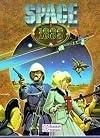
Space 1889 is a planetary adventure in the vein of Verne, Wells, and H. Rider Haggard. It's the 1889 that you vaguely remember from history, with a European peace and a scramble for Empire, trains and factories but only the most experimental cars. There are a few teensy differences. First, Thomas Edison invented a device in 1870 called the ether propeller, which allows travel in space. Mars, Venus, and Mercury have all been explored. Mars is populated by a decadent race in dusty cities along show more canals, with bands of wild nomads. Martian liftwood allows the creation of ships that can fly to an altitude where the ether propeller takes them into space. Mars is mostly dominated by the British. Venus is a swampy planet with dinosaurs, lizardmen, and efficient German plantations. Mercury has a livable river separating regions where lead vaporizes and air freezes. The setting seems ripe for adventure, with vast wildernesses to explore, principalities both human and alien to conquer, and many treasures to exploit.
The system is Ubiquity, a stat+skill dice pool where even results count as a success. There's an automatic success rule, which is good because the system seems extremely punishing. My analysis shows a decent chance of success at half your total rating, bad odds (p=0.3) one above that, poor odds (p = 0.1) two above that, and beyond that, forget about it!
I haven't yet played this game, so I do have some skepticism about the setting. There are hooks everywhere, but how do they catch? I'm not running the game, so less concerned. And as for Ubiquity, it's serviceable, but for a game based around expeditions and/or social status, could use some more mechanical heft there. Also, combat by the book involves rerolling initiative every round, which why? show less
The system is Ubiquity, a stat+skill dice pool where even results count as a success. There's an automatic success rule, which is good because the system seems extremely punishing. My analysis shows a decent chance of success at half your total rating, bad odds (p=0.3) one above that, poor odds (p = 0.1) two above that, and beyond that, forget about it!
I haven't yet played this game, so I do have some skepticism about the setting. There are hooks everywhere, but how do they catch? I'm not running the game, so less concerned. And as for Ubiquity, it's serviceable, but for a game based around expeditions and/or social status, could use some more mechanical heft there. Also, combat by the book involves rerolling initiative every round, which why? show less
This was a lot different than I expected it to be. It came off as more of a James Bondish/military fiction/pulp adventure story. It also was much more hard sci-fi than I expected. The main character is pretty much a Mary Sue. He speaks a bunch of languages, is great at armed combat, a history expert, an expert about all things military, an expert on advanced science topics, great with women, etc... in every situation he immediately deduced what was happening and had a solution.
That said, it show more was still pretty fun, just got kind of annoying sometimes. show less
That said, it show more was still pretty fun, just got kind of annoying sometimes. show less
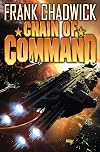
Frank Chadwick’s Chain of Command is ab military space opera inspired by Guadalcanal and the World War II battle in the Solomon Islands. His hero, Sam Bitka, is a character type common to the genre from C. S. Forester to David Weber, a rapidly promoted captain, who keeps a stiff upper lip despite his own insecurities. He battles bureaucrats and gains the respect of his crew. Chadwick has thought through his spaceship design and pays attention to such details as orbital mechanics, the show more health effects of long-term weightlessness, and the inherent danger of hydrogen as a fuel. Refreshingly, his enemy aliens are not monolithic and have as many political divisions as their human counterparts. Battle scenes are especially well done. 3.5 stars. show less

It is not exactly deep world building. It switches genres twice. Starts out as 40's noir, segues to a Weberesque military procedural and then finishes up as a pair of dungeon crawls. The characters are straight out of classic Hollywood central casting and the ending is pure Hollywood. Doesn't matter. It works. Its a fun romp with just enough curve balls to keep you glued to the pages. I also like how the author does not feel the need to fully explain things that are way above the POV show more character's paygrade. Worth buying. Worth reading. Worth rereading. show less
Awards
You May Also Like


Associated Authors
Statistics
- Works
- 86
- Also by
- 7
- Members
- 1,139
- Popularity
- #22,541
- Rating
- 3.6
- Reviews
- 16
- ISBNs
- 90
- Languages
- 2