
C. David Heymann (1945–2012)
Author of A Woman Named Jackie
About the Author
C. David Heymann is the internationally known author of such New York Times bestselling books as The Georgetown Ladies' Social Club; RFK: A Candid Biography of Robert F. Kennedy; Poor Little Rich Girl: The Life and Legend of Barbara Hutton; and A Woman Named Jackie: An Intimate Biography of show more Jacqueline Bouvier Kennedy Onassis. Three of his works have been made into award-winning NBC-TV miniseries. A three-time Pultizer Prize nominee, he lives and works in Manhattan show less
Works by C. David Heymann
The Georgetown Ladies' Social Club: Power, Passion, and Politics in the Nation's Capital (2003) 115 copies, 1 review
Associated Works
Reader's Digest Today's Best Nonfiction 06 1989: A Woman Named Jackie / Family of Spies / The Hotel / Touching the Void (1989) — Contributor — 51 copies
Tagged
Common Knowledge
- Legal name
- Heymann, Clemens David
- Birthdate
- 1945-01-14
- Date of death
- 2012-05-09
- Gender
- male
- Education
- State University of New York, Stony Brook
University of Massachusetts, Amherst (MFA)
Cornell University (BA - Hotel Administration) - Occupations
- biographer
- Awards and honors
- Pulitzer Prize nominee
- Agent
- Owen Laster (William Morris Agency)
- Short biography
- C. David Heymann was the internationally known author of such bestselling books as biographies. Three of his biographies were made into major award-winning NBC-TV miniseries. A three-time Pulitzer prize nominee, he lived and worked in Manhattan.
- Nationality
- USA
- Birthplace
- Manhattan, New York, USA
- Place of death
- Manhattan, New York, USA
- Associated Place (for map)
- Manhattan, New York, USA
Members
Reviews
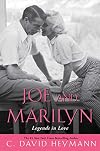
Meticulously researched, this very well written, insightful book provided details into the lives of two incredibly complex super stars.
Volatile, turbulent, obsessive, damaged, dysfunctional, sensational and tragic, the relationship between Joe DiMaggio, baseball's record-setting hero, and Marilyn Monroe, America's sex Goddess, is as difficult to describe as the deep psychological problems both seemed to exhibit.
The marriage lasted a short nine months. The relationship lasted as long as one show more of them was alive. Long after her death, DiMaggio had roses delivered to her grave three times a week.
She was unfaithful throughout the many years of their attempts to reconcile. He was a brutal, angry man who was not adverse to slugging her face with the same speed and accuracy as he hit a baseball.
Promiscuous and self defined as a sex symbol, while Marilyn talked of breaking away from this stereotypical role, her behaviors always pushed all envelopes of societal approval.
Thriving scandal, Marilyn simply could not help by spin out of control Narcissistic, Anna Freud, daughter of Sigmund, deemed her schizophrenic with an extreme character disorder. Hailing from a close knit Italian family, Joe's idea of a woman's role in the kitchen, would never conform to the need to be in the glaring public limelight that Marilyn craved.
Throughout the years, as she allowed other men to use and discard her, Joe remained the one and only stable force in her life.
Three and 1/2 stars! show less
Volatile, turbulent, obsessive, damaged, dysfunctional, sensational and tragic, the relationship between Joe DiMaggio, baseball's record-setting hero, and Marilyn Monroe, America's sex Goddess, is as difficult to describe as the deep psychological problems both seemed to exhibit.
The marriage lasted a short nine months. The relationship lasted as long as one show more of them was alive. Long after her death, DiMaggio had roses delivered to her grave three times a week.
She was unfaithful throughout the many years of their attempts to reconcile. He was a brutal, angry man who was not adverse to slugging her face with the same speed and accuracy as he hit a baseball.
Promiscuous and self defined as a sex symbol, while Marilyn talked of breaking away from this stereotypical role, her behaviors always pushed all envelopes of societal approval.
Thriving scandal, Marilyn simply could not help by spin out of control Narcissistic, Anna Freud, daughter of Sigmund, deemed her schizophrenic with an extreme character disorder. Hailing from a close knit Italian family, Joe's idea of a woman's role in the kitchen, would never conform to the need to be in the glaring public limelight that Marilyn craved.
Throughout the years, as she allowed other men to use and discard her, Joe remained the one and only stable force in her life.
Three and 1/2 stars! show less

A loosely-connected collection of short stories that perfectly conveys the fun, relaxed, not-overly-driven spirit of the idealized Austin that seems lodged permanently in our memories of our twenties. Though Heymann swears that the characters in the novel are not drawn directly from his own life, it's obvious that the rich detail here, down to specific species of trees in clients' yards, comes from having spent a good amount of time marinating in the town (like the protagonist, he's been a show more "practicing" architect in Austin since the mid-80s). My favorite story was "Keeping Austin Weird", where the main character solves an oak-poisoning incident on the site of one of his clients' properties with the help of an arborist whose personal life is straight out of a letter to Penthouse; it mixed thoughtful architectural discussion with barbecue ("There are a series of barbecue joints positioned like Stations of the Cross in a ring of towns around Austin"), serendipitous encounters, and a satisfyingly salacious yarn. But each of the other six stories are also a pleasure to read, and properly appreciative of the way that people balance their inner and outer lives. There's not a higher moral here, just thoughtful appreciations of how pleasant it is to while away the hours in a city with seemingly limitless opportunities to let time float peaceably downstream. show less
Fiction
David Heymann
My Beautiful City Austin
Houston: John M. Hardy Publishing
Hardcover, 978-0-9903714-0-3
176 pages, $24.00
November 2014
The seven linked stories in architect and University of Texas professor David Heymann's collection of short fiction are a testimonial to his passion for Austin and, hopefully, function as a warning. We flock to gorgeous, temperate Austin and that laid back hippie-techie-arty-nerdy-hipster-music-dude-everything-is-cool-or-soon-will-be vibe. But we refuse to show more respect what we love and destroy the qualities we claim to value. Suburban sprawl, disregard of ethical architecture and environmental considerations, and what Heymann calls “steroidal houses, huge and tall and…pretentious…starter mansions…” are endangering our beautiful city.
Heymann’s protagonist is also an architect named David. He is funny, earnest, and frequently befuddled by his clients. In “Intern Owners” he is flummoxed when his clients choose a neighborhood and house plan that are starkly different from their personalities and values. In “The Honey Trap” his older, retired clients want to build the personal equivalent of Six Flags as a lure for their grandchildren. “A Life in Ruins” finds David on a house tour suffering cognitive dissonance occasioned by a Shaker style master bedroom in a “vaguely Italianate stucco and stone pile.” “Patterns of Passive Aggression” contrasts Barton Springs—“the psychic heart of Austin”—and Lake Travis.
The author can turn a phrase: “Facts, politics, money: the [Barton] Springs are gradually being strangled, as one landscape takes over another, like starlings, or hydrilla, or antibiotic-resistant strep…” Regarding a certain familiar collection of restaurants: “There are a series of barbeque joints positioned like Stations of the Cross in a ring of towns around Austin.” A subdivision with a mixture of overgrown houses from widely divergent eras and styles looks like “someone had given a group of supersized drag queens the keys to the wardrobe of a historical society.”
And his descriptive skills are pastoral without being effusive. “The rolling reddish ground everywhere was covered in a ridiculousness of bluebonnets, to the edge of the horizon....A bit farther on we came upon a cowboy, fully duded out and saddled up, coming toward us through scrub cedar and cactus, riding herd on a flock of tiny Angora sheep, the legs of which disappeared into the purple blue.”
Heymann’s book is about the role architecture can and should play in our quality of life. He would rather we built innovative structures that incorporate the character of, and partner with, the land on which we choose to live. My Beautiful City Austin is a love song. It remains to be seen whether that song is a rallying seduction or a bittersweet elegy.
First published in Lone Star Literary Life. show less
David Heymann
My Beautiful City Austin
Houston: John M. Hardy Publishing
Hardcover, 978-0-9903714-0-3
176 pages, $24.00
November 2014
The seven linked stories in architect and University of Texas professor David Heymann's collection of short fiction are a testimonial to his passion for Austin and, hopefully, function as a warning. We flock to gorgeous, temperate Austin and that laid back hippie-techie-arty-nerdy-hipster-music-dude-everything-is-cool-or-soon-will-be vibe. But we refuse to show more respect what we love and destroy the qualities we claim to value. Suburban sprawl, disregard of ethical architecture and environmental considerations, and what Heymann calls “steroidal houses, huge and tall and…pretentious…starter mansions…” are endangering our beautiful city.
Heymann’s protagonist is also an architect named David. He is funny, earnest, and frequently befuddled by his clients. In “Intern Owners” he is flummoxed when his clients choose a neighborhood and house plan that are starkly different from their personalities and values. In “The Honey Trap” his older, retired clients want to build the personal equivalent of Six Flags as a lure for their grandchildren. “A Life in Ruins” finds David on a house tour suffering cognitive dissonance occasioned by a Shaker style master bedroom in a “vaguely Italianate stucco and stone pile.” “Patterns of Passive Aggression” contrasts Barton Springs—“the psychic heart of Austin”—and Lake Travis.
The author can turn a phrase: “Facts, politics, money: the [Barton] Springs are gradually being strangled, as one landscape takes over another, like starlings, or hydrilla, or antibiotic-resistant strep…” Regarding a certain familiar collection of restaurants: “There are a series of barbeque joints positioned like Stations of the Cross in a ring of towns around Austin.” A subdivision with a mixture of overgrown houses from widely divergent eras and styles looks like “someone had given a group of supersized drag queens the keys to the wardrobe of a historical society.”
And his descriptive skills are pastoral without being effusive. “The rolling reddish ground everywhere was covered in a ridiculousness of bluebonnets, to the edge of the horizon....A bit farther on we came upon a cowboy, fully duded out and saddled up, coming toward us through scrub cedar and cactus, riding herd on a flock of tiny Angora sheep, the legs of which disappeared into the purple blue.”
Heymann’s book is about the role architecture can and should play in our quality of life. He would rather we built innovative structures that incorporate the character of, and partner with, the land on which we choose to live. My Beautiful City Austin is a love song. It remains to be seen whether that song is a rallying seduction or a bittersweet elegy.
First published in Lone Star Literary Life. show less
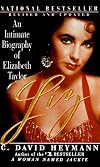
This was really more of a three and a half. It's pretty weirdly mis-titled. I would think that an "intimate biography" would be an authorized biography where the biographer gets complete access to the subject. This was definitely an unauthorized biography, and while the author doesn't mince words about her many controversial love affairs, her love of priceless jewels, her inability to be on time, etc., it's mostly fairly sympathetic, though it doesn't really speak much about her greatest show more performances. All in all, a fairly entertaining read. Serious diehard fans might find it a little lurid, but I don't see how it's possible to write a balanced biography about Elizabeth without a few juicy tidbits. show less
Awards

You May Also Like


Associated Authors
Statistics
- Works
- 15
- Also by
- 1
- Members
- 1,460
- Popularity
- #17,596
- Rating
- 3.3
- Reviews
- 23
- ISBNs
- 94
- Languages
- 10