

Charles Royster
Author of The Destructive War: William Tecumseh Sherman, Stonewall Jackson, and the Americans
About the Author
Works by Charles Royster
The Destructive War: William Tecumseh Sherman, Stonewall Jackson, and the Americans (1991) 348 copies, 3 reviews
The Fabulous History of the Dismal Swamp Company: A Story of George Washington's Times (1999) 246 copies, 1 review
A Revolutionary People At War: The Continental Army and American Character, 1775-1783 (1980) 229 copies, 1 review
Associated Works
Arms and Independence: The Military Character of the American Revolution (1984) — Contributor — 12 copies
Tagged
Common Knowledge
- Canonical name
- Royster, Charles
- Birthdate
- 1944
- Gender
- male
- Education
- University of California, Berkeley (AB|1966)
University of California, Berkeley (PhD|1977) - Nationality
- USA
- Birthplace
- Nashville, Tennessee, USA
- Places of residence
- Baton Rouge, Louisiana, USA
- Associated Place (for map)
- USA
Members
Reviews
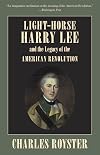
Interesting book. Not written in a typical biographical form. Not chronological or based on broad themes. This is strictly a look at Light-Horse Harry Lee's Revolutionary War experience and how it informed his later political outlook, his vision for the future expansion of the United States, and more interestingly how it helps explain his later monetary situation.
Royster basically argues Lee's adherence to the Federalist cause grew out of his abhorrence of the violence and disorder that were show more part of his war experience. His unit, Lee's Legion witnessed the unusually brutal type warfare that went on between loyalists and rebels. Because of this he developed a healthy skepticism for the ability of the populace to control their basest instincts. And his experience with civilians more interested in lining their own pockets than contributing to the effort of those working to secure their independence, convinced him the people needed strong guidance from a powerful central government led by those he viewed as "born" for the job. A category he placed himself in.
It also caused him to take a very dim view of anyone who would advocate splitting the union. He was appalled at the actions of those involved in the "Whiskey Rebellion," an action he led an army to suppress. He is possibly the most forceful in this period arguing the union was "perpetual" and that no state had a right to split from it. This led to two ironies; first was his argument that the constitution was a compact among "the people" rather than the states, ironic given his distrust of "the peoples" ability to govern themselves, and second, that his son Robert E. Lee would end up leading such a rebellion.
His war experience also led him to have an expansive view of the American future, including westward settlement, road and canal construction and the prosperity that would flow from it, which in many ways presaged Henry Clay's "American System". This, according to Royster, led to Lee's profligate spending which eventually landed him in debtors prison.
Overall the book does a very good and persuasive job of describing Lee's political and social views as they were shaped by the Revolution. His contention that Lee's irresponsible financial investments were also the result of this are less convincing. Definitely worth a read if the era is of interest to you. Well written. show less
Royster basically argues Lee's adherence to the Federalist cause grew out of his abhorrence of the violence and disorder that were show more part of his war experience. His unit, Lee's Legion witnessed the unusually brutal type warfare that went on between loyalists and rebels. Because of this he developed a healthy skepticism for the ability of the populace to control their basest instincts. And his experience with civilians more interested in lining their own pockets than contributing to the effort of those working to secure their independence, convinced him the people needed strong guidance from a powerful central government led by those he viewed as "born" for the job. A category he placed himself in.
It also caused him to take a very dim view of anyone who would advocate splitting the union. He was appalled at the actions of those involved in the "Whiskey Rebellion," an action he led an army to suppress. He is possibly the most forceful in this period arguing the union was "perpetual" and that no state had a right to split from it. This led to two ironies; first was his argument that the constitution was a compact among "the people" rather than the states, ironic given his distrust of "the peoples" ability to govern themselves, and second, that his son Robert E. Lee would end up leading such a rebellion.
His war experience also led him to have an expansive view of the American future, including westward settlement, road and canal construction and the prosperity that would flow from it, which in many ways presaged Henry Clay's "American System". This, according to Royster, led to Lee's profligate spending which eventually landed him in debtors prison.
Overall the book does a very good and persuasive job of describing Lee's political and social views as they were shaped by the Revolution. His contention that Lee's irresponsible financial investments were also the result of this are less convincing. Definitely worth a read if the era is of interest to you. Well written. show less
Royster examines the years following the Revolution through the eyes of Light-Horse Harry Lee, a partisan leader throughout Nathaniel Greene's brilliant southern campaign. Royster's thesis is that Lee is emblematic of those Revolutionary leaders who became disillusioned in the years following the end of the war and the direction the country took.
Royster focuses on a number of themes from Lee's life to make his point. His business failure and subsequent bankruptcy and time in debtor's prison show more are examples of the new country's failure to extend limitless prosperity to Lee and other heroes, such as Robert Morris.
Royster also points out the growing partisanship of the 1790's and the move by Republicans to equate Federalists, including the revered Washington with the loyalist Tories. Lee obsessed over Jefferson's rise to power on the power of these calumnies.
Though, there are other important points to the book, perhaps none is quite as powerful as Lee's fear of the growing strength of the "mob" in America. Lee was beaten nearly to death in Baltimore by leading a group of Federalist opponents to oppose the War of 1812. He never fully recovered and those injuries led ultimately to his death five years later.
I'm not sure Royster's arguments fully succeed. Lee was a fascinating character, but one with astonishingly bad judgement. His speculative exploits in the 1790's would seem quite comfortable to those Wall Street barons recently caught up in credit default swaps and the collapse of sub-prime mortgages. His participation in the Baltimore incident shows further poor decision-making. I'm not sure that one man of such uniqueness can be an example for an entire generation of patriots. show less
Royster focuses on a number of themes from Lee's life to make his point. His business failure and subsequent bankruptcy and time in debtor's prison show more are examples of the new country's failure to extend limitless prosperity to Lee and other heroes, such as Robert Morris.
Royster also points out the growing partisanship of the 1790's and the move by Republicans to equate Federalists, including the revered Washington with the loyalist Tories. Lee obsessed over Jefferson's rise to power on the power of these calumnies.
Though, there are other important points to the book, perhaps none is quite as powerful as Lee's fear of the growing strength of the "mob" in America. Lee was beaten nearly to death in Baltimore by leading a group of Federalist opponents to oppose the War of 1812. He never fully recovered and those injuries led ultimately to his death five years later.
I'm not sure Royster's arguments fully succeed. Lee was a fascinating character, but one with astonishingly bad judgement. His speculative exploits in the 1790's would seem quite comfortable to those Wall Street barons recently caught up in credit default swaps and the collapse of sub-prime mortgages. His participation in the Baltimore incident shows further poor decision-making. I'm not sure that one man of such uniqueness can be an example for an entire generation of patriots. show less
A Revolutionary People at War: The Continental Army and American Character, 1775-1783 by Charles Royster

A very good intellectual history of the Revolution, discussing the interesting and important dichotomy between the soldiers of the Continental Army and the populace at large.
The destructive war : William Tecumseh Sherman, Stonewall Jackson, and the Americans by Charles Royster
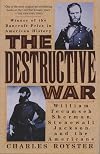
A dual biography of two efficient warriors. Evenly balanced to demonstrate that the War was a process all by itself, perhaps outside the politics involved. I don't really think so, as both men did wrack up victories, Sherman in the long run successful. Royster doesn't deal very effectively with Jackson's occasional time-outs, where he would go into a light coma, as he did at the start of the Peninsula fighting. His inaction that day was probably not simply fatigue...there were other show more instances... someone should go into that...
Sherman, was excitable, and a less skilled leader, but gives the impression, even in his own memoirs, of being "On the Job", rather than enjoying a mystical experience. show less
Sherman, was excitable, and a less skilled leader, but gives the impression, even in his own memoirs, of being "On the Job", rather than enjoying a mystical experience. show less
Lists
Awards


You May Also Like


Associated Authors
Statistics
- Works
- 4
- Also by
- 2
- Members
- 902
- Popularity
- #28,435
- Rating
- 3.4
- Reviews
- 8
- ISBNs
- 19
- Favorited
- 1