

Bari Wood
Author of The Tribe
About the Author
Works by Bari Wood
Associated Works
Tagged
Common Knowledge
- Legal name
- Wood, Bari Eve
- Birthdate
- 1936
- Gender
- female
- Education
- Northwestern University
- Nationality
- USA
- Birthplace
- Jacksonville, Illinois, USA
Members
Reviews

4.75/5
The Tribe is frequently categorized as horror, but that label does it a disservice. This is not a novel built around fear or spectacle. It is a serious literary work that uses elements of Jewish myth and history to examine one of the most difficult ethical questions imaginable: is murder ever right? And if it is committed once, what does that permission do to the people who claim it?
Set within a tightly drawn New York Jewish community, the novel feels intensely real. Wood does not rely show more on heavy description; instead, the world is constructed through voice, behavior, silence, and social pressure. You hear the characters speaking. You understand the unspoken rules of the neighborhood. The setting emerges organically, through how people interact and what they fear, rather than through exposition. It is a fully realized community, not a backdrop.
The story begins with an act of violence that feels morally legible — even, at first, understandable. But Wood is patient and exacting. Rather than asking the reader to approve or condemn, she follows the consequences. What starts as retribution gradually shifts into something far more troubling: violence used as protection, then as control, and finally as a way of maintaining order at any cost.
This is where The Tribe reveals its real power. The novel is not interested in monsters; it is interested in justifications. It shows how fear and trauma can transform survival into entitlement, and entitlement into authority over others. Each act of killing makes the next one easier, until the original reasons no longer matter at all. The most disturbing moments are not explosive, but quiet — when violence becomes normalized, procedural, and calm.
What makes the book morally significant is its refusal to grant immunity to anyone. Trauma explains behavior, but it does not sanctify it. Good intentions do not prevent corruption once killing becomes a system. By the end, the distinctions that once seemed so clear — between victim and perpetrator, protection and cruelty — have collapsed, not because the characters are evil, but because the logic they have adopted allows no other outcome.
The Tribe is not a comfortable book. It does not reassure the reader or offer clean moral answers. Instead, it forces a confrontation with uncomfortable truths about fear, revenge, and how easily killing becomes easier once it is justified the first time. That is why it lingers. show less
The Tribe is frequently categorized as horror, but that label does it a disservice. This is not a novel built around fear or spectacle. It is a serious literary work that uses elements of Jewish myth and history to examine one of the most difficult ethical questions imaginable: is murder ever right? And if it is committed once, what does that permission do to the people who claim it?
Set within a tightly drawn New York Jewish community, the novel feels intensely real. Wood does not rely show more on heavy description; instead, the world is constructed through voice, behavior, silence, and social pressure. You hear the characters speaking. You understand the unspoken rules of the neighborhood. The setting emerges organically, through how people interact and what they fear, rather than through exposition. It is a fully realized community, not a backdrop.
The story begins with an act of violence that feels morally legible — even, at first, understandable. But Wood is patient and exacting. Rather than asking the reader to approve or condemn, she follows the consequences. What starts as retribution gradually shifts into something far more troubling: violence used as protection, then as control, and finally as a way of maintaining order at any cost.
This is where The Tribe reveals its real power. The novel is not interested in monsters; it is interested in justifications. It shows how fear and trauma can transform survival into entitlement, and entitlement into authority over others. Each act of killing makes the next one easier, until the original reasons no longer matter at all. The most disturbing moments are not explosive, but quiet — when violence becomes normalized, procedural, and calm.
What makes the book morally significant is its refusal to grant immunity to anyone. Trauma explains behavior, but it does not sanctify it. Good intentions do not prevent corruption once killing becomes a system. By the end, the distinctions that once seemed so clear — between victim and perpetrator, protection and cruelty — have collapsed, not because the characters are evil, but because the logic they have adopted allows no other outcome.
The Tribe is not a comfortable book. It does not reassure the reader or offer clean moral answers. Instead, it forces a confrontation with uncomfortable truths about fear, revenge, and how easily killing becomes easier once it is justified the first time. That is why it lingers. show less
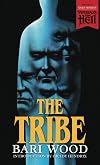
The Tribe exceeded and defied expectations. While theoretically we have a horror story about a Golem and the murders its used to commit, what we really have is a complex story of human relationships, with horrors much more familiar. The judgment and prejudice faced not only by minorities, but *between* minorities features heavily throughout. How people of color (especially at the time) are othered and seen as dangerous or monstrous themselves, with one of our protagonists being massive like show more our monster only reinforcing that, not just by the minority but by the Jewish population at the time. How that fear and hate by the Jewish population is a direct result of not just the unresolvable trauma of World War 2, but also by the antisemitism they faced both before and after the war. There are some great implicit and explicit analogies between these experiences drawn throughout, with imagery and reflections on the ghettos, and the idea that just like one can leave the ghetto in which one lives but not the one in the mind, the same is true of the camps.
We see gentle men, capable of but abhorring violence, on both sides of the divide struggle to overcome these barriers. Which is perhaps some of the best and most touching writing Wood does. The depictions of love shared between them, the love of father's and sons, of surrogate fathers, of men in community together or traumatized together is exceptional. Sometimes even verging on the, likely unrealized and closeted, homosexual. How lost we can be in recovering, rebuilding, or making amends when those relationships are damaged or broken is heartrendingly portrayed here as well.
I don't know that I'd enthusiastically recommend this to a lot of horror fans...The violence is limited, brief, and if it were a movie it would be revealed to us only in rapid flash cuts. However, as a snapshot of culture at a particular time in new york, as a beautiful piece about human relationships, I can't recommend it strongly enough. show less
We see gentle men, capable of but abhorring violence, on both sides of the divide struggle to overcome these barriers. Which is perhaps some of the best and most touching writing Wood does. The depictions of love shared between them, the love of father's and sons, of surrogate fathers, of men in community together or traumatized together is exceptional. Sometimes even verging on the, likely unrealized and closeted, homosexual. How lost we can be in recovering, rebuilding, or making amends when those relationships are damaged or broken is heartrendingly portrayed here as well.
I don't know that I'd enthusiastically recommend this to a lot of horror fans...The violence is limited, brief, and if it were a movie it would be revealed to us only in rapid flash cuts. However, as a snapshot of culture at a particular time in new york, as a beautiful piece about human relationships, I can't recommend it strongly enough. show less
Bari Wood's The Tribe lives on a borderland between horror, cultural critique, and suspense novel, sharing spirit and concepts with novels of Jewish Magical Realism--in fact, it might belong there more than in horror, where the Paperbacks from Hell label places it--but I'm glad to have discovered it, regardless. Although there are moments in the writing itself that definitely come across as dated to the 70s/80s, especially in relation to stereotypes and, to a lesser extent, gender, the show more book's story and writing overall stand up well and offer a fascinating blend of genre. What's potentially most impressive about the writing is the way in which Wood blends Jewish culture, belief, and legend together without weighing the book down, whereas particularly poignant moments that feel all too real add to the realism she achieves here.
All told, this book has made me a big fan of the author's, and I hope the Paperbacks from Hell reprinting allows many more readers to discover it. It's not quite like anything else I've read... and I rather loved the journey of it. Absolutely recommended. show less
All told, this book has made me a big fan of the author's, and I hope the Paperbacks from Hell reprinting allows many more readers to discover it. It's not quite like anything else I've read... and I rather loved the journey of it. Absolutely recommended. show less

Wealthy Connecticut housewife Myra Ludens is well aware of the inexplicable fear most people experience upon entering her cellar. While she knows that other people may feel dread, Myra truly believes that she is living in her dream house. However, her dream is about to turn into a nightmare...
For what Myra doesn't realize is that the recent remodeling of her basement has reawakened an evil presence that demands vengeance. Researching the history of her house, Myra discovers that in 1695, a show more woman by the name of Elizabeth 'Goody' Redman was hanged for witchcraft. Goody Redman's body was subsequently buried on Myra's land. To release the tormented spirit, Myra performs an impromptu exorcism - to her detriment.
In my opinion, this was an excellent book and I thoroughly enjoyed reading it. Ms. Wood really knows how to create a chilling atmosphere, and I also appreciated the slow and steady increase in the horror - which was sustained throughout the story. I give this book a definite A+! - it's certainly a keeper for me! show less
For what Myra doesn't realize is that the recent remodeling of her basement has reawakened an evil presence that demands vengeance. Researching the history of her house, Myra discovers that in 1695, a show more woman by the name of Elizabeth 'Goody' Redman was hanged for witchcraft. Goody Redman's body was subsequently buried on Myra's land. To release the tormented spirit, Myra performs an impromptu exorcism - to her detriment.
In my opinion, this was an excellent book and I thoroughly enjoyed reading it. Ms. Wood really knows how to create a chilling atmosphere, and I also appreciated the slow and steady increase in the horror - which was sustained throughout the story. I give this book a definite A+! - it's certainly a keeper for me! show less
Lists
Awards

You May Also Like


Associated Authors
Statistics
- Works
- 9
- Also by
- 2
- Members
- 1,035
- Popularity
- #24,871
- Rating
- 3.5
- Reviews
- 16
- ISBNs
- 80
- Languages
- 9
- Favorited
- 1