
Gordon McAlpine (–2021)
Author of The Tell-Tale Start
Series
Works by Gordon McAlpine
Associated Works
Tagged
Common Knowledge
- Date of death
- 2021-11-24
- Gender
- male
- Education
- University of California, Irvine (MFA | Program in Creative Writing)
- Nationality
- USA
- Associated Place (for map)
- USA
Members
Reviews
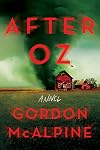
Thanks to NetGalley and Crooked Lane Books for an ARC of this novel.
American writer Frank Baum’s The Wizard of Oz, published in 1900, has inspired many retellings, stage productions, and, of course, the much-loved 1939 film that made Judy Garland’s career. With Baum’s work as a basis—Baum is a minor but important figure in this novel—Gordon McAlpine brings a fascinating new angle into play. As the title suggests, it unfolds after the famous tornado-caused adventure, with Dorothy show more and Toto discovered asleep in a field several days later. Her story about the witches, the magical beings, the wizard, are taken to result from being blown away in the storm, a diagnosis confirmed by the town’s doctor. She anxiously confesses to having killed the Wicked Witch of the West by ‘melting’ her, though without meaning to. The child’s refusal to accept that she dreamed Oz, or fabricated the story to get attention, sets into motion a disturbing series of events during which the entire town viciously turns against her. She is put through a true witch trial and is then sent to an insane asylum in Topeka. Dorothy goes from unfortunate victim to evil, morally repulsive, Satanic ‘murderess’ in a matter of days, and with no one, not even Uncle Henry and Aunty Em, to defend her.
The Oz story is the novel’s premise but it is decentred here to focus on the aftermath. The result is a penetrating look at what happens when hardened world views forbid alternative interpretations. Dorothy’s hometown, Sunbonnet, Kansas, is permeated by a rigid, dogmatic Christianity based on unquestioning biblical literalism. It is a supremely effective method of ‘crowd control’. Those who do not toe the line drawn by the town’s leading men-especially women, who have little power on their own anyway—are blamed, scapegoated, ostracized, and never forgiven unless they repent their ‘sins’, atone, and never again defy God’s authority. Not at all surprisingly, the town’s charismatic and persuasive minister has particular influence, while covering his own serious moral lapses.
The true central character is not so much Dorothy as Dr Evelyn Grace Wilford, from Boston, unmarried, and very much of the ‘new woman’ type that so troubled the period’s guardians of morality and the status quo. She is a psychologist when psychology was a very new field and women practitioners probably non-existent. Its theories and practices owed much to Dr. William James, who looked to myth and timeless archetypes for clues to how the mind processes experience. Dr Wilford is a devoted student of James, to whom she writes about Dorothy’s case. She was introduced to it by her cousin, Chicago journalist Frank Baum, who had visited Sunbonnet to report on it and was convinced that Dorothy was a blameless scapegoat. A few visits to the asylum, in which she has her recount and further explain her story, convinces her that Dorothy was neither insane nor guilty of killing the town outcast, the despised spinster Alvina Clough.
Dr Wilford visits the town to interview the four town leaders, believing that Dorothy can only escape her fate in the oppressive asylum if she can be proven innocent of murder. She wants to understand ‘Who are we human beings that such terrible things as this happen?’ The unidentified narrator who presents the town’s point of view to such an absurd degree that it is at once ugly and humorous calls what she set out to do a ‘heedless mission’ combining a ‘uniquely dangerous brand of scientism wed to paganism.’ How she unravels the murder mystery, exposes the perpetrators, and saves Dorothy, is surprising and wonderful.
Like Baum’s original tale, which was never just a story to amuse children, McAlpine’s is allegorical, as well as a timely social critique. I was shocked and saddened to learn of his death two years ago. He was a gifted writer and an incisive commentator. This novel is a tribute to his memory. show less
American writer Frank Baum’s The Wizard of Oz, published in 1900, has inspired many retellings, stage productions, and, of course, the much-loved 1939 film that made Judy Garland’s career. With Baum’s work as a basis—Baum is a minor but important figure in this novel—Gordon McAlpine brings a fascinating new angle into play. As the title suggests, it unfolds after the famous tornado-caused adventure, with Dorothy show more and Toto discovered asleep in a field several days later. Her story about the witches, the magical beings, the wizard, are taken to result from being blown away in the storm, a diagnosis confirmed by the town’s doctor. She anxiously confesses to having killed the Wicked Witch of the West by ‘melting’ her, though without meaning to. The child’s refusal to accept that she dreamed Oz, or fabricated the story to get attention, sets into motion a disturbing series of events during which the entire town viciously turns against her. She is put through a true witch trial and is then sent to an insane asylum in Topeka. Dorothy goes from unfortunate victim to evil, morally repulsive, Satanic ‘murderess’ in a matter of days, and with no one, not even Uncle Henry and Aunty Em, to defend her.
The Oz story is the novel’s premise but it is decentred here to focus on the aftermath. The result is a penetrating look at what happens when hardened world views forbid alternative interpretations. Dorothy’s hometown, Sunbonnet, Kansas, is permeated by a rigid, dogmatic Christianity based on unquestioning biblical literalism. It is a supremely effective method of ‘crowd control’. Those who do not toe the line drawn by the town’s leading men-especially women, who have little power on their own anyway—are blamed, scapegoated, ostracized, and never forgiven unless they repent their ‘sins’, atone, and never again defy God’s authority. Not at all surprisingly, the town’s charismatic and persuasive minister has particular influence, while covering his own serious moral lapses.
The true central character is not so much Dorothy as Dr Evelyn Grace Wilford, from Boston, unmarried, and very much of the ‘new woman’ type that so troubled the period’s guardians of morality and the status quo. She is a psychologist when psychology was a very new field and women practitioners probably non-existent. Its theories and practices owed much to Dr. William James, who looked to myth and timeless archetypes for clues to how the mind processes experience. Dr Wilford is a devoted student of James, to whom she writes about Dorothy’s case. She was introduced to it by her cousin, Chicago journalist Frank Baum, who had visited Sunbonnet to report on it and was convinced that Dorothy was a blameless scapegoat. A few visits to the asylum, in which she has her recount and further explain her story, convinces her that Dorothy was neither insane nor guilty of killing the town outcast, the despised spinster Alvina Clough.
Dr Wilford visits the town to interview the four town leaders, believing that Dorothy can only escape her fate in the oppressive asylum if she can be proven innocent of murder. She wants to understand ‘Who are we human beings that such terrible things as this happen?’ The unidentified narrator who presents the town’s point of view to such an absurd degree that it is at once ugly and humorous calls what she set out to do a ‘heedless mission’ combining a ‘uniquely dangerous brand of scientism wed to paganism.’ How she unravels the murder mystery, exposes the perpetrators, and saves Dorothy, is surprising and wonderful.
Like Baum’s original tale, which was never just a story to amuse children, McAlpine’s is allegorical, as well as a timely social critique. I was shocked and saddened to learn of his death two years ago. He was a gifted writer and an incisive commentator. This novel is a tribute to his memory. show less

How is it that I hadn’t heard of Gordon McAlpine before this? Perusing now a list of his works, I see that he specialized in the clever sort of mysteries I enjoy: historical mysteries that are pastiches of other famous works, including Sherlock Holmes, Hamlet, Nancy Drew, and, of course, the Wizard of Oz.
In After Oz, Dr. Evelyn Grace Wilford, a student of William James and cousin to an equally famous writer, comes to Topeka Insane Asylum to examine Dorothy Gale, who’s been committed for show more the murder of a mean old spinster, Alvina Clough. After being found asleep in a pumpkin patch four days after the famous twister, Dorothy claims to have been in Oz, where, among other details of the tale familiar to the readers of L. Frank Baum’s books or viewers of the 1939 Judy Garland movie, she confesses to having murdered a witch by melting her with a bucket of water. The god-fearing townsfolk of Sunbonnet, Kansas, already appalled by Dorothy’s “satanic” fantasies, logically assume that she murdered Clough.
Alternating chapters are told from the POV of Dr. Wilford, largely in the form of letters to her mentor William James, and by a first-person plural Greek chorus of villagers from Sunbonnet.
While there were plenty of clues to figure out a large part of the mystery well before Dr. Wilford does, I felt pretty foolish for not having foreseen the actual culprit. But a large part of the appeal of this novel came from rooting for Dr. Wilford in her efforts to prove Dorothy’s innocence in the face of the deliberate obtuseness and hypocrisy of the the self-satisfied, self-righteous villagers.
[Small quibbles about mechanics: I appreciated the good typesetting, so rare in an ebook, including proper use of en dashes! However, as a tip to the “woman with the blue pencil,” an heir named in a will is a “beneficiary,” not a “benefactor”; “just like” instead of “just as” before a dependent clause would be considered even more incorrect than it is today for an educated person of that time; and the idiom is “spoke my piece,” not “spoke my peace.”] show less
In After Oz, Dr. Evelyn Grace Wilford, a student of William James and cousin to an equally famous writer, comes to Topeka Insane Asylum to examine Dorothy Gale, who’s been committed for show more the murder of a mean old spinster, Alvina Clough. After being found asleep in a pumpkin patch four days after the famous twister, Dorothy claims to have been in Oz, where, among other details of the tale familiar to the readers of L. Frank Baum’s books or viewers of the 1939 Judy Garland movie, she confesses to having murdered a witch by melting her with a bucket of water. The god-fearing townsfolk of Sunbonnet, Kansas, already appalled by Dorothy’s “satanic” fantasies, logically assume that she murdered Clough.
Alternating chapters are told from the POV of Dr. Wilford, largely in the form of letters to her mentor William James, and by a first-person plural Greek chorus of villagers from Sunbonnet.
While there were plenty of clues to figure out a large part of the mystery well before Dr. Wilford does, I felt pretty foolish for not having foreseen the actual culprit. But a large part of the appeal of this novel came from rooting for Dr. Wilford in her efforts to prove Dorothy’s innocence in the face of the deliberate obtuseness and hypocrisy of the the self-satisfied, self-righteous villagers.
[Small quibbles about mechanics: I appreciated the good typesetting, so rare in an ebook, including proper use of en dashes! However, as a tip to the “woman with the blue pencil,” an heir named in a will is a “beneficiary,” not a “benefactor”; “just like” instead of “just as” before a dependent clause would be considered even more incorrect than it is today for an educated person of that time; and the idiom is “spoke my piece,” not “spoke my peace.”] show less
 This review was written for LibraryThing Early Reviewers.
I just finished reading this and wow! After Oz is an incredibly creative new look at a timeless classic. The tornado has passed and Dorothy has returned from Oz, but nobody believes her and things go from bad to worse. I won't go into more details about the plot because it's better to discover it for yourself, but I can say that I loved the changes in POV, from an unidentified townsperson (almost an amalgam of the town's men, actually) to letters written by Dr. Wilford, a female psychiatrist show more who has taken an interest in Dorothy. I also loved the initial slow building of suspense that quickens suddenly near the end, and the surprises yet in store after that. I highly recommend this book. show less
This review was written for LibraryThing Early Reviewers.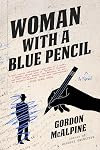
I loved the metafictional aspect and the way the various narratives intertwined, but it strikes me as such an author's-eye-view of publishing and the editorial process. You know, "I wrote something profound and touching and true, but then the editor forced me to betray my artistic vision and make it crass and commercial!" And I'm not saying this doesn't happen (or that bigotry of various sorts doesn't play into what changes editors demand you make, as it does in this book), but there is show more here, as there so frequently is in novels about writing/publishing from the writer's perspective, this sense of the editor as a lone malevolent force totally divorced from any company or industry. The editor, it is implied, demands these changes because she herself is a manipulative, grasping, greedy person, not because of any external pressures. (It's interesting to me that this is the case even though she is identified as an associate editor; I don't know about the 1940s, but these days that would almost certainly put her near the bottom of the editorial hierarchy and therefore subject to various diktats from above, to say nothing of the pressures that can come from outside the editorial department--but in novels about writers there never are any other departments, just these mysterious free-floating editors.)
I'm complaining a lot about a book that I mostly enjoyed, and I realize I'm kind of missing the point, but it happened to be a particularly extreme example of the things I frequently find irritating in books about writers. show less
I'm complaining a lot about a book that I mostly enjoyed, and I realize I'm kind of missing the point, but it happened to be a particularly extreme example of the things I frequently find irritating in books about writers. show less
Lists
Awards


You May Also Like


Associated Authors
Statistics
- Works
- 10
- Also by
- 1
- Members
- 485
- Popularity
- #50,912
- Rating
- 3.7
- Reviews
- 32
- ISBNs
- 43
