
Aurélie Valognes
Author of Out of Sorts
About the Author
Image credit: By Wollastoni - Own work, CC BY-SA 4.0, https://commons.wikimedia.org/w/index.php?curid=50822849
Works by Aurélie Valognes
Le tourbillon de la vie 1 copy
La Fugue (French Edition) 1 copy
Viver na Flauta 1 copy
L'envol (French Edition) 1 copy
Will You Ever Change? 1 copy
La fugue 1 copy
Tagged
Common Knowledge
- Gender
- female
Members
Reviews
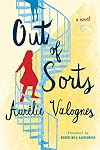
A surprisingly charming book about a grumpy man who, upon becoming a grumpy old man, finally learns how to live.
The book starts off rather dreadfully. The main character, Ferdinand, is not a pleasant person. He's cranky, willfully awful, and spiteful. He spirals deeper into awfulness after his dog Daisy is hit by a car, and it's only the combination of his daughter threatening to put him in a home if he doesn't shape up and being adopted by Juliette, his new upstairs neighbor's precocious show more 10-year-old daughter that forces him to stop being a recluse and curmudgeon. And he starts liking it.
The book borders on the absurd, with much of it related to Mrs. Sanchez, the concierge of the apartment complex. In character, she's more of a distasteful biddy body than Gladys Kravitz and more self-righteous and uptight than the worst HOA president (you know the kind - the one who sticks you with fines and legal notices if your lawn is half-an-inch over the proscribed height). And she hates Ferdinand because she was friends with his ex-wife.
This is an extremely short read (it's just a bit over 200 pages) but it had a lot that can be gleaned about family (blood and not), human connections, growing older, and moving beyond others' expectations and perceptions. There's also a pretty hefty "don't be a dick" message here, which is to be expected.
As I said earlier, this book ended up being surprisingly charming, and I found myself smiling at it toward the end. I found myself wishing the book was longer since I wanted to spend more time with the characters and learn what happens next in their lives.
I'm glad I read this, and look forward to seeing what else of the author's gets translated into English.
Review copy courtesy of the publisher via NetGalley. show less
The book starts off rather dreadfully. The main character, Ferdinand, is not a pleasant person. He's cranky, willfully awful, and spiteful. He spirals deeper into awfulness after his dog Daisy is hit by a car, and it's only the combination of his daughter threatening to put him in a home if he doesn't shape up and being adopted by Juliette, his new upstairs neighbor's precocious show more 10-year-old daughter that forces him to stop being a recluse and curmudgeon. And he starts liking it.
The book borders on the absurd, with much of it related to Mrs. Sanchez, the concierge of the apartment complex. In character, she's more of a distasteful biddy body than Gladys Kravitz and more self-righteous and uptight than the worst HOA president (you know the kind - the one who sticks you with fines and legal notices if your lawn is half-an-inch over the proscribed height). And she hates Ferdinand because she was friends with his ex-wife.
This is an extremely short read (it's just a bit over 200 pages) but it had a lot that can be gleaned about family (blood and not), human connections, growing older, and moving beyond others' expectations and perceptions. There's also a pretty hefty "don't be a dick" message here, which is to be expected.
As I said earlier, this book ended up being surprisingly charming, and I found myself smiling at it toward the end. I found myself wishing the book was longer since I wanted to spend more time with the characters and learn what happens next in their lives.
I'm glad I read this, and look forward to seeing what else of the author's gets translated into English.
Review copy courtesy of the publisher via NetGalley. show less
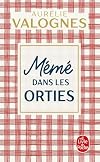
Eighty-three-year-old Ferdinand Bruns has been a curmudgeon his entire life, and old age and a divorce have not improved his disposition. He and his Great Dane Daisy are loathed by most of the other residents of his apartment house in Paris — especially the domineering concierge, Mrs. Suarez.
The slovenly Bruns is in danger of being shipped to a nursing home if he doesn’t improve. Naturally, this being a light-hearted novel, he’s assisted by two sprightly neighbors, 10-year-old show more Juliette and 92-year-old Beatrice Claudel. But Bruns is so disagreeable and ungrateful that it was hard to really care whether he gets rescued or not. Unlike Carl Mørck in Jussi Adler-Olsen’s Department Q series, Bernadette Fox in Maria Semple’s Where'd You Go, Bernadette, Renée Michel in Muriel Barbery’s The Elegance of the Hedgehog, Balaclava College President Thorkjeld Svenson in Charlotte MacLeod’s Peter Shandy mystery series, or other great curmudgeons in literature, Bruns really doesn’t have any redeeming qualities. All he has is his misanthropy. And that’s not enough to make him — or this novel — interesting. show less
The slovenly Bruns is in danger of being shipped to a nursing home if he doesn’t improve. Naturally, this being a light-hearted novel, he’s assisted by two sprightly neighbors, 10-year-old show more Juliette and 92-year-old Beatrice Claudel. But Bruns is so disagreeable and ungrateful that it was hard to really care whether he gets rescued or not. Unlike Carl Mørck in Jussi Adler-Olsen’s Department Q series, Bernadette Fox in Maria Semple’s Where'd You Go, Bernadette, Renée Michel in Muriel Barbery’s The Elegance of the Hedgehog, Balaclava College President Thorkjeld Svenson in Charlotte MacLeod’s Peter Shandy mystery series, or other great curmudgeons in literature, Bruns really doesn’t have any redeeming qualities. All he has is his misanthropy. And that’s not enough to make him — or this novel — interesting. show less

Bring on that feel-good factor with Aurélie Valognes and Le Tourbillon de la vie. The whirlwind in this instance is Louis an eight year old boy who is spending the summer with his grandfather. A loving relationship develops between the two. Papy finds himself living alone, he has been diagnosed with an illness that will lead to memory loss, but has kept this to himself wishing to enjoy perhaps one last summer with his grandchild. He has been a stage actor and like some in that profession show more his ego and his pride have carried him away from his wife and his daughter. He realises that he has been selfish and perhaps stubborn and the love that remains with him is for Louis.
Valognes tells the story from an omnipresent point of view with short interjections from Papy at the start of each short chapter. He sometimes reflects on his past, but also tells us how he is thinking at the moment, he has always kept a diary. He comes to depend on Louis and the relationship changes from adult to child and back again for the two of them. To make the story work, the eight year old boy is wise well beyond his age, growing up remarkable quickly during an idyllic summer holiday.
Valognes tells her story simply and well creating an atmosphere that is a pleasure to read. She muses on feelings of empathy, of time passing and reflections on a full life now coming towards its end. Papy says he does not regret anything, but this last summer exposes a more gentle heart in a man coping with his coming demise. A gentle quiet book that does not challenge the idea that love will conquer all. Reading it is a bit like taking a warm bath, relaxing and enjoyable, but it does not last for long and you must get out, get dressed and face the world. 3 stars. show less
Valognes tells the story from an omnipresent point of view with short interjections from Papy at the start of each short chapter. He sometimes reflects on his past, but also tells us how he is thinking at the moment, he has always kept a diary. He comes to depend on Louis and the relationship changes from adult to child and back again for the two of them. To make the story work, the eight year old boy is wise well beyond his age, growing up remarkable quickly during an idyllic summer holiday.
Valognes tells her story simply and well creating an atmosphere that is a pleasure to read. She muses on feelings of empathy, of time passing and reflections on a full life now coming towards its end. Papy says he does not regret anything, but this last summer exposes a more gentle heart in a man coping with his coming demise. A gentle quiet book that does not challenge the idea that love will conquer all. Reading it is a bit like taking a warm bath, relaxing and enjoyable, but it does not last for long and you must get out, get dressed and face the world. 3 stars. show less
Ferdinand has always been a grumpy guy, but now he's getting older. He doesn't have as much control over his life. He has to show he's capable of living on his own so that his estranged daughter will continue to let him do so. He tries to do better and has to face some parts about himself. He learns and grows. He develops relationships. There's some light comedy and some heart. It's a fairly short read and ends well.
Awards


You May Also Like


Associated Authors
Statistics
- Works
- 32
- Members
- 505
- Popularity
- #49,062
- Rating
- 3.4
- Reviews
- 12
- ISBNs
- 55
- Languages
- 6